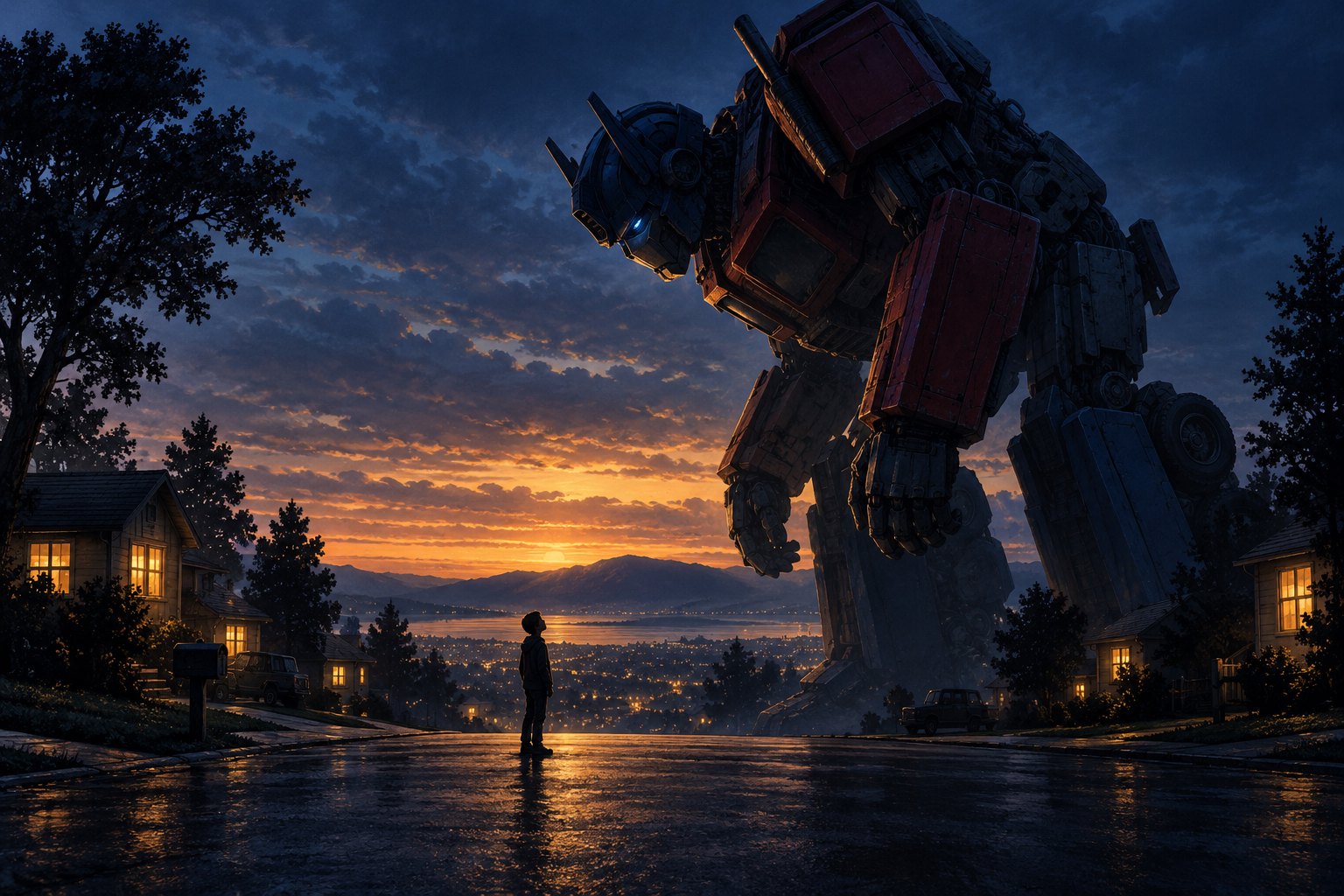
Steven Spielberg is set to oversee the Transformers franchise, with an eighth movie in development at Paramount Pictures, according to [Variety’s report](https://au.variety.com/2026/film/global/steven-spielberg-transformers-8-movie-franchise-reboot-41037/). That creates an intriguing creative opportunity: a series built around enormous machines can reconsider the small, personal attachments that make their battles matter.
Oversight should not be confused with a directing announcement, and development news cannot establish the quality of an unfinished movie. The useful question is what this franchise should carry forward. Michael Bay’s Transformers offers a revealing answer: its strongest emotional mechanism is the gradual discovery that something a teenager wants to own is someone he must learn to protect.
Spoiler warning: The following retrospective discusses the characters and ending of Transformers (2007). Its recommendations for the next movie are critical judgments, not information about that project’s story.
Sam’s first car becomes his first serious responsibility
The original film places an ordinary adolescent’s ambitions inside an extraordinary conflict. Sam Witwicky, played by Shia LaBeouf, worries about school, cars, and girls before becoming entangled in the Autobots’ struggle against the Decepticons. Bay directed the film, with Spielberg serving as an executive producer. [Amblin’s film overview](https://amblin.com/movie/transformers/) establishes both its everyday starting point and the family motto that acquires greater weight as events escalate: “No sacrifice, no victory!”
At first, Sam understands a car as a shortcut to adulthood. It promises movement, privacy, and social credibility. His desire is recognizable precisely because it is limited: he wants his circumstances to change without yet understanding how change might make demands on him.
Bumblebee transforms that transaction into a relationship. Sam thinks he has acquired a useful object; instead, he encounters a being with intentions independent of his own. The fantasy becomes more interesting at that point. A car that can protect its owner is wish fulfillment. A protector whose safety becomes the owner’s concern is the beginning of a moral education.
LaBeouf’s frantic delivery helps preserve the distance between Sam’s imagined competence and his actual readiness. His nervousness can become exhausting, but it also prevents him from feeling like a miniature action professional. He has to grow into responsibility while remaining visibly overwhelmed by it.
For movie eight, the transferable lesson is a dramatic progression: give someone an understandable desire, then let contact with another person—or another species—complicate it. Repeating the teenager-and-car setup would mean little without that change in perspective.
Bumblebee matters because protection becomes reciprocal
Bumblebee’s capture by Sector Seven is a crucial test of that relationship. The government agents treat an unfamiliar mechanical being as something to contain. Sam, who knows him as a protector, sees the individual behind the threatening appearance. Later, Sam argues for Bumblebee’s release. These events give their bond consequences beyond transportation or comic relief. [The film’s plot synopsis](https://www.imdb.com/title/tt0418279/plotsummary/) documents that movement from rescue to captivity and advocacy.
From Bumblebee’s perspective, the arrangement is precarious. Physical power does not guarantee that humans will recognize his intentions. He can save a person and still be classified as a danger. That makes his vulnerability more compelling than a simple shortage of firepower: his safety depends partly on whether someone will speak for him.
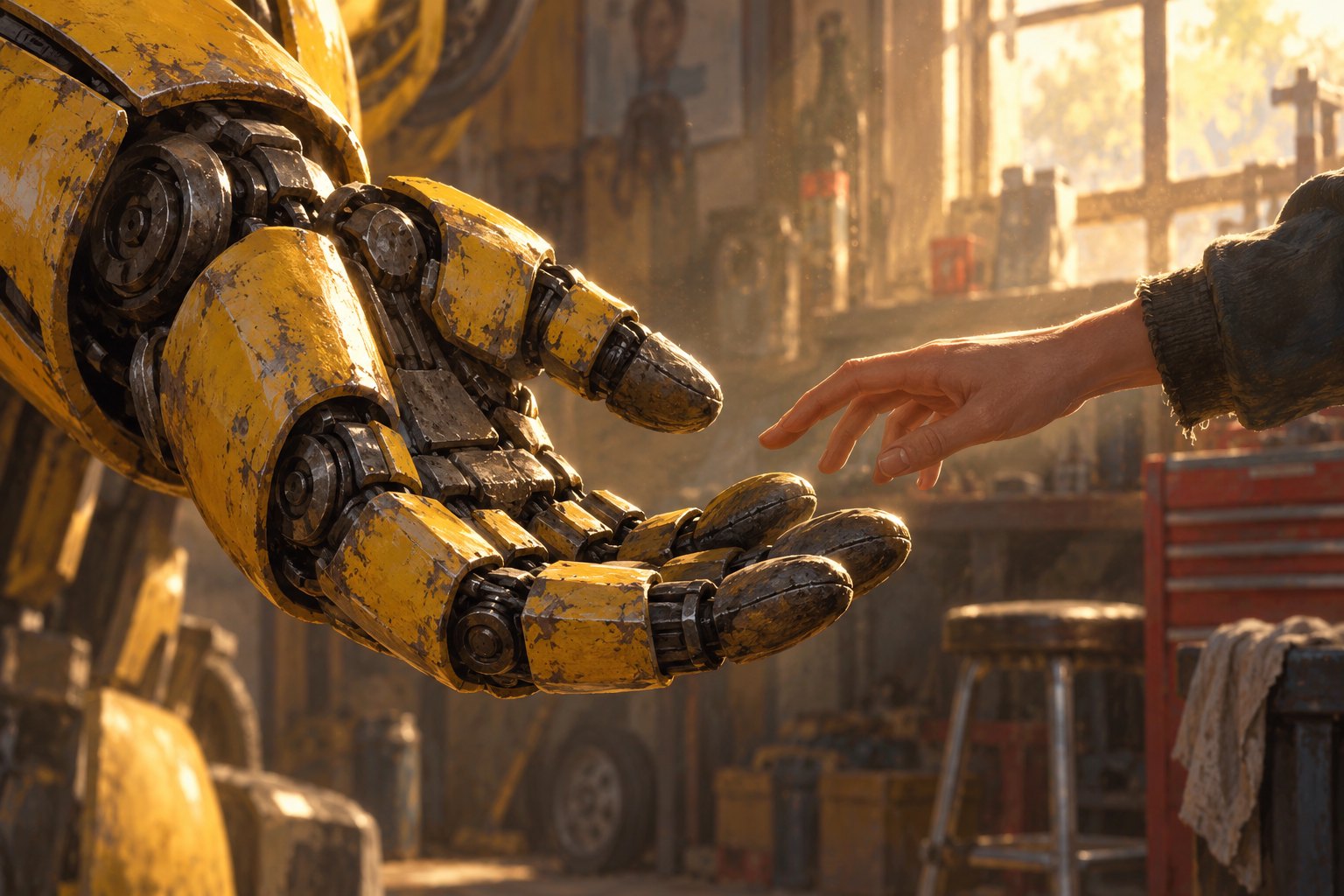
This is where the original earns some of its affection. The audience can admire the machinery, but attachment develops when strength fails to solve the immediate problem. Sam’s loyalty becomes meaningful because Bumblebee needs something Sam can provide.
A future installment could build an entire action sequence around that imbalance. What can the physically weaker character notice, decide, or risk that the stronger character cannot? Once the answer changes the outcome, human participation feels necessary.
Mikaela exposes the limits of Sam’s viewpoint
Mikaela Banes, played by Megan Fox, also complicates Sam’s assumptions. He initially approaches her through attraction and insecurity. Her mechanical knowledge reveals a competence that his romantic imagination has not accounted for. The relationship becomes more interesting whenever the film allows her practical judgment to interrupt his self-conscious performance.
My reservation is that the filmmaking does not consistently respect this discovery. The camera’s emphasis on Mikaela’s appearance can compete with the script’s recognition of her abilities. She is allowed to know more than Sam while still being presented through his desire. That tension makes the film less generous toward her than its action sometimes suggests.
The next movie could improve on that imbalance by giving its human characters objectives that exist independently of being admired, rescued, or included. Competence becomes characterization when it reveals a person’s history, priorities, or difficult choices.
That distinction also informs our discussion of why relationships matter more than a casting announcement. An ensemble becomes compelling through the pressures its members place on one another.
Optimus Prime gives the spectacle an ethical standard
Optimus Prime’s authority rests on more than size. His declaration, “Freedom is the right of all sentient beings,” makes the Autobots’ conduct answerable to a principle. The line is discussed in [this contemporary assessment of the film](https://www.lfs.org/newsletter/026/01/Prometheus_2601.pdf), which also notes his insistence that humans be protected.
The significant word is “all.” It extends moral consideration beyond one faction’s interests. Read alongside Bumblebee’s treatment, the statement raises a reciprocal question: can humans recognize the freedom of beings whose bodies resemble equipment?
For Optimus, leadership therefore involves restraint. A weaker species does not have to be consistently wise or welcoming to deserve protection. That gives his nobility a dramatic purpose. Without such a limit, superior force would be his only meaningful distinction from the enemy.
This is a useful standard for another sequel. A speech about freedom should shape a costly decision. If the characters can abandon the principle whenever the action requires a convenient escalation, the words become decoration.
What movie eight should preserve—and improve
My assessment of the 2007 film is affectionate but qualified. Its shifting scale can be exhilarating: ordinary concerns suddenly share space with bodies too large for the human environment. Yet its crowded storytelling and abrasive comedy can interrupt the relationships that give those effects emotional value.
Spielberg’s reported oversight makes renewed attention to those relationships an appealing possibility. It remains a possibility. As our discussion of celebrated filmmakers and audience expectations argues, a distinguished name creates interest; the finished work must establish its own value.
The most useful creative priorities are concrete:
- Let an Autobot want something beyond completing the mission.
- Give human characters decisions that materially affect their partners.
- Make action legible enough that viewers understand who is protecting whom.
- Allow consequences to register before the next joke or explosion.
The deeper transformation is learning to recognize someone
The original’s most productive idea is that recognition changes obligation. Sam begins with the consumer’s question: what can this machine do for me? His relationship with Bumblebee moves toward a harder question: what do I owe this being now that I know him?
That reading connects the film’s adolescent wish fulfillment to Optimus’s broader ethics. Growing up means discovering that other lives do not exist merely to improve your own. Even an extraordinary friend cannot remain a possession.
The eighth Transformers movie has an opportunity to make that discovery feel urgent again. Its emotional achievement will depend on whether viewers experience the robots as characters whose choices and vulnerabilities matter. The spectacle becomes meaningful when someone inside it has learned to care.
Original content by this site's editorial team. Published: October 7, 2026 at 17:23:30 PDT (Los Angeles time)