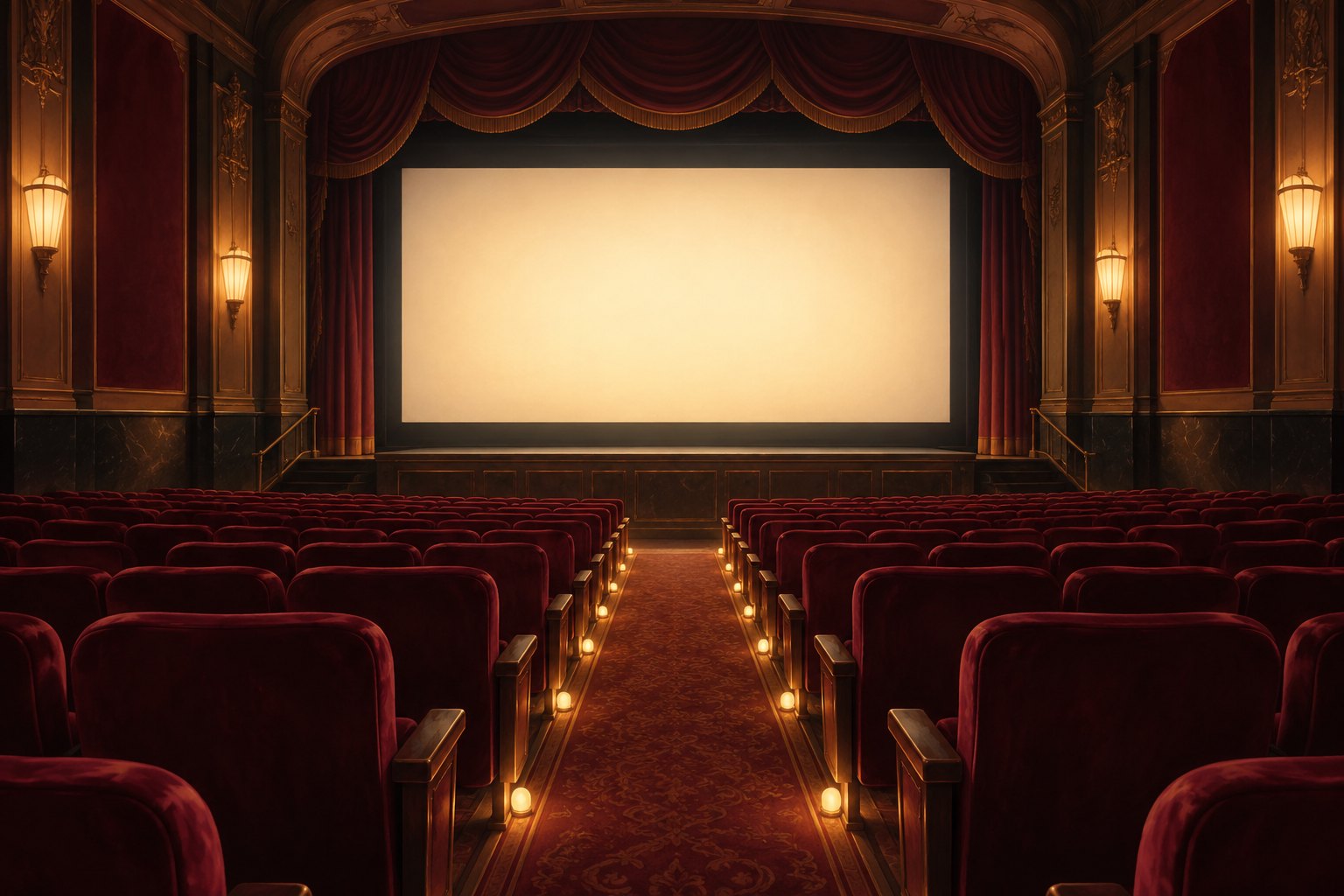
Life can feel like a movie when we pay closer attention to it. A familiar song changes a commute; afternoon light makes an unremarkable room worth looking at. Those pleasures are real. The trouble begins when cinematic beauty becomes a requirement—when an experience seems valuable only if it looks like a scene, and other people become supporting characters in the story we want to tell.
My answer to whether we should make life feel cinematic is a qualified yes: borrow cinema’s attentiveness, but be suspicious of its promises of control. Few films make that distinction more interesting than Perfect Days. Its central character appears to have perfected an ordinary existence. Watching him closely reveals how much that appearance leaves unresolved.
Spoiler warning: This critical essay discusses Hirayama’s family relationships and the ending of Perfect Days.
Hirayama makes repetition worth watching
Wim Wenders’ 2023 film follows Hirayama, played by Koji Yakusho, who cleans public toilets in Tokyo and finds pleasure in music, reading, and photography. These modest activities supply its dramatic foundation. [Criterion’s film overview](https://www.criterion.com/films/34274)
The initial temptation is to treat Hirayama as a lifestyle recommendation. Here is someone with a recognizable routine, cherished objects, and a seemingly reliable capacity for enjoyment. His world looks wonderfully manageable. But a character is more interesting than a prescription, and the film becomes richer when we stop asking how to copy his habits.
From Hirayama’s perspective, repetition provides a structure within which small differences matter. The viewer experiences something similar: once a routine becomes familiar, a change in expression or an interruption acquires weight. Wenders makes us wait long enough to register what a faster film might discard.
That is the film’s most persuasive achievement. It does not need to inflate an ordinary task into a heroic milestone to justify our attention. Its patience suggests that a day need not contain a breakthrough to deserve being experienced fully.
There is a useful connection here with our discussion of how a setting can deepen character. A place becomes meaningful through what people repeatedly do there, not simply through its attractiveness.
A beautiful routine still contains work
The danger in romanticizing Hirayama’s life is that we might admire its surfaces while overlooking its obligations. His occupation is not a decorative detail. Cleaning is useful work that requires effort, care, and repetition whether anyone finds it photogenic or not.
For me, the distinction between an appealing routine and an honest account of one lies in what happens when the pleasure disappears. Would the task still get done without the favorite song? Would care survive an inconvenient interruption? A cinematic attitude earns its place only if it helps someone remain present for the unlovely parts.
This also places a limit on the film’s usefulness as advice. No viewer should conclude that difficult employment becomes satisfying through better taste in music. Personal attention cannot settle questions of pay, exhaustion, or working conditions. The movie gives us one person to consider; turning him into a universal answer would flatten the very individuality that makes him compelling.
Private pleasure does not need an audience
Hirayama photographs the light in trees and keeps his pictures. The photographs have a place in his life without becoming a public identity. That detail matters because it separates making an image from needing recognition for having made it.

There is nothing inherently false about photographing a beautiful afternoon. Looking through a camera can make someone more observant. The question is what happens afterward: does the picture preserve an encounter, or does the encounter become an audition for a picture?
That distinction offers a practical way to evaluate the desire for a movie-like life. An experience can be deliberately beautiful and still belong to you. Arranging flowers, choosing a record, or taking a photograph does not automatically turn living into performance. Trouble starts when the imagined viewer becomes more important than the actual moment.
Hirayama’s appeal, in my reading, rests partly on that freedom from explanation. His pleasures do not require a persuasive caption. He does not have to establish that an ordinary lunch represents personal growth.
Niko tests whether his world has room for someone else
Hirayama’s niece, Niko, arrives after leaving home. She joins aspects of his routine rather than simply pulling him into a different lifestyle. Later, his sister’s arrival exposes family distance that his orderly days have not explained. Her question—“Are you really cleaning toilets?”—reveals a sharp difference in how they understand his life.
For Niko, her uncle’s habits can offer an alternative to the expectations she has left behind. For her mother, those same habits can be difficult to comprehend. Neither response gives the viewer a complete account of Hirayama. They show how one person’s peaceful arrangement can look very different from outside it.
The film also gives him a memorable response when Niko asks about a future outing: “Next time is next time. Now is now.” These exchanges are documented in [Criterion’s discussion of the film](https://www.criterion.com/current/posts/8536-perfect-days-where-the-light-comes-through).
The line sounds reassuring, but it deserves scrutiny. Attention to the present can be generous: it allows the person beside you to matter now. It can also become a defense against making promises or discussing what hurts. I do not think the film requires us to choose a single explanation for Hirayama.
This is where a beautifully organized life faces its hardest test. Other people arrive with needs that do not fit our preferred rhythm. A routine that supports connection has value beyond its appearance; one that cannot tolerate another person’s demands risks becoming a retreat.
The importance of giving others that independence also runs through our consideration of why romantic storytelling needs characters with agency. A satisfying personal narrative cannot require everyone else to follow a script.
The ending refuses a single emotional verdict
In the final driving sequence, with Nina Simone’s “Feeling Good” playing, Hirayama’s expression moves between smiling and tears. The film leaves those feelings together instead of resolving them into a simple declaration of happiness. [Criterion’s account of the closing scene](https://www.criterion.com/current/posts/8536-perfect-days-where-the-light-comes-through)
Yakusho’s performance makes this ending persuasive because the face remains more complicated than the idea we might want it to illustrate. A smile does not cancel the tears. The tears do not expose every earlier pleasure as fraudulent.
My strongest reading of Perfect Days is that its beauty depends on allowing incompatible feelings to remain visible. Its title need not describe days without disappointment. It can describe the wish to receive a day fully, without demanding that every part support the same mood.
That is a demanding answer to the question of living like a movie. We can take pleasure in framing, rhythm, and music. We can make ordinary hours more vivid. But we should resist editing our experience so aggressively that grief, obligation, or another person’s perspective disappears.
A life worth inhabiting does not have to sustain an atmosphere. It needs room for the moment that spoils the composition—and for the person who asks us to put the camera down.
Original content by this site's editorial team. Published: October 27, 2026 at 21:47:55 PDT (Los Angeles time)