
Sense and Sensibility makes romantic hesitation a serious problem: how do you recognize another person’s love when both of you have learned to conceal your own? Daisy Edgar-Jones’s Elinor Dashwood and George MacKay’s Edward Ferrars bring that question to the center of Georgia Oakley’s adaptation. The attraction of their pairing lies in a contradiction familiar far beyond Austen’s world. Consideration can make someone lovable while making that person almost impossible to read.
Spoilers: This critical reading discusses the romantic conflicts and character relationships described in published coverage. It draws on those accounts rather than a firsthand screening. Quotations identified as Austen’s words come from the novel and are not presented as verified dialogue from this adaptation.
Elinor’s Practicality Begins With Losing Security
Directed by Oakley and written by Diana Reid, the adaptation follows the Dashwood women after their father’s death destabilizes their circumstances. Elinor’s developing attachment to Edward is interrupted by the family’s move to a cottage, while Marianne becomes involved with Willoughby and attracts Colonel Brandon’s attention. Katie Walsh’s account describes these intertwined pressures of housing, money, and courtship. [Katie Walsh’s review](https://www.dailyherald.com/20261013/movies/movie-review-sense-and-sensibility-a-lush-earthy-and-embodied-adaptation-of-jane-austens-novel/)
That starting point matters more than the familiar shorthand of a sensible sister and an emotional one. Elinor’s caution has a practical purpose. A family facing reduced circumstances cannot resolve every disagreement through an outburst, however justified. Someone must consider what happens tomorrow, what can be afforded, and which uncomfortable relationship must be maintained.
My reading is that Elinor’s emotional burden comes from how easily competence becomes an assignment. Once everyone trusts her to remain composed, they have less reason to ask whether she is suffering. Her strength becomes a convenient explanation for overlooking her needs. The romantic question therefore extends beyond whether Edward loves her: can anyone recognize the cost of her apparent steadiness?
Edward’s Reserve Makes Affection Difficult to Interpret
Published descriptions place Edgar-Jones and MacKay’s relationship within a deliberately restrained style of courtship. Derek Smith’s account identifies a London dance in which Elinor and Edward’s guarded interaction occurs under the shadow of his commitment to Lucy Steele. That detail gives their hesitation a concrete obstacle; attraction alone cannot settle an existing obligation. [Derek Smith’s review](https://www.slantmagazine.com/film/sense-and-sensibility-review-daisy-edgar-jones-jane-austen/)
Edward’s predicament invites sympathy, but it also deserves scrutiny. A person can mean well and still leave someone else doing the painful work of interpretation. Elinor must distinguish affection from politeness while having little freedom to ask for certainty. Every hopeful inference exposes her to embarrassment; every defensive retreat risks concealing the very feeling she wants returned.
This is where restraint can become dramatically compelling. An unfinished exchange asks the audience to weigh possibilities rather than simply receive a declaration. Yet quietness needs consequences. If hesitation only delays a foregone conclusion, it becomes decorative. If it changes what Elinor believes she may hope for, it becomes action.
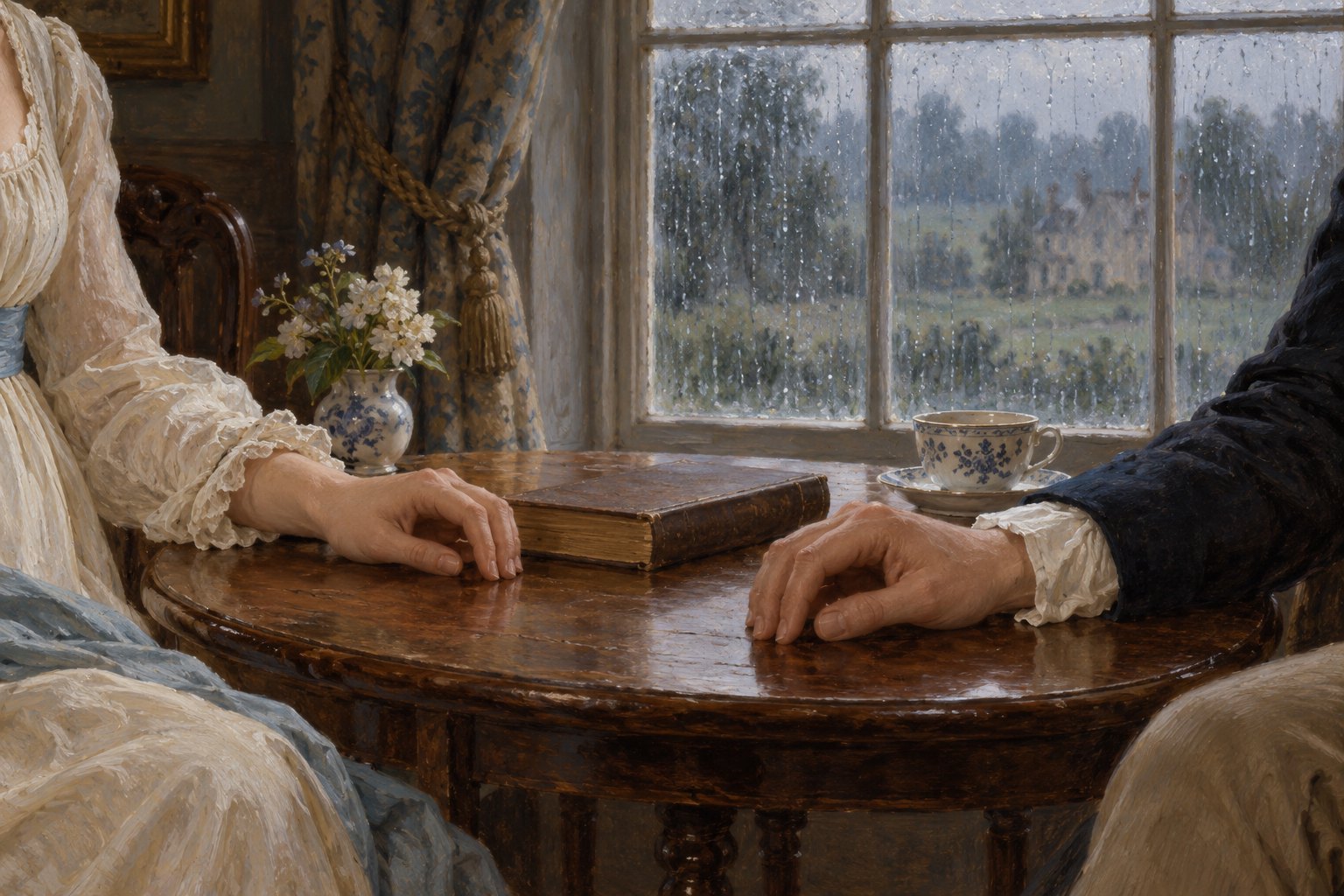
The appeal of Edgar-Jones and MacKay’s pairing, as described in the film’s coverage, is best understood through that tension. Emotional compatibility does not guarantee emotional communication. Two considerate people can be particularly skilled at protecting one another from the truth.
Marianne’s Openness Is a Different Kind of Risk
Esmé Creed-Miles plays Marianne, with Frank Dillane as Willoughby and Herbert Nordrum as Brandon. Smith describes a country dance that gives Marianne and Willoughby an expressive freedom contrasting with Elinor and Edward’s guarded encounter. The comparison offers a useful way into the sisters’ differences without reducing either woman to a personality label.
Marianne wants feeling to be recognizable. From her perspective, why should love look hesitant or require endless interpretation? The appeal of someone who appears to share her intensity is understandable. His enthusiasm seems to answer the question that Elinor cannot safely ask.
The danger is treating a convincing expression of feeling as evidence of dependable character. Excitement can be sincere in the moment without producing loyalty afterward. That distinction is more useful than dismissing Marianne as foolish: she mistakes one kind of truth for another.
Our analysis of attraction and vulnerability in Forty Love approaches a related question about romantic attention. Being intensely noticed can feel like being understood. Marianne’s story makes the difference between those experiences consequential.
What an Earthier Austen Can Reveal
Walsh describes Oakley’s visual approach through handheld camerawork, natural details, and the sisters’ physical ease outdoors. Such choices offer more than an alternative to polished drawing rooms. They can remind viewers that characters constrained by elaborate manners still experience desire through ordinary bodies: restlessness, proximity, discomfort, and the urge to move.
My reservation about any adaptation built around sensory immediacy is that atmosphere cannot carry the entire argument. Rough fabric and changing weather may make a fictional world tangible, but Austen’s social intelligence also depends on distinctions between what people say, what they mean, and what they can afford to admit. Physical intimacy becomes most revealing when those distinctions remain sharp.
The ideal balance would allow the countryside to register as pleasure while keeping financial dependence visible. A cottage can be beautiful and still represent diminished security. A dance can be exhilarating and still operate as an occasion for judgment.
The Sisters Need Each Other’s Way of Seeing
Austen gives Elinor a wonderfully dry reply to Marianne’s enthusiasm: “It is not every one ... who has your passion for dead leaves.” Elsewhere, Elinor insists that “sense will always have attractions for me.” These lines from the novel are useful companions to the adaptation because they give practicality a voice with wit and appetite. [Jane Austen’s novel](https://www.gutenberg.org/cache/epub/161/pg161-images.html)
Elinor is capable of enjoying her own preferences. Marianne is capable of making those preferences feel insufficient. Their disagreements matter because neither sister can simply supply the other with a correct answer. Elinor needs room to acknowledge longing; Marianne needs a way to evaluate what longing promises.
That reciprocal education makes sisterhood more than a comforting background to romance. A sister can remember the person you were before a courtship began and notice the ways you have changed to sustain it. She can also misread you precisely because she thinks she knows you so well.
Readers interested in how family relationships complicate a character’s understanding of the past may also appreciate our discussion of family memory in Coco and Ghostbusters: Afterlife. Here, the essential act of recognition happens between people still learning how to listen to each other.
Love Must Make Room for an Inner Life
The deeper value of Sense and Sensibility lies in its resistance to a single approved way of feeling. Elinor’s restraint should not require permanent self-denial. Marianne’s openness should not make disappointment a punishment she deserves. Each woman needs judgment and emotional freedom in proportions that her circumstances make difficult to achieve.
That is the most productive lens for Edgar-Jones and MacKay’s romance: whether affection allows Elinor to become more fully visible. A satisfying declaration must do more than end uncertainty. It must recognize that the quiet person has been living an intense emotional life all along.
Original content by this site's editorial team. Published: October 16, 2026 at 10:02:45 PDT (Los Angeles time)