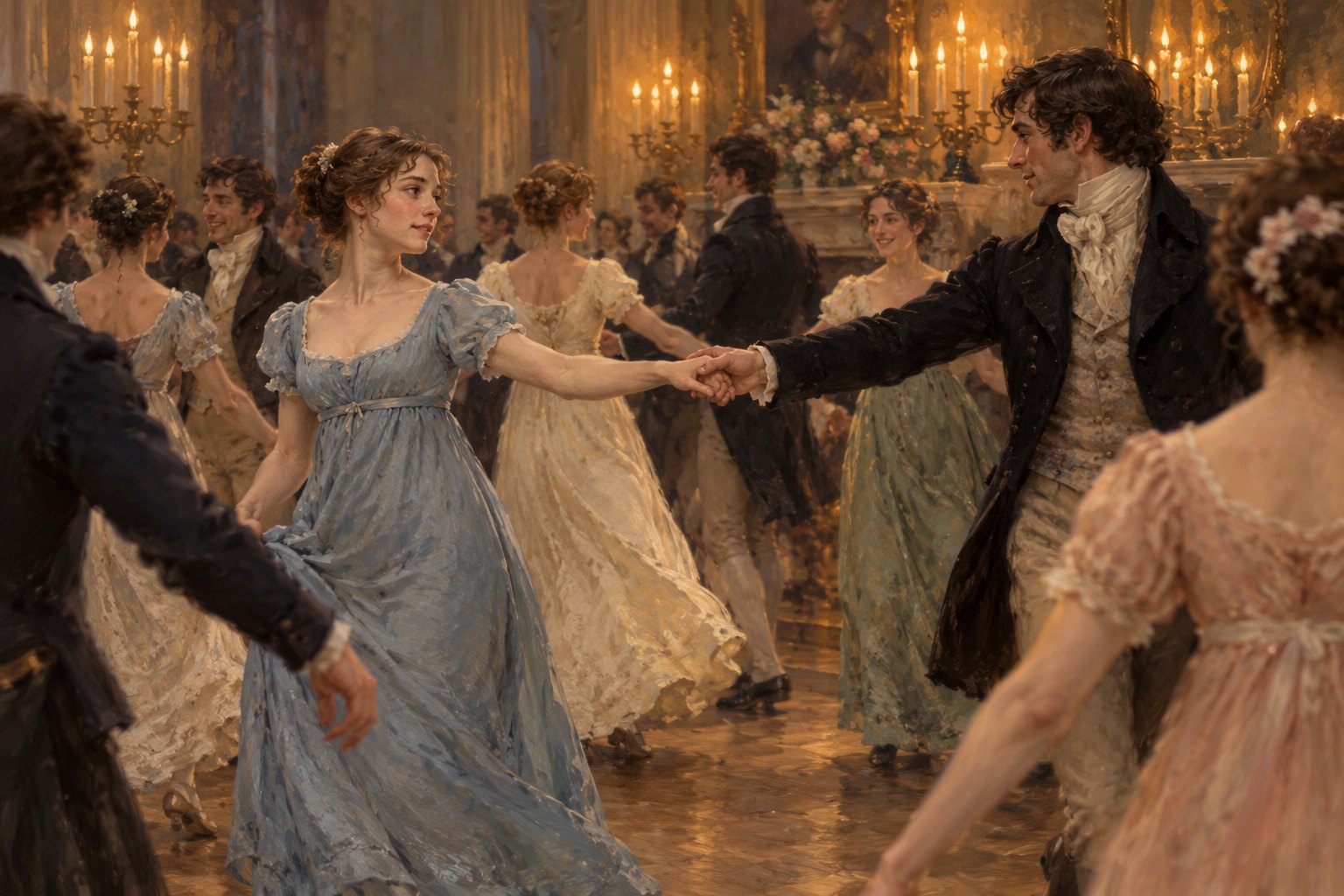
Sense and Sensibility succeeds most persuasively when it treats understanding a sister as something every bit as difficult as finding a husband. Georgia Oakley’s 2026 adaptation, written by Diana Reid, gives Jane Austen’s familiar romantic dilemmas an immediate emotional purpose: Elinor and Marianne Dashwood must learn that someone else’s feelings can be profound even when they look nothing like their own.
Daisy Edgar-Jones plays Elinor opposite Esmé Creed-Miles as Marianne. Their contrasting temperaments give the film its tension, but the deeper attraction lies in watching those categories become inadequate. Sensible people can suffer desperately. Passionate people can learn to listen. The result is an engaging interpretation whose emotional directness is both its greatest strength and its occasional limitation. The principal casting and creative credits are confirmed in the [studio’s production announcement](https://www.focusfeatures.com/article/sense-and-sensibility_rounds-out-cast-and-begins-filming).
Spoiler warning: The following analysis discusses romantic betrayals, the sisters’ reconciliation, and the ending. The illustrations are interpretive artwork, not film stills.
A family’s loss makes romance a practical problem
The Dashwoods’ troubles begin with their father’s death and the transfer of their home to their half-brother. Losing financial security changes the meaning of every subsequent invitation, introduction, and possible attachment. A marriage might provide affection, but it might also determine whether a woman has a stable place to live.
Fanny Dashwood’s question, “Why must dying people always wish for something extravagant?” makes selfishness sound like reasonable housekeeping. The joke exposes how easily an obligation to vulnerable relatives becomes an unreasonable demand in the mind of someone protecting her own comfort. That line appears among the film’s [documented dialogue excerpts](https://www.ranker.com/list/quotes-from-sense-and-sensibility).
From Elinor’s perspective, prudence is therefore more than a personality trait. Someone must think about what the family can afford and what other people’s promises actually mean. Marianne’s refusal to calculate love is equally understandable: she wants one part of life to remain untouched by bargaining. Their disagreement grows out of the same insecurity, even when each mistakes the other’s response for a defect.
Elinor’s composure has a cost
Edgar-Jones’ Elinor makes restraint interesting because it requires work. Her attraction to Edward Ferrars, played by George MacKay, develops around mutual reserve. Neither seems comfortable treating personal happiness as a claim other people must recognize. Their compatibility is appealing, but it also produces a painful problem: two considerate people can keep postponing honesty until consideration becomes another form of avoidance.
“I like him! I greatly esteem him.” Elinor’s careful language gives affection a respectable disguise. The comedy lies in how much feeling escapes through an expression intended to contain it. Esteem sounds manageable; wanting a future with someone is considerably harder to admit.
Lucy Steele’s disclosure of her engagement to Edward turns that habit of containment into an ordeal. Elinor must absorb information that changes her own future while continuing to behave as though she is merely receiving somebody else’s confidence. The emotional cruelty lies in the unequal situation: Lucy can speak about Edward, while Elinor has little room to acknowledge why listening hurts.
My reading of Elinor’s predicament is that self-command becomes dangerous when everyone benefits from it except the person exercising it. Her reliability encourages others to assume that she needs less care. That question of who supplies a family’s emotional support also runs through our analysis of caregiving and dependence in Klara and the Sun.
Marianne mistakes intensity for evidence
Marianne’s attraction to Willoughby depends on the exhilarating feeling of being immediately understood. Frank Dillane’s character offers the romantic possibility she wants to believe in: affection that arrives confidently and appears to need no cautious qualification.
His withdrawal exposes the weakness in that interpretation. Marianne treats the strength of her experience as evidence of his commitment. When he turns toward a wealthier marriage, the injury reaches beyond rejection. She must reconsider whether the intimacy she trusted meant the same thing to both participants.
Creed-Miles’ Marianne is most interesting when her certainty becomes a limitation on sympathy. Because she makes suffering visible, she can mistake Elinor’s privacy for emotional immunity. That is a recognizable failure of imagination: assuming another person cannot be devastated because they continue answering questions and completing ordinary tasks.
The film’s premise is consequently richer than a lesson about choosing sensible men. Marianne needs better judgment, but she also needs a broader understanding of other people. Learning to recognize hidden pain matters as much as recognizing unreliable charm.
The sisters’ confrontation changes the story
When Elinor finally reveals the depth of her distress, Marianne must revise her understanding of the person closest to her. Their embrace matters because affection has acquired knowledge. She is no longer comforting the idea of a dependable older sister; she is responding to a particular woman who has been hurting.
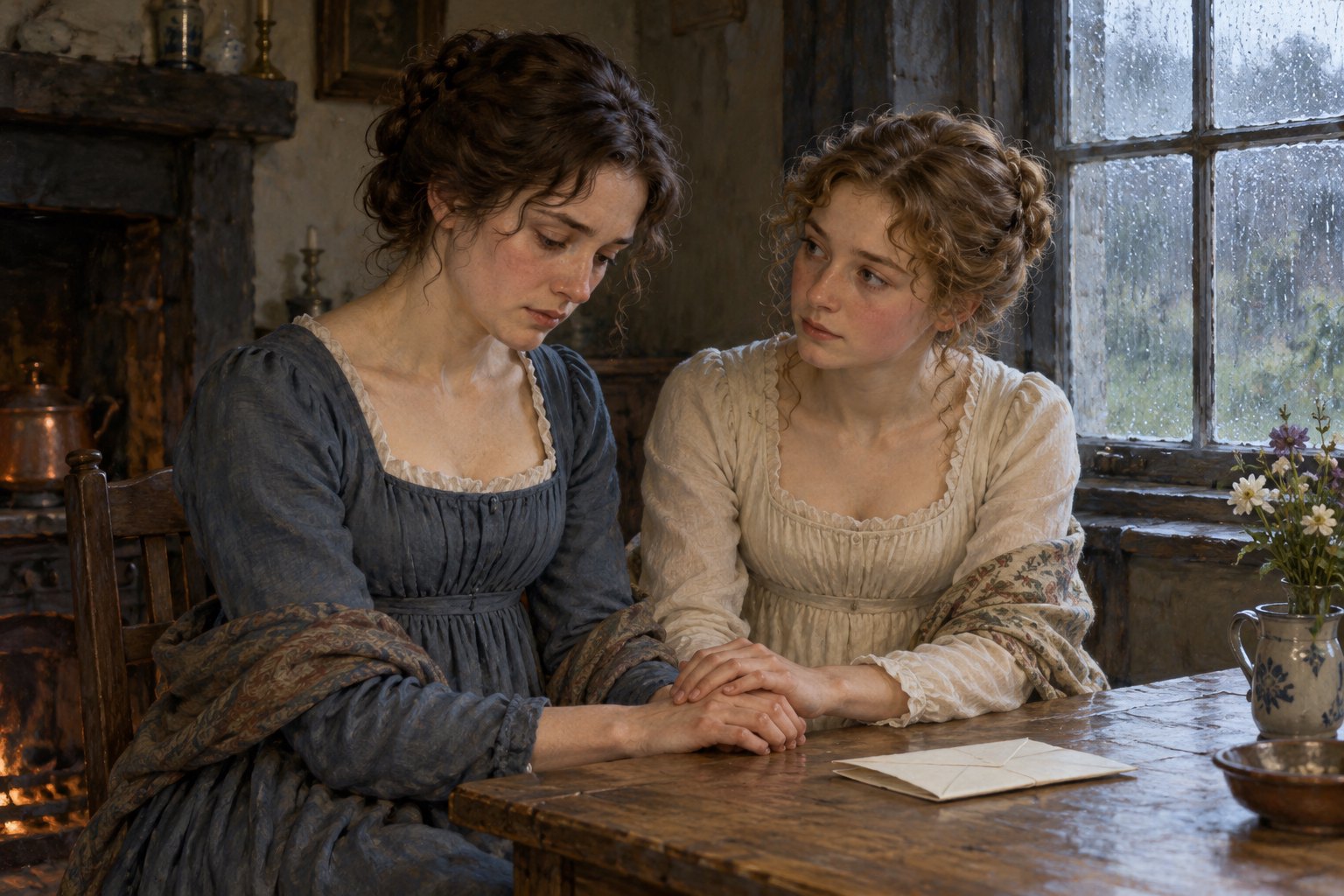
This is where the adaptation makes its clearest claim to a fresh perspective. Romance creates the circumstances, but the sisters’ changing relationship gives those circumstances meaning. Reid has described centering that relationship in her [interview about adapting Austen](https://www.townandcountrymag.com/leisure/arts-and-culture/a73763307/sense-and-sensibility-book-vs-2026-movie/).
The dramatic principle is simple and effective: revelation should alter how one character treats another. It is also central to our discussion of character judgment and ordinary kindness in Fargo, although the films reach that territory through very different worlds.
Open landscapes make private feeling visible
Oakley’s use of outdoor space gives the characters somewhere to express feelings that drawing-room behavior restricts. The landscapes surrounding Elinor and Edward suggest possibility; the rain accompanying Marianne’s distress makes emotional exposure physically uncomfortable. The film’s outdoor romantic resolutions extend that visual pattern, as described in [Daily Bruin’s account of the film](https://dailybruin.com/2026/10/16/film-review-sense-and-sensibility-successfully-brings-austens-classic-to-the-modern-screen).
This approach is accessible, but its clarity carries a tradeoff. Weather can tell us how to interpret a moment before the characters have made it complicated. Likewise, expansive romantic gestures provide release while potentially diminishing the awkward, unresolved feelings that make Austen’s social encounters so revealing.
For me, the film is strongest when its expressive setting supports an uncertain face or a difficult exchange. Beauty becomes dramatically useful when it gives us time to notice hesitation. It becomes less interesting when it supplies the entire emotional answer.
The ending asks what love should allow
Marianne’s movement toward Colonel Brandon offers a different measure of attachment: whether affection can accommodate another person’s pace. Elinor’s eventual movement toward Edward asks a related question from the opposite direction. Can a woman accustomed to managing disappointment act openly when happiness becomes possible?
The satisfying answer does not require either sister to abandon herself. Marianne can retain passion while becoming more attentive. Elinor can retain judgment while admitting that her own desires deserve expression. Each needs something the other has understood imperfectly all along.
That is the deeper achievement of this Sense and Sensibility. Marriage supplies resolution, but recognition supplies growth. Its most useful idea is that maturity involves becoming more accurate about other people’s inner lives—and allowing them a more accurate view of yours. Oakley’s adaptation earns its emotional appeal through that exchange, giving Austen’s sisters room to be mistaken, wounded, funny, and finally better understood.
Original content by this site's editorial team. Published: October 18, 2026 at 04:33:09 PDT (Los Angeles time)