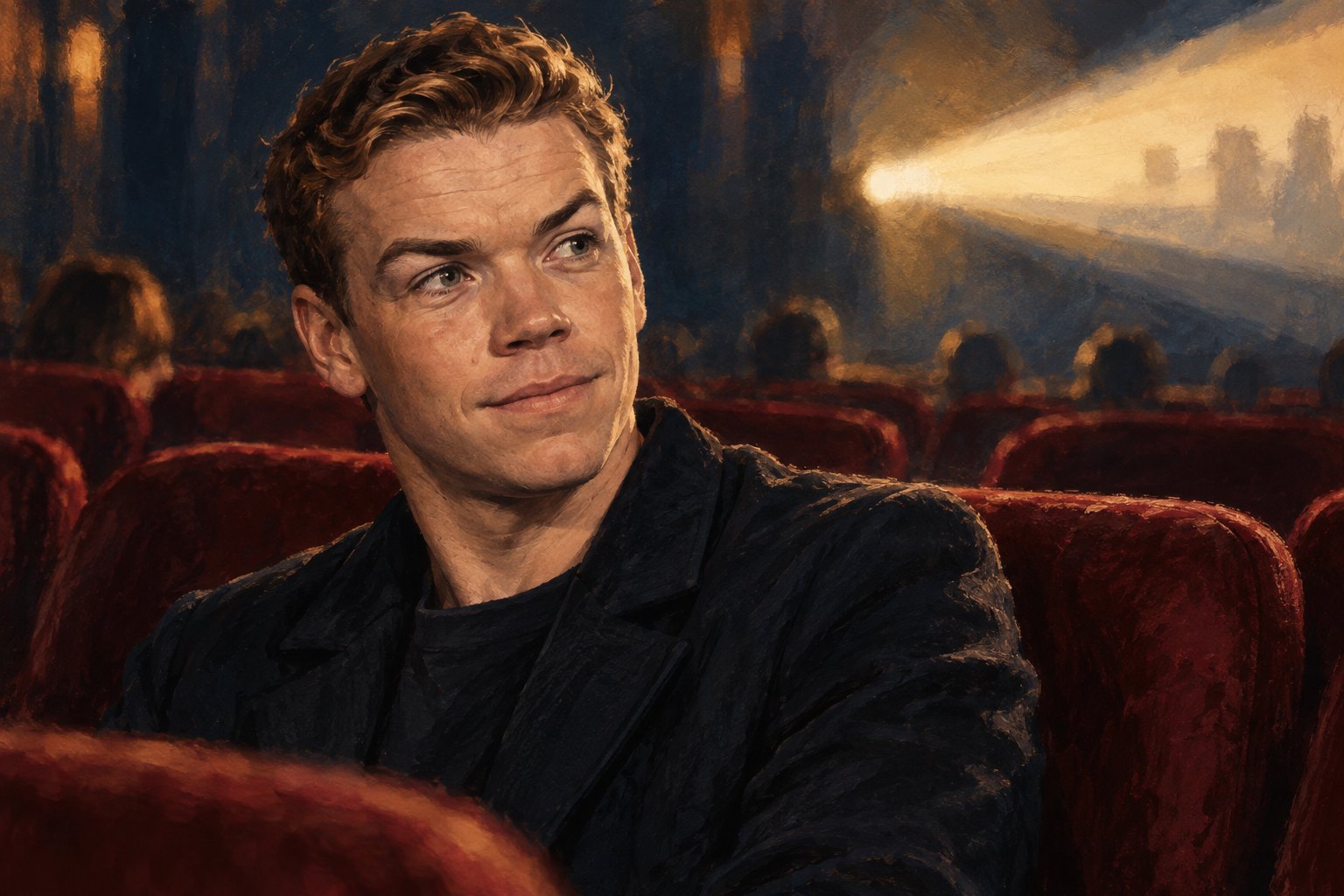
Richard Gadd is among 11 actors cast in the Bad Bunny-led Porto Rico, according to Deadline. That is the central development: Gadd is part of a broader casting announcement for a film whose lead is Bad Bunny. It is a reason to pay attention, though it does not yet establish what Gadd’s character wants, how much screen time he has, or how his performance fits the story.
The interesting question is what happens between recognizing an actor and believing a character. Audiences bring associations into a movie; the movie must give those associations somewhere to go. For Porto Rico, Gadd’s involvement invites a closer look at that transition, particularly alongside a lead whose name already anchors the coverage.
This is spoiler-free casting commentary, not a review of the finished film. A character-based verdict, memorable dialogue, and an interpretation of the ending require the work itself. The announcement supports an examination of expectations, without turning those expectations into invented scenes.
What the casting announcement actually tells us
Two distinctions matter. First, Gadd is among 11 actors in this casting news; the number should not be read as a complete count of everyone appearing in the movie. Second, being featured prominently in coverage does not establish a performer’s position within the narrative. A recognizable addition might play a central figure, a brief but consequential part, or something between those extremes.
Nor does the pairing of Gadd’s name with Bad Bunny’s prove that they share scenes. Publicity naturally places names together. A screenplay organizes people through relationships, locations, time, and competing objectives. Those arrangements cannot be reconstructed from a headline.
For readers following Porto Rico, the useful takeaway is therefore specific: the casting news gives another point of interest beyond the lead. It does not, by itself, answer questions about the film’s emotional center or dramatic structure. Those remain questions worth asking, rather than blanks to fill with confident guesses.
Gadd’s role should be allowed to surprise us
One of the pleasures of following actors is seeing them resist the expectations attached to their names. That pleasure disappears when an announcement is immediately treated as evidence of a particular character type. Nothing in this casting development establishes that Gadd will be threatening, sympathetic, comic, wounded, or morally ambiguous.
My preference is to leave that space open. An actor’s arrival becomes artistically meaningful through choices: the speed of an answer, the effort required to maintain composure, the difference between what a character says and what another person hears. These are qualities a performance reveals over time. They cannot be promised by casting alone.
There is also a distinction between a character who attracts attention and one who changes our understanding of the story. A small part can expose a contradiction in the lead. A large part can remain emotionally remote. When Gadd’s performance can be assessed, the useful question will be what becomes visible because his character is there.
Our discussion of how a new perspective could change the way audiences read Cliff Booth considers a related problem: knowing more about a figure does not automatically make that figure more compelling. What matters is how the additional perspective changes interpretation.
Bad Bunny’s lead status raises a question of perspective
Calling Porto Rico a Bad Bunny-led film identifies its headline performer. It does not necessarily tell us whose understanding of events the audience will share. A protagonist can occupy most of the screen while other characters quietly determine the moral perspective of a movie.
That distinction is especially useful when approaching a film through a famous name. We may expect the camera to confirm the lead’s importance. More revealing filmmaking can let another character interrupt that authority: by noticing something the lead misses, refusing an explanation, or responding in a way that complicates our sympathy. These are general dramatic possibilities, not descriptions of Porto Rico scenes.
My critical interest in the Gadd announcement lies here. If the finished film gives its supporting characters independent ways of seeing, their presence could make the lead more legible without making him easier to judge. The measure would be the specificity of those perspectives, not how many recognizable faces appear.

Why the reaction may matter as much as the line
Character analysis often starts with dialogue because words are easy to remember and quote. Yet a film can relocate the meaning of a line simply by cutting to the listener. A declaration may sound persuasive until another face registers doubt. Silence can suggest agreement, fear, calculation, or an unwillingness to participate.
That is why judging the eventual performances will require attention to editing and framing as well as delivery. Does a scene stay with the speaker? Does it allow the listener a response? Does a cut resolve uncertainty or make it harder to ignore? The same exchange can feel very different depending on where the film asks us to look.
No dialogue from Porto Rico is quoted here because this casting development provides no basis for selecting or interpreting a line from the film. A quotation should illuminate a scene that can actually be examined. Attaching imagined dialogue to a performer would create a false impression of access.
The importance of listening also runs through our character-focused reading of Life of Brian, where the distance between speaking and being understood provides a concrete basis for criticism. Porto Rico will need to be read through its own particular exchanges.
The deeper question behind the names
The most promising way to approach this announcement is with curiosity about who these performers will become inside the film. Gadd’s casting is news; the character’s significance must emerge from the work. Bad Bunny’s lead status establishes prominence; the performance must establish a person whose decisions we can follow.
For me, the eventual test is whether recognition gives way to attention. There is a point in a persuasive performance when viewers stop anticipating what an actor might do and start worrying about what a character will choose. That shift is where casting becomes drama. Porto Rico has another name worth following, and the meaningful verdict will depend on what happens after the recognition fades.
Original content by this site's editorial team. Published: September 17, 2026 at 16:37:29 PDT (Los Angeles time)