Zach Cregger’s Resident Evil has a compelling organizing idea beneath its monsters: getting somewhere does not necessarily mean getting safe. For Bryan, the medical courier played by Austin Abrams, a destination promises an end to uncertainty. Read through his journey, the reboot becomes a story about that promise repeatedly breaking down. Its potential appeal lies in the tension between the audience’s appetite for another grotesque surprise and the character’s increasingly reasonable desire for the night to stop.
Spoiler notice: This article discusses the opening setup, reported locations, and brief dialogue. It offers a critical interpretation of scenes described in published reviews, rather than a firsthand screening verdict; the ending is not discussed.
A delivery route gives the nightmare a direction
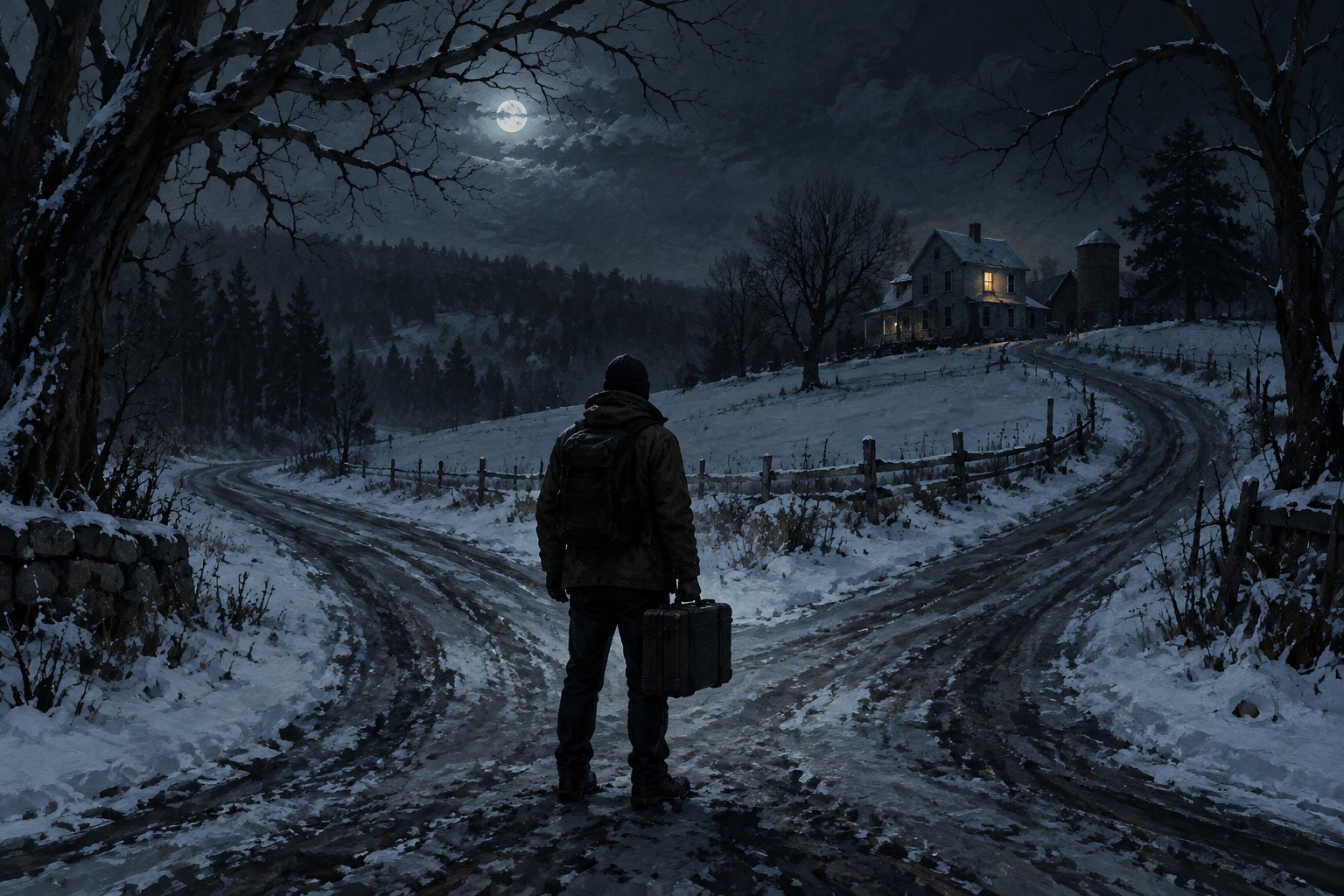
Variety describes an opening in which Bryan delivers an organ to a hospital before accepting another urgent assignment. A snowy drive and a roadside collision interrupt that apparently straightforward task. The review presents the film as an episodic journey through escalating dangers, beginning with an isolated farmhouse. [Variety’s review](https://au.variety.com/2026/film/global/resident-evil-review-zach-cregger-40441/)
The courier premise does useful dramatic work. Bryan starts with a route, a responsibility, and an expected handoff. Those are modest things, but they establish a version of the world in which actions lead to understandable results. Pick something up, take it somewhere, give it to the appropriate person. Horror can then attack the assumptions holding that sequence together.
From Bryan’s perspective, pressing forward need not initially feel heroic. It can simply feel more sensible than abandoning the only plan he has. That distinction matters: a character does not need to understand an unfolding catastrophe to have a believable reason to move through it.
My reading is that the delivery job provides an especially effective source of suspense because it makes arrival measurable while leaving safety uncertain. We can understand what progress looks like without knowing whether progress will help. The destination remains a practical objective even as the meaning of reaching it becomes unstable.
A farmhouse carries expectations before anything happens inside
A house encountered during a dangerous night is never merely a building. It suggests warmth, a telephone, another person, perhaps a chance to explain what happened. The familiar appearance of shelter invites a frightened traveler to fill in missing information optimistically.
That makes the farmhouse setting significant even without cataloging its surprises. Bryan’s predicament asks the viewer to recognize why someone would approach a place that horror audiences instinctively distrust. He needs the building to perform its ordinary function. We have the luxury of expecting it to fail.
This gap between character knowledge and audience expectation can generate both dread and comedy. A viewer may anticipate trouble long before a protagonist has enough evidence to justify retreat. The crucial question is whether the film makes that delay understandable. Suspense weakens when a character ignores obvious information; it strengthens when every available choice carries a plausible cost.
Our discussion of Bryan’s compassion under pressure approaches his decisions through their moral consequences. The spatial reading adds another consideration: sometimes the troubling choice begins before he meets anyone, simply with deciding which doorway offers the best chance of help.
Medical spaces make the threat more personal
The Associated Press describes later environments including an elevator shaft, a laboratory, sewers, and a disturbing maternity ward. It also records Bryan’s exasperated admission, “It’s confusing in real life!” and, elsewhere, his protest, “This isn’t real.” Those brief lines capture a man struggling to reconcile events with his existing understanding of the world. [The Associated Press review](https://apnews.com/article/82a73a5e863c0b726fcbf001038323a0)
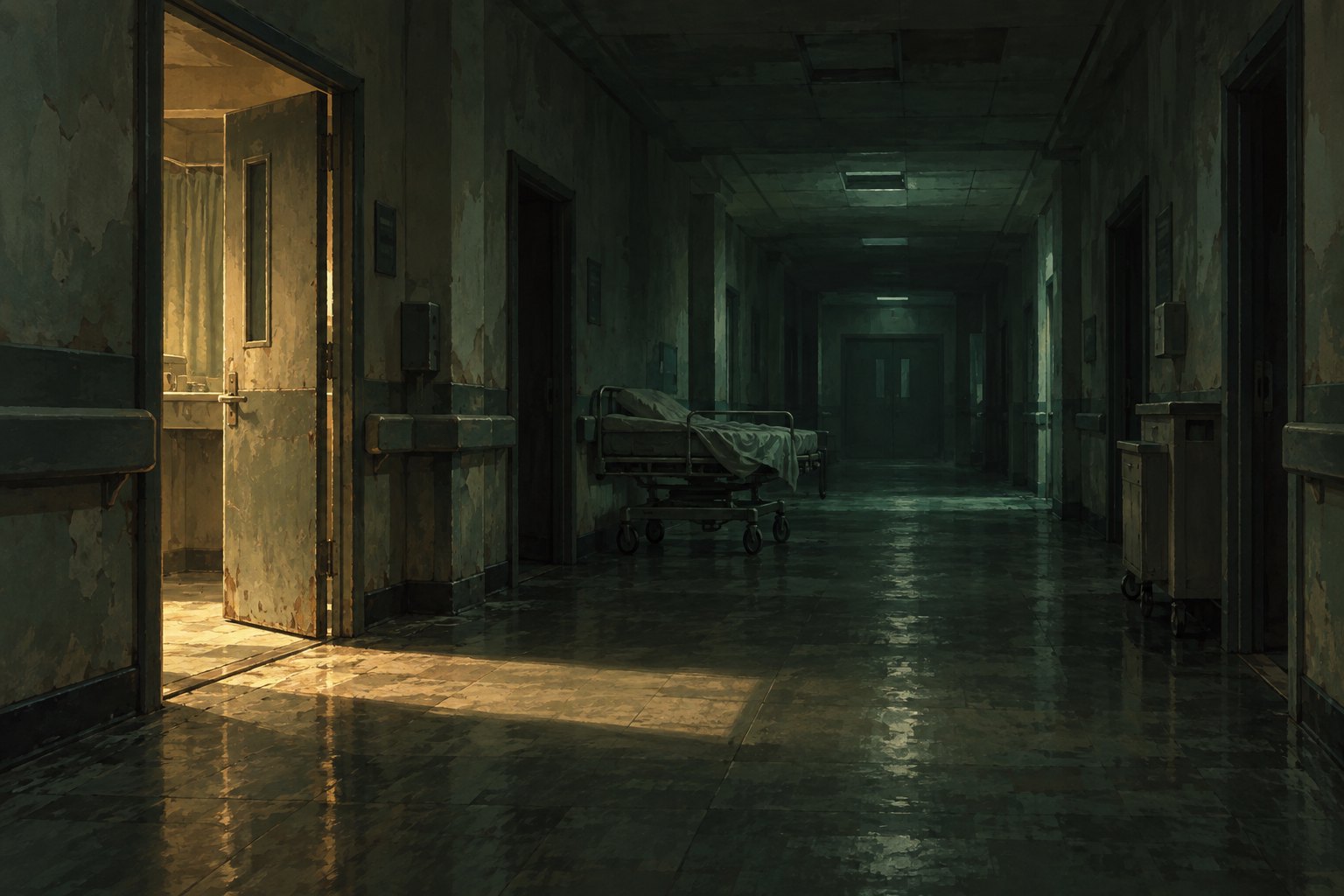
A hospital has a different emotional function from an unfamiliar house. It represents organized care: people trained to recognize injury, equipment intended to keep bodies functioning, procedures that turn panic into action. For a medical courier, it also belongs to the normal geography of work.
That familiarity creates an interpretive opportunity. A threatening medical environment does more than replace comfort with danger. It unsettles the distinction between bodily damage and the systems supposed to contain it. Corridors and treatment rooms become disturbing because their intended purpose remains recognizable.
I would resist treating every such image as proof of a comprehensive institutional allegory. A location can produce a powerful association without delivering a complete political argument. Here, the more immediate reading is enough: Bryan’s professional world supplies places that should make sense, while the nightmare strips that sense away.
His voice becomes a temporary refuge
“It’s confusing in real life!” is funny because it sounds like an everyday complaint applied to circumstances wildly beyond everyday experience. It also distinguishes knowing the vocabulary of danger from being able to act inside it.
That distinction is explored further in our analysis of Bryan’s uncertain survival skills. Here, what interests me is the function of speaking itself. Naming confusion gives a character a small amount of distance from it. The situation may be incomprehensible, but the sentence still has a beginning and an end.
“This isn’t real” works differently. As language, it attempts to reject evidence rather than organize it. Placed within a survival story, that kind of denial exposes the lag between what a person can see and what they can emotionally accept.
These responses suggest a useful way to understand horror comedy. Humor need not announce that the danger is harmless. It can preserve the recognizable person experiencing it. A complaint, an objection, or a baffled remark briefly restores the scale of ordinary life against something monstrous.
Constant movement has a dramatic cost
The structural risk is repetition. If each new location offers hope and then withdraws it, viewers may eventually stop investing in the offer. Anticipation becomes a checklist: enter, encounter, escape, repeat.
For this kind of movie, escalating creature designs cannot alone solve that problem. The stronger dramatic test is whether Bryan carries something forward from one encounter to the next. Does an experience alter how he assesses a room, responds to another person, or understands his destination? Those changes would give movement cumulative meaning.
This is also why a character’s moments of hesitation matter. Continuous flight can flatten different experiences into the same urgency. A pause allows viewers to register what has been lost, what remains possible, and why the next decision differs from the last.
The deeper fear is losing the meaning of shelter
The most persuasive interpretation of Bryan’s route is that survival requires him to revise a map he once trusted. Roads connect destinations. Houses offer shelter. Hospitals provide care. Those expectations ordinarily let people navigate without treating every step as a fresh crisis.
Resident Evil becomes interesting when those expectations are no longer dependable. Its monsters can supply the immediate spectacle, but the underlying fear is recognizable: familiar surroundings remain physically present while ceasing to function as promised.
That is the distinction worth watching for in Cregger’s reboot. A succession of dangerous rooms can entertain. A journey that changes what a person believes a safe room looks like can leave something behind after the monsters disappear.
Original content by this site's editorial team. Published: September 16, 2026 at 17:57:27 PDT (Los Angeles time)