Resident Evil has a straightforward invitation for viewers who have never played the games: imagine taking one more delivery job and discovering that nothing you know about getting through a workday applies anymore. The appeal of Zach Cregger’s film, considered through its reported story and character details, rests on that mismatch. Bryan’s vulnerability gives newcomers something more immediately useful than franchise knowledge: a person whose confusion they can understand.
Seattle Refined’s positive assessment emphasizes the film’s appeal beyond gamers. That is a promising distinction, but accessibility and gentleness are different things. This is bloody survival horror. Its potential welcome comes from an understandable predicament, not from making the danger less grotesque.
Spoiler note: The following analysis discusses the setup, Bryan’s behavior, and brief dialogue excerpts. It does not explain the ending.
A delivery job makes the nightmare personal
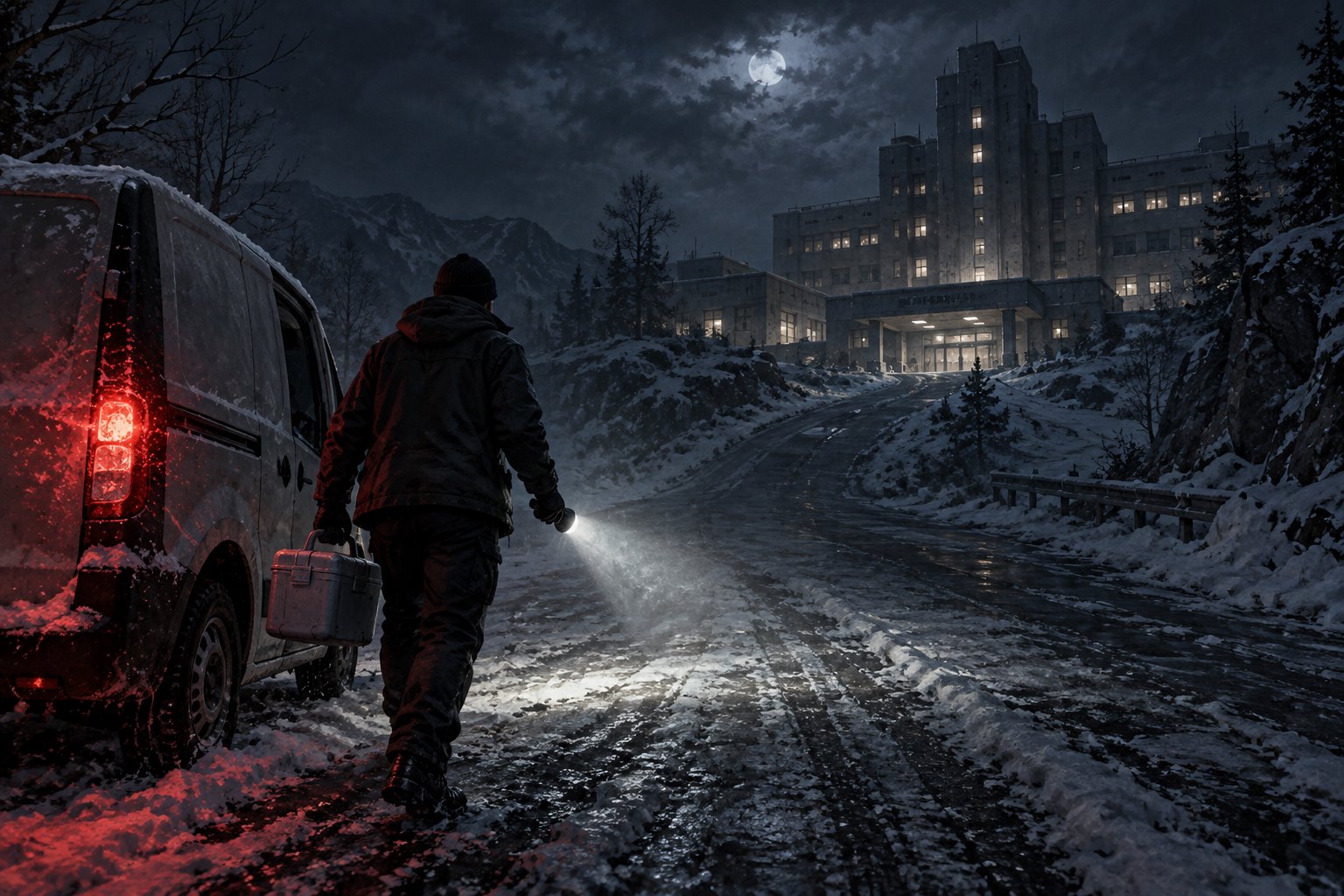
Austin Abrams plays Bryan, a medical courier whose extra assignment takes him toward Raccoon City General Hospital. According to The Independent’s account, he accepts double pay while facing an unplanned pregnancy at home. His journey turns disastrous after he strikes a woman on a snowy road and initially mistakes her condition for shock. Those details establish both a practical reason to keep working and a dangerously inadequate understanding of what he has encountered. [The Independent’s review](https://www.the-independent.com/arts-entertainment/films/reviews/resident-evil-review-zach-cregger-b3051893.html).
The money matters to a character-centered reading. An additional delivery is a recognizable calculation: a little more discomfort now might make tomorrow easier. Bryan does not need an elaborate heroic calling to enter the story. He needs an incentive that sounds reasonable before the circumstances change.
That makes his predicament more interesting than a simple punishment for curiosity. My reading is that the setup connects responsibility with exposure. The same impulse that sends someone back out to earn more money can put him somewhere he should never have been. The ordinary logic is sound; the surrounding world has become impossible.
For a newcomer, this is sufficient orientation. You can understand what Bryan wants before understanding what threatens him. The film’s mythology can arrive later, because his immediate problem already has emotional weight.
Being frightened is different from being useless
Slant describes Bryan as an inexperienced fighter whose attempts to avoid danger or help a child can leave him taking the punishment. Its account also emphasizes his failure to recognize useful objects and opportunities around him. This is a protagonist whose instincts and skills do not reliably match the situation. [Slant’s review](https://www.slantmagazine.com/film/resident-evil-review-austin-abrams-zach-cregger/).
That distinction is crucial. Fear does not automatically erase decency, and decency does not automatically produce good tactics. A person can make an understandable choice that becomes a terrible survival decision. Watching that contradiction is potentially more involving than watching someone solve every problem correctly.
There is a limit, however. Repeated incompetence becomes tiresome when a film treats its lead as an object to knock around. The useful critical question is whether Bryan’s mistakes remain expressions of a frightened person’s judgment. If a bad decision follows from incomplete information, it deepens our involvement. If it exists only to arrange another attack, it weakens the character.
This is where a non-gamer’s perspective can be especially valuable. Without recognizing a missed resource or familiar convention, the viewer evaluates the behavior on human terms. Does the choice make sense to somebody who is exhausted and terrified? That is a tougher test than whether it reproduces a recognizable gameplay mistake.
The smallest objects carry the biggest promises
A medical delivery creates an unusually effective tension between an object’s practical purpose and its dramatic burden. A package is supposed to travel from one place to another. Someone accepts it; the job ends. Horror can dismantle that comforting sequence without needing to explain its entire universe.
Through Bryan’s perspective, completing a task can become a way of holding on to order. When everything else is incomprehensible, a destination remains comprehensible. That does not establish that he is right to keep moving toward it. It explains why continuing might feel easier than admitting that the rules governing his work have disappeared.
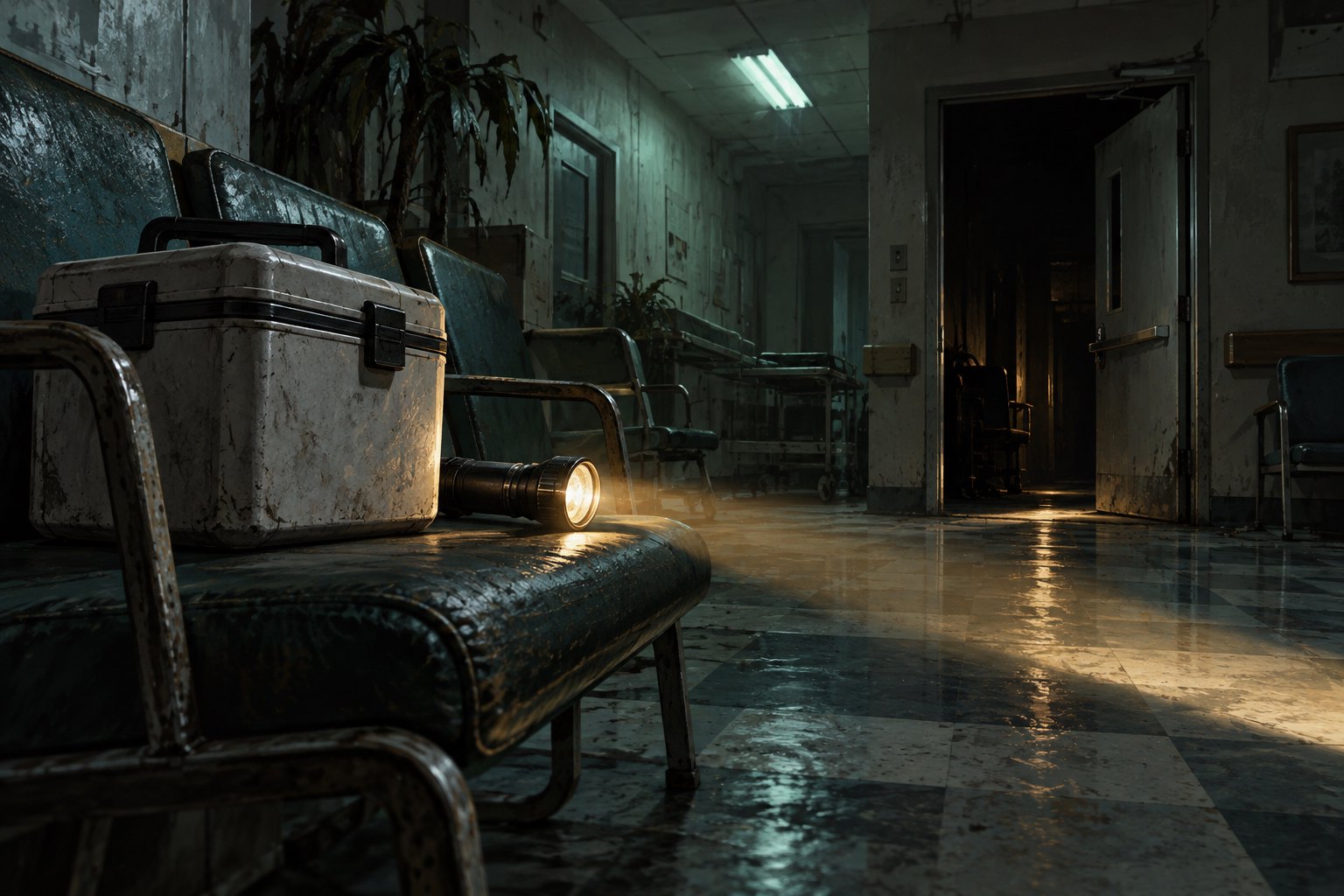
The illustration above captures that tension symbolically: an ordinary piece of equipment becomes a fragile point of order in an unsafe environment. It is conceptual artwork, not a reconstruction of a movie scene.
For readers interested in the broader character question, our analysis of how Hope keeps creature spectacle connected to human decisions offers a useful companion. Monsters gain dramatic force when someone must decide what to do about them.
Ordinary language makes room for the absurd
Two short Bryan lines illustrate the distance between the nightmare and the person experiencing it: “It seems kind of important” and “I just wanted you to know I love you.” The former belongs to his attempt to find a recipient for the delivery; the latter addresses the possibility of losing contact with someone he loves. [Published dialogue excerpts](https://www.ranker.com/list/quotes-from-resident-evil/sarah-oneill).
The first phrase is funny because its scale is so inadequate. A courier’s modest insistence survives inside circumstances that demand something much louder. Its appeal does not depend on recognizing a game reference. It depends on hearing familiar workplace language fail to contain an extraordinary emergency.
The second line points toward a different value. Love supplies a reason for survival beyond the continuation of the chase. Bryan has a life elsewhere, and that life cannot be reduced to the delivery or the next obstacle.
My interpretation is that the strongest possible relationship between these registers is cumulative: the nervous understatement makes him recognizable, and the direct expression of love makes that recognition matter. Comedy earns emotional weight when we laugh at behavior while continuing to care about the person behaving that way.
What the gore needs from Bryan
The promise of a good time should not excuse empty repetition. For this kind of horror to sustain itself, escalation must change Bryan’s relationship to danger. A larger threat can increase spectacle; a threat that defeats his latest assumption can increase suspense.
The difference matters because newcomers have fewer recognition-based rewards to fall back on. Their investment must come from anticipation, surprise, and concern. The relevant question is not simply how inventive a monster looks, but what its arrival forces Bryan to reconsider.
Our separate examination of the critical debate over Resident Evil’s horror and character payoff explores the reception more broadly. Here, the narrower judgment is that Bryan’s lack of mastery is the film’s most accessible dramatic resource—and something its comedy must handle carefully.
A deeper reading: survival without expertise
Viewed through Bryan, Resident Evil raises an uncomfortable possibility: accepting responsibility does not equip you to fulfill it. Working harder, caring about others, and wanting to get home are meaningful impulses, but none guarantees control.
That is why the ordinary-person perspective has value beyond making a franchise approachable. It challenges the comforting assumption that a crisis will reveal hidden competence on schedule. Bryan’s predicament asks us to stay interested in someone before he has earned the reassuring outline of a hero.
For non-gamers, that is the strongest reason to engage with this bloody nightmare. You do not need to recognize the world’s references to recognize the fear of being unprepared—or the stubborn hope that finishing one necessary thing might help you find your way home.
Original content by this site's editorial team. Published: September 19, 2026 at 01:15:59 PDT (Los Angeles time)