Reading the World brings Brazilian educator Paulo Freire, the author associated with Pedagogy of the Oppressed, into focus through a question that makes his work immediately accessible: what changes when people gain the ability to read their own lives as well as printed words? The documentary’s subject is education, but its underlying tension concerns who gets to participate, speak, and be recognized.
The most compelling angle is the relationship between Freire and the adults involved in his teaching experiments. A famous educator can draw an audience to a film. The learners give that audience a reason to care beyond the reputation of a book.
Scope and spoilers: This is a critical analysis of the film’s documented premise and publicly presented excerpts, rather than a review based on a complete screening. It discusses the historical disruption of the literacy project; judgments about the finished film’s pacing, editing, and overall execution remain open.
The experience behind the famous educator
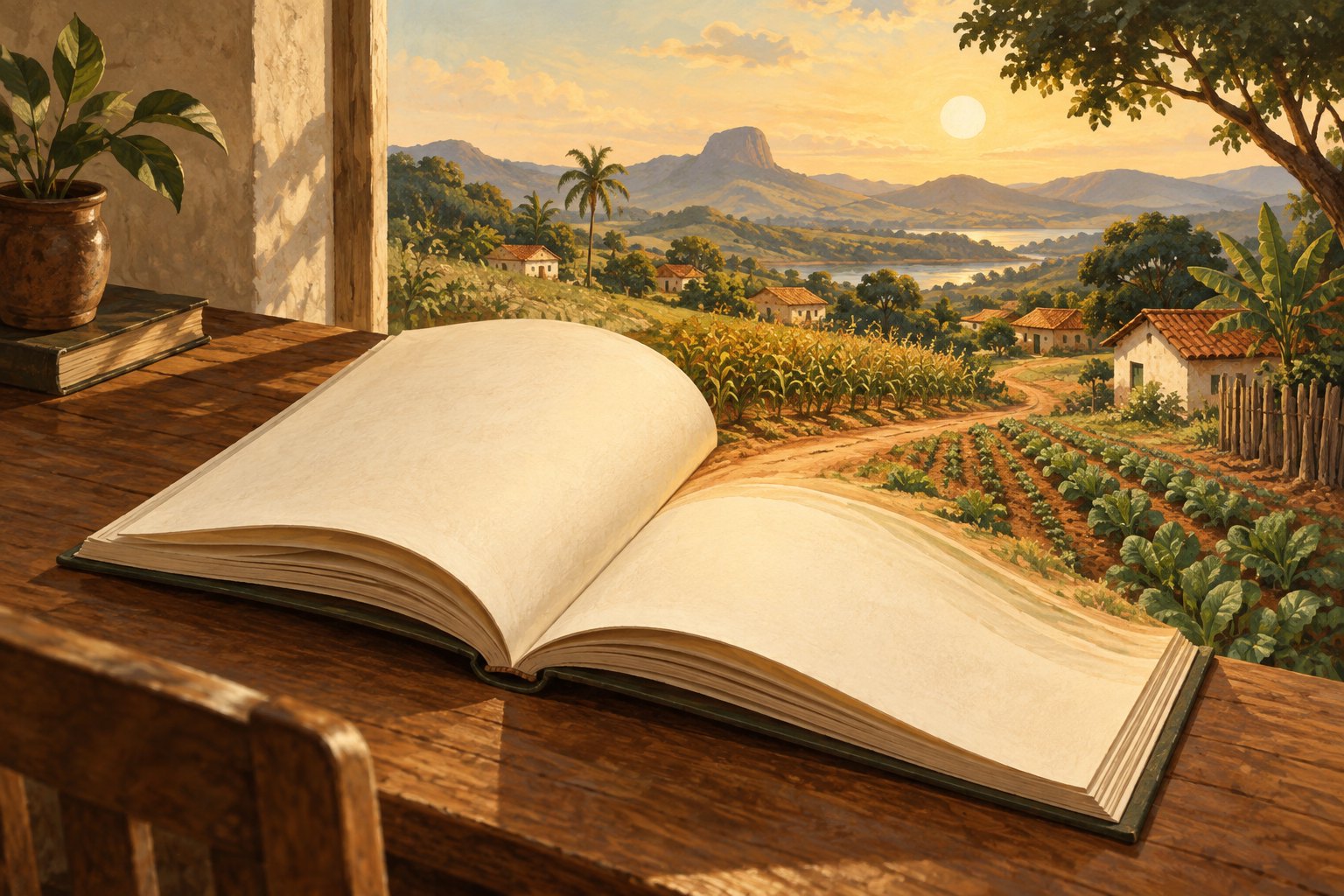
Maestra Productions describes the film’s central history as an adult education experiment in northeastern Brazil in 1963. Freire and fellow educators worked with rural adults through culture circles, connecting reading and writing to the participants’ surroundings and experiences. The producer reports that the project taught 300 people in forty hours.
That striking figure needs careful handling. It describes the achievement claimed for a particular project, not a universal promise about how quickly anyone can acquire literacy. For a viewer, the more revealing question is what those hours contained: whose experiences counted as useful knowledge, and what learning made possible afterward.
According to the producer’s account, lessons emphasized creative and critical thought instead of repetition alone. That approach offers an unusually concrete basis for a documentary about ideas. Rather than requiring viewers to begin with theoretical vocabulary, the subject invites them to consider an everyday interaction: a teacher asks a question, and the answer matters because it comes from someone’s actual life.
My interest in that premise is its potential to make intellectual history personal without reducing it to personality. Understanding a method through the people who used it can reveal something that an admiring account of its inventor might miss.
Maria’s words make the stakes tangible
In a translated trailer excerpt presented by Democracy Now!, participant Maria Miranda Gomes recalls, “I didn’t even know how to sign my name.” It is a plain statement with considerable emotional force.
A signature is small enough to seem unremarkable to someone who writes one automatically. Yet it connects a person’s identity to a visible, repeatable act. Approached from that perspective, literacy becomes something more intimate than an educational statistic.
For me, the line also suggests how to listen to testimony in this film. The speaker’s choice of detail deserves attention before a commentator turns it into a broad lesson. An account of a name can carry its own weight. It does not need exaggerated language about miraculous transformation.
This is where the distinction between documentary participants and fictional characters matters. These people are describing lived experiences. A useful reading should respect the limits of what they say, allowing a specific recollection to remain specific rather than inventing an entire emotional journey around it.
Who occupies the center of the circle?
The culture-circle premise creates a productive challenge for a film carrying Freire’s reputation. How can the educator remain a central subject while other people retain intellectual importance? The strongest possible answer would emerge through exchanges, disagreements, recollections, and different ways of understanding the same experience.
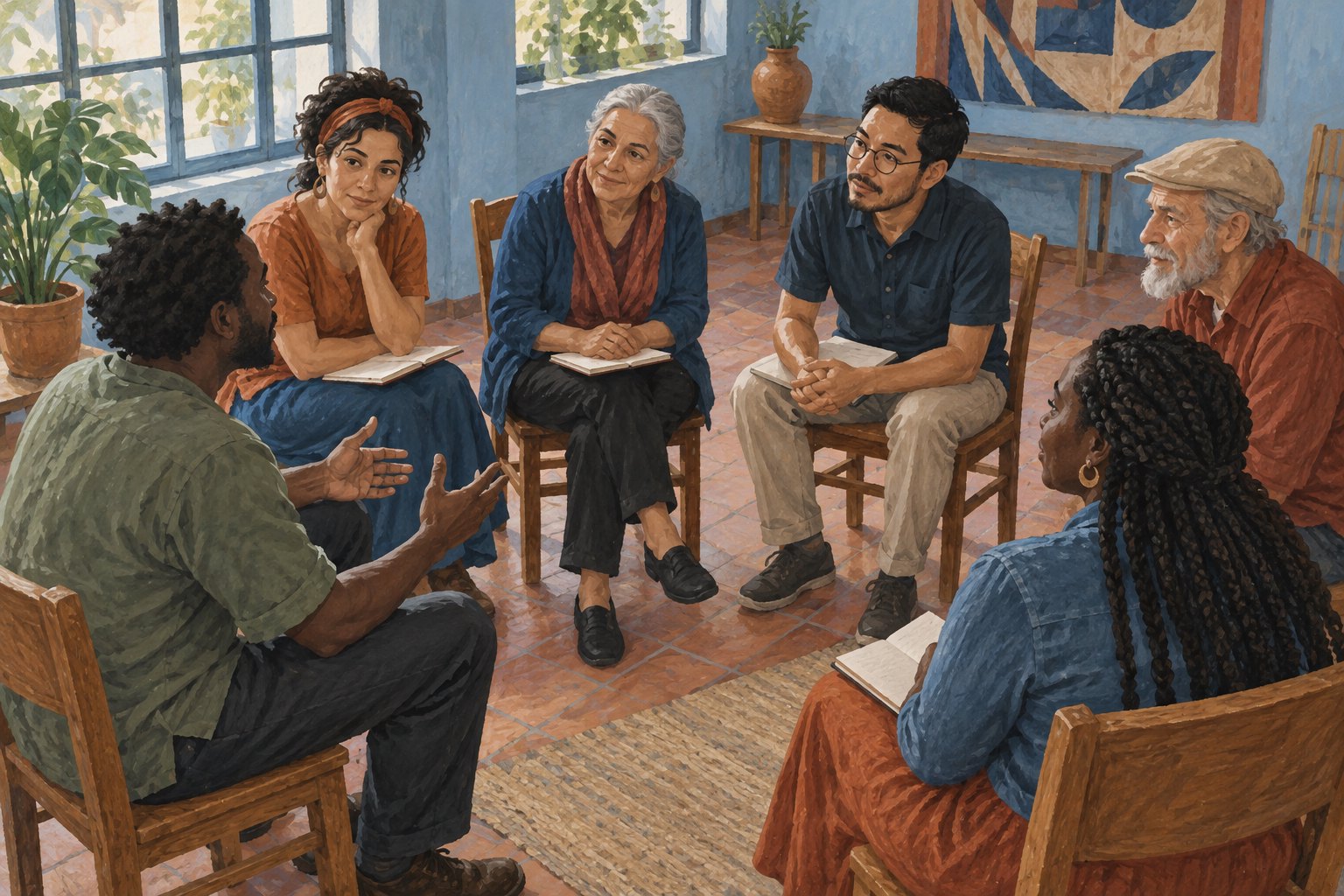
A circle is an appealing image because it offers no obvious front row. But the arrangement of chairs alone cannot establish equality. What matters is whether a participant’s contribution changes the conversation. Applied to documentary storytelling, the equivalent question is whether testimony supplies fresh understanding or simply confirms an argument already settled elsewhere.
That distinction gives viewers a useful way to assess the complete film. Listen for moments when a learner contributes an interpretation, rather than merely expressing gratitude. Notice whether collaborators have recognizable perspectives. Consider who is allowed to explain why an experience mattered.
Our discussion of looking beyond a documentary’s subject develops a related point: worthy material and accomplished filmmaking require separate judgments. Here, the relationship between subject and form is especially consequential because the story itself concerns participation.
When learning becomes a political act
The project’s stakes extended beyond the classroom. The film’s synopsis, also published by the Ecofalante festival, explains that people unable to read and write could not vote in Brazil at the time. Literacy therefore offered access to a political role from which participants had been excluded.
That connection changes how an audience can interpret an educational success story. The achievement is not simply an individual becoming more capable. A rule governing participation makes that capability consequential for public life.
The historical trajectory also resists an uncomplicated inspirational ending. The producer identifies the 1964 coup as the event that shut down the program and led to Freire’s exile. These events belong to the documented history behind the film; they should not be treated as a dramatic surprise invented for a screenplay.
My reading of that trajectory is that progress and security are different things. A person can gain a skill while the institutions surrounding that person become more hostile. Holding those realities together prevents an uplifting account of education from becoming an easy assurance that learning automatically defeats power.
Memory gives the film its human scale
NETA’s broadcast description identifies participants’ collective memories and archival images of Brazil as elements of the documentary. Those materials bring different kinds of evidence into a portrait: records of an earlier world and later accounts of what living through it meant.
Archives can establish visible circumstances, but an image does not explain every experience within its frame. Recollection offers perspective, while also carrying the distance between an event and its telling. A thoughtful viewer can value both without assuming that either provides an exhaustive account.
The complete film’s achievement will depend partly on how it handles that relationship. Do images clarify what a speaker remembers? Does a recollection complicate an apparently straightforward historical record? Those are questions worth carrying into a screening, rather than conclusions that a synopsis can settle.
They also connect with our consideration of family and community perspectives in documentary: individuals deserve attention beyond the larger themes they help a film express.
A deeper reading: participation is the real subject
In another translated excerpt presented by Democracy Now!, Freire uses the phrase “not of an object.” The distinction is a useful starting point for interpreting the film’s title.
To read the world, as I understand the idea suggested here, is to recognize that familiar circumstances can be examined. Work, language, institutions, and ordinary encounters become things a person can question and discuss. Reading is connected to judgment, and judgment creates possibilities for action.
That interpretation also places a demand on the audience. Admiration for Freire is an easy response. More searching attention asks whether the learners emerge as people whose knowledge can alter our understanding of him.
Reading the World has a compelling premise because the educator’s legacy and the participants’ experiences belong in the same frame. The decisive question for the full documentary is how much room it gives those people to shape the story. Their presence is what can turn a profile of an influential thinker into an encounter with education as a lived, shared experience.
Original content by this site's editorial team. Published: September 24, 2026 at 00:26:08 PDT (Los Angeles time)