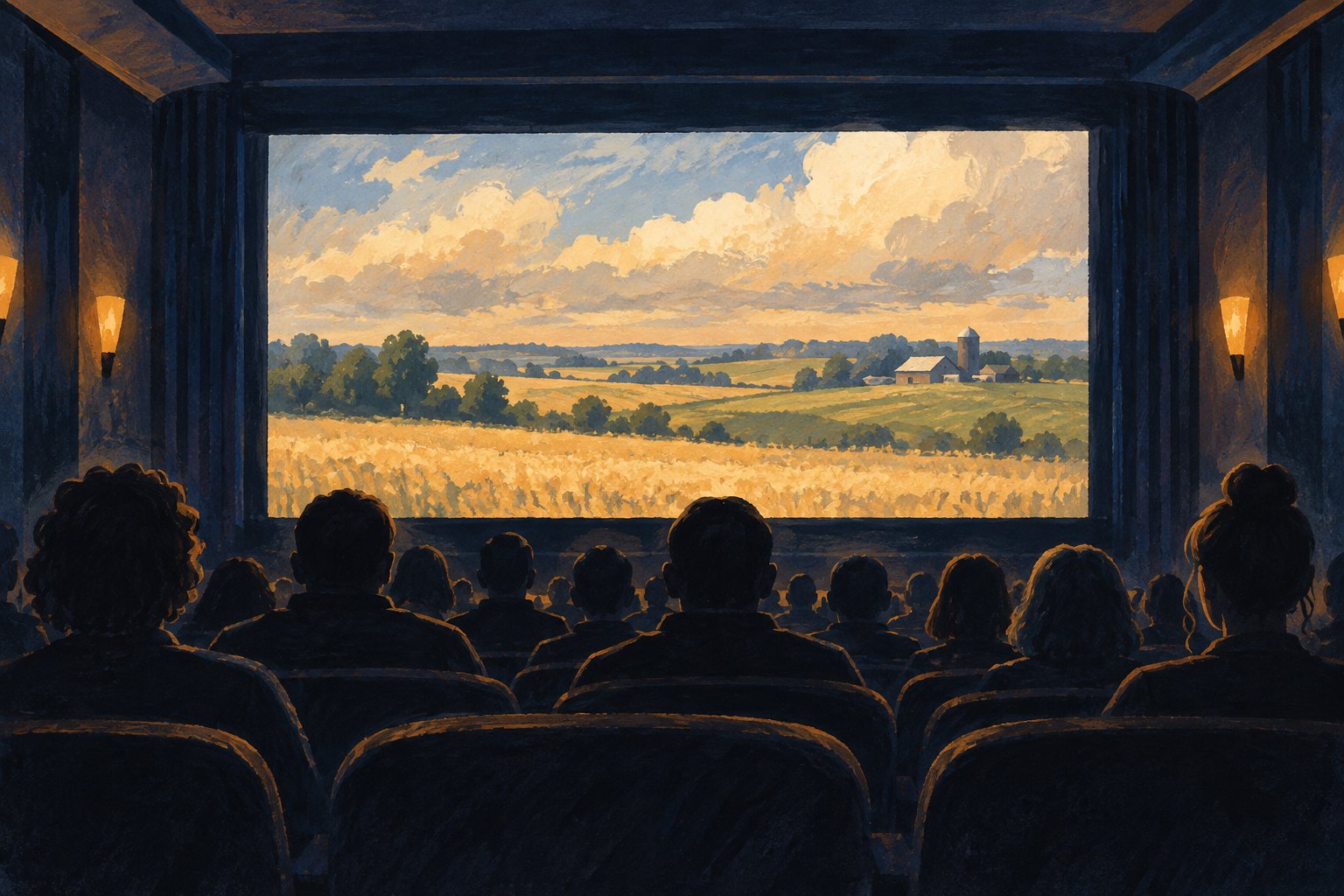
A new documentary short film festival is coming to Ames, according to Iowa Public Radio, giving local moviegoers a reason to look more closely at a form that rarely receives the attention devoted to feature releases. The appeal goes beyond shorter running times: a documentary short can concentrate on a person, a decision, or a contradiction with unusual intensity.
For prospective viewers, the useful question is what makes that concentration worthwhile. An important subject does not automatically produce a revealing film. The strongest documentary work helps us understand how someone experiences the world—and makes its own methods of arriving at that understanding available for scrutiny.
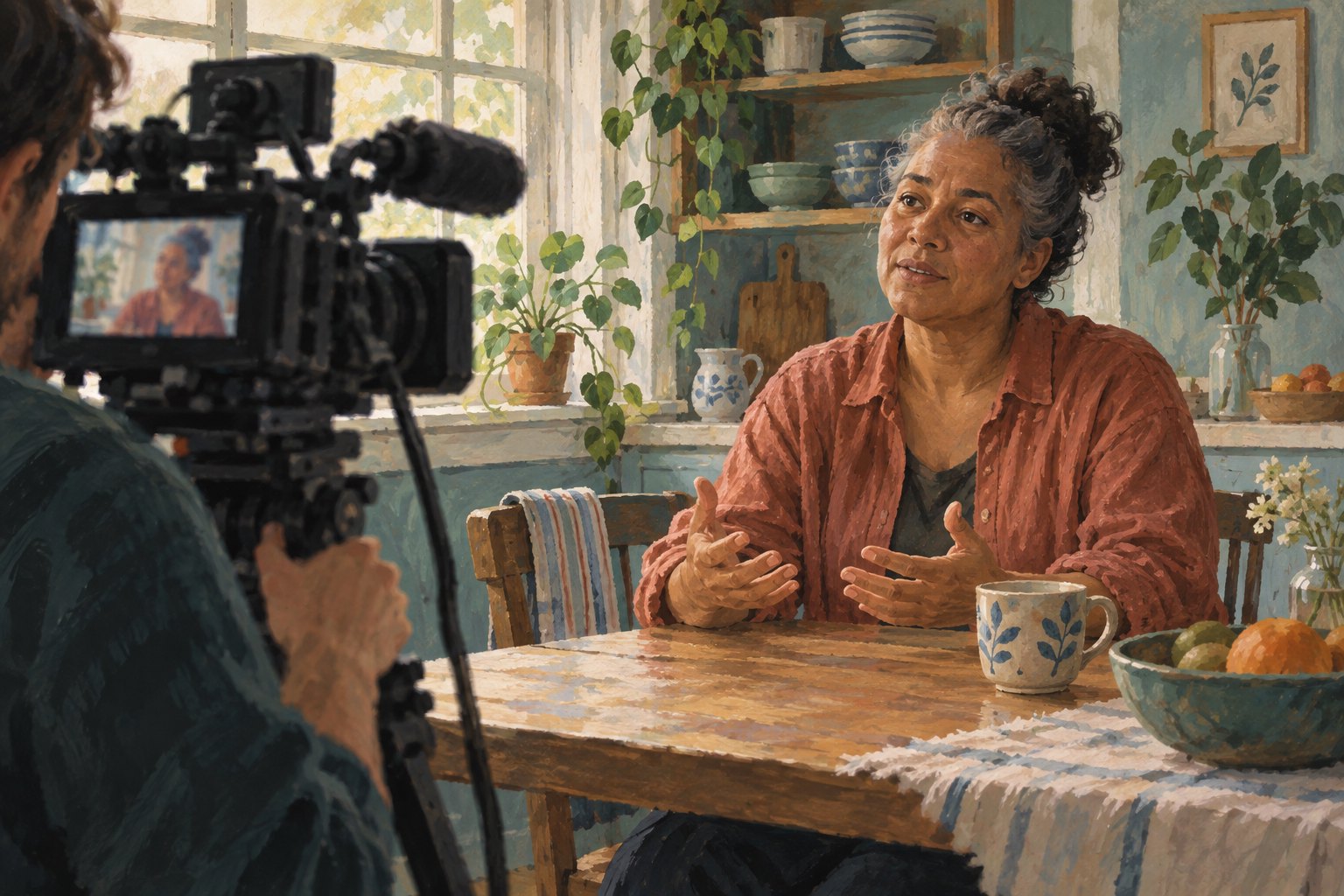
This is a spoiler-free festival commentary and viewing guide, rather than a review of individual selections. The illustrations are conceptual scenes, not depictions of festival venues or participants.
Why the short format deserves a festival audience
A short documentary has to establish where we are, whose experience matters, and what is at stake without the space a feature might devote to background. That pressure can sharpen a film. A specific task, a difficult conversation, or a familiar place undergoing change may provide enough structure to make a larger issue comprehensible.
Compression also creates risks. A filmmaker can make a complicated situation seem settled simply by excluding the complication. Viewers should distinguish a deliberately narrow perspective from an argument that quietly presents itself as comprehensive. A film about one person's experience need not explain everyone else's, but it should give us a reasonable sense of its boundaries.
My critical preference is for shorts that know the size of their question. An observant portrait of a single relationship can be more persuasive than a hurried attempt to summarize an entire social problem. For the new Ames event, that is a useful expectation to bring into the room: look for precision before scale.
Start with the person, then consider the argument
Documentaries ask us to follow real people, whose lives extend beyond their roles in a finished film. Character-focused analysis therefore requires care. We can examine how the film presents someone's motivations without assuming that an edit gives us complete access to their inner life.
Start with a simple question: what does this person appear to want? The answer might concern a relationship, work, recognition, stability, or the ability to make a decision independently. Then ask what evidence supports that interpretation. Does the person articulate the desire? Do we observe choices that make it legible? Or does a narrator supply an explanation that the images never establish?
Those distinctions matter because sympathy can arrive faster than understanding. A close-up and a swelling score may move us before we know much about the person on screen. Emotional force becomes more meaningful when the film also gives that person room to act, disagree, hesitate, or surprise us.
Notice who gets to explain the experience
During an interview, pay attention to the relationship between a speaker's words and the surrounding images. Footage can clarify testimony, introduce a competing perspective, or merely decorate an account. These functions can look similar when editing moves quickly, yet they carry very different evidentiary weight.
An image of an empty room, for instance, does not by itself establish why someone left it. Its meaning depends on context. That is a general viewing principle, not a description of a festival selection: the connection created by an edit deserves as much attention as either shot alone.
Also consider whose explanation becomes the final one. Does the subject interpret their own experience, or does another voice repeatedly tell us what it means? Outside expertise can be essential. Still, a film becomes less illuminating when a person exists only to illustrate someone else's thesis.
Our commentary on family and community in Camden's documentary award winners offers a related point of departure: festival recognition can direct attention toward a film, while close criticism must return to the relationships that give its subject meaning.
Listen for more than the memorable sentence
A striking line can organize an entire short documentary. It may express a conflict so clearly that everything around it acquires new significance. But a sentence's emotional accuracy and its usefulness as a summary are different things. People can express contradictory feelings, and a revealing film may preserve that contradiction.
When a line stays with you, consider what preceded it. Was the speaker responding to a visible question? Did the film allow the thought to develop? Did a later moment complicate it? These questions help separate an earned insight from a quotation made to carry more certainty than its context supports.
Listen to pauses, too. Silence can suggest reflection, discomfort, or simply the ordinary time needed to answer. We should resist assigning a motive the film cannot establish. A useful review describes the pause and its placement before declaring what it proves.
Let the films remain different from one another
A festival encourages comparison, but immediate ranking can flatten the experience. One short may build its effect through observation, another through interviews, another through the relationship between past records and present testimony. Each deserves to be judged against what it attempts and what its material can sustain.
Between screenings, a few brief notes can preserve those differences:
- Identify the central perspective. Whose experience organizes the film, and who remains outside that view?
- Record one concrete choice. Note an edit, a sound, a framing decision, or a sustained moment that changed your understanding.
- Separate evidence from inference. Write down what the film established and what you concluded for yourself.
- Keep one question open. An unresolved question may expose a weakness, but it may also reflect the situation honestly.
These notes provide a better foundation for conversation than trying to decide instantly which film mattered most. They also make disagreement more useful: two viewers can compare the moments that shaped their responses.
What the Ames setting adds to the experience
The arrival of a documentary festival in Ames creates an opportunity for shared attention. A screening gives people a common object to discuss, even when they bring different experiences to it. Someone may recognize an everyday detail that another viewer overlooks; someone else may question an assumption that initially seemed self-evident.
That possibility connects with our discussion of how a working movie theater contributes to local film culture. Exhibition matters partly because it creates occasions for people to encounter a film together. Whether that opportunity becomes a lasting conversation depends on what viewers do with it.
A satisfying ending does not have to settle a life
The deepest question to carry into the Ames festival concerns endings. A film must stop somewhere; its subjects continue living. An uplifting final image may feel deserved, or it may offer reassurance that the preceding material has not earned. An unresolved ending can be equally evasive if it substitutes vagueness for a clear account of the stakes.
For me, the strongest documentary short leaves a precise impression of both its insight and its limits. We understand something we did not understand before, while recognizing what remains beyond the frame. That is an ambitious standard for any running time—and a worthwhile reason to give the new Ames festival our attention.
Original content by this site's editorial team. Published: September 23, 2026 at 22:30:58 PDT (Los Angeles time)