Ralph Fiennes is set to star in a film about Henry Cecil and the celebrated racehorse Frankel, according to Deadline. For moviegoers, the announcement offers an intriguing prospect: a story in which a human performer must share the emotional center with an animal whose experience cannot be explained through dialogue. The casting attracts attention, but the relationship will determine whether that attention becomes something lasting.
This is a casting analysis and critical preview, not a review of a finished film. The announcement alone does not establish the movie’s scenes, dialogue, ending, or dramatic interpretation of Cecil. Those distinctions matter particularly here, where a familiar sporting framework could invite assumptions about what the film will show. Its potential deserves discussion without turning imagined scenes into reported facts.
What the casting announcement actually tells us
The central news is straightforward: Fiennes will star in a film concerning Cecil and Frankel. That establishes the people and sporting subject at the heart of the project. It does not, by itself, tell an audience how the story will distribute its attention between professional life, private experience, and the horse’s presence.
For readers looking for a release date, an assessment of Fiennes’s performance, or an explanation of the ending, this announcement cannot provide those answers. Nor would it justify quoting supposedly memorable lines. A responsible assessment at this stage concerns the dramatic possibilities of the subject and the standards by which the completed movie should eventually be judged.
The most useful question is therefore specific: how can a film make the work between Cecil and Frankel emotionally legible to someone who arrives knowing little about racing?
Cecil’s perspective: making expertise visible
A trainer presents an interesting acting challenge because expertise often appears uneventful from the outside. Watching, waiting, noticing a change, or deciding against an action can matter enormously within a profession while looking like very little on screen. A film needs to teach viewers how to recognize the significance of that attention.
For Fiennes, the opportunity would be to build a character through the quality of his responses. Where does Cecil look? How quickly does he react? What does he notice before someone else does? These are performance questions, not descriptions of scenes that have been confirmed. They suggest a way to make competence tangible without repeatedly having another character announce that the central figure is exceptional.
My preference would be for a performance that allows uncertainty to coexist with authority. A character becomes more interesting when knowledge carries responsibility: understanding an animal does not mean controlling every outcome. If the film makes that distinction persuasive, professional decisions could become a source of tension in their own right.
Such an approach would also give viewers a way into Cecil’s perspective without requiring them to admire him automatically. Understanding how someone thinks is a stronger dramatic invitation than being told how much respect he deserves.
Frankel needs a presence beyond the finish line
The other central challenge is Frankel. A horse can dominate an image and still remain dramatically incidental if every appearance serves only to illustrate a human character’s feelings. Beauty, speed, and a swelling score can create excitement, but they cannot independently establish a relationship.
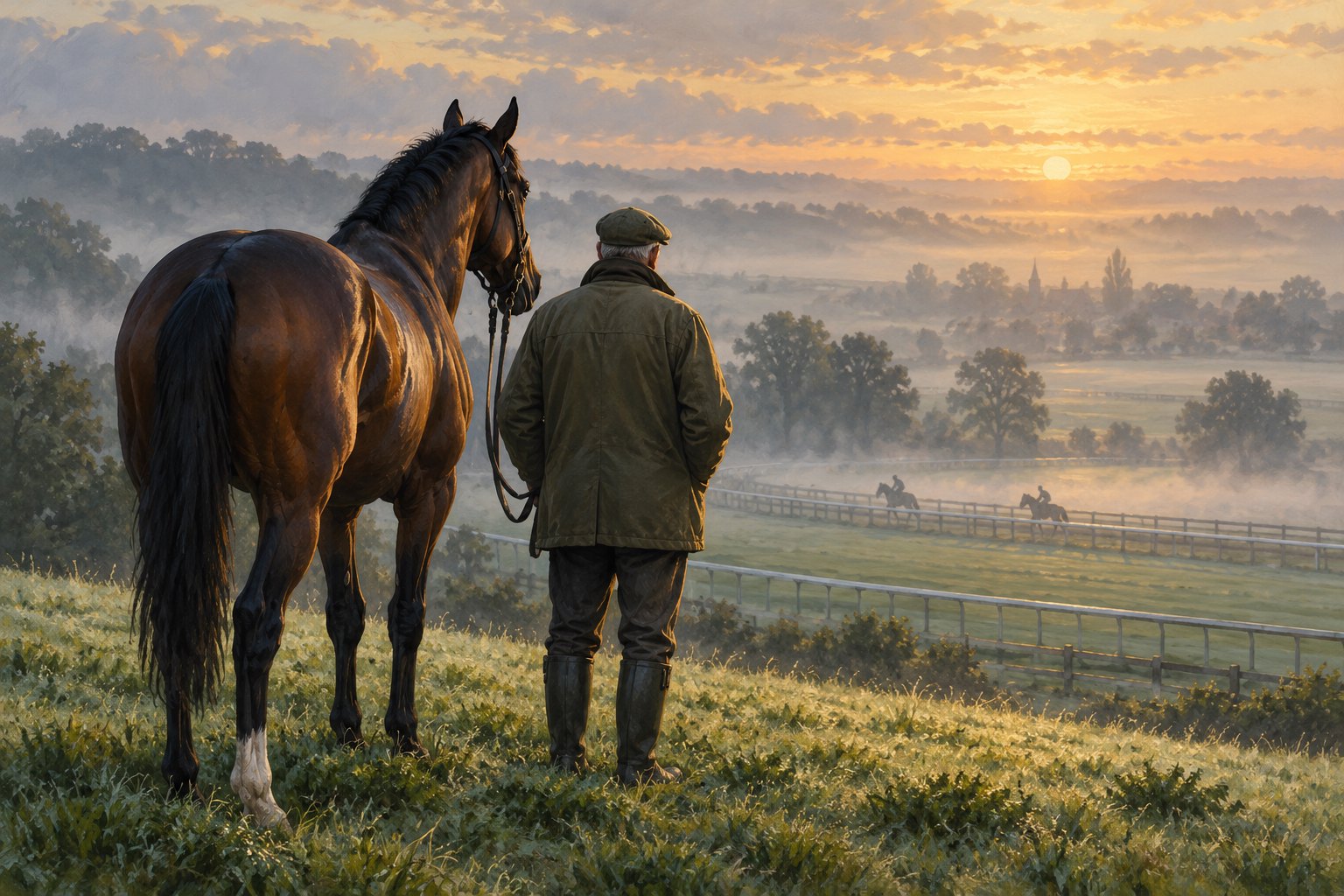
A persuasive treatment would give viewers time to observe the animal. Posture, movement, attention, and the physical distance between horse and handler offer a visual vocabulary. The filmmaking would then need to use that vocabulary consistently enough for changes to carry meaning.
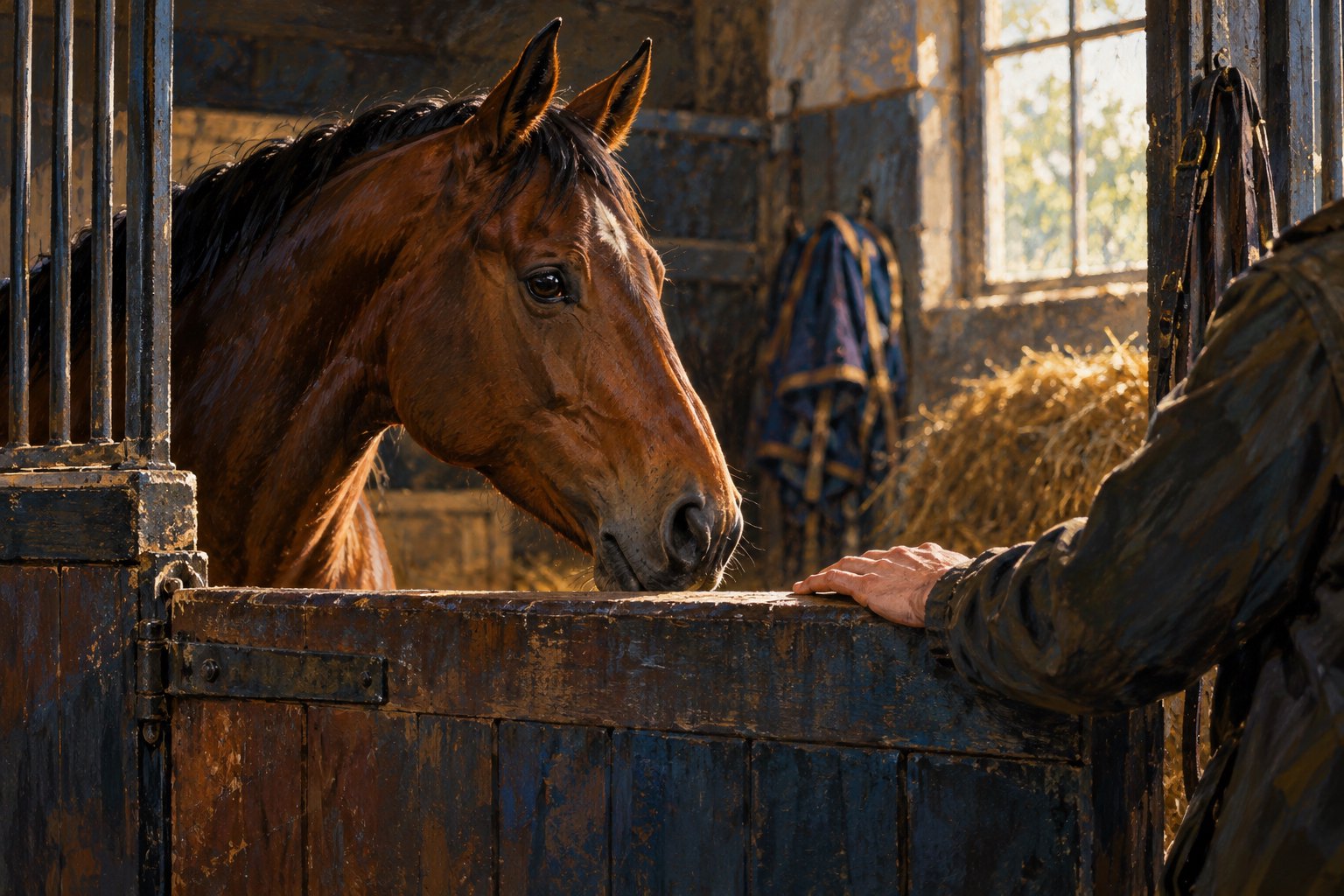
There is a delicate boundary here. Editing can suggest that an animal understands a person’s emotional predicament with remarkable precision. That suggestion may be moving, but it can also simplify the animal into an instrument of reassurance. I would find a film more compelling if it allowed the relationship to retain some mystery.
Cecil’s interpretation of Frankel could be meaningful without being presented as unquestionable access to the horse’s thoughts. That space between close observation and complete understanding is rich dramatic territory. It gives companionship substance while allowing the animal to remain an animal.
How racing can reveal character
Racing sequences would face a different problem: turning movement into understandable stakes. Fast cutting and loud sound can communicate intensity, yet intensity alone does not explain what a character fears or hopes to see. The audience needs enough visual clarity to connect preparation with performance.
Our discussion of reading the decisions behind a sporting finish offers a useful parallel. The decisive moment becomes more interesting when viewers understand the work that made it possible. Applied to a Cecil and Frankel film, that principle would mean making earlier observations matter when the horse enters competition.
This need not involve a running lecture on racing. A clear dramatic setup can establish what someone is watching for, then let the event test that expectation. The viewer learns through consequence. Technical information earns its place because it changes the emotional meaning of what happens.
The same principle applies to sound. Hoofbeats, breathing, crowd noise, and silence could direct attention toward physical effort or human apprehension. Whether any particular technique succeeds will depend on the finished film, but the standard is clear: spectacle should deepen the relationship already established.
The biographical challenge: admiration with room for complexity
A film about a celebrated sporting partnership risks treating its reputation as a substitute for characterization. Once greatness becomes the organizing assumption, every setback can feel like a brief delay before the audience receives the conclusion it expected.
A more searching biographical drama would give individual choices their full weight. That means allowing the central figure’s perspective to have limits and giving other people interests beyond confirming his importance. This is a criterion for evaluating the adaptation, not a claim about Cecil’s personal conduct or the screenplay’s supporting characters.
There is a related issue in our analysis of what a performance can and cannot reveal about a real person. The subjects and circumstances differ substantially, but the interpretive question travels: a convincing portrayal can feel like understanding without exhausting the truth of a life.
Fiennes’s involvement makes the prospect of a detailed characterization appealing. It should also encourage viewers to ask what the film chooses to emphasize, whose perspective shapes that emphasis, and how convincingly its emotional conclusions emerge from the action.
The deeper possibility: attention as a form of care
The strongest potential interpretation of this project concerns attention. A trainer’s work offers a way to dramatize the difference between wanting an outcome and attending closely to another living creature. On screen, that distinction could make small decisions as revealing as public triumphs.
From that perspective, Frankel’s importance would extend beyond providing a sporting climax. The relationship could become a measure of how Cecil sees, responds, and accepts responsibility. The horse’s presence would shape the human characterization instead of merely rewarding it.
That is the promise worth watching in the Ralph Fiennes casting news. A meaningful film about Cecil and Frankel will need to make their connection specific enough that viewers care about the moments between the races. The eventual performance, dialogue, and direction must supply that evidence. For now, the subject offers a compelling question: what does extraordinary achievement look like when the camera pays equal attention to the patient work surrounding it?
Original content by this site's editorial team. Published: October 18, 2026 at 02:37:53 PDT (Los Angeles time)