
Other Mommy is heading toward a reported $28 million box-office debut, while The Social Reckoning is getting a quieter start. That is the immediate takeaway from The Hollywood Reporter’s opening-weekend coverage. The figure describes an unfolding opening, however, rather than a settled verdict on the film’s commercial life. It also leaves the most interesting question for moviegoers unanswered: does the experience justify the anticipation?
For Jessica Chastain’s horror movie, that question has a particularly useful shape. Coverage has drawn attention to its jump scares while questioning how frightening they actually are. Those ideas can coexist. A film can make viewers flinch repeatedly without giving them anything to fear once the noise subsides. Equally, a well-placed shock can become the moment when a story’s emotional danger finally feels physical.
This is spoiler-free box-office and horror commentary, not a scene-by-scene review. The distinction matters because a financial headline cannot establish the quality of a performance, explain an ending, or tell us what a character’s choices mean.
What the $28 Million Opening Actually Tells Us
The reported opening gives Other Mommy a clear place in the weekend conversation. It suggests substantial initial interest in the theatrical offering. It does not, by itself, establish profitability, audience satisfaction, or staying power. Those are separate questions requiring different evidence.
A debut captures several decisions at once: people choosing a title, choosing a showtime, and choosing to spend money before they know how the experience will end. Some may arrive for Chastain. Others may want a horror movie with friends. Without audience research, assigning a single motive to those ticket purchases would turn an appealing explanation into an unsupported claim.
The same caution applies to the comparison with The Social Reckoning. A quieter opening establishes a contrast in initial business. It does not prove that viewers have rejected everything the film represents, or that one type of storytelling has defeated another. Two releases can attract different audiences, operate under different expectations, and build different reputations after their first weekend.
My view is that the useful distinction is between attraction and fulfillment. An opening measures the success of getting people through the door. Criticism asks what happens once they take their seats. Neither inquiry becomes more valuable by pretending to answer the other.
A Jump Scare Is a Technique, Not a Verdict
The discussion around Other Mommy invites a familiar shortcut: treating the presence of jump scares as evidence against a horror film. That is too easy. A sudden visual or sonic interruption can be precisely the right choice when it changes our understanding of a space, exposes a character’s vulnerability, or breaks a rhythm the film has carefully established.
The stronger question concerns consequences. After the shock, has anything changed? Does the character behave differently? Does a previously ordinary place now feel unsafe? Has the audience learned something that makes the next quiet moment harder to endure? If the answer is yes, the scare has become part of the storytelling.
When nothing changes, repeated shocks can begin to feel interchangeable. The viewer anticipates the mechanism rather than the danger. That is a general critical standard, not a claim about an unverified sequence in Other Mommy. It provides a more useful way to approach the film than counting how often an audience jumps.
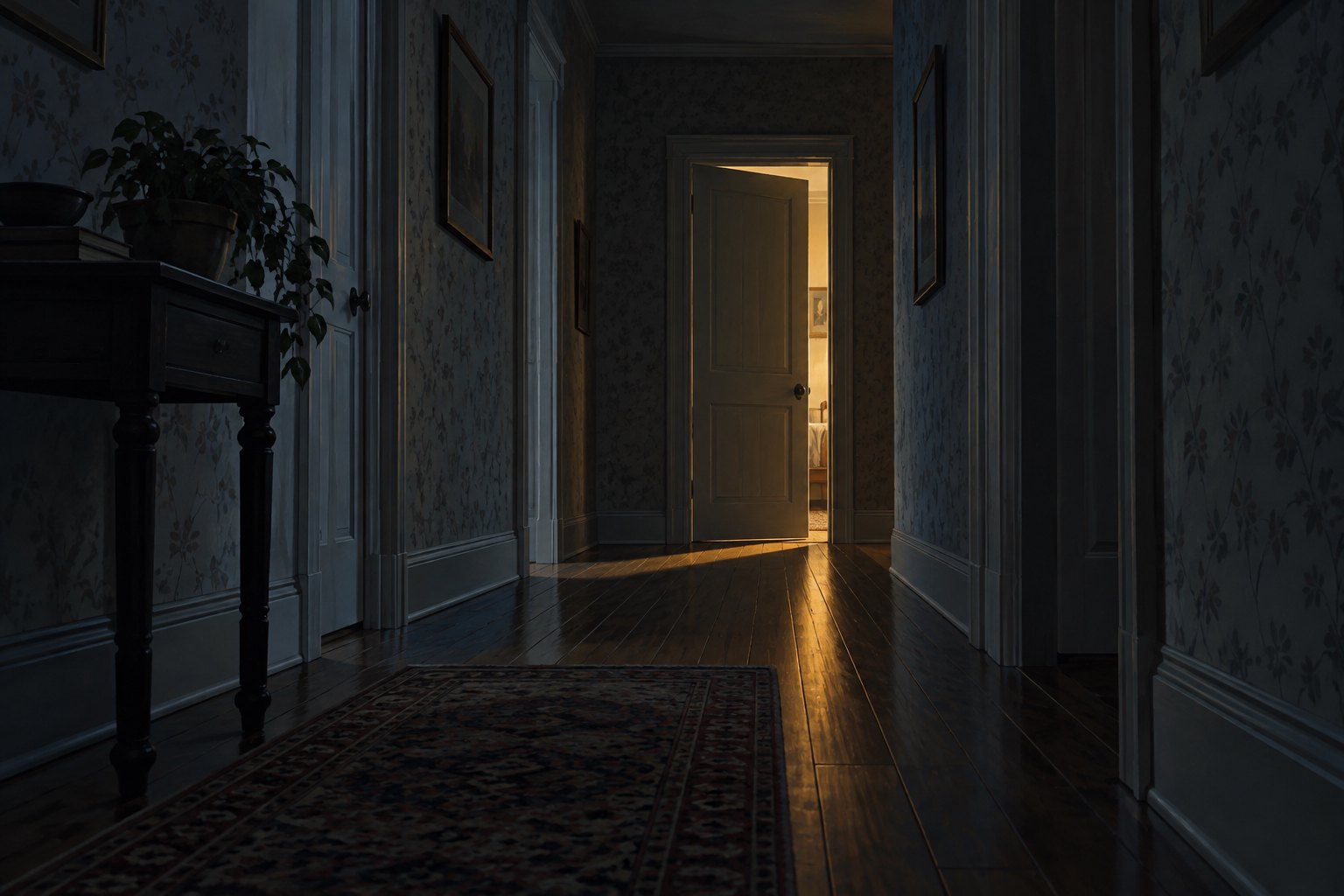
Lingering dread works on a different timetable. It can begin before an event and continue after the scene ends. An empty doorway becomes charged because the audience has learned to associate it with uncertainty. The image does not need to move; the viewer’s expectations do the work. For my taste, horror becomes most rewarding when immediate shocks deepen that continuing unease.
Why Character Perspective Matters More Than Scare Frequency
A character-centered assessment starts with knowledge: what does this person understand, what have they misunderstood, and what can they do about the danger? Suspense grows when viewers can follow those limits. Confusion becomes dramatically productive when it belongs to the character’s experience and has recognizable emotional stakes.
That approach also changes how we assess acting. Looking terrified is only one part of a horror performance. Hesitation, denial, bargaining, and an effort to appear calm can make fear legible before any overt threat appears. Chastain’s involvement gives viewers a performance to evaluate, but star recognition alone cannot settle whether the dramatic construction supports that work.
Our analysis of family pressure and suspense in Animals explores a related critical concern: danger acquires meaning through what people choose to protect. That is a useful lens for horror, too. The audience needs to understand what survival would preserve beyond the simple continuation of a character’s life.
Attention to perspective also makes room for quieter storytelling. Our retrospective on Chiron’s interior life in Moonlight considers how private feeling can carry a film. The genres differ, but the evaluative principle travels: a reaction matters most when it expresses a person we have come to understand.
Give The Social Reckoning Its Own Critical Hearing
The temptation in a two-film box-office story is to make the quieter release a supporting character in the louder release’s success. That may produce a tidy headline, but it is an inadequate basis for choosing a movie. The opening comparison tells readers where early business is going; it does not tell them which film offers the ideas, performances, or emotional experience they want.
There is no reason to turn the reported contrast into an artistic hierarchy. Nor should a slower beginning automatically become a romantic story about an overlooked masterpiece. Both conclusions require evidence from the films themselves. For now, the fair reading is narrower: Other Mommy has the stronger reported opening momentum, while The Social Reckoning begins more quietly.
The Real Test Comes After the Startle
For viewers deciding whether Other Mommy belongs on their watchlist, the most helpful question is what they want from horror. A communal evening of anticipation and sudden reactions can be a satisfying goal. Viewers seeking sustained psychological unease should look for criticism that explains character motivation, atmosphere, and the relationship between individual scares and the larger story.
The deeper issue raised by this opening is the difference between an experience that attracts attention and one that earns continued thought. Horror has an unusual opportunity to connect the two: it can turn an involuntary physical response into an emotional recognition. A gasp can become the beginning of understanding, rather than the end of a trick.
That is the standard I would bring to Other Mommy. Its reported $28 million debut makes it a commercial story worth following. Whether its fear develops through character, accumulates between shocks, and survives the walk out of the theater is the critical question that the opening number cannot answer.
Original content by this site's editorial team. Published: October 11, 2026 at 03:43:58 PDT (Los Angeles time)