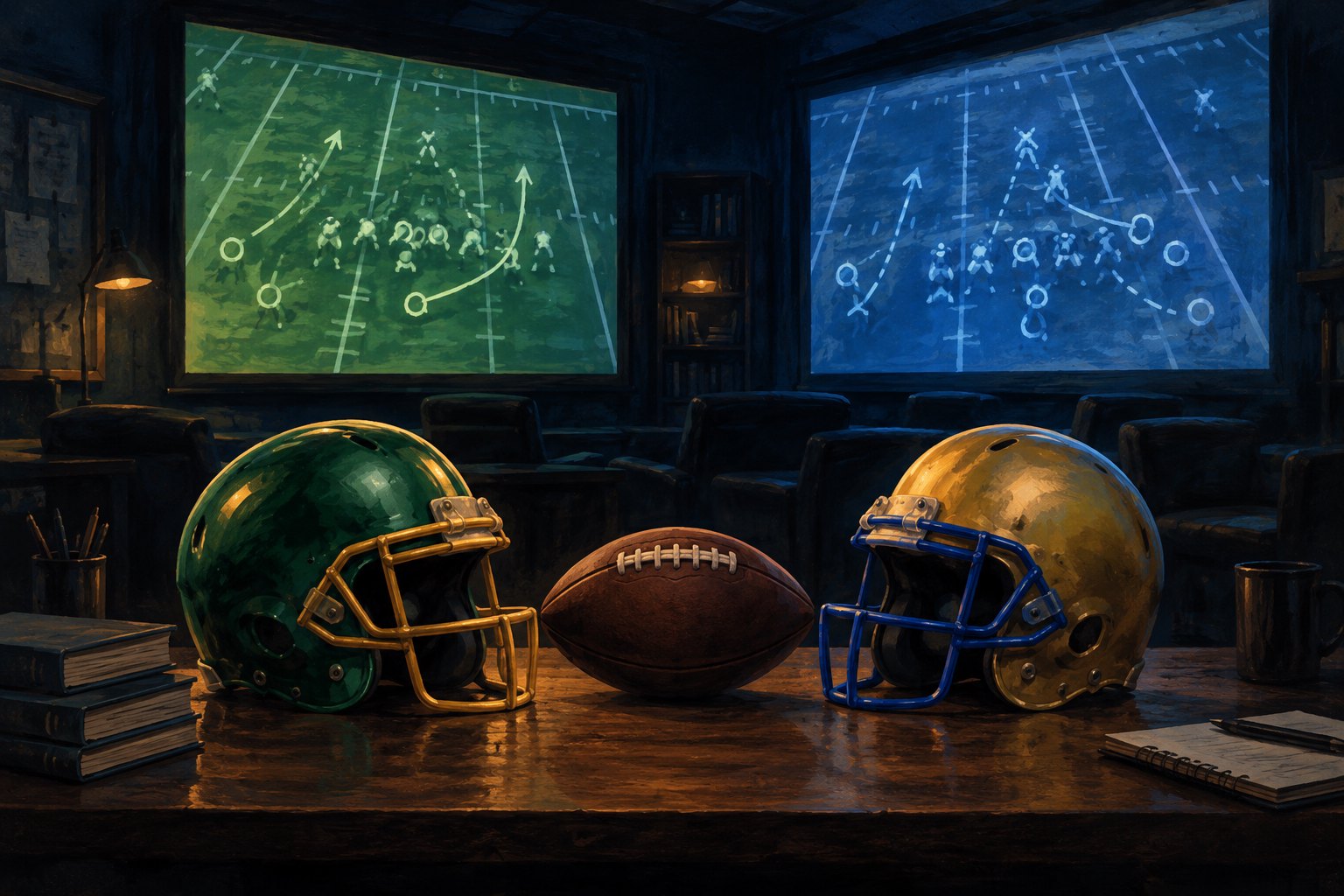
Oregon Ducks football, the UCLA Bruins, and the 2026 Duck Tape review belong to a different kind of film discussion: the close reading of recorded competition. Addicted To Quack’s football-review title concerns game footage, not a theatrical release. For readers arriving with an interest in visual storytelling, however, the subject raises a familiar question: how does an image persuade us that we understand someone’s decision?
This commentary offers a framework for approaching that Oregon–UCLA analysis. It does not evaluate particular snaps or reproduce the review’s conclusions. Its focus is how to distinguish an observable action from an explanation of that action—and how to watch the people outside the center of the frame.
Start With the Situation, Then Judge the Decision
A football play has an ending that immediately attracts attention: a catch, an incompletion, a tackle, an open stretch of grass. That ending can become the explanation before the viewer has considered the sequence. A successful result encourages praise; an unsuccessful one invites a search for the person who failed.
When approaching Oregon–UCLA footage, begin earlier. Establish the down, the distance needed for a first down, the field position, and the time remaining whenever those details are visible. They help define what each team is trying to accomplish. A short gain can serve one situation and leave another unresolved.
Then separate three questions: What happened? What choices appeared available? What evidence supports an explanation? These are different stages of analysis. The camera may clearly establish a result while leaving the decision behind it uncertain.
The Quarterback’s Perspective Has Limits
The quarterback offers the easiest entry point because the ball and the broadcast’s attention so often converge there. For either Oregon or UCLA, however, assessing that position requires more than locating an apparently open receiver in a paused image.
Consider a hypothetical replay in which a receiver finds space after the quarterback begins throwing elsewhere. The still frame can make the alternative look obvious. The moving sequence may show that the opportunity appeared too late, that pressure restricted the throwing motion, or that the receiver was outside the available view. None of those explanations should be assigned to this matchup without supporting footage.
The useful habit is to return to the instant when the decision had to happen. Watch the passer’s feet, the surrounding space, and the timing of nearby movement. A camera can reveal body position; it cannot directly reveal a player’s thoughts or the instructions communicated before the snap.
This is where a character-centered approach needs adjustment. In a scripted film, dialogue and later scenes may establish motive. With athletes, viewers must resist turning posture into psychology. A hurried movement does not, by itself, prove panic.
Look Away From the Ball
The next viewing should follow someone who never becomes the highlight. Choose an offensive lineman, a receiver away from the target, or a defender whose movement changes the space available to another player.
For an Oregon offensive sequence, that means paying equal attention to UCLA’s response. For a UCLA possession, reverse the emphasis. Watching only the team you support makes it easy to describe every success as self-created and every setback as self-inflicted. The opposition is making decisions too.
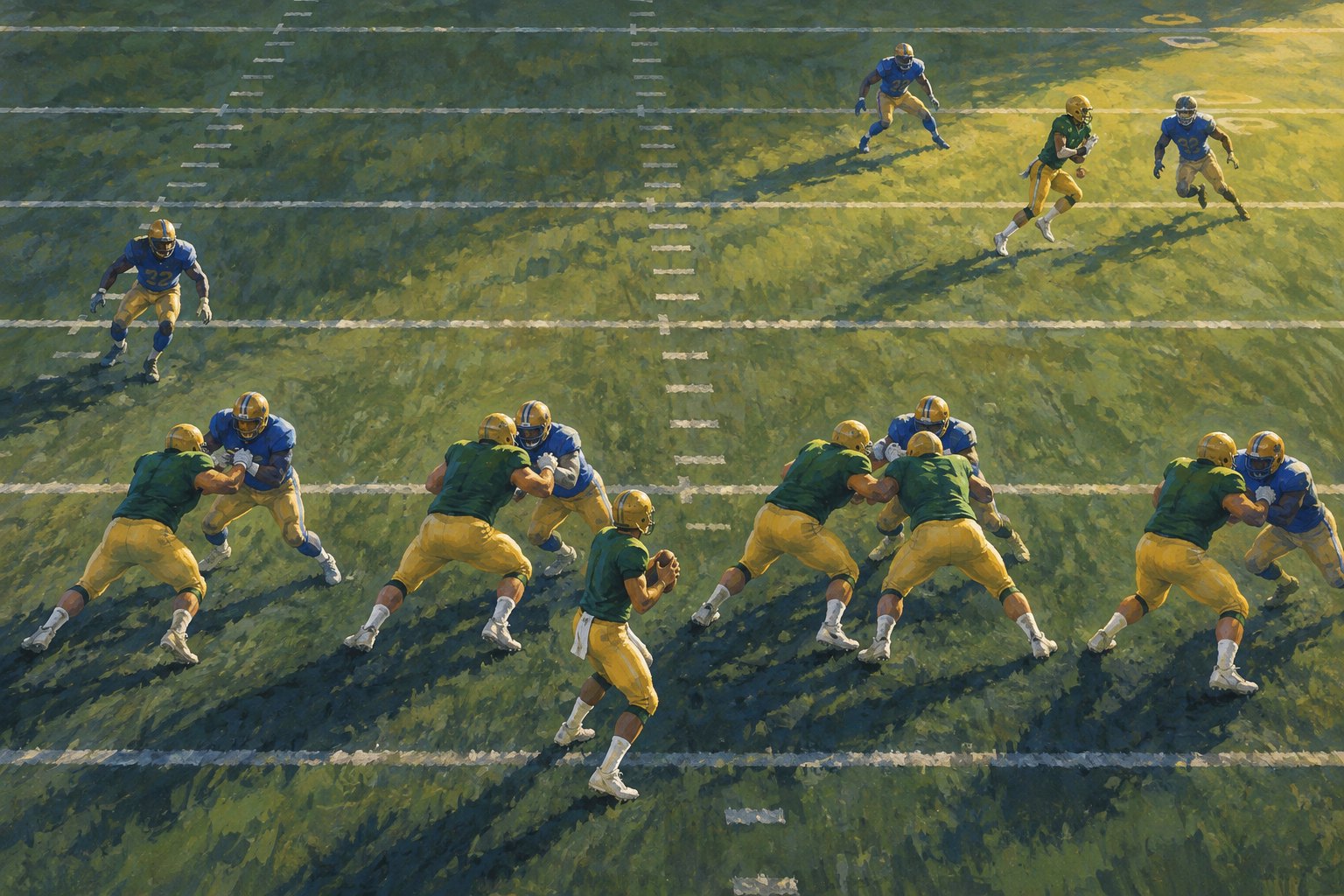
Follow movement before assigning responsibility. Who moves first? Who changes direction? Does that movement open or close space? Those questions produce more precise observations than declaring that someone simply wanted the play more.
Even then, visible behavior and assigned responsibility are separate matters. Footage might show two defenders following one receiver. It may not establish which defender departed from the intended coverage. A persuasive breakdown should explain that uncertainty instead of turning it into a confident accusation.
Replay Changes the Experience of Time
Slow motion makes a fleeting moment available for inspection. It also gives the viewer a luxury the player never had: time to compare alternatives without consequence.
My preferred approach is to watch a sequence at normal speed, examine the relevant detail slowly, and then return to normal speed. The first pass establishes urgency. The second clarifies movement. The third tests whether the proposed explanation still makes sense under the original time pressure.
A freeze-frame is particularly useful for showing where people are. It is less useful for establishing how long they stayed there. Whenever an argument depends on a gap, an opening, or a missed opportunity, duration matters.
This concern overlaps with the questions about framing and representation explored in our commentary on documentary cinema and attentive viewing. Recorded reality still reaches an audience through choices about what to show and where to direct attention.
A Clip Illustrates; a Pattern Requires Comparison
A memorable snap can explain a mechanism clearly without proving that the mechanism defined the entire Oregon–UCLA matchup. To assess a broader claim, look for comparable situations and ask whether the same interaction recurs.
Comparison should include inconvenient examples. If a particular arrangement appears to create an advantage, what happens when the opponent responds differently? Does the advantage survive? Does a similar-looking play unfold differently because the timing changes?
Film audiences already practice a related skill when evaluating recurring scenes across a series. Our discussion of how movie trilogies develop meaning through repetition and change considers why a repeated situation becomes interesting when its consequences evolve. In football analysis, the comparison serves an evidentiary purpose: resemblance should invite investigation, not settle it.
A Practical Checklist for the Duck Tape Subject
- Establish context. Record the visible game situation before describing a decision as sensible or costly.
- Watch the complete sequence. Include the setup and immediate aftermath when available.
- Track one player away from the ball. Describe the movement before guessing the assignment.
- Check the camera’s limits. A player outside the frame is missing evidence, not evidence of absence.
- Compare examples. Ask whether a proposed explanation accounts for both successful and unsuccessful outcomes.
- Match confidence to visibility. State an observation firmly when it is clear; qualify explanations that require unavailable information.
The Deeper Value: Distributing Credit More Fairly
The most rewarding reason to study Oregon and UCLA this way is the possibility of revising an initial judgment. Attention can move from the person holding the ball to the person who made the next action possible. An apparent individual mistake may become a more complicated interaction among timing, pressure, and competing decisions.
That does not mean every outcome is unknowable. It means a useful interpretation earns its confidence. For me, the strongest football-film commentary makes viewers more observant and more precise about responsibility. The decisive question is whether the explanation accounts for what the sequence actually shows—and remains honest about what the camera cannot tell us.
Original content by this site's editorial team. Published: October 13, 2026 at 04:20:56 PDT (Los Angeles time)