New York City’s film and television production surge in 2026 is a story about permits, spending, and soundstages—and, potentially, about what audiences will eventually watch. Deadline reports growth across those areas. That is encouraging news for a city whose streets and interiors offer filmmakers an extraordinary range of dramatic possibilities. It does not, by itself, establish how many memorable movies or compelling television seasons will follow.
The distinction matters. Production activity measures the work of making screen entertainment; criticism evaluates what that work achieves. For viewers, the interesting question is how a busier New York production landscape might translate into richer settings, more persuasive performances, and stories that understand the people inhabiting the city.
This is industry commentary about the reported production surge, rather than a review of an individual film. The creative examples below are hypothetical.
What permits, spending, and soundstages actually tell us
The three indicators belong together, but they should not be treated as interchangeable. Each describes a different part of the production process. Reading them carefully helps prevent an upbeat industry headline from becoming a claim it cannot support.
Permits concern activity, not finished titles
A permit count is not a movie count. A production can involve multiple locations and shooting arrangements, while the relationship between permissions and completed work depends on what a particular dataset records. More permit activity can indicate a busier filming environment without telling audiences how many distinct films or series will reach them.
It also cannot establish artistic ambition. A familiar street might appear in an inventive character drama, a routine establishing shot, or a brief commercial sequence. The permission to film is an enabling condition; the camera’s purpose remains a creative decision.
Spending needs context
Higher expenditure can reflect more production work, more expensive projects, rising costs, or some combination of those factors. Without a consistent breakdown, it should not automatically be translated into more jobs, longer employment, or greater opportunity for every filmmaker.
Comparisons also need matching geography and time periods. A city’s permit activity and a state’s production expenditure may illuminate related developments, but they do not necessarily measure the same group of projects. Readers should look for those distinctions before accepting sweeping conclusions about which production center is winning.
Stage activity and stage supply are different questions
Soundstage growth can mean different things: increased use, additional bookings, or expanded physical capacity. Those possibilities have different implications. More buildings do not necessarily mean more occupied stages, and heavier use does not establish that new space has opened.
The broad report of a surge should therefore be read as a direction of travel, not a complete inventory of facilities or a guarantee of availability. For filmmakers, the practical question is whether suitable space is accessible when their project needs it.
Why the production story belongs in a conversation about movies
Infrastructure can seem remote from the experience of watching an actor hesitate before answering a question. Yet that moment depends on practical choices: where the scene happens, how the performers move, what the camera can see, and whether the environment allows the intended performance to be captured.
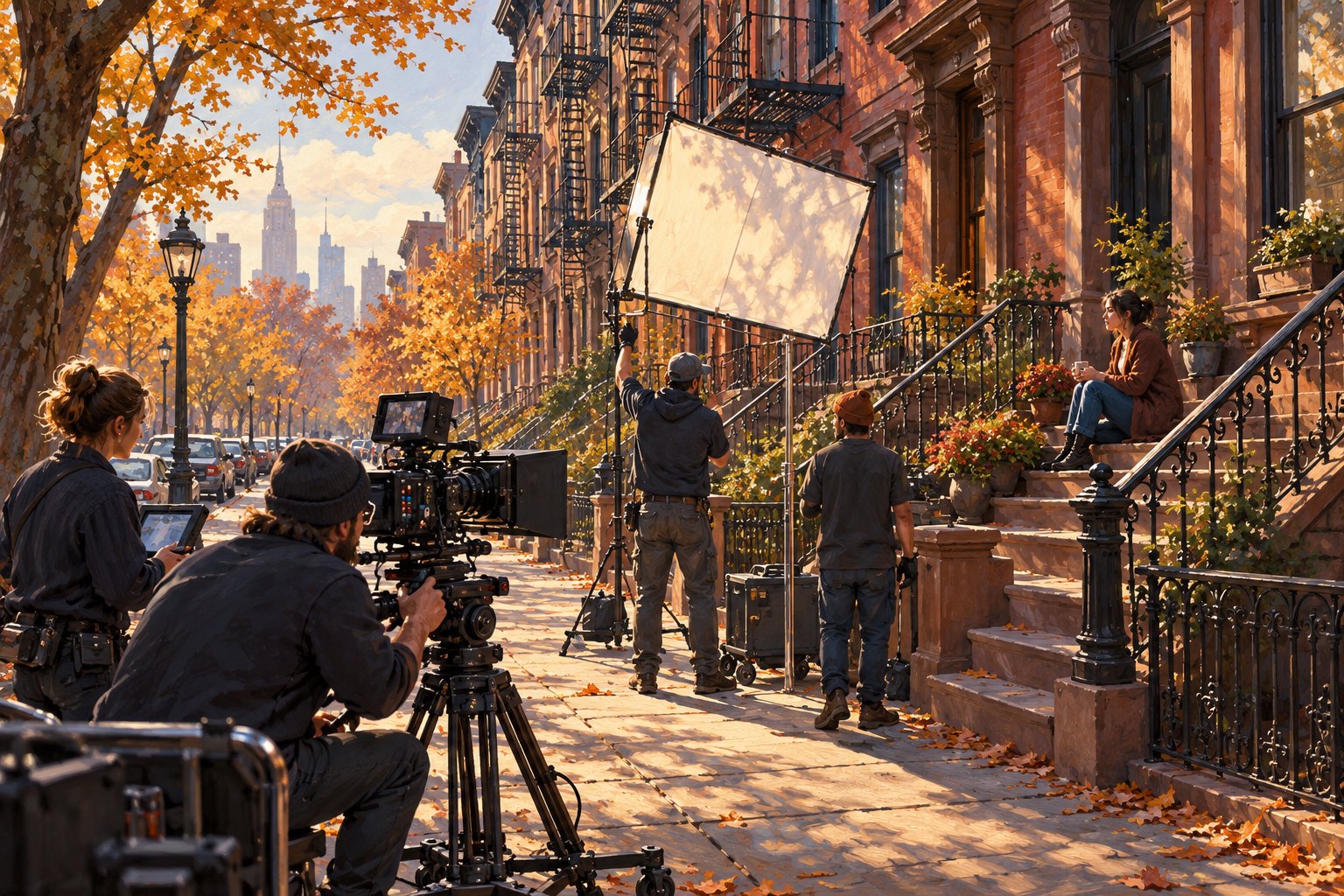
A street offers depth, movement, and unpredictable detail. A controlled interior offers other possibilities, including repeatable lighting and space arranged around the camera. Neither approach carries an automatic claim to authenticity. The critical question is whether the filmmaking helps us understand the character.
Consider an imagined scene in which someone returns home after losing a job. On a stoop, the pause before entering might suggest fear of being observed by neighbors. Inside a kitchen, the same hesitation might become fear of telling a partner. The location changes the emotional pressure, even when the underlying event remains identical.
A convincing New York begins with a character’s experience
Recognizable architecture can establish a city quickly. It takes more attention to establish what living there means to a particular person. Does a crowded sidewalk energize the protagonist or make them feel invisible? Is a small apartment a refuge, an achievement, or an arrangement they can barely tolerate?
Those questions give familiar images dramatic specificity. A staircase becomes meaningful when climbing it requires effort, when someone waits at its top, or when a character cannot bring themselves to leave. The setting participates in the scene because it affects behavior.
My critical preference is for films that make geography felt through choices. Distance should matter when characters must cross it. Privacy should matter when they cannot obtain it. A beautiful city image earns its place when it deepens the experience of the person within the frame.
That concern with proportion also informs our discussion of how cinematic scale serves character in Ramayana: Rise of a Legend. Whether the setting is an expansive epic world or an ordinary apartment, visual resources become dramatically valuable through human stakes.
What soundstages can contribute to intimate storytelling
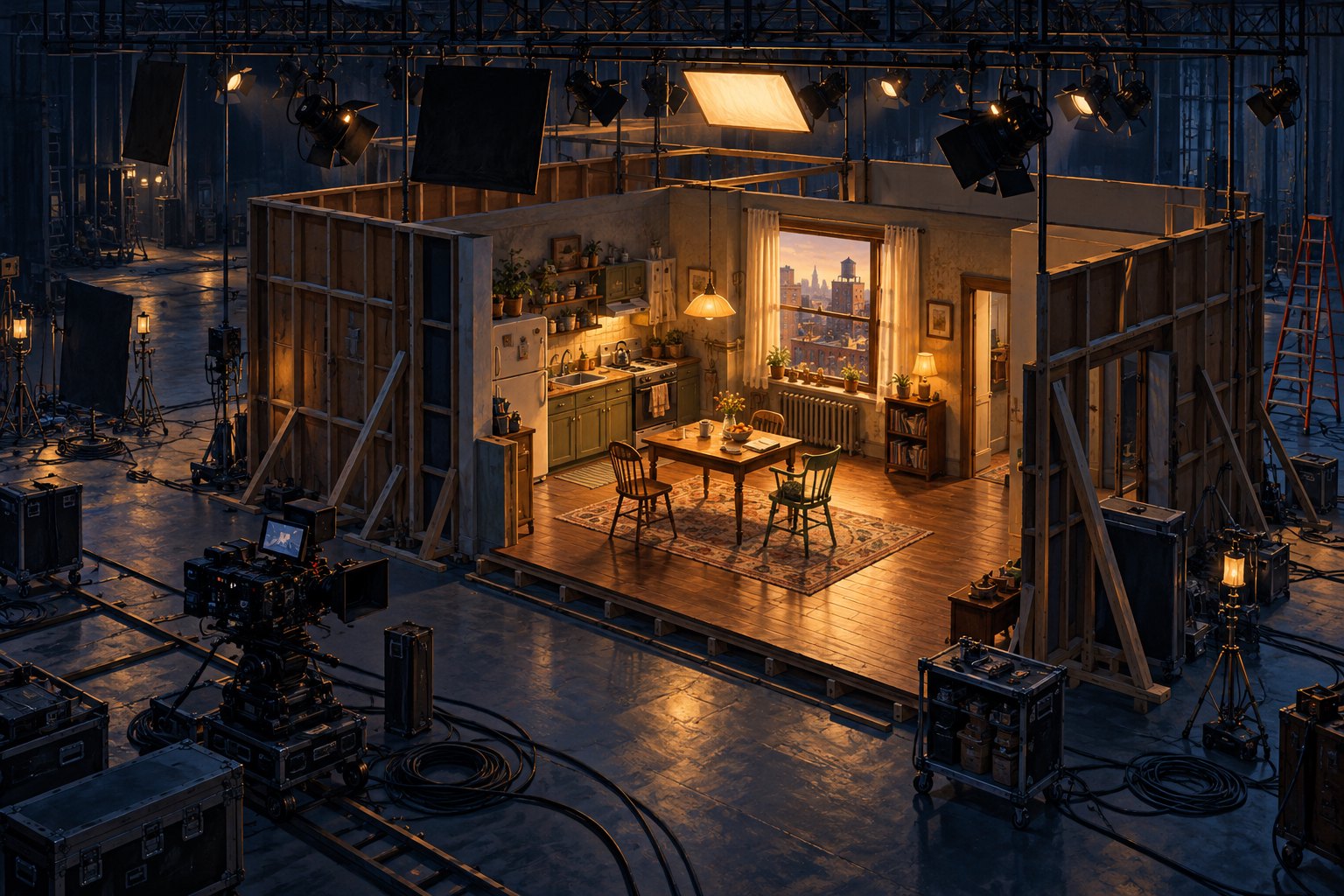
A constructed room can give filmmakers precise control over what an audience notices. Doorways, furniture, and camera positions can establish who dominates a conversation or who has nowhere comfortable to stand. An interior does not need to be spectacular to justify the craft invested in it.
Imagine two estranged siblings seated at a kitchen table. A wide composition might preserve the empty space between them. A closer angle might reveal that one keeps watching the doorway. The room supports both interpretations, but performance, framing, and editing determine which emotional relationship reaches the viewer.
Expanded production resources could support that kind of patient, detailed work. They could also support more elaborate images without stronger characterization. The reported surge makes the opportunity worth discussing; finished films and episodes will provide the evidence of how it was used.
Who gets to benefit from a busier production landscape?
Growth raises an access question alongside the creative one. Can projects with different budgets and schedules find the resources they need? Does increased demand leave room for emerging filmmakers? Are opportunities sustained long enough for people to develop their craft?
These are questions for evaluating the boom, not claims that any particular group has already gained or lost ground. Aggregate activity cannot answer them alone. A healthy production environment should be assessed through the range and continuity of work it supports.
Our examination of what success should mean in California’s film incentives debate raises a related issue: impressive totals become more useful when connected to clearly defined outcomes. For New York, the creative outcome worth watching is whether greater activity helps different kinds of stories become possible.
The audience’s test comes after the cameras stop
Viewers do not need to audit a production budget to judge the eventual result. Watch whether locations influence the action, whether interiors reveal relationships, and whether the city contains people with distinct lives beyond the protagonist’s immediate needs. Notice when a setting feels observed closely and when it merely looks familiar.
New York’s reported 2026 production surge creates grounds for interest, but the artistic verdict remains open. Its deepest potential lies in giving filmmakers the means to show how people inhabit space: who feels welcome, who feels exposed, who can leave, and who must stay. More production becomes culturally meaningful when those differences become visible on screen.
Original content by this site's editorial team. Published: October 30, 2026 at 11:41:51 PDT (Los Angeles time)