
The New York Film Festival’s second-week highlights offer an intriguing pairing: Bruno Dumont’s Red Rocks and Valeska Grisebach’s The Dreamed Adventure. Both appear in Richard Brody’s October 2 coverage, and both invite a character-centered question: what happens when following someone you care about takes you into territory you cannot control? [The New Yorker’s second-week coverage](https://www.newyorker.com/culture/the-front-row/the-new-york-film-festival-week-two-loose-talk-bold-action).
Plot spoilers follow. This essay analyzes documented story details and attributed critical observations; it is not a firsthand festival screening report.
Red Rocks: A Small Child in a World of Large Consequences
Written and directed by Dumont, Red Rocks follows Géo, a boy barely five years old, through a summer on the French Riviera. Two groups of children compete at cliff jumping, while friendship, rivalry, and early romantic feelings complicate their freedom. The film’s official synopsis establishes an unusually young protagonist for a story involving such physical and emotional risk. [Official film information](https://www.lesrochesrougesfilm.com/information).
That age changes the terms of interpretation. Géo cannot reasonably be understood as an adult adventurer with a settled idea of danger. He is still discovering what bravery means, what other people expect, and how quickly a companion can become a rival. A child’s determination can look heroic from one angle and frighteningly uninformed from another.
My reading of this premise is that its strongest tension lies in the distance between freedom and understanding. Being able to go somewhere does not mean knowing what will happen there. For a young character, that distance is enormous—and a coastal landscape offers very little protection from it.
Affection Becomes a Question of Belonging
Published accounts identify Géo’s attraction to Eve, who already has a boyfriend known as B, as a source of conflict. Ben Kenigsberg’s Cannes review also describes Eve’s comparatively affluent home and an unsupervised train trip to visit her grandparents in Italy. These details establish that the children’s relationships cross both personal and social boundaries. [RogerEbert.com’s Cannes review](https://www.rogerebert.com/festivals/cannes-2026-minotaur-red-rocks).
For Géo, the emotional problem is immediate: he likes someone whose existing attachments make that affection complicated. From an adult perspective, childhood couples can seem temporary or comic. From inside the relationship, however, being chosen or displaced has real force. Treating those feelings seriously does not require pretending the children possess adult emotional knowledge.
Eve’s more comfortable circumstances introduce another imbalance. Two children can share an afternoon without sharing the same opportunities, protections, or expectations. That distinction makes their companionship worth examining beyond its sweetness.
The broader question of conditional acceptance also runs through our analysis of belonging and privilege in School Ties. Here, the children encounter differences they may not yet have the language to explain.
Two Questions That Open Up the Characters
Brody records Géo asking at a gated home, “Why are you locked in?” He also quotes Eve asking about Manon, “What are you like with her?” One question concerns a physical barrier; the other asks whether affection changes someone’s behavior. [Brody’s account of Red Rocks](https://www.newyorker.com/culture/the-front-row/the-new-york-film-festival-week-two-loose-talk-bold-action).
These are useful lines to carry into a discussion of character because neither requires an elaborate speech to expose uncertainty. The speakers are trying to understand arrangements that other people may already accept. Their directness gives the questions their sting.
The Limit of Childhood Freedom
A less comfortable aspect of Red Rocks emerges in Kenji Fujishima’s review: B and Do corner and attack Géo, while Rouben receives comparatively little narrative development. Fujishima also describes a later instance of Géo jumping alone. Those observations complicate any reading of the film as an uncomplicated celebration of childhood independence. [Slant’s review](https://www.slantmagazine.com/film/red-rocks-review-bruno-dumont/).
Rivalry becomes consequential when one child’s hurt turns into another child’s physical vulnerability. The relevant question is no longer simply who likes whom. It is who feels entitled to enforce a claim, and what happens when the group provides no effective restraint.
The observation about Rouben raises a separate critical issue. A film can attend closely to its central child while leaving another child at the edge of its emotional world. Viewers should consider whose curiosity gets explored, whose jealousy acquires meaning, and whose presence mainly supports somebody else’s adventure. That is a useful test of the film’s perspective, even when its central relationship is compelling.
The Dreamed Adventure: Veska Knows More, but Still Takes the Risk
Grisebach’s The Dreamed Adventure offers an older protagonist with a history she cannot simply leave behind. Veska, played by Yana Radeva, is an archaeologist working near Bulgaria’s borders with Greece and Turkey. An encounter with her old acquaintance Saïd draws her into a smuggling operation; the distributor’s synopsis describes her assuming control of that operation after he disappears. [Janus Films’ synopsis](https://janusfilms.herokuapp.com/films/2361).
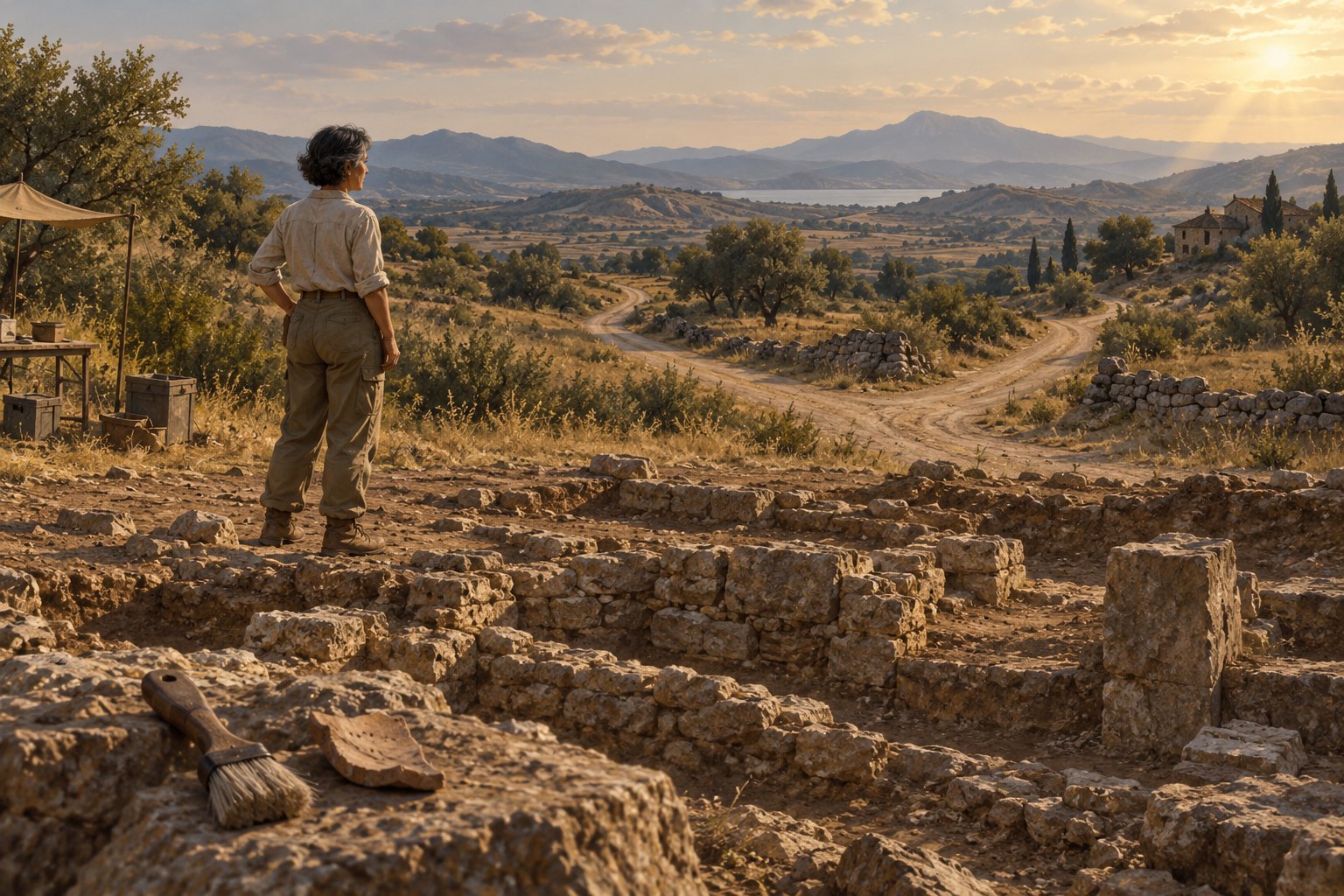
Veska’s position makes the familiar idea of an innocent outsider inadequate. Her connection to Saïd precedes the immediate danger. Helping him therefore involves memory, unfinished feeling, and some knowledge of the people around her. Each of those can sharpen judgment; each can also compromise it.
My interpretation is that her decision-making deserves attention precisely because competence does not guarantee safety. A capable person may enter a dangerous arrangement with good reasons and still misjudge its demands. The dramatic interest lies in how much responsibility she accepts as the situation changes.
That relationship between returning and reassessing oneself also informs our discussion of homecoming in Behemoth!. Familiar ground can carry obligations that remain invisible to visitors.
What These Two Highlights Reveal About Choice
Grisebach has described a working method that allows encounters with people and places to alter a planned film. Cannes’ account of her process emphasizes observation, dialogue, and predominantly nonprofessional performers. That context supports approaching Veska as a person whose behavior deserves patient attention, rather than reducing her to a function in a crime plot. [Cannes’ discussion of Grisebach’s filmmaking](https://www.festival-cannes.com/en/2026/a-look-back-at-the-filming-of-valeska-grisebachs-the-dreamed-adventure/).
The deeper connection between these festival highlights is the uneven relationship between desire and knowledge. Géo moves toward experiences he has scarcely begun to understand. Veska approaches danger carrying the knowledge—and attachments—of an adult past. Neither youth nor experience settles the question of how to act.
For viewers choosing between them, the distinction is useful: Red Rocks centers the unstable social world of childhood, while The Dreamed Adventure places personal history inside a criminal economy. Considered together, they suggest that independence is measured through particular decisions: whom to follow, when to intervene, and which obligations to accept after an apparently simple encounter becomes something more.
Original content by this site's editorial team. Published: October 3, 2026 at 09:13:45 PDT (Los Angeles time)