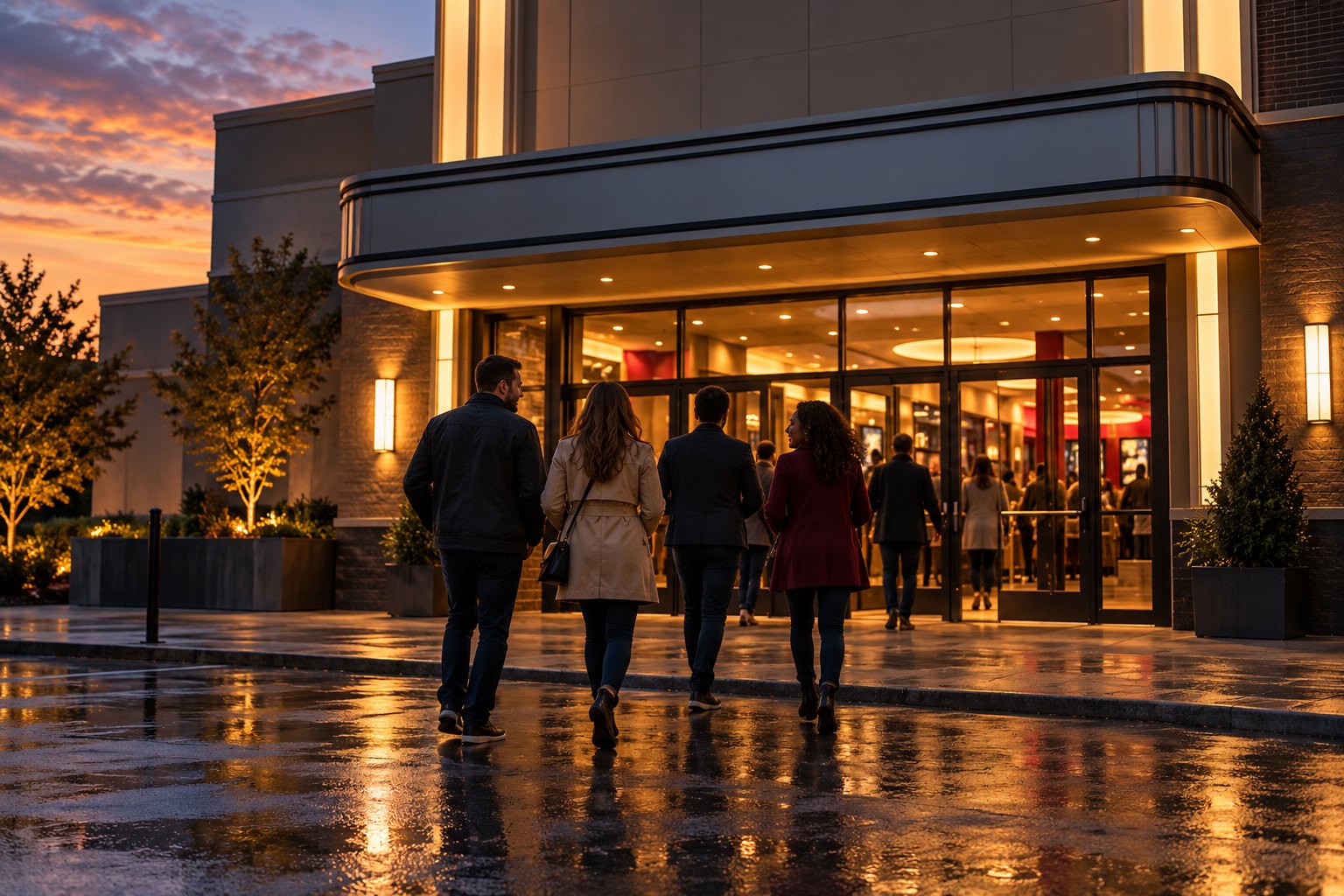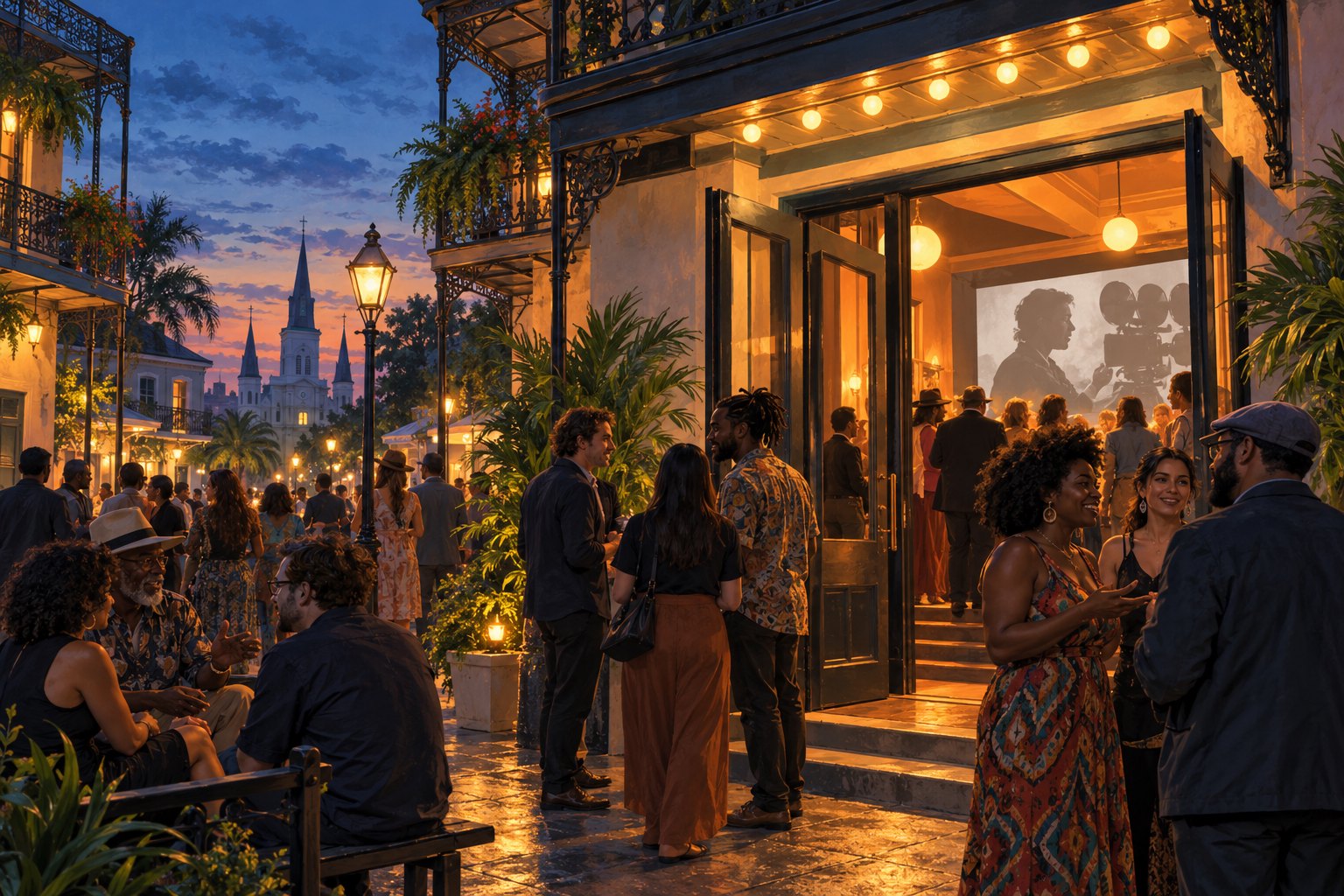
The New Orleans Film Festival invites a question that matters well beyond the screening room: what changes when the people associated with a place help determine how its stories are told? New Orleans Magazine’s headline, “New Orleans Film Festival Tells Our Stories Our Way,” puts ownership of the narrative at the center. The most interesting word is “way.” A location tells us where a film happens. A perspective determines whose experience makes that location meaningful.
This is spoiler-free film commentary about that framing, rather than a review of an individual festival selection. Its argument is that local storytelling earns its force through choices we can actually see and hear: whose desires organize a scene, whose speech receives patient attention, and whose contradictions survive the edit.
A City Becomes a Story Through Its People
Recognizable architecture can establish a setting in seconds. Establishing a life requires more. A street becomes dramatically significant when someone needs to cross it, avoids it, remembers it differently from a friend, or can no longer afford to live there. The difference lies in the relationship between environment and action.
For viewers approaching the New Orleans Film Festival through the idea of community storytelling, this offers a useful first test: does the place affect what people can do? If the scenery could be exchanged for another attractive location without altering the central relationships, the film may have a strong visual identity but a thin sense of lived experience.
A character-centered approach starts with immediate wants. Someone might want privacy, recognition, reconciliation, or simply an uneventful day. Those are hypothetical dramatic possibilities, not descriptions of festival films. Their value is that they make a community legible through individual stakes. A person becomes more than a representative when their wishes can conflict with what others expect them to represent.
That principle also informs our discussion of the working crew’s importance to Alien: attention to ordinary concerns gives larger cinematic ideas emotional weight. Regional filmmaking deserves the same close attention to the person inside the premise.
What Does Telling a Story “Our Way” Mean?
My reading of the phrase is that it makes a claim about artistic authority. That authority extends beyond appearing on camera. It includes deciding where a story begins, which background information matters, how a disagreement is presented, and when an explanation becomes unnecessary.
Consider an imagined family conversation. A version designed primarily to orient unfamiliar viewers might pause to explain every custom and reference. Another version might let the exchange move at the pace its participants expect, trusting context and performance to carry meaning. Neither approach is automatically superior. The critical question is whether the explanation serves the people in the scene or repeatedly interrupts them.
Similarly, a film can offer intimacy without pretending that every viewer will understand every detail immediately. An unexplained joke may first register through who laughs and who refuses to. A change in address can suggest affection or distance before its full significance becomes clear. Watching attentively means allowing understanding to develop.
Local authorship should not become a guarantee of artistic success, however. Familiarity can produce insight, but it can also leave assumptions unexamined. An outsider can listen carefully; an insider can simplify. The finished film still needs to demonstrate the quality of its attention.
Listening Is a Formal Choice
In documentary, listening has visible consequences. Does an interview retain hesitation? Does a speaker get room to complicate an earlier statement? Does the film move away as soon as a usable sentence arrives? These decisions shape whether a participant seems like a thinking person or a source of convenient evidence.
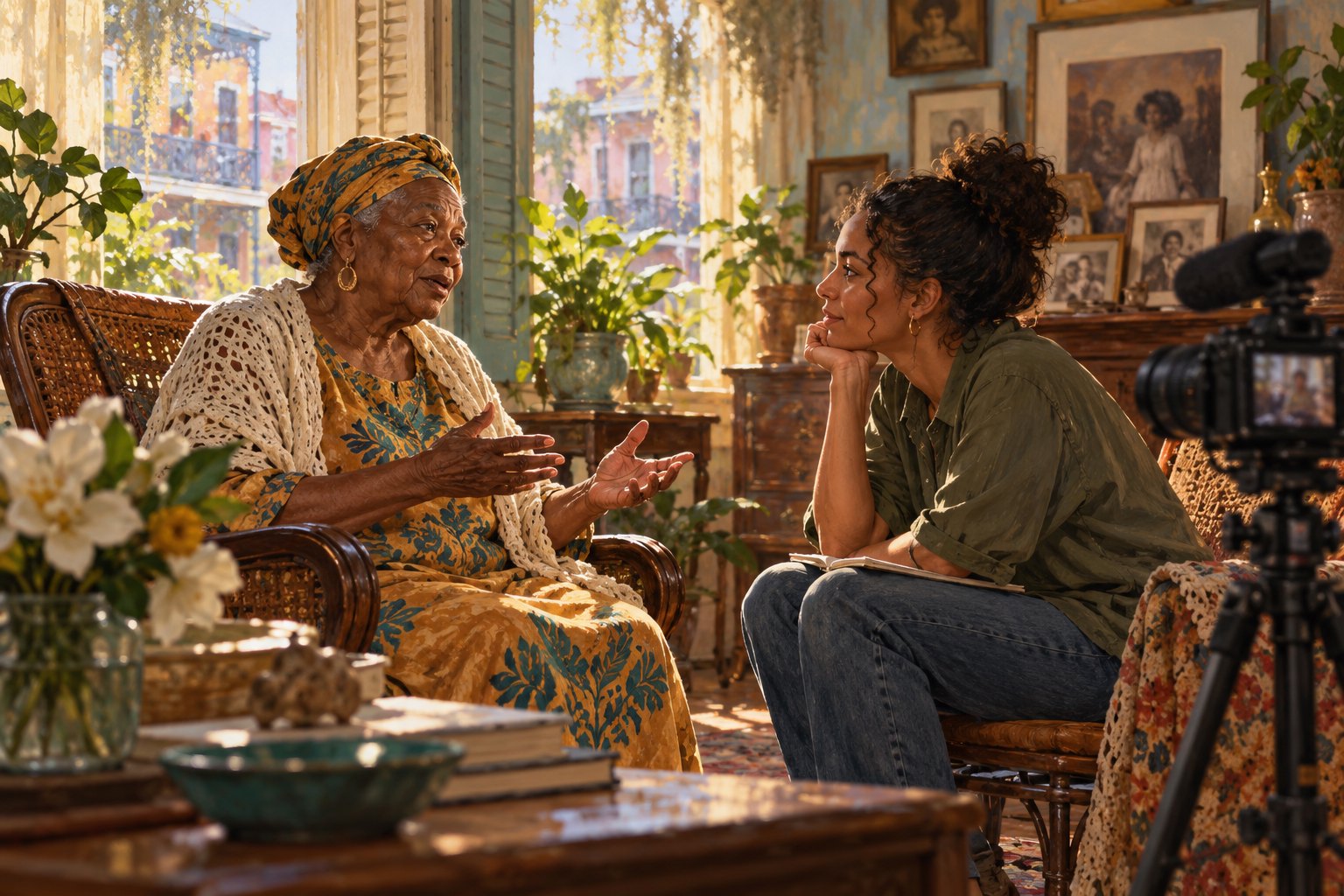
Duration alone does not settle the question. A long take can become intrusive, while a concise sequence can preserve someone's meaning with care. What matters is the relationship between the speaker’s intention and the argument constructed around it. Music, reaction shots, and juxtaposition can encourage us to trust, pity, admire, or dismiss someone before we have considered what they say.
This is especially important when evaluating a film presented through the language of community ownership. Access to a home or a personal memory does not make the camera neutral. Intimacy creates a responsibility to examine how that access becomes a story.
Our commentary on people and historical images in Imperium approaches a related critical concern: images acquire arguments through selection and arrangement. At a community scale, the same question remains useful—whose understanding of an experience does the editing invite us to accept?
Characters Need Room to Disagree
The word “our” can express belonging, but it should leave room for differences within that belonging. A city cannot be reduced to one temperament, one political position, or one preferred account of itself. A film that acknowledges this can make disagreement part of its texture without treating every conflict as a problem requiring resolution.
For character analysis, this means resisting the temptation to identify one person as the authentic voice and measure everyone else against them. Instead, examine what each person knows, what they misunderstand, and what they stand to lose. Two characters can care about the same place while wanting incompatible futures for it.
The most persuasive community stories, in my judgment, allow people to be funny, impatient, evasive, generous, and mistaken. Constant admiration can flatten a character as thoroughly as contempt. Respect becomes dramatically meaningful when it survives an unflattering moment.
That freedom also applies to genre. A story connected to New Orleans need not explain the city’s entire history or carry a public-service message to justify itself. Comedy, romance, suspense, and quiet domestic drama can all make a place felt through behavior. Cultural significance should leave artists room to entertain.
How to Watch With These Questions in Mind
Viewers do not need specialist vocabulary to evaluate perspective. A few concrete observations can make a post-screening conversation more useful than a general claim that a film felt authentic:
- Identify the central desire. What does the main character or documentary participant want, beyond the film’s larger subject?
- Follow the decisions. Who changes the direction of events, and who is mainly shown reacting?
- Notice the explanations. Which details receive clarification, and what does that suggest about the audience the film imagines?
- Listen to the sound. Does music illuminate an experience, or tell you how to judge someone before they finish speaking?
- Reconsider the ending. Does it emerge from the people’s experiences, or impose a tidier conclusion than those experiences support?
These questions are standards for viewing, not findings about any particular festival selection. They also allow praise to become specific. Saying a film gives someone room to revise a memory communicates more than calling it heartfelt; explaining how a neighborhood constrains a decision says more than calling the setting vivid.
The Deeper Stakes of a Local Screen
The strongest interpretation of the New Orleans Film Festival’s storytelling frame is that representation includes the freedom to determine emphasis. A filmmaker might place an everyday exchange at the center and leave a spectacular event in the background. That decision tells us what counts as consequential from within the life being portrayed.
For me, the promise of telling a city’s stories on its own terms is the possibility of encountering people who exceed the audience’s expectations. They need not explain everything, embody everyone, or arrive at a reassuring conclusion. The screen can make room for their particularity. That is where a place stops functioning as scenery and begins to feel like somewhere people live.
Original content by this site's editorial team. Published: October 24, 2026 at 13:17:04 PDT (Los Angeles time)