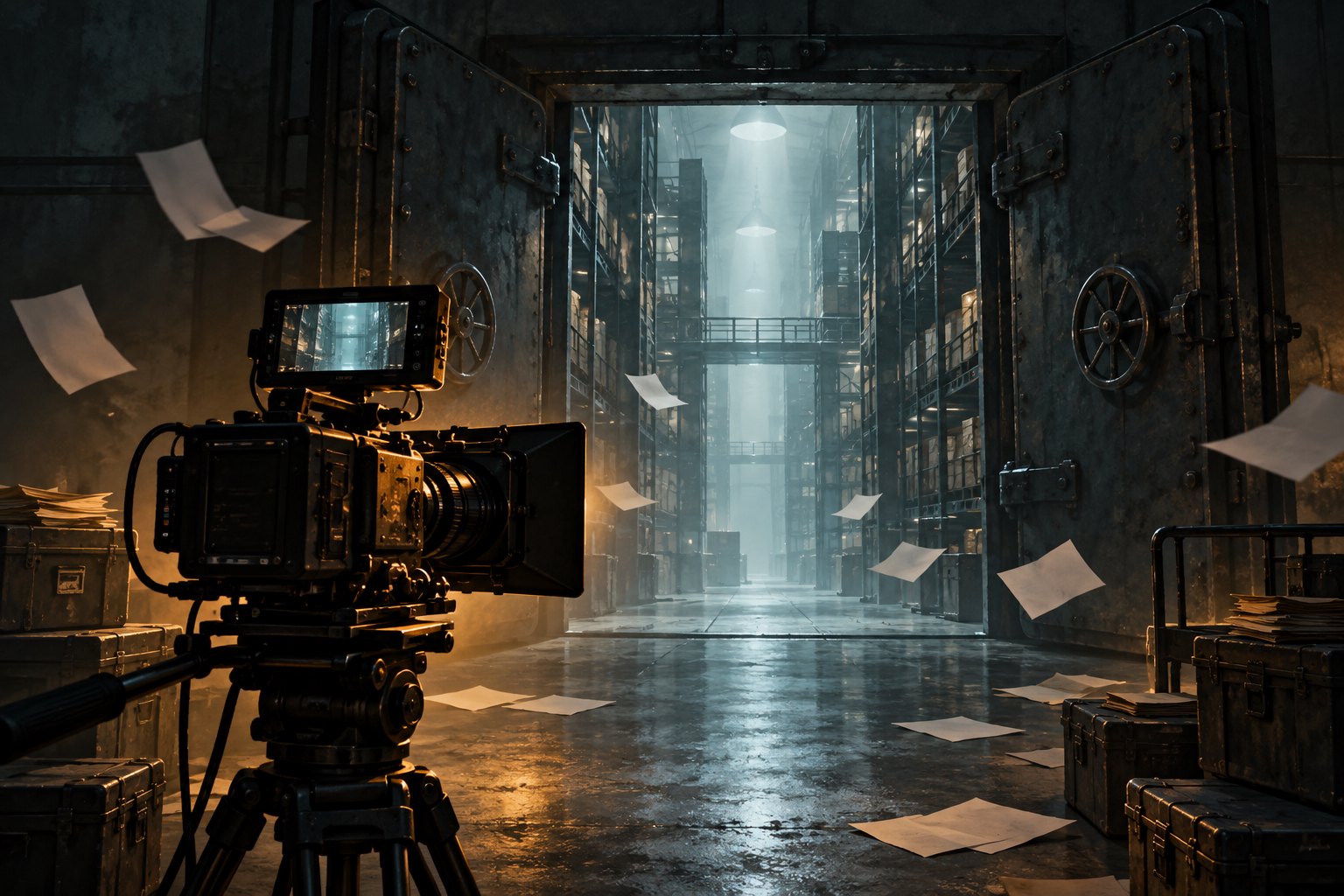
Neon’s SCP Foundation movie is challenging A24’s competing project through its approach to production. Deadline reports that Neon is pursuing an open-source production, making the method of bringing this material to the screen part of the rivalry itself. For viewers, the interesting question is what that choice might change about the eventual movie: whose imagination shapes it, whose perspective it follows, and whether its horror feels distinctive.
That is a promising subject for film commentary, but it is not yet a verdict on either film. A production announcement cannot establish the quality of a performance, the effectiveness of a scare, or the meaning of an ending. This is a spoiler-free analysis of the reported approach, not a review of a finished movie. Specific characters, dialogue, and plot developments should enter the discussion only when they can be established.
What Neon’s open-source approach actually tells viewers
The central reported distinction is straightforward: Neon is positioning its SCP Foundation project around open-source production while a competing A24 adaptation is also in the picture. That gives audiences a concrete difference to consider before there is enough evidence to compare the films as films.
It does not, by itself, explain every practical detail. The phrase open-source cannot tell a viewer who makes the final creative decisions, how contributions are selected, or which production materials become accessible. Nor should it automatically be read as an invitation for anyone to join the writing process. Those are separate questions requiring specific answers.
My interest in the approach is creative rather than promotional. It raises the possibility that a film’s relationship with its underlying material could extend beyond selecting recognizable imagery. But a production philosophy becomes meaningful to an audience through choices: the scenes that survive the edit, the perspectives allowed room to breathe, and the information a story decides to withhold.
The rivalry needs more than a winner and a loser
It is tempting to treat Neon versus A24 as a contest already decided by the announcement. One project has a production angle that invites discussion; therefore, the argument goes, it must also have the more compelling artistic vision. That conclusion arrives too early.
Neither a company name nor an attractive description of the process tells us whether a film will build tension. An open production approach could support an unusually strong interpretation. It could also produce a movie with fascinating intentions and weak dramatic connections. The same distinction between intentions and execution applies to its competitor.
For viewers, two adaptations are potentially valuable because they can offer different readings of related material. The useful comparison will eventually concern dramatic perspective, atmosphere, structure, and emotional consequences. A disagreement over what matters in a story can be far more interesting than a race to establish which company represents it best.
That is also why the question resembles the one behind our commentary on what an adaptation must add beyond an attention-grabbing premise. Recognition may bring people into a theater. The film still needs to give them a reason to care once they sit down.
Character perspective is where the approach must pay off
Without verified character or plot details, assigning motives to either movie’s protagonists would be invention. Still, character perspective offers a precise way to evaluate these projects when more material becomes available. The essential question is whose experience organizes the fear.
A character who knows more than the audience creates one kind of suspense: we watch for the moment their confidence fails. A character who knows less creates another: every new piece of information may change what they think is safe. These are general dramatic possibilities, not descriptions of either announced film.
My preference would be for an adaptation that makes knowledge emotionally costly. Learning something frightening becomes more powerful when it forces a person to reconsider a loyalty, a responsibility, or a previous decision. Exposition then does more than explain the world. It changes the character’s ability to live inside it.
The same standard applies to relationships. People become memorable when their incompatible needs shape what happens next. As our analysis of why the strongest movie duos change each other argues, a compelling partnership develops through pressure and consequential choices. Horror benefits from that pressure as much as comedy or drama does.
Collaboration still needs a clear dramatic shape
An open-source production approach invites questions about participation and authorship. It does not necessarily mean collective screenwriting, and it should not be judged as though that detail were already established. However participation is organized, the finished film will need a deliberate relationship between its parts.
Distinct creative voices can make a movie feel expansive. They can also pull its tone in competing directions. The editorial challenge is to preserve worthwhile differences while giving the audience something to follow: a developing question, an emotional pattern, or an accumulating sense of consequence.
Consistency need not mean making everything look and sound alike. A sudden change in style can be disturbing when it changes our understanding of what we have seen. It becomes distracting when it merely interrupts the tension. The distinction depends on placement and purpose, not on how many contributors worked on the material.
For Neon, the most persuasive outcome would be a movie whose creative openness is perceptible in the range and specificity of its ideas. A label in an announcement cannot provide that experience on its own.
What to look for as the films take shape
Future footage and production details will make a more grounded comparison possible. Three questions should help audiences separate meaningful information from positioning:
- Is there an identifiable point of view? Even a brief scene can reveal whether the camera follows someone’s fear or simply displays something ominous.
- Do the production claims become specific? Clear explanations of participation and decision-making would make the open-source description easier to assess.
- Does the adaptation work without advance familiarity? A viewer should be able to understand an immediate danger or emotional conflict without recognizing every reference.
Memorable dialogue and Easter eggs belong in a later, evidence-based assessment. Their value will depend on context: what a line reveals about its speaker, or how a background detail deepens a scene. Recognition alone is a limited form of pleasure.
The deeper question is what openness contributes to horror
Neon’s reported strategy makes the relationship between creative process and artistic result unusually visible. My reading is that its strongest potential lies in allowing a distinctive interpretation to emerge while acknowledging that other interpretations can exist alongside it.
That possibility gives the rivalry substance. The eventual achievement, however, must happen on screen. An SCP Foundation movie earns its place when its images create uncertainty, its characters make consequential choices, and its ending changes how we understand what came before. Open-source production is an intriguing starting point. The lasting argument will be made by the film.
Original content by this site's editorial team. Published: September 30, 2026 at 15:07:53 PDT (Los Angeles time)