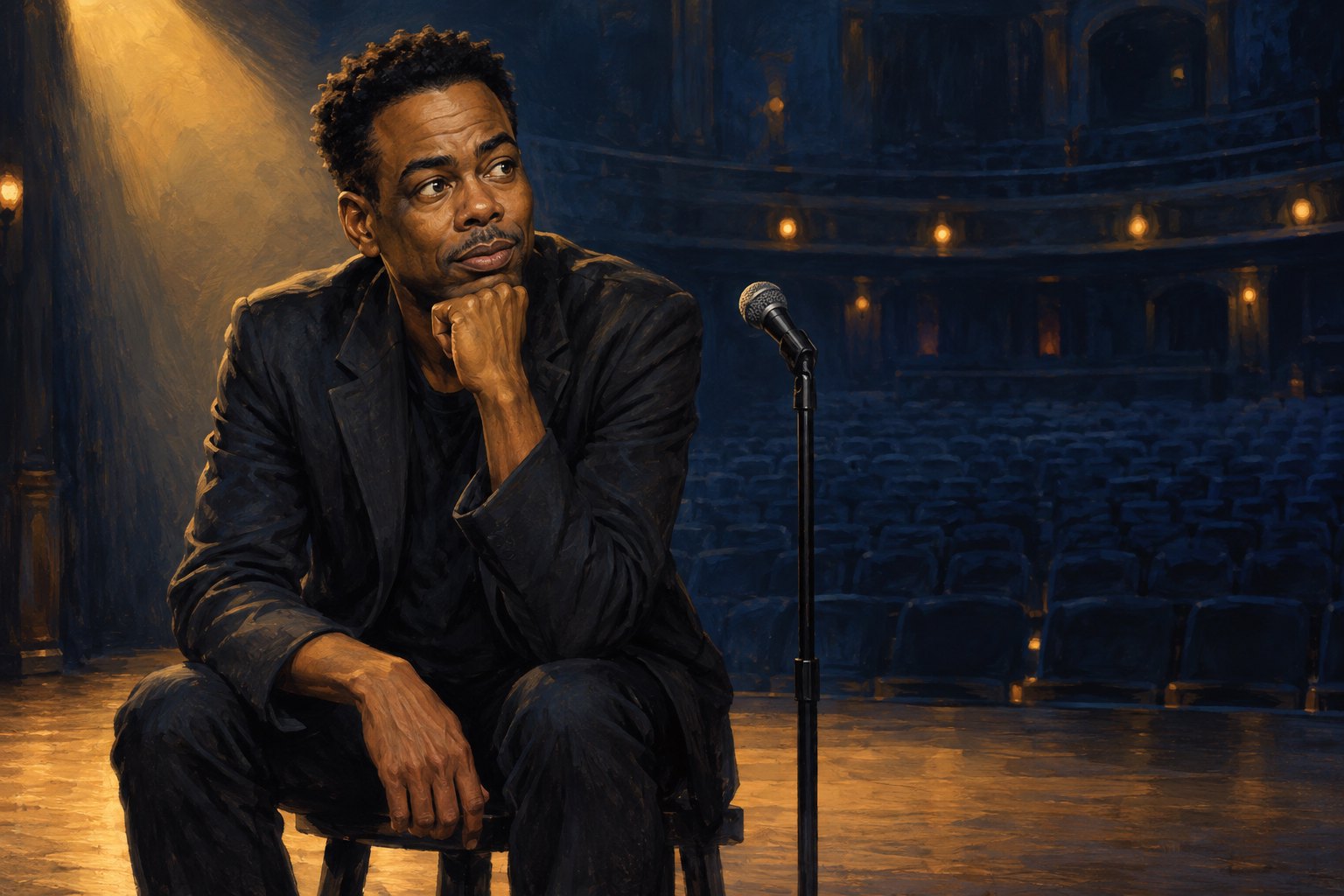
NAZA’s filmmakers addressed threats at the documentary’s New York City premiere, according to The Guardian. That news gives the screening a significance beyond the familiar business of introducing a film and discussing its reception. It raises a basic question about documentary culture: what happens to public conversation when the people presenting a work must also respond to intimidation?
The immediate answer should be straightforward. Filmmakers should be able to discuss their work without threats. Audiences should be able to question that work carefully. Those principles belong together, and the attention surrounding NAZA makes their relationship especially important.
This is commentary on the premiere and its implications, rather than a screening-based review. It makes no claims about unverified scenes, dialogue, or the film’s ending. The critical issue here is how to approach NAZA without allowing the circumstances surrounding its exhibition to decide its meaning in advance.
What the premiere establishes—and what it does not
The reported event establishes that threats became part of the public discussion at NAZA’s New York premiere. That alone deserves attention. A screening is a place where a work moves from its makers to an audience; addressing threats there introduces another concern into the exchange, one involving the conditions under which the filmmakers can speak.
But that basic account cannot establish every surrounding detail. The nature, origin, and consequences of particular threats require specific reporting. So do the filmmakers’ exact responses. Precision matters because a vague account can leave readers filling gaps with assumptions, including assumptions about events inside the theater.
It also cannot settle the film’s artistic quality. A documentary may be urgently worth discussing while still requiring close examination of its evidence, structure, and treatment of participants. Equally, objections to a documentary do not excuse intimidation. My judgment is that a useful response to NAZA’s premiere must preserve both distinctions from the start.
Threats can change the question an audience asks
Public controversy can steer a viewer toward judging courage, loyalty, or defiance before considering the work itself. In NAZA’s case, the premiere news creates that possibility: the encounter may become a referendum on supporting the filmmakers, with the film’s specific arguments pushed into the background.
Support for their ability to speak is a meaningful position. It is not, by itself, an account of what their film demonstrates. The strongest defense of documentary expression leaves room for audiences to investigate what they have heard and seen, rather than making approval a condition of solidarity.
The same standard applies to skepticism. A viewer can challenge an inference, identify missing context, or dispute an editorial choice. Useful criticism explains the objection and the evidence behind it. Threats offer no such explanation. They cannot tell an audience whether an interview is persuasive or whether a sequence supports the conclusion attached to it.
For readers following the premiere, this provides a practical distinction: assess statements about the filmmakers’ safety separately from statements about the film’s accuracy. Neither subject benefits when the two are treated as interchangeable.
Keep the people on screen within the discussion
A character-focused approach to documentary begins with a qualification: documentary participants are people whose lives extend beyond the finished film. Their appearances may be selected, shortened, and arranged, but they should not be understood solely as functions within a narrative.
Without verified access to NAZA’s scenes, assigning individual participants motives or describing their emotional journeys would be speculation. Still, its reception invites a concrete viewing question: when the film becomes available to a reader, how much space does it give people to explain their own experiences, limits, and decisions?
That question involves more than counting interview minutes. A person can appear frequently while being permitted only one role: witness, authority, opponent, or illustration of an argument. A revealing documentary allows viewers to understand what a participant knows, how they know it, and where their perspective ends. Whether NAZA achieves that requires examining the film.

This concern connects with our discussion of how a story’s built-in certainty can limit its characters. The standards for fiction and documentary differ, but the critical question travels: does the work let the people within it complicate its argument?
Listen for context, not just a memorable sentence
Premiere coverage often brings individual remarks to the foreground. A forceful sentence can communicate a filmmaker’s position quickly, but a statement at a screening and a statement inside a documentary serve different purposes. One responds to an immediate public situation; the other belongs to an edited work.
No unverified line should be presented as NAZA dialogue. More broadly, a memorable documentary quotation deserves attention to the question that prompted it, the material surrounding it, and the speaker’s basis for the claim. Eloquence can make testimony affecting. It cannot independently establish its scope or accuracy.
Our commentary on the distance between a public remark and a larger explanation explores a related interpretive problem. A statement can offer a compelling point of entry while leaving much of the underlying story unresolved.
A useful way to approach NAZA after the premiere
For audiences drawn to NAZA by this news, three questions can keep the eventual viewing focused:
- What does the film directly establish? Distinguish what is visible or documented from what a participant recalls and what the filmmakers infer.
- How does the editing connect its claims? Notice whether a transition provides evidence of a relationship or mainly encourages an emotional association.
- What remains unresolved? Consider whether uncertainty is acknowledged and whether the film gives viewers enough context to recognize the limits of its account.
These are substantive questions for a documentary, not reasons to dismiss it before watching. They allow engagement to continue beyond either admiration for the filmmakers or opposition to their position.
The deeper issue is the freedom to examine a film
The most consequential implication of NAZA’s premiere is that the freedom to present a documentary and the freedom to scrutinize it depend on the same public space. Intimidation damages that space. So does a discussion that reduces every response to a declaration of allegiance.
My view is that audiences serve a documentary best by giving its particular claims sustained attention. The filmmakers’ response to threats deserves to be understood on its own terms. The people, evidence, and editorial decisions within NAZA deserve equally specific consideration. Keeping those responsibilities together is how a premiere controversy can lead to a serious conversation about cinema rather than consume it.
Original content by this site's editorial team. Published: September 27, 2026 at 16:06:38 PDT (Los Angeles time)