NAZA raises a difficult question for documentary art: what happens when revealing a system of violence requires protecting the people who helped operate it? Its anonymous interviews promise access to decisions usually hidden from public view. They also create an uncomfortable imbalance between the visibility of Palestinian suffering and the concealment of those describing their involvement.
The strongest way to approach that tension is to hold two judgments together. Testimony can have substantial public value, and the conditions under which it becomes available can still deserve scrutiny. Disclosure does not automatically amount to accountability.
This is a critical analysis of the film’s documented premise and formal choices, rather than a firsthand screening review. It discusses its interview structure and themes without revealing the closing sequence.
What NAZA examines—and what its title conceals
Directed by Yuval Abraham and Rachel Szor, NAZA centers on nighttime conversations on Tel Aviv rooftops. Film at Lincoln Center describes its title as a military acronym used to express the number of civilians expected to die in an airstrike. Its account also places the documentary alongside investigative reporting published between 2023 and 2025. Those details establish the film’s subject: the relationship between institutional procedures and human consequences. [Film at Lincoln Center’s program description](https://www.filmlinc.org/nyff2026/films/naza/)
A numerical estimate can communicate anticipated harm while making the people represented by that estimate harder to imagine. That is the title’s central interpretive pressure. An audience must keep translating an administrative category back into individual lives.
For viewers, a useful question is therefore less whether the terminology sounds disturbing than what it permits a speaker to leave unsaid. Does a description explain who makes a decision? Does it identify alternatives? Does it acknowledge the people affected? Precision about a procedure can coexist with profound vagueness about responsibility.
The interviewees’ perspective: expertise as a possible defense
These are documentary participants, not fictional characters whose private motivations a reviewer can confidently narrate. Their explanations nevertheless invite close analysis of how people present themselves. A speaker may offer operational knowledge while limiting the moral significance of having possessed that knowledge.
In its discussion of the film, The Atlantic quotes one participant saying, “My role is technical,” and another comparing the experience to a “video game.” These brief statements suggest distinct forms of distance: a narrowly defined professional role and an experience mediated by a screen. They should be read as reported dialogue, not as a complete account of either speaker’s intentions. [The Atlantic’s assessment](https://www.theatlantic.com/culture/2026/09/missed-opportunity-documentary-movie-naza/688832/)
“My role is technical” is especially revealing as an argument. It describes a function, but it does not settle the ethical implications of performing that function. Designing, recommending, authorizing, and executing are different activities; separating them accurately matters. Yet dividing a process into tasks can also make each participant’s contribution appear morally smaller than its consequences.
My reading is that this distinction offers the most productive route into NAZA. Listen for the point at which an explanation of limited authority becomes a claim of limited responsibility. Those propositions are related, but one does not automatically establish the other.
Why the rooftop setting matters
The Venice festival’s official synopsis confirms the rooftop setting. In their accompanying statement, Abraham and Szor explain that cinema allows them to explore silence as well as spoken testimony. This is an artistic ambition beyond collecting information: the setting and duration of an encounter can influence how an explanation is understood. [Venice’s film entry and directors’ statement](https://www.labiennale.org/en/cinema/2026/venezia-83-competition/naza)
A rooftop places a conversation above ordinary street life. As a formal choice, that elevation invites an interpretation of distance: people discussing consequential decisions occupy a space physically removed from their consequences. That is an interpretation of the setting, not proof of what any participant feels.
The ethical risk is that secrecy can become visually seductive. Darkness and concealment may encourage viewers to associate privileged access with truth. A compelling atmosphere cannot establish the accuracy of a statement. Good documentary criticism must assess what an image makes us feel separately from what the accompanying evidence establishes.
The same distinction matters in our discussion of what a film about wartime violence asks of its audience: emotional attention has value, but it should lead toward careful understanding.
Anonymity protects access and limits scrutiny
Writing in Literary Hub, Steven W. Thrasher identifies source protection as a central ethical difficulty in NAZA. He describes the alteration of interviewees’ appearances and voices and questions the implications of protecting people recounting their own participation in violence. His response usefully directs attention toward a filmmaking decision that might otherwise be treated as a technical necessity. [Thrasher’s essay on documentary ethics](https://lithub.com/on-the-film-naza-and-the-ethics-of-documentary-art/)
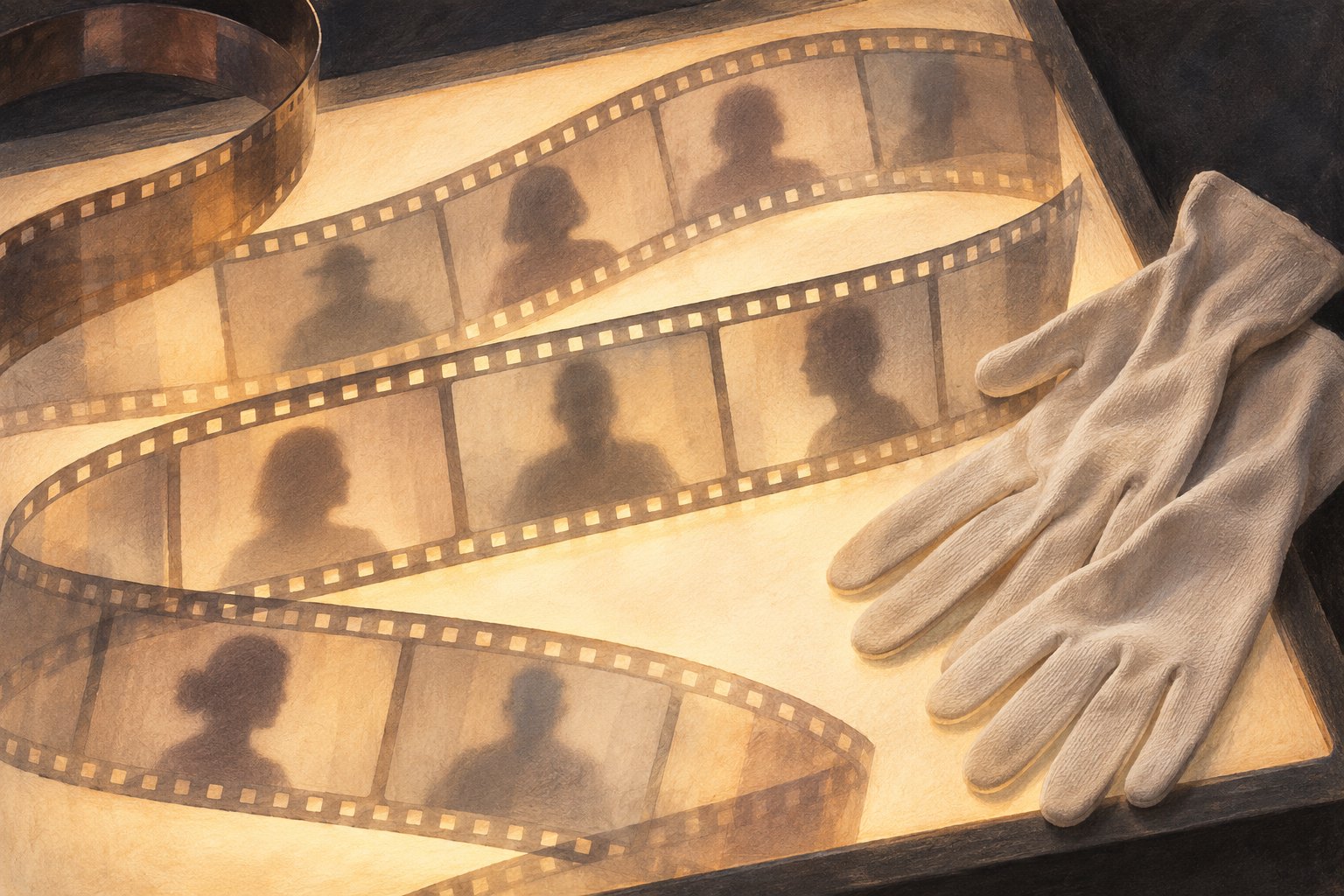
The argument for anonymity is substantial: an identifiable source may refuse to speak. Protecting identity can make otherwise inaccessible testimony available. But anonymity also restricts the audience’s ability to examine a speaker’s position, incentives, and proximity to the events described.
Neither automatic trust nor automatic dismissal answers that problem. The relevant questions concern verification. What did the person directly observe? What are they repeating? Which conclusions depend on corroboration outside their account? A documentary need not expose a confidential source to clarify these distinctions.
The Israeli military disputes the documentary’s allegations and says its targeting decisions involve human officers and commanders. The filmmakers maintain that their reporting was vetted. Those positions should remain attributed; neither cinematic conviction nor institutional denial independently resolves a disputed claim. [Associated Press reporting](https://apnews.com/article/0f3ecf2b862cb425f6a48d14fa17d8d6)
Who receives the audience’s attention?
Centering insiders creates another difficulty: the people describing violence can become the people an audience spends the most time trying to understand. Their hesitation, confidence, or discomfort may command attention that would otherwise belong to those affected.
Understanding a participant’s explanation can help expose a decision-making culture. It becomes ethically weaker when the participant’s emotional condition becomes the principal measure of the harm. Remorse is relevant to a person’s self-understanding; it cannot stand in for the experiences of others.
This concern connects with our analysis of Being Heumann and the limits of inspiration. In different kinds of politically engaged cinema, a satisfying audience emotion can prematurely close a question the film ought to keep open.
A deeper reading: disclosure is the beginning
NAZA’s documented approach supports a larger interpretation: bureaucratic language does more than describe decisions. It can organize the boundaries within which people recognize their own agency. A task becomes a role; a person becomes an estimate; an explanation becomes a defense.
The documentary’s ethical challenge extends to viewers. Hearing an insider speak can feel like reaching the hidden truth. Yet access should begin an inquiry rather than finish it. Who is speaking, what supports the account, whose experience remains outside the frame, and what responsibility survives the explanation?
For me, those questions provide the clearest standard for assessing NAZA’s artistic project. Its importance lies in bringing protected explanations into public consideration. Its unresolved difficulty lies in ensuring that the protection necessary to obtain testimony does not also shelter that testimony from scrutiny.
Original content by this site's editorial team. Published: November 3, 2026 at 04:16:31 PST (Los Angeles time)