Mike P. Nelson will direct the new Saw film from Lionsgate and Blumhouse Atomic Monster, according to Deadline. That establishes the filmmaker taking on the project; it does not establish what its characters, traps, or final reveal will be. The most interesting creative question is already available, however: can another Saw make us feel the difference between being offered a choice and being forced into somebody else’s definition of one? [Deadline’s director report](https://malaysia.news.yahoo.com/saw-lionsgate-blumhouse-atomic-monster-193000043.html)
The original movie offers a demanding standard. Its machinery matters, but its lasting cruelty comes from the relationship between two frightened men who need each other while being given reasons to distrust each other. For Nelson, that tension represents a richer inheritance than any individual instrument of torture.
Major spoilers for Saw (2004) follow. This is a retrospective critical analysis prompted by the directing announcement, not a review of the forthcoming film.
The directing announcement leaves the dramatic question open
A director’s appointment is meaningful without being a verdict. Nothing about Nelson taking the job proves that the next movie will understand its victims, sustain suspense, or find a satisfying place within the series. Those are questions the finished film must answer through performance, staging, and the information it gives its audience.
That distinction also guides our analysis of what a horror casting announcement can actually tell viewers. An encouraging name creates interest; the relationships on screen determine whether that interest becomes emotional investment.
My hope for Nelson’s film is specific: let the people inside the game remain more interesting than its instructions. The first Saw provides a useful example because its central predicament turns cooperation into something unstable.
Adam and Gordon occupy the same room but face different terrors
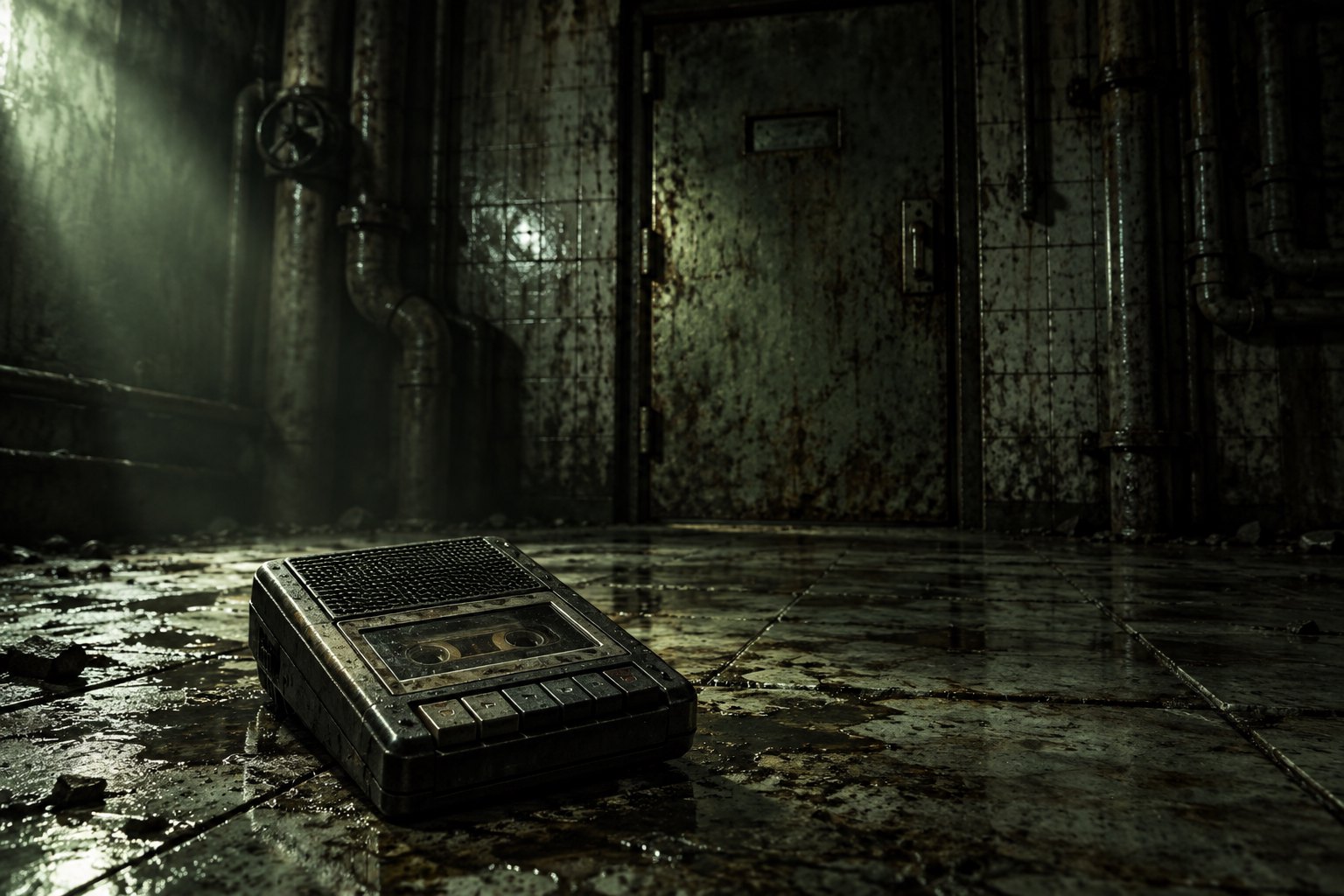
In the original film, Adam and Dr. Lawrence Gordon are chained on opposite sides of a filthy bathroom. Gordon is instructed to kill Adam before a deadline, with his wife and daughter threatened if he fails. Their shared confinement therefore conceals an unequal arrangement: the person Adam needs as an ally has been ordered to become his killer. [The original film’s plot synopsis](https://www.imdb.com/title/tt0387564/plotsummary/)
From Adam’s perspective, every helpful gesture has a possible second meaning. Gordon’s composure can look reassuring, then calculating. Expertise offers comfort only until the expert’s interests diverge from yours. The room becomes frightening because trust is both necessary and difficult to justify.
Gordon’s predicament reverses that pressure. He has reasons to care about Adam, but the threat to his family makes that concern feel potentially catastrophic. The film pushes him toward treating another human being as an obstacle between himself and the people he loves.
That is where the scenario acquires dramatic weight. Neither man needs to deliver a speech about morality. Their attempts to interpret each other already constitute an argument about it. How much reassurance can Adam accept? How long can Gordon preserve a sense of himself as reasonable?
For me, this is the original film’s strongest feature. It makes conversation dangerous. A new installment could change the setting and the mechanisms completely while preserving that pressure: two people trying to establish a shared reality when the rules reward betrayal.
Jigsaw’s language disguises the violence of his premise
“I want to play a game” is a chilling invitation because participation is compulsory. Later, “Game over” gives Jigsaw the last word. Between those phrases lies his claim to control the beginning, conditions, and meaning of another person’s ordeal. Both lines appear in the original film. [Filmsite’s scene and dialogue account](https://www.filmsite.org/saw.html)
Read through the victims’ experience, that vocabulary is a form of domination. A game suggests recognizable rules and some relationship between effort and outcome. Jigsaw borrows those associations while reserving the authority to decide what every action proves.
This matters when judging a new Saw. A compelling villain can believe his own explanation without the movie endorsing it. The camera’s attention becomes crucial: does it linger on his ingenuity, or does it make room for the person whose suffering his explanation cannot honestly account for?
The original gives viewers an uncomfortable double position. We want to solve its puzzle, even while the people trapped inside it need something much more urgent than a clever answer. My reading is that this friction supplies the movie’s deepest unease. Enjoying the construction can briefly align us with the person who constructed it.
The lost key makes the ending more than a clever reveal
At the end, the apparently dead man in the bathroom rises, revealing himself as Jigsaw. Adam also learns that the key to his restraint was in the bathtub; it disappeared down the drain when he awoke. The closing door leaves him screaming. [The ending’s sequence of revelations](https://www.filmsite.org/saw.html)
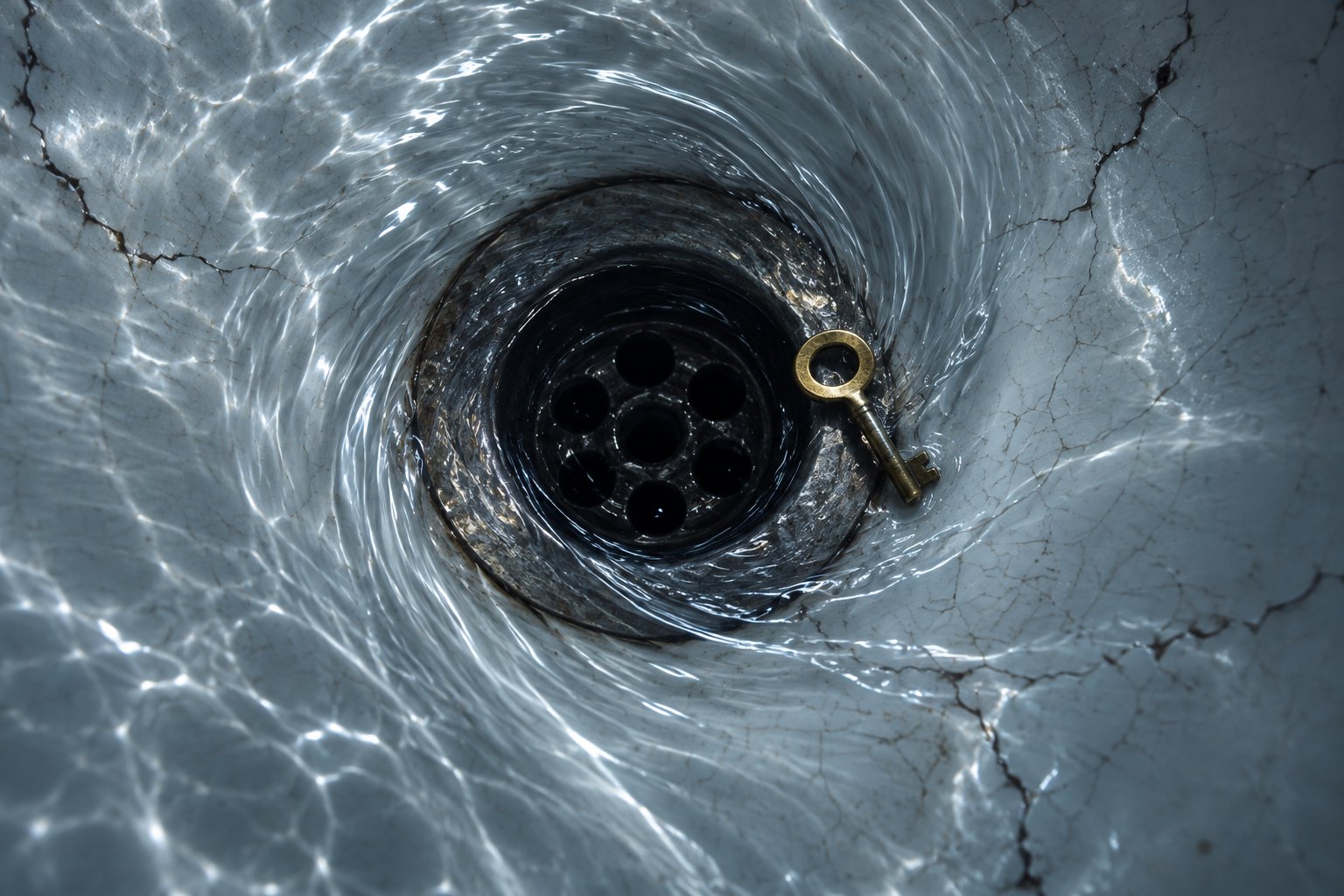
This symbolic illustration isolates the detail that makes the ending so bitter. A key conventionally represents an available solution. Here, the possibility of freedom has vanished before Adam understands what he needs to solve.
That is devastating from his perspective. Information arrives, but understanding does not restore agency. The explanation provides the audience with narrative satisfaction while giving the character almost nothing useful.
I find this more disturbing than the surprise alone. The reveal forces us to reconsider the authority behind the instructions. If a person can lose his chance before understanding the situation, survival cannot straightforwardly demonstrate superior will or moral worth.
For Nelson, the lesson need not be to reproduce that ending. It is to make a revelation alter the emotional meaning of what preceded it. A twist should change how we understand someone’s predicament, not merely identify the person who arranged the scenery.
What the new Saw should make us watch for
The original’s construction also has a limitation: the pleasure of reconstructing the scheme can compete with attention to the victims. Its puzzle is so forceful that discussion easily turns people into clues. I would welcome a new film that gives the consequences of terror as much dramatic weight as its delivery.
Three questions offer a practical standard for the eventual review:
- Can we understand a victim’s decision from inside the moment? Panic, incomplete knowledge, and attachment should shape behavior.
- Does each trap expose a relationship? A mechanism gains meaning when it changes trust, dependence, or responsibility.
- Does the ending complicate Jigsaw’s worldview? His certainty becomes more frightening when the film allows us to see what it excludes.
These concerns connect with the broader question of how claims of moral authority become material for horror. Declaring yourself a judge does not make your interpretation of another person complete.
The deeper horror is ownership of another person’s story
The most productive reading of Saw, for me, is that Jigsaw wants control over what suffering means. He constructs the ordeal and then claims the right to interpret the result. Resistance, fear, and survival become evidence within an argument the victim never agreed to enter.
Adam’s desperation resists that tidy account. Seen from his position, the essential demand is not for moral transformation but for another chance to act. That gap between the killer’s explanation and the victim’s experience gives the original its enduring force.
Nelson’s appointment opens a new creative possibility, not a guarantee. The strongest next chapter would keep that gap visible. Before asking whether a character deserves to survive, it should make us question the person who believes he has earned the right to ask.
Original content by this site's editorial team. Published: September 24, 2026 at 14:08:59 PDT (Los Angeles time)