
Martha Stewart says she “really screwed up” with a Halloween costume depicting a homeless person, according to CNN’s reporting. The controversy centers on a straightforward question: what happens when someone’s real hardship becomes someone else’s holiday performance? Stewart’s reported acknowledgment matters, but so does understanding why the costume drew criticism in the first place.
Reports describe backlash, a deleted costume photograph, and Stewart’s response that she was not mocking homelessness. Those elements establish a dispute about representation and responsibility. They do not establish her private motives, nor do they justify treating every reaction as equally informed. The criticism developed here concerns the choice and its meaning, rather than a verdict on Stewart’s entire character.
What Stewart’s Response Does—and Doesn’t—Resolve
The coverage emphasizes different aspects of the same controversy. CNN foregrounds Stewart’s acknowledgment of a mistake. People highlights her denial that she was mocking homelessness. Page Six describes a response that stopped short of an apology, while TMZ reports that she posted and deleted the costume photograph. These descriptions should not be flattened into one interchangeable statement: denying an intention, acknowledging a mistake, and apologizing perform different functions.
A denial of mockery addresses motive. An admission of error addresses judgment. An apology, when it identifies the offending choice and accepts responsibility, addresses the relationship between the person who acted and the people affected. A response can succeed at one of these tasks while leaving another unfinished.
That distinction helps explain why “really screwed up” is meaningful without making it the end of the discussion. The phrase places responsibility with the speaker. But the larger question remains what was wrong with the decision: an unfortunate misunderstanding, an unsuitable occasion, or the reduction of vulnerable people to a recognizable costume category?
Readers should also resist turning a cluster of headlines into a complete account of someone’s thinking. Our discussion of what viewers can and cannot conclude from a public celebrity dispute applies here: a public action can warrant scrutiny without giving an audience unrestricted access to private intentions.
Why Homelessness Is a Troubling Costume Premise
Halloween depends on recognition. A costume usually offers a compressed set of signals that lets another person identify a monster, profession, fictional character, or familiar celebrity. That compression is part of the fun. It also becomes a problem when the identifying category is a condition of deprivation.
Homelessness does not supply a single personality, appearance, or story. Treating it as a recognizable look encourages the audience to substitute a visual shortcut for the people it supposedly represents. The wearer gets a temporary identity; the people being referenced are left with an imposed one.
In my view, that imbalance is the strongest basis for criticizing the premise. The objection does not require proof that Stewart wanted anyone to suffer or consciously intended cruelty. A choice can be careless in its construction even when its creator rejects a cruel interpretation.
There is also a difference between depicting hardship and making hardship the attraction. A depiction can invite attention to someone’s circumstances, decisions, relationships, and needs. A costume organized around a broad social category risks making recognition itself the payoff: the viewer identifies deprivation, and the performance has completed its work.
What Film Criticism Reveals About the Missing Person
This is a celebrity controversy, not a movie with a plot to review. Nevertheless, the tools of film criticism clarify its central problem. Costume, framing, performance, and point of view all influence whether an audience encounters a person or merely a type.
In a thoughtfully developed screen character, clothing gains meaning through context. An ordinary coat might carry a history because we understand why its owner keeps it, what replacing it would cost, or whose memory it preserves. The garment participates in a life. Without that context, clothing can become shorthand that asks the audience to make assumptions before a character has spoken.
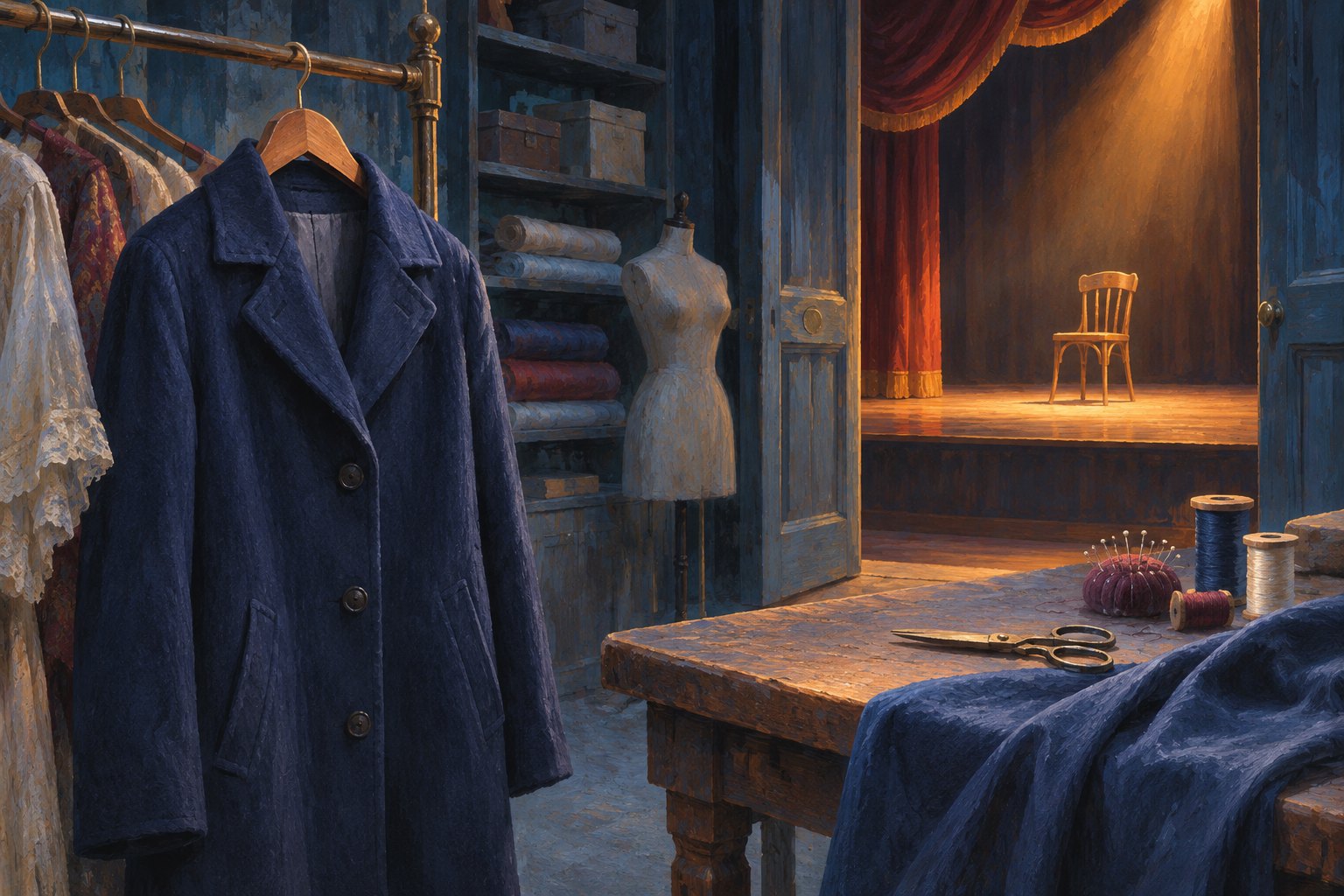
The useful critical question is therefore: whose perspective organizes the image? A celebrity costume naturally directs attention toward the celebrity’s transformation. Viewers are invited to register the recognizable person doing something unexpected. When that transformation invokes homelessness, the person experiencing hardship can disappear behind the spectacle of someone else impersonating it.
Our examination of who gets to make movies and shape their perspectives connects with this issue. Representation involves decisions about who controls the frame, who receives complexity, and whose experience becomes material for another person’s expression.
None of this means artists must avoid poverty, discomfort, or difficult social realities. Avoidance would create its own distortions. The stronger standard is specificity: give the represented person desires, contradictions, agency, and a perspective that exists beyond the observer’s reaction.
Intent Matters, but the Image Has Its Own Meaning
Stewart’s reported denial of mockery deserves to be represented fairly. It is relevant to how she explains her conduct. It does not, however, settle what the costume communicated. An audience encounters a choice through its visible form and setting, not through direct access to the creator’s intentions.
That principle is familiar in film analysis. A filmmaker’s explanation can illuminate a scene, but viewers still assess what the scene actually shows. Who receives sympathy? Who becomes the joke? What information is withheld? An explanation cannot automatically supply dignity or context that the presentation leaves out.
The same distinction helps keep this controversy proportionate. It is possible to accept that a person did not intend mockery while concluding that the chosen premise was demeaning. Conversely, criticizing an image does not authorize inventing a malicious motive or assuming that every aspect of its creator’s life confirms the criticism.
What Meaningful Accountability Would Address
A useful response would identify the decision clearly, explain why turning homelessness into a costume was objectionable, and avoid making the audience’s sensitivity the central problem. This is an editorial standard for evaluating accountability, not a claim about unreported actions Stewart has taken.
Removing an image can limit its continued presentation by the original account. It cannot explain the mistake by itself. Likewise, a forceful admission may signal recognition, but its value depends on whether the underlying issue is understood. The distinction matters because reputation management and responsibility can sound similar while directing attention toward different people.
Audiences have responsibilities here, too. Criticism loses focus when it becomes recreational humiliation or treats people experiencing homelessness as props in an argument about a celebrity. The point should be to challenge the representational choice without reproducing the same habit of pushing actual people out of the frame.
The deeper lesson of Stewart’s costume controversy is about perspective. A person who can put on a social identity for an evening also has the power to take it off. Someone living with the circumstances being depicted does not have that freedom. Recognizing that difference is where a more thoughtful performance—and a more meaningful acknowledgment of error—begins.
Original content by this site's editorial team. Published: November 2, 2026 at 04:08:21 PST (Los Angeles time)