Leif’s Halloween movie picks offer five ways to feel uneasy: The Uninvited, The Sentinel, The Changeling, Jacob’s Ladder, and Enys Men. Leif Larson’s selection for the Red Hook Star-Revue favors haunted places, with room for both classical storytelling and disorienting experimentation. For viewers choosing just one, our recommendation is The Changeling: a ghost story whose most disturbing question is what the living owe a child everyone else has forgotten. [Leif Larson’s Halloween selections](https://www.star-revue.com/leifs-halloween-movie-picks/)
Peter Medak’s 1980 film gives George C. Scott a compelling role as composer John Russell. Its appeal extends beyond an imposing house and unexplained noises. John’s bereavement makes him susceptible to the haunting, but it also gives him a reason to listen. Fear gradually becomes responsibility.
Spoiler notice: The opening guide keeps plot revelations light. The detailed review below discusses child murder, the central identity twist, and the ending.
Finding Your Way Through Leif’s Five Picks
The selection is useful because its films promise different experiences. Larson emphasizes atmosphere in The Uninvited, Brooklyn connections in The Sentinel and Jacob’s Ladder, and the unusual texture of Enys Men. Those observations suggest several routes through the lineup, rather than a single mandatory marathon.
- The Uninvited: Start here for a classical haunted-house story. Its siblings purchase a coastal home whose history becomes inseparable from their new life.
- The Sentinel: Consider this for the unsettling premise of a Brooklyn residence concealing something infernal, and for Larson’s interest in its neighborhood setting.
- The Changeling: Our choice for viewers who want an emotionally grounded mystery alongside supernatural suspense.
- Jacob’s Ladder: Larson’s recommendation for a more punishing experience, with New York locations adding an unsettling familiarity.
- Enys Men: Choose this when you are receptive to an isolated setting and experimental horror rather than straightforward investigation.
A useful pairing is The Uninvited followed by The Changeling. Both invite viewers to consider what purchasing or occupying a house actually gives someone authority over. Ownership can change hands while the past remains stubbornly present. That is our proposed double feature, rather than a viewing order prescribed by Larson.
John Russell: A Man Whose Worst Fear Has Already Happened
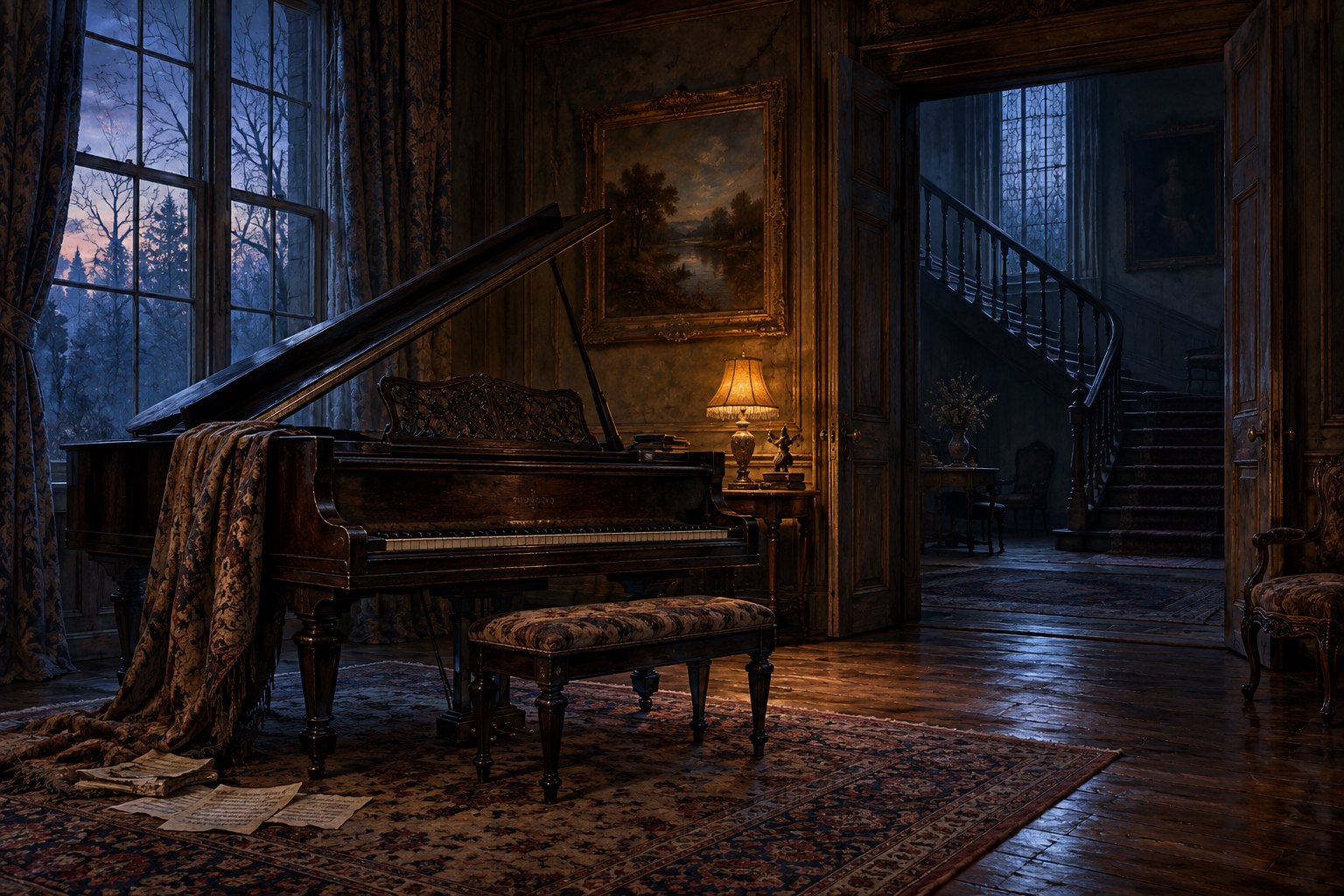
The Changeling begins with the deaths of John’s wife and daughter in a road accident. His subsequent move to Seattle offers a change of surroundings, teaching work, and space to compose. Claire Norman, played by Trish Van Devere, helps him rent the mansion where the haunting unfolds. [Film synopsis](https://www.rottentomatoes.com/m/changeling)
John’s predicament changes the usual haunted-house calculation. Leaving an unsettling building would not deliver him back to a safe, intact family. His deepest loss has already occurred. The mansion’s emptiness therefore makes emotional sense before it becomes frightening: here is a place large enough to accommodate a man withdrawing from ordinary life.
Scott’s gravity is essential. John does not need to advertise his suffering constantly for us to recognize it. His practical responses to strange events suggest someone trying to preserve the habits that make a day manageable. Work, observation, and explanation become ways of maintaining contact with the world.
That restraint also creates a limitation. Viewers who need escalating panic may find John unusually composed. To our eyes, however, his steadiness gives the disturbances greater force. The film makes a capable adult confront something that competence cannot settle.
The Ball Turns Memory Into an Intrusion
The film’s celebrated ball sequence makes a small object carry enormous emotional weight. A ball belonging to John’s daughter comes bouncing down the stairs. He throws it into the water from a bridge, only for it to return to the house. The sequence depends on recognition and repetition rather than an elaborate creature effect. [Scene account](https://www.the-back-row.com/blog/2013/08/10/robins-underrated-gems-the-changeling-1980/)
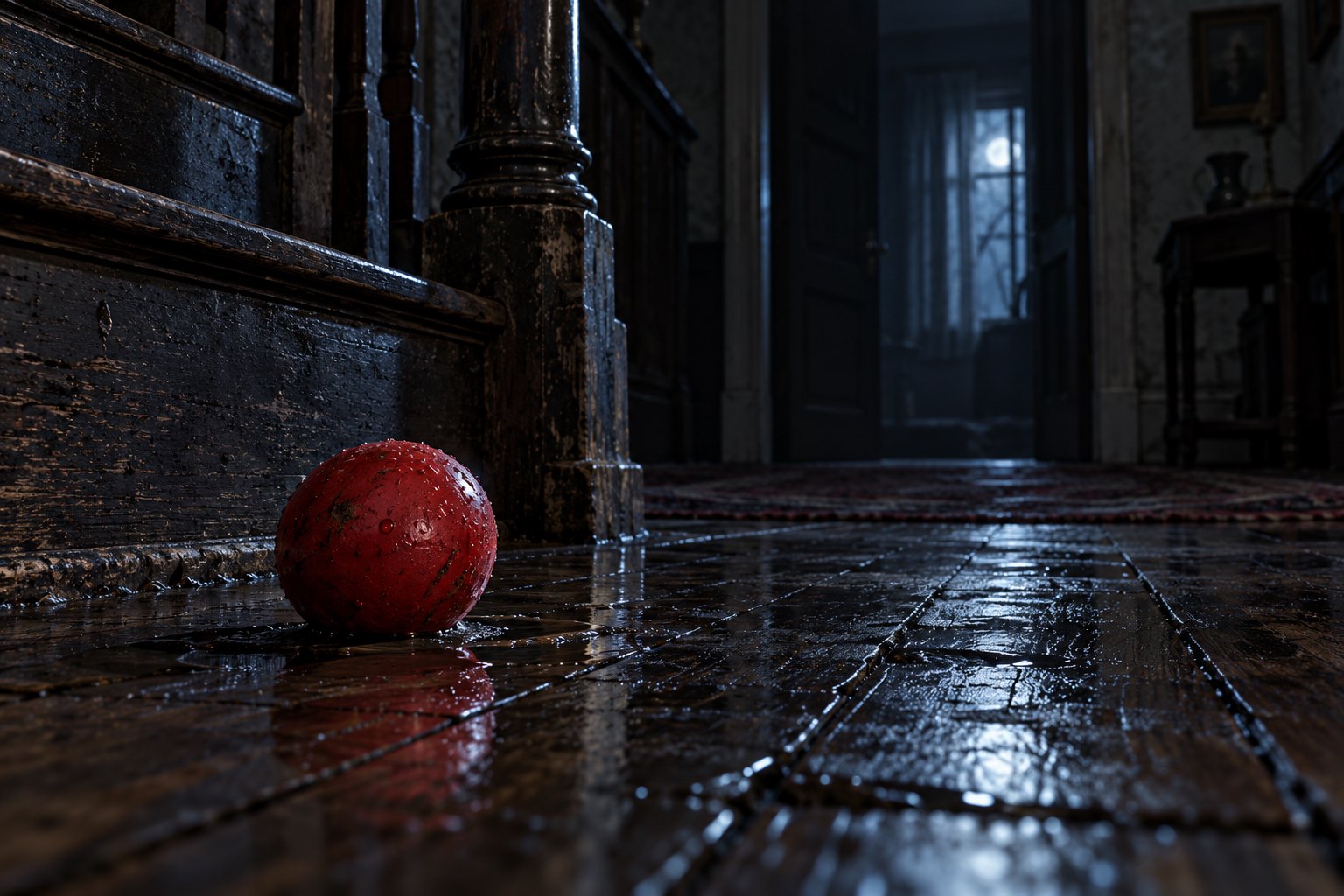
For John, the intrusion is cruelly intimate. Something has reached into the material remains of his relationship with his daughter. The object that should belong to private remembrance becomes a message he cannot control or refuse.
This is where the haunting gains its uncomfortable moral texture. A suffering spirit can deserve sympathy while using another person’s pain to command attention. The film does not require those two truths to cancel each other out. Our analysis of sympathy and coercion in Bride of Frankenstein explores a related difficulty: understanding a wounded figure does not automatically justify everything that figure demands.
Listening Gives the Ghost a Separate Identity
The investigation initially points toward a dead girl, Cora, but a recorded séance identifies the spirit as Joseph Carmichael. This correction matters. John cannot understand the house simply by finding a story that resembles his own loss. The child requires recognition as a separate person. [Plot and character details](https://en.wikipedia.org/wiki/The_Changeling_(film))
During the séance, the question “What do you want of John?” gives the relationship a revealing shape. John has become more than an occupant who needs protection. Someone is asking something of him. Later, his declaration “This isn’t blackmail” marks the distance between his purpose and the assumptions of the powerful man he confronts. [Dialogue transcript](https://www.springfieldspringfield.co.uk/movie_script.php?movie=changeling-the)
For a composer, listening is an especially fitting form of action. The film makes attention dramatic: replaying a recording, recognizing a tune, or distinguishing a voice can change what John believes. His movement toward another person’s suffering offers an alternative to isolation without pretending to cure bereavement.
The Carmichael Secret Makes the House Political
The mystery reveals that Joseph’s father murdered his disabled son and substituted another boy to secure an inheritance. That replacement grew into the influential Senator Carmichael, played by Melvyn Douglas. The senator did not commit the original murder; his position nevertheless rests on its concealment. [The Carmichael revelation](https://en.wikipedia.org/wiki/The_Changeling_(film))
This distinction gives the confrontation its force. John brings evidence of a life erased, while Carmichael hears a threat to the account of himself he has always trusted. Money and authority make it possible to resist that evidence. They cannot make the evidence cease to exist.
Read this way, the mansion preserves an arrangement of power: one child disappears so that another identity can prosper. Joseph’s disability is part of the father’s calculation, exposing a worldview in which a child’s worth depends on financial usefulness. The supernatural horror grows from an entirely human decision.
Readers interested in how stories expose the violence beneath privilege may also find a useful companion in our discussion of power and moral perspective in Red Rising.
What Remains After the Fire
The burning mansion and Carmichael’s death bring the confrontation to an end, but the concluding return to the music box prevents complete reassurance. The film leaves a small, intimate sound where a grand building once stood. [Ending details](https://en.wikipedia.org/wiki/The_Changeling_(film))
Our reading is that the film’s deepest concern is recognition. John cannot recover his daughter, and exposing Joseph’s murder cannot restore the boy’s life. What he can do is refuse the convenience of forgetting. His grief becomes a capacity to acknowledge someone whose suffering was deliberately excluded from the family story.
That makes The Changeling a particularly rewarding choice from Leif’s Halloween picks. Its investigative passages sometimes explain more than the atmosphere needs, but its emotional structure holds: an abandoned child reaches a bereaved father, and listening draws that father back into moral engagement. The haunting lasts because the film makes being afraid only the beginning of paying attention.
Original content by this site's editorial team. Published: October 17, 2026 at 00:26:34 PDT (Los Angeles time)