La Bola Negra directors Los Javis and star Guitarricadelafuente are set to be honored at Miami Film Festival Gems, according to Variety. For readers looking for the essential news, those are the central names and the event. The announcement brings attention to both the filmmakers shaping the work and a performer helping bring it to life.
That combination offers an interesting starting point for film commentary. Recognition can encourage audiences to discover a movie, but it also establishes expectations before the opening scene. In this case, the attention falls on a creative relationship: direction and performance, and the ways audiences experience them together.
This is spoiler-free commentary on the honors announcement, rather than a review based on a screening. A judgment about the movie’s characters, dialogue, or ending requires the film itself. The announcement supports a discussion of recognition and expectations; it does not establish how any particular scene plays.
What the Miami recognition brings into focus
The most useful detail in the news is that Los Javis and Guitarricadelafuente are being recognized in connection with the same film. A director’s name can become shorthand for an entire production, while a star’s face can dominate its public identity. Placing both in the conversation gives viewers a reason to think about how those contributions meet.
My reading of the announcement is that its strongest editorial angle lies in that shared attention. It invites curiosity about the relationship between the film’s overall construction and the human presence within it. That is a more specific question than whether an honor makes a movie worth watching.
There is also a practical distinction for audiences: an announcement about people receiving honors does not, by itself, establish a competitive prize for their film. Nor does it settle questions about screening access, distribution, or release timing. Those details require their own confirmation. Readers should be able to understand the recognition without having to disentangle it from assumptions about the movie’s availability.
Why direction and acting belong in the same conversation
We often discuss direction and performance as separate accomplishments. In practice, the boundary is difficult to locate. An actor makes a gesture; the framing determines how clearly we see it. A pause develops tension; the editing determines whether that tension has time to register. A voice becomes quieter; the surrounding sound can make that change intimate or nearly invisible.
These are general principles of screen storytelling, not descriptions of scenes from La Bola Negra. They explain why the combination of honorees is worth considering. When audiences eventually assess Guitarricadelafuente’s performance, the visible result will also reflect choices about distance, duration, rhythm, and perspective.
The reverse matters too. A meticulously arranged image can remain emotionally remote unless a performer gives the audience something to read within it. Direction provides conditions for a scene; acting can introduce hesitation, resistance, or ambiguity that makes those conditions feel inhabited. Neither contribution needs to overwhelm the other.

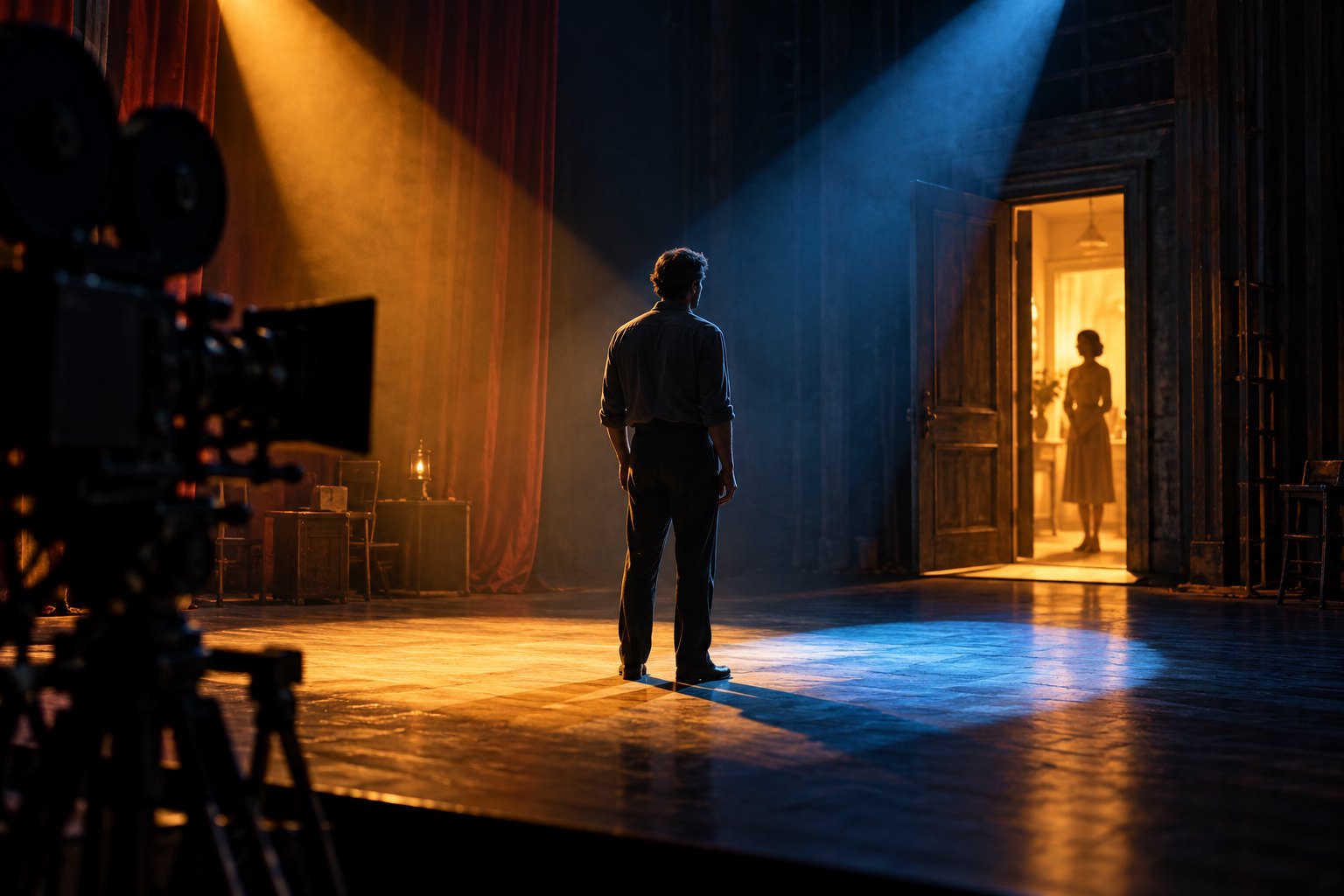
The conceptual image above illustrates that collaboration. It does not reproduce a production setting or a scene from the movie. The empty chair leaves the central question open: what happens when a performer enters the space that filmmakers have prepared?
Keep the character separate from the honoree
For Guitarricadelafuente, recognition creates a particular viewing challenge. Once an audience knows a performer is being celebrated, it can start searching for conspicuous evidence: a major speech, a dramatic transformation, an emotionally explosive moment. That search may overlook quieter work.
A character becomes convincing through continuity as much as intensity. The important question is often whether one decision grows believably from an earlier encounter. Does the person listen differently after being hurt? Does confidence change depending on who is present? Does a later action complicate an initial impression? These are useful questions to bring to a screening, without presuming how this film answers them.
They also protect the distinction between a performer’s public identity and a character’s interior life. Whatever draws someone to Guitarricadelafuente, a character-centered review should eventually explain what the person onscreen wants, what stands in the way, and what changes under pressure.
Our guide to understanding theme through a character’s hardest choice develops that approach. It is especially helpful when publicity has already supplied an impressive set of labels: return to choices and consequences, then ask what meaning the movie earns through them.
What a close reading of Los Javis’ direction would need
The recognition of Los Javis naturally directs attention toward authorship. But a useful assessment of their work on La Bola Negra would need to identify decisions within this particular film. Calling direction assured, expressive, or visionary means little unless the criticism explains what the camera, sound, editing, and staging actually accomplish.
Perspective would be an essential place to begin. Whose experience organizes a scene? When does the audience know more than a character, and when is it held inside that character’s uncertainty? A shift in perspective can alter our sympathy without changing the underlying event. Describing that shift precisely is more revealing than attaching an adjective to the filmmakers.
Dialogue deserves the same care. A memorable line acquires meaning from its speaker, listener, timing, and consequences. Without verified dialogue and its dramatic context, quoting supposed highlights would create a false impression of access. A future close reading should examine how a line changes meaning across a scene, rather than use it as decoration.
How to approach the film after the announcement
For prospective viewers, the Miami news works best as an invitation to pay attention. It identifies artists whose work is being celebrated and supplies a reason to investigate the film. It cannot determine an individual viewer’s response in advance.
A useful approach is to separate three stages: what attracts you before watching, what you experience during the film, and what remains afterward. The honors belong to the first stage. Emotional involvement, confusion, surprise, and resistance belong to the second. Critical interpretation begins when you examine the relationship between those responses and the movie’s specific choices.
Our discussion of looking beyond festival connections when discovering films considers a related problem. Institutional recognition can help a title reach your attention; the viewing experience supplies the evidence for your judgment.
The deeper significance of sharing the spotlight
The most promising implication of this announcement is the opportunity to discuss screen authorship as a relationship. Los Javis and Guitarricadelafuente occupy different creative roles, yet audiences encounter their contributions within the same unfolding moments. Recognition of both can make that interdependence more visible.
For La Bola Negra, Miami Film Festival Gems now provides a public occasion to celebrate its directors and star. The next critical task is more intimate: to understand how their work allows characters to exist beyond the names attached to the production. That interpretation must come from the film. The honors give audiences a reason to look; the characters will have to give them a reason to keep thinking.
Original content by this site's editorial team. Published: October 21, 2026 at 22:08:38 PDT (Los Angeles time)