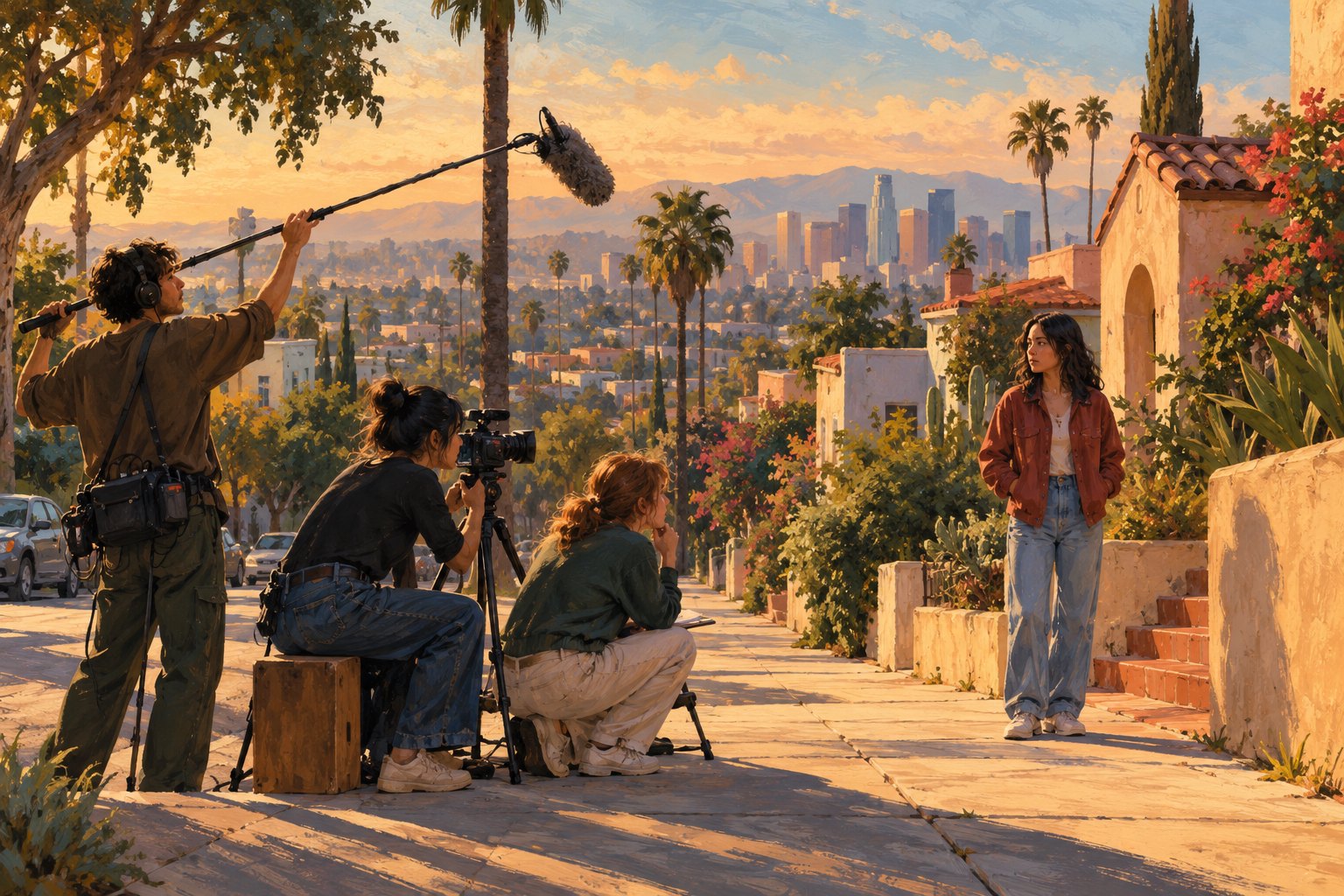
Los Angeles is making micro-shoot permits free, but the question for student filmmakers is whether that saving makes a planned film possible. Annenberg Media reports that USC film students are uncertain about how much the change will help. That tension deserves attention: removing a fee can be useful while leaving the hardest decisions on a small production unresolved.
My assessment is that free permits deserve a welcome measured against what students can actually accomplish with them. The strongest case for the change is practical. If a permit expense is the obstacle keeping a manageable project from moving forward, removing it matters. If the obstacle lies elsewhere, the same waiver may barely change the production plan.
What a free permit can—and cannot—tell us
The reported development establishes the central issue: L.A. is making these permits free, and USC students are questioning the benefit. It does not, by itself, establish that every student production qualifies, that every location becomes available, or that every expense associated with shooting disappears. Those distinctions matter when a filmmaker turns an announcement into a budget.
There is also a difference between eliminating a charge and simplifying a process. A fee concerns money; an application involves preparation, decisions, and time. A useful assessment should examine both, without assuming that changing one automatically changes the other.
The students’ uncertainty should therefore remain uncertainty. It is neither proof that the measure will fail nor evidence that students dismiss financial help. Its editorial value is the question it raises: how closely does this particular intervention match the obstacles encountered while making a film?
The budget that determines whether a scene gets shot
Consider a hypothetical student short built around two people having a difficult conversation outside an apartment. The camera setup might be modest, yet the scene still needs performers who can arrive together, usable sound, sufficient daylight, and a place where the team can work. Depending on the project, transportation, food, equipment, and access to the property may also require resources.
These are examples of production considerations, not a documented expense list for the USC students in the report. They illustrate why the value of a waiver depends on the budget surrounding it. A saving can cover another essential need, or it can leave a project facing an expense that remains out of reach.
The most useful comparison is the same production before and after the change. Does the filmmaker gain a shooting day? Can the crew reach a more suitable location? Does the project simply cost slightly less? Each outcome has value, but they represent different levels of assistance.

Location access changes the story inside the frame
For a film audience, permitting can seem far removed from acting, editing, or character development. Yet a location helps determine what a scene can communicate. A conversation on a public sidewalk has different possibilities from the same exchange behind a closed bedroom door: strangers might pass, someone might hesitate to speak, and either character might walk away.
Imagine that hypothetical short following a character who wants to apologize but cannot bring themselves to enter another person’s home. A threshold gives the conflict physical form. Move the entire scene into an available classroom, and the filmmaker must find another way to express the same hesitation. The alternative might work beautifully, but the choice changes the storytelling.
Our character-focused analysis of Halloween explores how ordinary surroundings can acquire dramatic force. The broader lesson for student filmmaking is that space deserves the same attention as dialogue. Affordable access can expand the expressive choices available to a director.
That does not mean an exterior location automatically improves a film. A room chosen carefully can be more revealing than an impressive street used without purpose. The creative benefit lies in giving filmmakers a workable choice.
Small crews still need time to make good decisions
A production can use little equipment and still ask demanding things of its collaborators. An actor may need another rehearsal to make a pause feel motivated. A camera operator may need to adjust a composition so that a character’s distance from someone else becomes legible. A sound recordist may need to identify a distracting noise before it undermines the scene.
When evaluating support for small shoots, I would ask whether it creates room for those decisions. Saving money can help if it reduces the pressure to rush or frees resources for an essential task. But a zero-dollar permit does not itself provide rehearsal time, resolve conflicting schedules, or produce a clean recording.
This is also why production access and artistic achievement require separate judgments. Our commentary on the commercial prospects of Gods Don’t Give Gifts considers the distance between a project gaining support and earning its eventual critical response. Here, too, improving the conditions for filmmaking is valuable without guaranteeing the quality of the finished work.
How a student producer can assess the actual benefit
A practical response begins with a specific production plan. Before treating the announcement as a solution, a student filmmaker can work through four questions:
- What does the scene require? Identify the people, equipment, location, and working time needed to preserve its dramatic purpose.
- What must be confirmed? Establish the applicable eligibility requirements, application process, timing, and location permissions before relying on a waiver.
- Which expenses remain? Separate the permit charge from other potential costs so that one saving does not obscure the full budget.
- What changes creatively? Decide whether the saving protects rehearsal, improves a location choice, supports sound recording, or simply reduces the amount the team must raise.
This approach avoids assigning the policy more power than it has. It also gives a modest saving its proper credit. For a project close to being feasible, a small change can be decisive.
Judge the measure by the opportunities it opens
A meaningful evaluation would look beyond the existence of a free permit category. Useful questions include whether students understand it, whether eligible projects can use it without disproportionate effort, and whether it enables shoots that otherwise would not happen. These are proposed measures of success, not outcomes established by the announcement.
The deeper issue is who gets to practice filmmaking under conditions that allow them to learn. A student needs opportunities to discover that a performance changes with another take, that a location alters a character’s behavior, or that an ambitious idea requires a different approach. Those discoveries happen through making work.
L.A.’s free micro-shoot permits could contribute to that opportunity. The USC students’ uncertainty keeps the standard concrete: help should be judged by what becomes possible on an actual production. For viewers, the eventual benefit would be visible in films whose settings, performances, and character choices reflect creative intention—and in the emerging filmmakers who get the chance to make them.
Original content by this site's editorial team. Published: October 28, 2026 at 06:24:17 PDT (Los Angeles time)