
Klara and the Sun places an artificial companion inside a painfully human arrangement: a family wants help, a lonely girl wants connection, and the newcomer wants to belong. The question raised by Variety’s sharply negative review of Taika Waititi’s adaptation is whether its reassuring tone leaves enough room for the disturbing implications of that arrangement. This is an analysis of the film’s confirmed premise and reported storytelling, rather than a firsthand screening verdict.
Spoiler notice: The discussion below covers illness, family grief, and character relationships described in published coverage. It does not reveal the ending.
The problem begins with what everyone wants from Klara
Directed by Waititi and written by Waititi and Dahvi Waller, the film adapts Kazuo Ishiguro’s novel. Jenna Ortega plays Klara, an Artificial Friend who forms a connection with Josie, played by Mia Tharia. Amy Adams plays Josie’s mother. Sony’s synopsis establishes a household affected by loss and a strained mother-daughter relationship, with Klara’s arrival bringing the possibility of healing. [Sony Pictures’ official synopsis and credits](https://www.sonypictures.com/movies/klaraandthesun).
That premise contains a useful contradiction. Klara wants a home, but the family has a use for her. Those desires may overlap without being identical. Being welcomed because someone enjoys your company is different from being welcomed because you can make a troubled household function.
My reading of this setup is that the film’s strongest potential lies in that unequal bargain. A companion can be cherished and still be treated as equipment. Affection does not automatically cancel ownership, just as gratitude does not necessarily mean someone recognizes your needs.
Klara’s perspective: belonging with conditions attached
For Klara, helpfulness can become a route to acceptance. That makes her optimism more interesting than a simple personality trait. If usefulness is the condition of belonging, every problem she cannot solve threatens the place she hopes to occupy.
There is a substantial difference between innocence and a lack of interior life. An innocent character can notice something accurately while misunderstanding its significance. She can accept an explanation that the audience distrusts. She can offer comfort without recognizing what another person is asking her to surrender.
This is where Variety’s criticism becomes relevant. Its review argues that the characterization makes Klara persistently hopeful without giving viewers a sufficiently vivid understanding of her consciousness. It also describes later problems with her digital memory. Those are the reviewer’s observations, not an independent assessment here. [Variety’s review of Klara and the Sun](https://au.variety.com/2026/film/global/klara-and-the-sun-review-41429/).
The distinction matters because memory loss has emotional force only when particular memories matter. An audience needs to understand why an encounter belongs to Klara, why she returns to it, and what losing it would take away. Otherwise, damaged memory risks becoming a general signal of sadness instead of the erosion of a specific self.
Josie’s perspective: friendship should leave room for disagreement
Josie’s role deserves scrutiny beyond the comfort Klara provides. A young person living in a strained household may want attention, privacy, reassurance, and independence at the same time. Those wishes are contradictory only if we expect loneliness to make someone uncomplicated.
A friendship becomes dramatically persuasive when both people can surprise or disappoint each other. Perfect availability can relieve isolation, but it does not necessarily establish equality. If one participant exists to accommodate the other, their closeness carries a question that affection alone cannot answer.
For Josie, the meaningful issue is therefore whether Klara can become someone she recognizes as separate from herself. Can she value her companion without making every interaction about her own needs? That is an interpretive question raised by the premise, not a claim about an unverified scene.
Our examination of Anna’s longing to be chosen and the choices that follow explores a related distinction: emotional recognition becomes convincing through behavior. A declaration of devotion is a beginning; the demands it places on a relationship are the story.
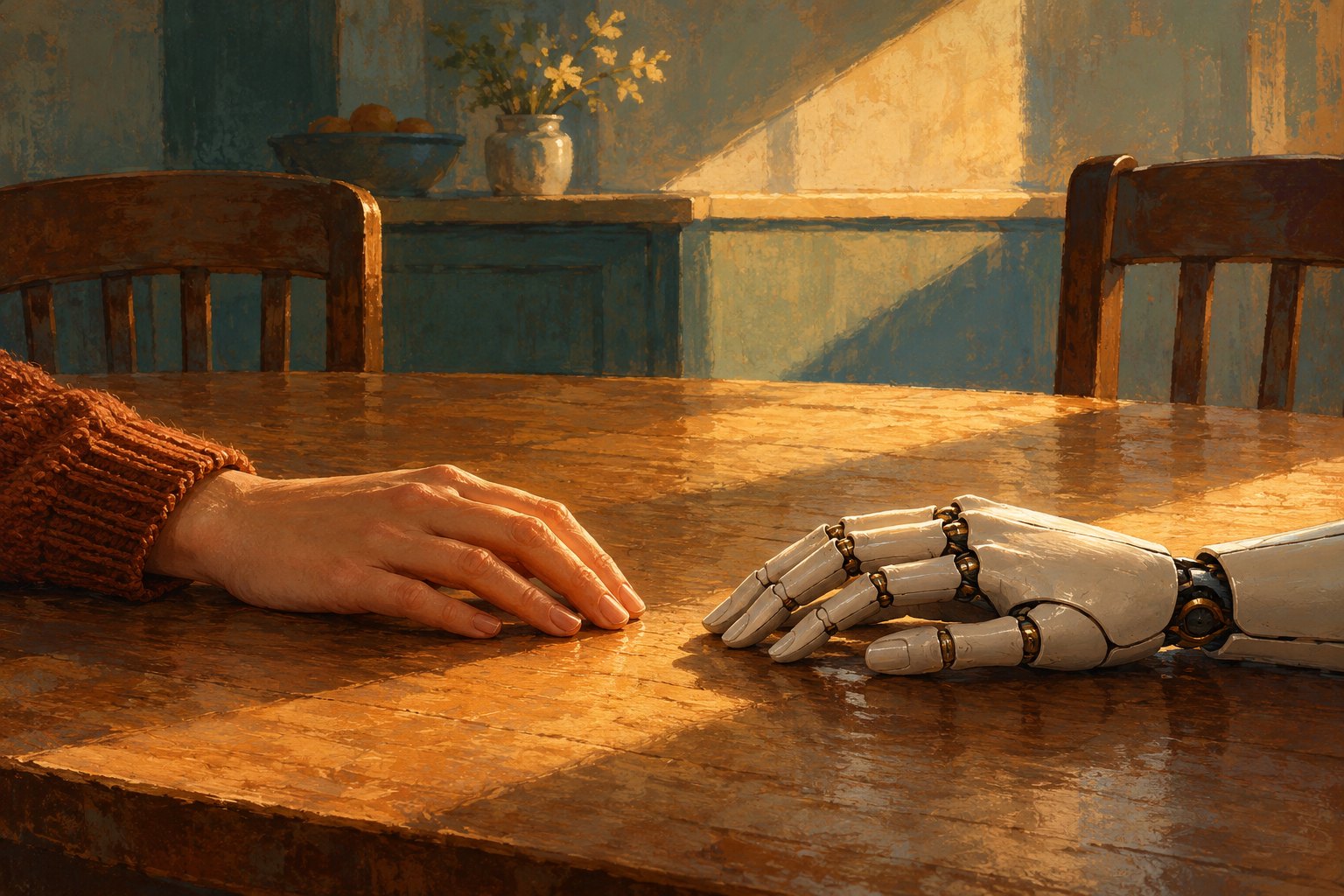
A mother’s grief can explain a demand without making it fair
Published coverage gives the family’s distress a more specific shape. A Shot’s review describes Josie’s mother as grieving an older daughter and identifies tension around Klara’s growing relationship with her. It also describes Klara’s determination to help the sick Josie. [A Shot’s account of the film’s character relationships](https://ashotmagazine.com/klara-and-the-sun-review-jenna-ortega-elevates-dull-script/).
Viewed through the mother’s position, an artificial companion offers something emotionally dangerous: the suggestion that an unbearable situation might become manageable. That promise need not be explicitly made to exert pressure. Someone who has already experienced loss may see possibility where another person would see limits.
The ethical difficulty is that understandable suffering can produce unreasonable expectations. A parent’s fear deserves compassion. So does the being expected to absorb that fear and turn it into reassurance.
My interpretation is that this relationship should resist a tidy division between a cold adult and a warm machine. Grief can coexist with tenderness, defensiveness, gratitude, and control. The more those impulses remain visible together, the less the mother becomes an obstacle placed in Klara’s path and the more she becomes a person whose love has difficult consequences.
Why warmth needs an uncomfortable edge
There is nothing inherently unsuitable about humor in a story involving illness or artificial life. A misunderstanding can expose an assumption that everyone else takes for granted. A funny response can reveal how people avoid saying what frightens them.
The decisive question is what happens after the laugh. Does it deepen our understanding of a relationship, or does it let everyone escape an uncomfortable moment? Repeated escape can make a film feel emotionally evasive even when its intentions are affectionate.
Adaptation also involves more than retaining recognizable events. As our discussion of how a book-to-film change can reshape a character’s memories considers, changing the way information reaches an audience can change the emotional meaning of the story. Klara’s perspective needs its own cinematic logic; familiarity with the novel cannot supply it on the film’s behalf.
The deeper question: who gets to need care?
The most compelling interpretation of Klara and the Sun begins with reciprocity. We readily understand why a human might need an artificial friend. The more difficult question is whether that human can accept obligations in return.
That shifts the discussion away from a simple test of whether a machine can convincingly express affection. A convincing performance of care may be enough for a customer. A relationship asks what happens when the caregiver becomes inconvenient, confused, or unable to help.
Variety’s harsh response should remain a critic’s judgment, not a substitute for every viewer’s experience. But it directs attention toward a worthwhile standard: Klara must matter beyond the emotional improvements she brings to others. The story’s deepest possibility is that belonging should survive the end of usefulness. Whether viewers find that idea fully realized will determine how much remains after the film’s warmth fades.
Original content by this site's editorial team. Published: October 17, 2026 at 21:41:34 PDT (Los Angeles time)