Jon Watts will direct the next Star Wars movie, according to Variety. The appointment invites a practical question: which parts of his filmmaking deserve to make the journey? His Spider-Man: Homecoming offers a revealing answer through its uneasy relationships between a young hero and the adults who think they understand him.
This is a retrospective assessment of Watts’ work, not a review of the forthcoming movie. The directing report alone does not establish its story, cast, or release date. What Homecoming does establish is an ability to make ambition uncomfortable—and to turn an ordinary conversation into a threat.
Major spoilers for Spider-Man: Homecoming follow.
Peter Parker mistakes recognition for readiness
Released in 2017 and directed by Watts, Homecoming follows Tom Holland’s Peter Parker as he tries to reconcile school life with the opportunity represented by Tony Stark. Michael Keaton’s Adrian Toomes, the Vulture, becomes his principal adversary. The studio’s synopsis makes Peter’s desire to prove himself central to the premise. [Sony Pictures’ film overview](https://www.sonypictures.com/movies/spidermanhomecoming)
Peter’s problem is more specific than ordinary teenage impatience. Having experienced the Avengers’ world, he struggles to find sufficient meaning in his own. A neighborhood emergency feels like an audition for a bigger assignment. Helping someone and demonstrating that he deserves promotion become dangerously entangled.
Holland makes that confusion sympathetic. His eagerness can be funny, but it also exposes how easily a young person can mistake access for affection. Peter wants Tony to notice him because that attention seems to certify everything he hopes is true about himself.
My reading is that the film works best when it lets those motives coexist. Peter cares about people. He also wants an impressive life. His immaturity comes from assuming that the second desire will automatically serve the first.
That distinction gives Watts’ prospective Star Wars work a useful point of comparison. A protagonist’s hunger for adventure becomes dramatically interesting when the adventure exposes a mistaken belief about adulthood. The destination can be extraordinary; the misunderstanding needs to feel recognizable.
Tony Stark is an imperfect measure of success
After the ferry disaster, Tony confiscates Peter’s advanced suit. Peter protests, “I’m nothing without this suit.” Tony answers, “If you’re nothing without this suit, then you shouldn’t have it.” The exchange converts an argument about equipment into a crisis of identity.
Peter hears the withdrawal of trust. Tony sees evidence that his protégé cannot yet manage the responsibility attached to his gifts. Both perspectives make emotional sense, which is why the scene carries more weight than a straightforward lecture.
Yet Tony’s authority deserves scrutiny. He helped make extraordinary recognition available to Peter, then expected the teenager to develop a measured relationship with it. His concern is understandable; his mentorship is inconsistent. The film becomes richer when we recognize that the adult delivering the lesson helped create the confusion.
There is also a limitation here. Homecoming depends heavily on Tony as the person whose approval establishes the stakes. Even Peter’s effort to become independent unfolds within a framework Tony supplies. The film’s affection for its famous mentor sometimes softens the harder questions raised by his influence.
For Watts’ Star Wars movie, the relevant challenge would be giving a new protagonist emotional independence from whichever established figures surround them. A familiar face can create instant interest. A relationship still needs its own contradictions.
The Vulture turns family loyalty into permission
Toomes begins with an intelligible grievance: his salvage operation loses its cleanup work. He subsequently builds a criminal business around recovered alien technology. His insistence on providing for his family makes his choices understandable without making them defensible.
Keaton gives that distinction force. Toomes carries himself like someone who considers his conclusions settled. He has a story explaining who wronged him, what he deserves, and why ordinary restrictions should no longer apply.
The frightening quality is his ability to make self-interest sound like responsibility. Concern for loved ones becomes permission to endanger other people’s loved ones. His family matters enormously to him, but that attachment does not extend into a consistent moral principle.
Our analysis of family loyalty and dangerous confidence in Paper Tiger examines a related question: when does believing in a provider become an excuse to overlook what that person actually does?
This is a valuable strength for a filmmaker entering Star Wars. Antagonists become more compelling when their explanations reveal the boundaries of their sympathy. Toomes does not need a complicated mythology to establish those boundaries. His behavior does the work.
A car ride becomes the film’s sharpest confrontation
The discovery that Toomes is Liz’s father brings Peter’s romantic hopes and superhero obligations into the same household. During the drive to the dance, Toomes pieces together Peter’s identity. The danger emerges through conversation before either character can retreat into a costume.
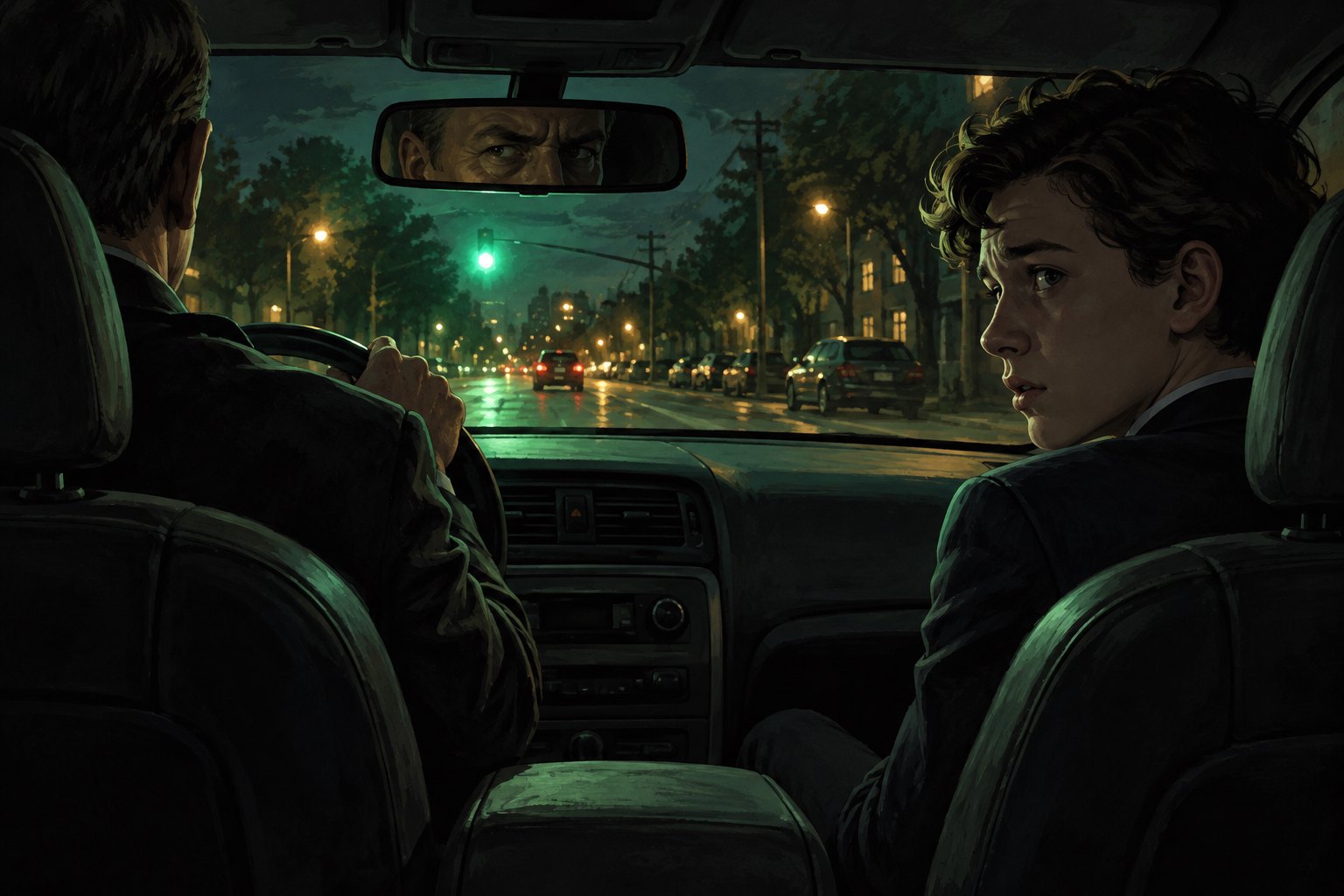
From Peter’s perspective, social embarrassment becomes mortal danger without a clean transition. He must keep behaving like a polite date while reassessing everything around him. The ordinary rules of the occasion trap him almost as effectively as the enclosed space.
From Toomes’ perspective, the boy becomes a problem to manage. His paternal authority gives him control of the conversation before his criminal identity supplies the threat. Keaton makes those forms of power feel disturbingly compatible.
To my eye, this is more effective than the film’s climactic aerial action. The car sequence keeps the important information legible: who knows what, who has control, and what Peter stands to lose. Its restraint gives every pause a purpose.
That is the specific craft worth watching for in Watts’ next franchise assignment. Spectacle benefits when the audience can track a shifting relationship as clearly as a moving spacecraft.
The ending makes independence a choice
Trapped beneath rubble, Peter urges himself onward: “Come on, Spider-Man.” Later, he saves Toomes and declines Tony’s offer to join the Avengers. These developments complete a movement from seeking recognition to deciding what responsibility requires. [Homecoming plot reference](https://en.wikipedia.org/wiki/Spider-Man:_Homecoming)
The rubble scene matters because Peter cannot perform bravery for an approving audience. His fear is exposed, and encouragement has to come from within. Holland’s vulnerability makes the effort persuasive: courage develops in the presence of panic.
Saving Toomes then gives that courage an ethical direction. Peter’s responsibility extends to someone who has threatened him. His achievement is larger than winning a fight because it refuses the villain’s narrow definition of whose safety counts.
Our earlier discussion of character and adventure in Watts’ reported Star Wars project considered the franchise’s storytelling foundations. Homecoming adds a more pointed criterion: can a hero outgrow the reward that originally motivated the journey?
A comic-book echo with a dramatic purpose
Peter lifting the rubble recalls the celebrated sequence in The Amazing Spider-Man No. 33. The reference serves the immediate story because viewers can understand the ordeal without recognizing its source. Recognition adds pleasure; the struggle supplies meaning. [Background on the comic-book homage](https://en.wikipedia.org/wiki/Spider-Man:_Homecoming)
That balance offers the strongest reason for interest in Watts’ Star Wars appointment. At its best, Homecoming makes a familiar heroic image feel earned by a particular frightened person. Its deeper subject is the freedom to stop treating someone else’s approval as proof of your worth. A new adventure that finds an equally precise emotional conflict would give its spectacle something substantial to carry.
Original content by this site's editorial team. Published: September 26, 2026 at 22:15:11 PDT (Los Angeles time)