Jacob Martin’s quarterback sacks are the subject of the Tennessee Titans’ Jacob Martin QB Sacks | Film Review Powered by Microsoft Surface. For readers arriving with movie reviews in mind, the distinction matters immediately: this is football film study, where recorded action becomes material for close examination. Its central question is compelling on its own terms: what happens before a quarterback goes down, and how much of that story does the viewer actually see?
A sack gives an audience an unmistakable finish. Understanding it requires working backward through movement, resistance, timing, and the positions of other players. That makes Martin’s subject an interesting meeting point between sports analysis and screen criticism. Both demand attention to how an outcome becomes legible.
This article is a viewing guide and critical commentary, not a shot-by-shot assessment of the video. No specific rush technique, opponent, spoken line, or play sequence is attributed to Martin here without verified footage. The useful starting point is the feature’s stated subject and the questions that subject deserves.
Start With Martin, Then Widen the Frame
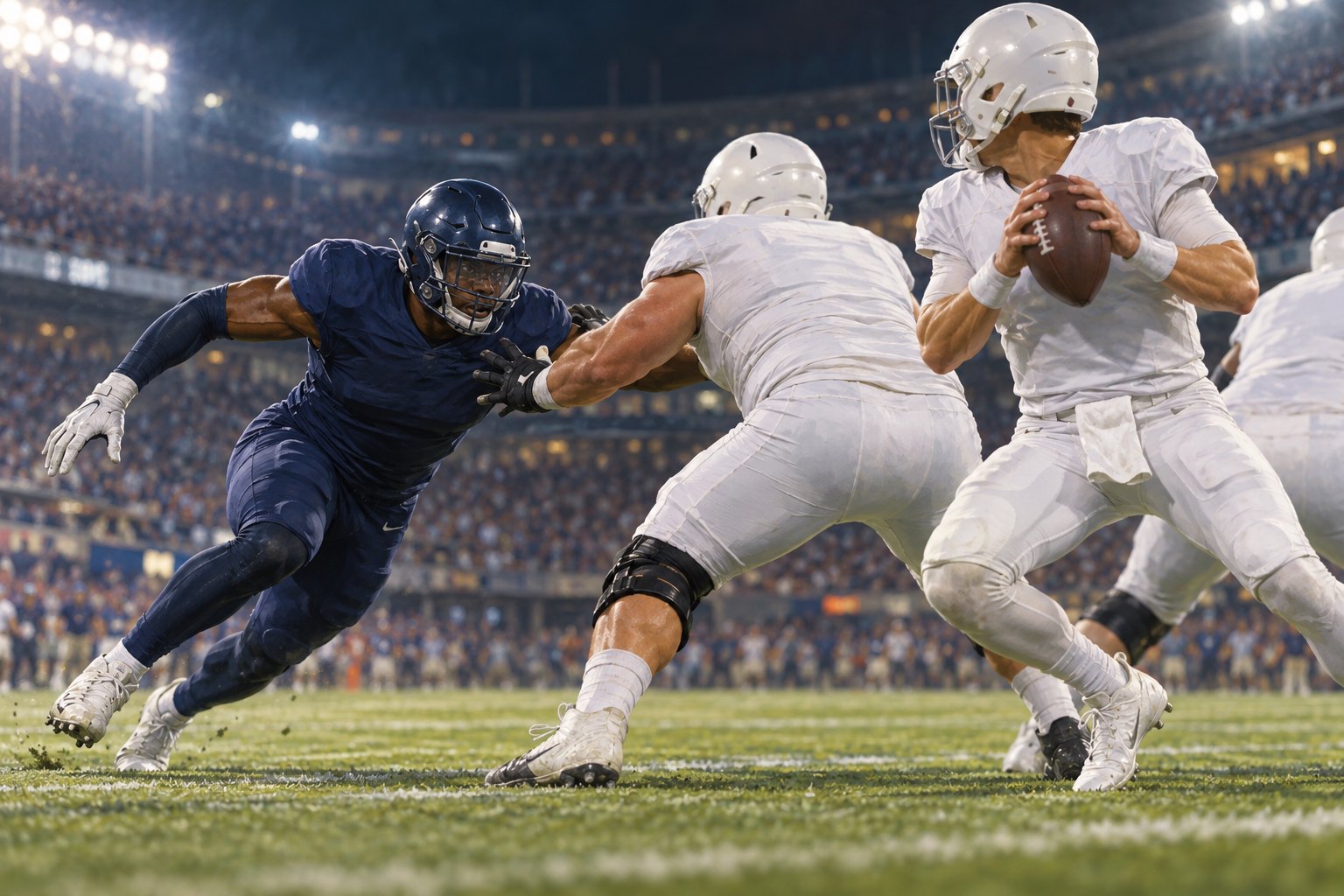
The title directs attention toward Martin. That is a natural entry point: follow the featured player, identify his route toward the quarterback, and notice where resistance changes his movement. But concentrating exclusively on the eventual tackler can make the explanation too simple.
In general football analysis, a defender’s path may be affected by the blocking arrangement, nearby rushers, and the quarterback’s movement. The final contact belongs to the visible climax; the conditions that enable it may develop elsewhere in the frame. A useful review connects those two levels without assuming that every successful rush follows the same pattern.
From Martin’s perspective, the viewing question is therefore about available space. Where is the apparent opening? When does it emerge? Does his route stay consistent, or does it change in response to another player? These are questions to test against the images, not conclusions about the particular sacks featured.
That distinction also protects the player from vague praise. Calling a finish explosive communicates excitement. Identifying the movement that creates an opening communicates something a viewer can recognize the next time.
The Blocker and Quarterback Supply the Other Perspectives
A character-focused approach to screen analysis can be helpful here, provided real athletes are not treated as fictional characters with invented motivations. Their visible actions can be studied; their private thoughts cannot be supplied by the critic.
Consider the blocker’s perspective. The task is to preserve the passer’s opportunity to throw. For a viewer, that means looking at the relationship between the blocker’s position and the defender’s path. Contact alone tells us little. The more useful question is whether that contact redirects the rush, delays it, or fails to close the relevant space.
The quarterback presents another set of questions. Does he remain in place, move forward, or leave the original pocket? Does that movement create separation from one defender while reducing it from another? A sack can look different when the passer’s movement becomes part of the explanation.
Even then, the camera imposes limits. If receivers are outside the frame, a viewer may not be able to judge whether a reasonable passing option existed. If the opening of the play is missing, the original responsibilities may remain unclear. Good analysis identifies those limits instead of turning every unsuccessful play into a verdict on someone’s intelligence or effort.
Watch the Cause Before Celebrating the Result
The most useful way to approach a sack-centered feature is to give each viewing a different purpose. Trying to follow the ball, the blocker, the rusher, and the wider defense simultaneously often leaves the decisive relationship unnoticed.
- Watch once for orientation. Locate Martin, the quarterback, and the immediate blocking traffic. Establish where the action begins and ends.
- Watch again for the first meaningful change. Look for the moment that alters the distance or angle between the rusher and passer.
- Follow the resistance. Observe how the blocker responds and whether another player affects the available route.
- Return to full speed. Check whether the interpretation still makes sense when the time available for each response becomes apparent.
- Separate observation from inference. A visible change of direction is evidence. A claim about the exact assignment or intended counter requires additional support.
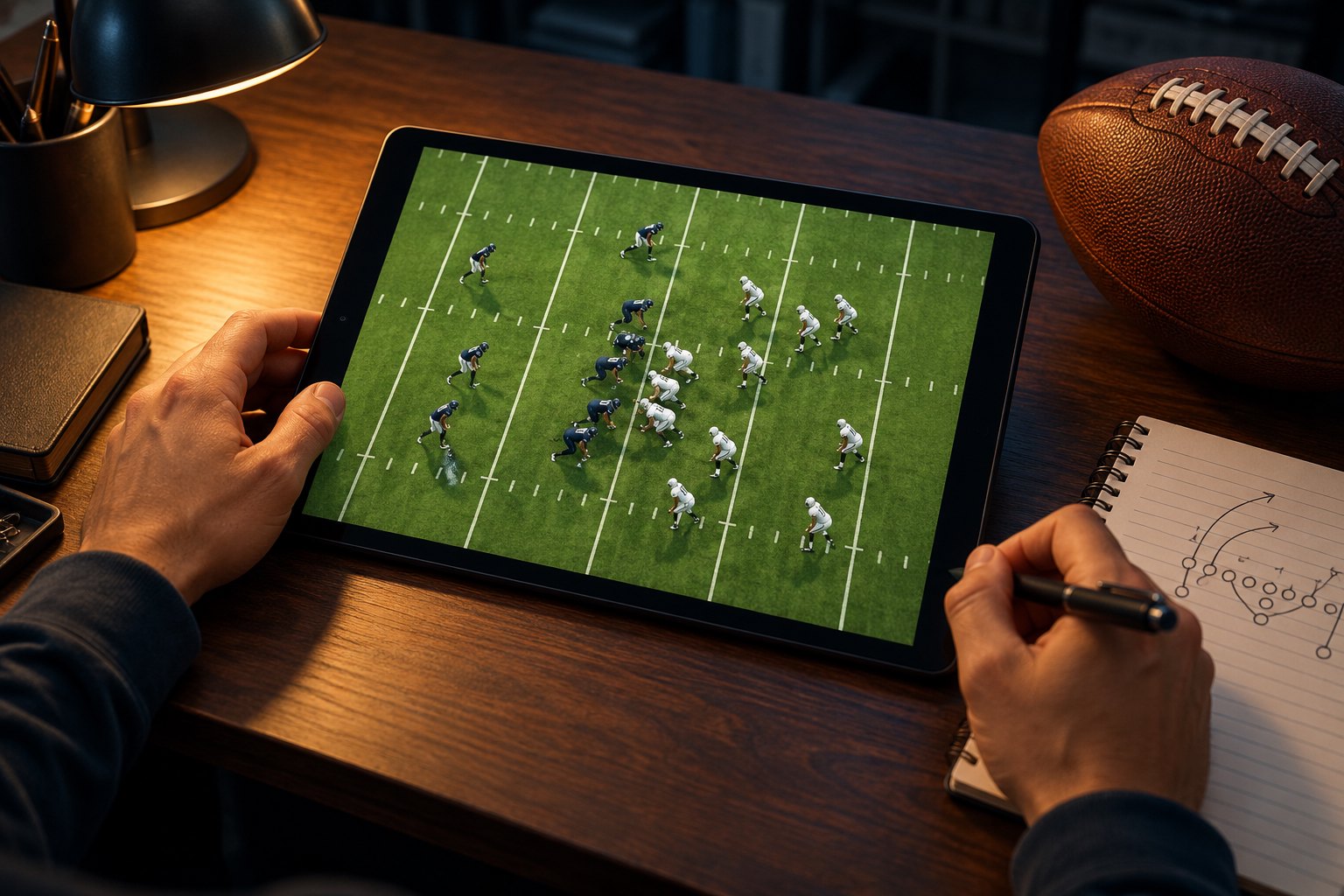
This method does not require expert terminology. Plain descriptions of position, direction, and timing are often more illuminating than attaching a technical label too early. The goal is to understand why the play develops as it does.
What Makes Football Film Study Persuasive?
My standard for this kind of screen analysis is straightforward: the explanation should help the audience see more than the result. A replay earns its place when it reveals a relationship that was difficult to register at game speed. A pause is useful when it clarifies positions rather than merely enlarging a moment of impact.
Slow motion also deserves care. It can reveal detail while making a rapidly changing situation appear more manageable than it was. Returning to normal speed restores the pressure of limited time. Both views matter, and neither should automatically replace the other.
Selection matters as well. A feature organized around sacks begins with successful outcomes. Those examples can illuminate how particular plays worked, but they cannot, by themselves, establish how consistently a player wins across all opportunities. That is a limit of the sample, not a criticism of celebrating successful plays.
The same distinction between outcome and explanation shapes our commentary on Street Fighter’s commercial success and character stakes: a visible achievement starts an inquiry into how it happened. It does not complete that inquiry.
Football on Screen Has More Than One Storytelling Job
A football-themed movie can use a stadium, team identity, or shared ritual to establish emotional belonging. Our discussion of football imagery and emotional atmosphere in Holiday Touchdown explores that dramatic function. Martin’s sack-focused subject calls for a different emphasis: images that explain physical relationships and decisions.
The Microsoft Surface wording identifies the feature’s branded presentation. It does not, on its own, establish what analytical tools appear or how they are used. The meaningful editorial test remains whether the presentation makes the football easier to understand.
Nor does this subject need invented dialogue, a fictional character arc, or an Easter-egg hunt to justify close attention. The interest lies in real movement and the discipline of looking carefully.
The Deeper Story Is About Shared Causation
A sack is easy to remember as one player’s decisive act. The richer interpretation asks how that act fits into a field of competing intentions. Martin remains the focus, but the blocker, quarterback, and surrounding players give his movement its significance.
For me, that is the strongest reason to approach this subject as film study: it can turn admiration into understanding. The finish draws the eye. Careful viewing reveals the conditions that made the finish possible—and preserves the uncertainty wherever the image cannot tell the whole story.
Original content by this site's editorial team. Published: October 17, 2026 at 22:17:08 PDT (Los Angeles time)