Hunter Schafer’s upcoming A24 horror project is a vampire movie, according to PHANTASMAG’s report on her revelation. That gives audiences a more specific reason to be curious: the project now carries the possibilities of a monster whose appetite can make intimacy dangerous and survival morally complicated.
It also leaves an essential question open. What does being a vampire—or encountering one—mean for the people in this particular story? A genre label cannot answer that, and Schafer’s involvement does not establish whether her character is a vampire, a potential victim, or someone occupying another position entirely.
This is a spoiler-free critical preview, not a review of the finished film. The reported revelation offers a starting point for discussing the project’s dramatic potential. It does not provide a basis for reconstructing its plot, quoting its dialogue, or judging its ending.
What the vampire revelation actually tells us
The central news is straightforward: Schafer has identified the upcoming A24 horror project as a vampire movie. That information narrows the broad promise of horror into a recognizable tradition, but it does not settle the film’s tone. Vampires can sustain frightening, romantic, comic, tragic, or deliberately uncomfortable stories. The creature alone tells us little about the balance this film will strike.
Nor does the label establish its supernatural rules. Sunlight, invitations, mirrors, and immortality are familiar elements of vampire storytelling, but none should automatically be assigned to this project. A filmmaker might embrace those conventions, revise them, or leave them aside.
For readers looking for practical details, this preview does not establish a release date, an official title, or a character synopsis. Those require separate confirmation. The useful distinction is between learning what kind of creature the film involves and learning what story it actually tells.
The most interesting question is whose hunger matters
My interest in the announcement rests on character perspective. A vampire story changes radically depending on whose experience organizes it. From the predator’s perspective, hunger might become an unbearable need. From the endangered person’s perspective, that same hunger is a threat. A compelling film can make both experiences understandable without treating them as morally equivalent.
That tension gives the genre an unusually direct way to examine responsibility. If a character must harm someone to survive, the story can ask what choices remain available: restraint, deception, sacrifice, denial. The drama comes from the decisions, not simply from explaining the appetite.
For Schafer’s project, the question is therefore broader than whether she will wear fangs. What does her character want before danger enters the picture? What relationship, ambition, or belief would make her vulnerable to it? Those are questions for the eventual film, rather than details that can responsibly be inferred from the announcement.
Our discussion of why Street Fighter’s rivalries need emotional stakes raises a related principle: recognizable genre attractions become more involving when characters have something specific to lose. Here, the attraction is the vampire. The emotional stakes still need to emerge.
Intimacy gives vampire horror its sharpest edge
A monster that must get close to another person creates different dramatic possibilities from a distant, impersonal threat. Proximity can make an ordinary gesture—a welcome, an offered hand, a moment of trust—feel consequential. The same physical closeness can suggest affection to one character and access to another.
That does not mean Schafer’s film will be a romance. It means vampire horror has tools for making relationships frightening without abandoning their emotional complexity. Friendship, dependence, loyalty, and hospitality can all become unstable when one person knows something crucial that another does not.
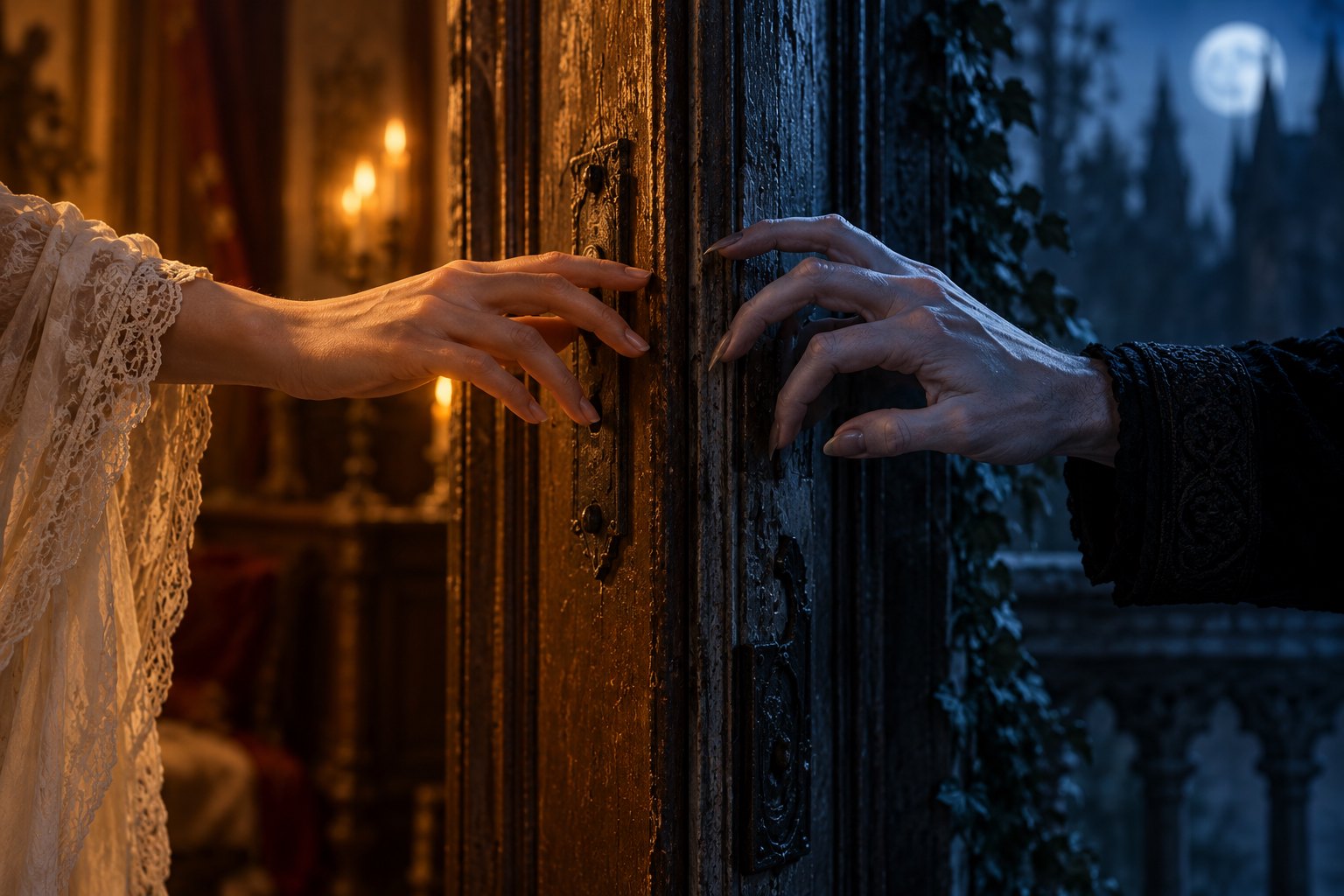
Consider the familiar convention that a vampire needs an invitation to enter. When a story uses it, the threshold can become a concrete expression of permission. Yet permission is complicated if the person offering it has been deceived. The dramatic question becomes whether a character understands what they are allowing into their life.
This is a genre example, not a description of a scene or rule in the upcoming film. Its relevance is the kind of character conflict it illustrates. My preference would be for the project to make boundaries consequential: a choice should alter a relationship, rather than serve only as an excuse for an ominous image.
What a performance would need beyond mystery
The announcement naturally directs attention toward Schafer, but there is no performance here to assess yet. A mysterious promotional identity can generate interest; a fully realized character needs recognizable intentions, contradictions, and reactions.
If her character knows more than the people around her, the performance might depend on the difference between what she reveals and what she conceals. If she is discovering the danger herself, the challenge could involve showing how curiosity changes into recognition. These are different acting demands, and neither should be assumed to describe her role.
What I would look for in either case is specificity. Silence becomes expressive when we understand what a person is struggling not to say. Fear becomes involving when it threatens something we have seen them value. A striking appearance can introduce a character, but it cannot do all that work.
Atmosphere needs consequences
Vampire imagery offers plenty of visual temptation: shadowed rooms, nocturnal streets, surfaces that conceal more than they reveal. The editorial illustrations accompanying this article explore that atmosphere; they are conceptual images, not production stills or representations of confirmed scenes.
In the film itself, style will be most interesting if it shapes our relationship to the characters. A camera that stays near someone in danger can restrict our knowledge. A cut away from an encounter can withhold reassurance. Sound can make a space feel inhabited before a threat becomes visible. These choices matter because they control what the audience understands and when.
That approach to watching is explored further in our guide to looking closer at character, editing, and sound. For this project, the eventual critical test will be whether atmosphere develops emotional pressure across scenes, rather than merely producing attractive individual shots.
The deeper promise: understanding without absolution
The most compelling possibility in Schafer’s vampire reveal is a story that asks viewers to understand a dangerous person without excusing the damage they cause. Need can explain behavior. It does not automatically justify it. Equally, depicting someone as monstrous can become an easy way to avoid examining their choices at all.
A thoughtful vampire film can hold those ideas together. It can make desire persuasive, show its cost, and give the person paying that cost an interior life. Whether this A24 project pursues that interpretation remains unknown; it is a critical hope, not an announced theme.
For now, the revelation earns curiosity rather than a verdict. The meaningful question is what the film will make its characters do with hunger, fear, and power—and whether it will let the consequences matter as much as the bite.
Original content by this site's editorial team. Published: October 18, 2026 at 19:26:18 PDT (Los Angeles time)