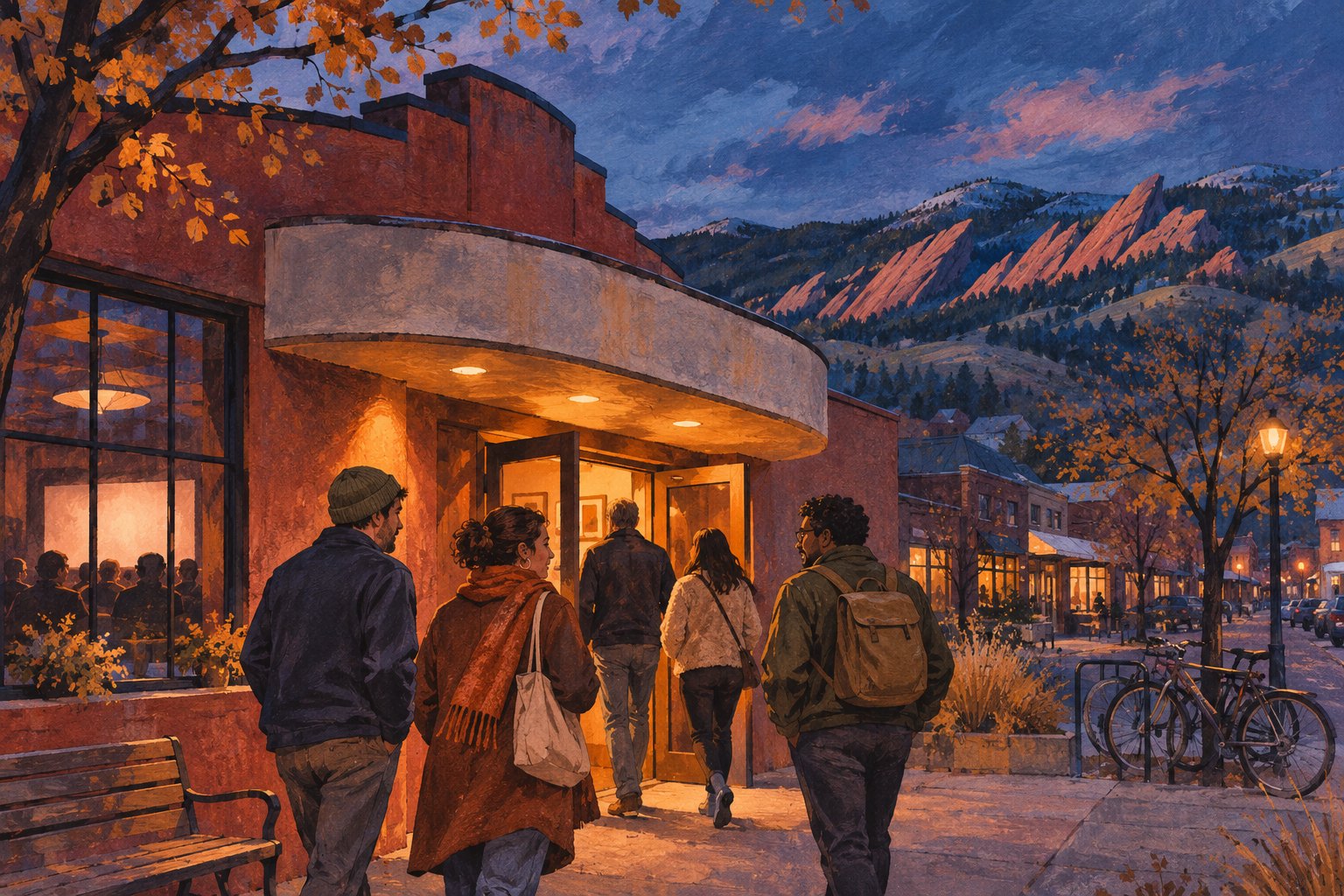
Sundance could reinvigorate Colorado’s film ecosystem by helping people who make movies find collaborators, people who show movies find audiences, and emerging filmmakers find a sustainable reason to keep working locally. The crucial question is whether the attention surrounding the festival can support those relationships throughout the year.
University of Colorado Boulder has raised the prospect of Sundance strengthening the state’s film ecosystem. That possibility deserves examination, but it should remain distinct from a demonstrated economic or creative outcome. The argument here is about what would make such a transformation meaningful: accessible opportunities, repeat employment, stronger exhibition, and films that reflect the people who live in Colorado.
This is film-industry commentary. The measures discussed below are criteria for evaluating the opportunity, rather than claims that particular programs or benefits have already materialized.
What a stronger film ecosystem would actually mean
A film ecosystem includes far more than directors and actors. It encompasses sound recordists, editors, costume workers, equipment suppliers, programmers, teachers, critics, and the audiences willing to watch an unfamiliar movie. Its strength depends on how reliably those people can work with one another.
Consider a hypothetical first-time filmmaker completing a short. A screening offers visibility. A conversation afterward might introduce an editor. A subsequent paid assignment could help both people afford their next project. Each step has value, but the connections between them determine whether the original opportunity produces something durable.
That distinction should guide the Colorado conversation. Festival activity and local filmmaking capacity are related, but they require different evidence. A busy screening demonstrates demand for that event. A crew member securing another local job months later tells us something else: the possibility of a working career.
Turn introductions into opportunities people can use
The most promising role for Sundance would be to bring people into contact who otherwise might struggle to meet. Yet proximity alone cannot guarantee access. Being in the same city as a producer is different from having a realistic opportunity to discuss a project with one.
Useful connections need structure. Clearly advertised portfolio sessions, small-group craft discussions, and introductions organized around specific needs could give emerging filmmakers something more actionable than a crowded reception. Someone seeking feedback on documentary sound should be able to identify a relevant conversation without already knowing an insider.
Follow-through matters just as much. A workshop becomes more useful when participants leave with a defined next step: a revised budget, a stronger scene, or an introduction they have permission to pursue. A mentorship should establish what participants will do together and how long the relationship will last.
These are practical standards for any proposed initiative. They would also make its results easier to assess. Organizers could distinguish between attendance, completed work, subsequent collaborations, and paid placements instead of treating every encounter as an equivalent success.
Give emerging talent a path to paid work
For students and early-career workers, the central issue is continuity. A brief opportunity can introduce a profession; sustained practice develops the judgment needed to succeed in it. That difference is especially important in collaborative work, where technical competence and trust grow together.
A useful training pathway would connect learning to supervised responsibility. An aspiring sound recordist might observe a demonstration, practice recording dialogue, receive feedback, and then assist on a properly supported production. Each stage would build on the previous one rather than repeatedly offering an introduction to the field.

Compensation belongs in this discussion from the beginning. Opportunities that demand substantial unpaid time can exclude talented people with jobs, caregiving responsibilities, or limited savings. Clear payment terms, reasonable schedules, and transparent selection criteria would make participation more attainable.
The creative stakes extend to the finished movie. A team with time to prepare can test a difficult scene, solve a sound problem, or explore a performance before pressure forces a compromise. Our commentary on how production support might create more time for filmmaking examines that connection between working conditions and artistic choices.
Make Colorado a source of stories
From a film criticism perspective, the most exciting potential outcome is a wider range of stories told with local understanding. Beautiful scenery can establish a setting. The details of how people work, socialize, travel, and negotiate belonging give that setting dramatic meaning.
A character’s relationship to a place becomes visible through choices: where they feel comfortable, which journey they avoid, whose home they can enter without knocking. Filmmakers who know a community may notice tensions and routines that an outsider would miss. That knowledge can shape performance, framing, dialogue, and the rhythm of a scene.
Colorado’s opportunity should therefore include supporting creative decision-making locally. Hiring residents is valuable; giving local writers, directors, and producers room to develop their own material would deepen that value. The goal should leave space for work that is difficult, funny, intimate, strange, or critical of its surroundings.
A healthy regional cinema does not need every film to function as a favorable portrait of its home. It needs enough creative freedom for different people to disagree about what that home means.
Build audiences who return after the festival
Audience development deserves equal attention. A festival can encourage viewers to take a chance on unfamiliar work. The longer-term opportunity is to make that curiosity part of ordinary moviegoing.
Accessible local screenings, thoughtful introductions, and discussions centered on filmmaking could help sustain it. A conversation about why a director withheld a reverse shot or let an uncomfortable silence continue gives viewers a way to engage beyond whether they liked the ending.
Existing exhibitors and smaller festivals should have room in that process. Partnerships could allow discoveries to circulate through additional screenings, visiting-artist conversations, or related programming where rights and resources permit. Our guide to discovering films through festivals beyond Sundance explores the audience side of that broader culture.
Access also needs a practical definition. Ticket affordability matters alongside scheduling, transportation, and accessibility information. A community cannot develop a lasting relationship with cinema if participation consistently requires resources its residents do not have.
Judge the opportunity by what lasts
The strongest assessment of Sundance’s potential influence would examine several outcomes separately. An event can succeed as an attraction while leaving other ambitions unfinished. Clear questions would help Colorado identify where attention is translating into capacity:
- Employment: Are local film workers finding repeat paid assignments?
- Development: Are emerging filmmakers completing projects and advancing to greater responsibility?
- Exhibition: Are local audiences returning for independent films outside the festival period?
- Access: Can people participate without relying on personal connections or substantial unpaid availability?
- Creative ownership: Are Colorado-based storytellers shaping the projects being developed?
No single number could answer all those questions. Evaluation would need to distinguish temporary activity from continuing work and avoid attributing every change in the state’s film sector to one festival.
My view is that Sundance’s most valuable contribution would be to make the distance between watching a film and helping create one feel smaller. A viewer might become a committed supporter of a local theater. A student might find a collaborator. An experienced crew member might gain enough consistent work to mentor someone new.
That is the deeper promise of a stronger film culture: more people with the skills, support, and freedom to turn their observations into movies, and more neighbors prepared to watch closely. Sundance could help Colorado reach that point. The meaningful evidence would be the work, relationships, and audiences that continue long after a screening ends.
Original content by this site's editorial team. Published: November 2, 2026 at 13:03:24 PST (Los Angeles time)