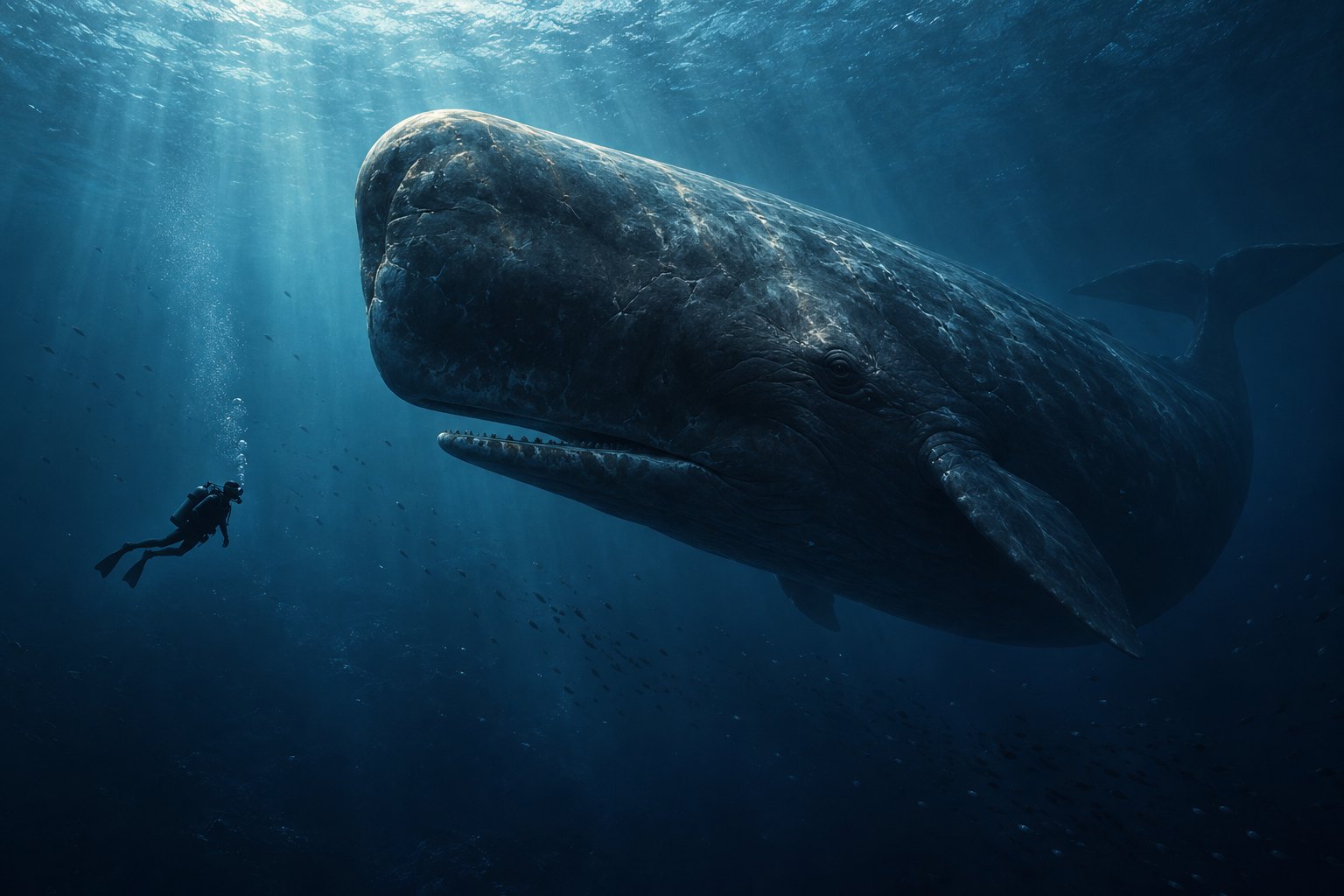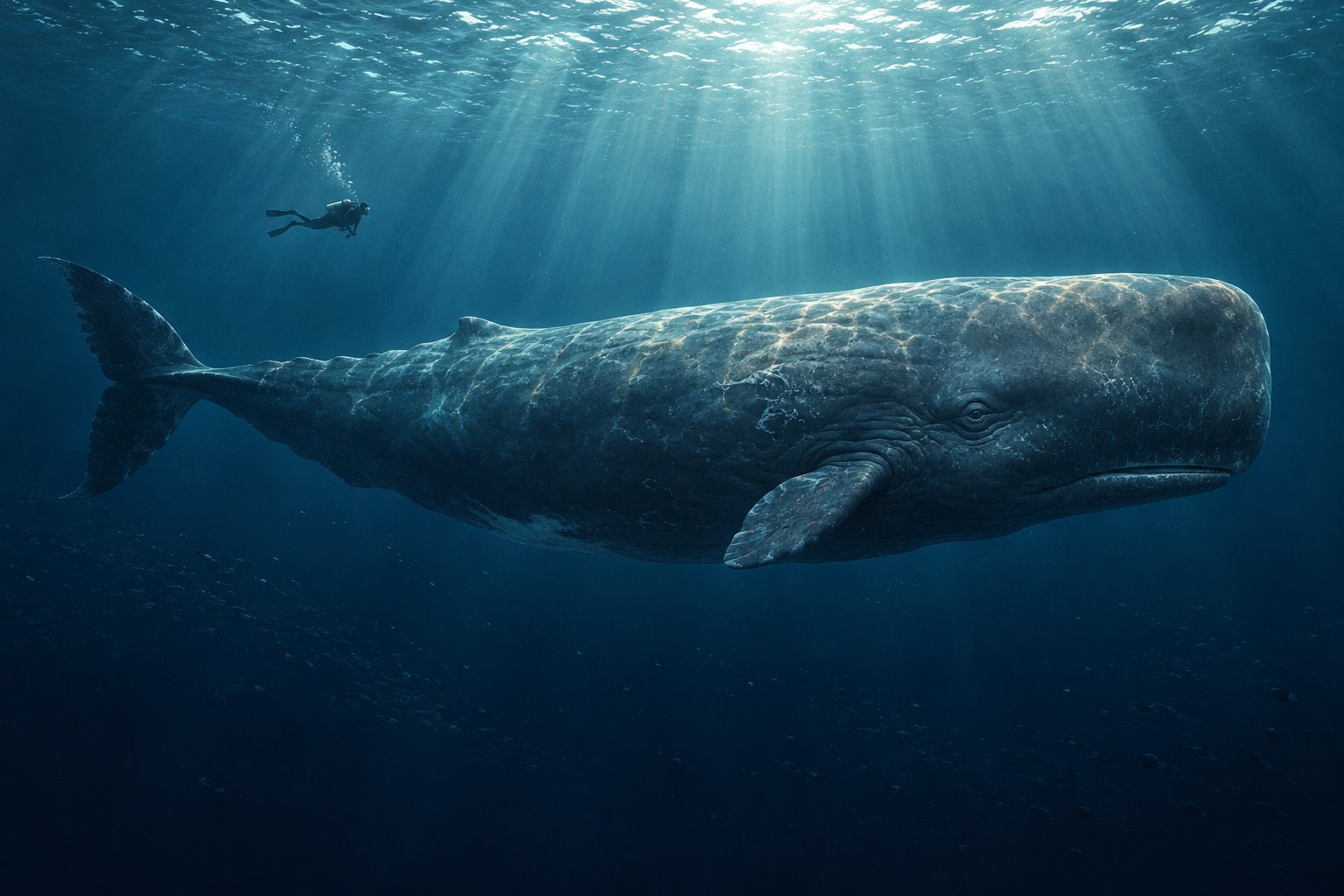
Whalefall has a more defensible starting point than its outrageous premise might suggest. A sufficiently large sperm whale could theoretically swallow a person. What does not follow is that the person could remain alive, move through its digestive system, and engineer an escape. The movie’s realism question becomes much more interesting once those separate claims stop being treated as interchangeable.
Comparative anatomist Joy Reidenberg, who consulted on the film, explained to Science News that swallowing a human would require an exceptionally large adult sperm whale. Its anatomy makes the scenario conceivable; its behavior and feeding habits make it extremely unlikely. That distinction is essential to understanding what Whalefall borrows from science and what it asks audiences to accept. [Science News’ interviews with whale specialists](https://www.sciencenews.org/article/whalefall-movie-whale-swallow-person)
Spoilers follow for the premise and a late escape mechanism. This is an analysis of the film’s documented story and published expert assessments, rather than a firsthand screening review.
The whale is feeding, not hunting Jay
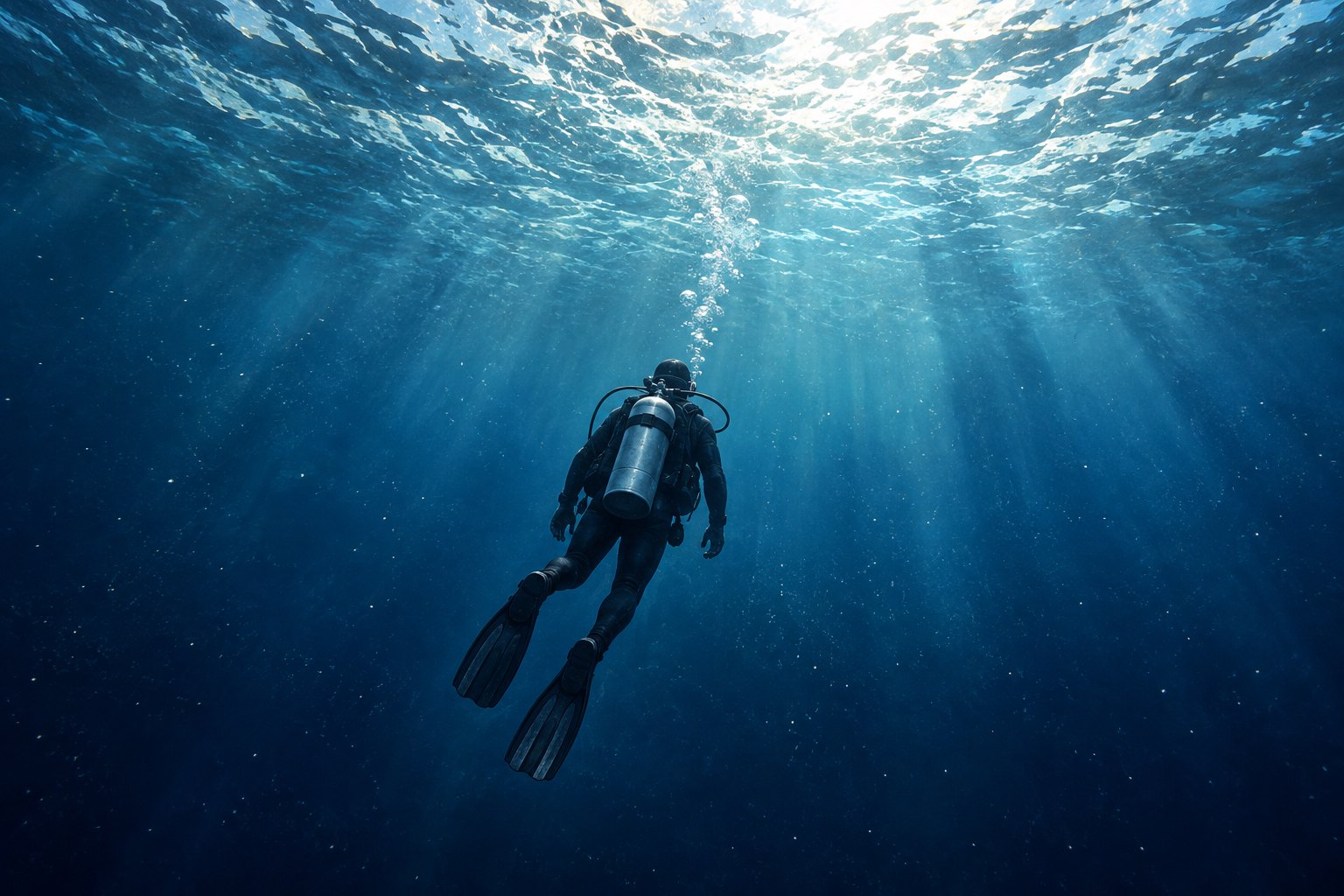
Directed by Brian Duffield and adapted from Daniel Kraus’s novel, Whalefall follows Jay Gardiner, played by Austin Abrams, as he dives to recover his deceased father’s remains off California’s central coast. A sperm whale pursuing a giant squid swallows him. The official synopsis gives him roughly an hour of remaining air and establishes his father’s lessons as a possible means of survival. [20th Century Studios’ film synopsis](https://www.20thcenturystudios.com/movies/whalefall)
The feeding accident is a crucial storytelling choice. Jay has entered an encounter that already has its own purpose. The whale does not need a grudge, an appetite for humans, or an ability to recognize the protagonist. His personal emergency is incidental to its meal.
From Jay’s perspective, that is arguably more frightening than deliberate pursuit. A pursuer can sometimes be distracted or deceived. An animal carrying on with its ordinary life offers no such reassuring relationship between a human action and an animal response. Jay must interpret an environment that was never organized around him.
That gives the premise an unusual dramatic imbalance: the person whose experience matters most to the audience matters least to the creature containing him. The horror lies in that mismatch.
Swallowing and surviving are different scientific questions
It helps to divide the premise into three tests. Can the animal physically admit a human body? Could the circumstances bring them together? Could that human survive what happens afterward? A qualified answer to the first question does not settle the other two.
Nor does a whale’s enormous size tell the whole story. As Reidenberg explains, large baleen whales can have narrow gullets despite their immense mouths. Being briefly caught in a feeding whale’s mouth is therefore different from passing into its digestive tract. The species matters more than the general impression of gigantic size.
For a viewer, this distinction changes the kind of disbelief the film requires. Whalefall is not simply asking us to imagine a large animal. It is asking us to accept an extraordinary sequence of events involving a particular animal, a particular diver, and conditions favorable enough for the story to continue.
My critical judgment is that such a concession can be productive. Survival fiction often begins with a terrible coincidence. What matters afterward is whether consequences remain consistent, whether solutions cost something, and whether the protagonist’s decisions make sense within the established situation. An unlikely beginning does not automatically excuse every later convenience.
A convincing stomach is still an unlivable place
In an interview with SYFY WIRE, whale biologist Shane Gero praised the film’s representation of a sperm whale’s four stomach chambers. He also emphasized their fundamental function: breaking down what enters them. His assessment supports aspects of the setting without validating an extended human stay inside it.
That is a useful limit on the phrase scientifically accurate. A location can contain recognizable anatomical details while the action staged there remains speculative. Accurate surroundings do not make a character invulnerable to those surroundings.
Consider the predicament from Jay’s position. Information becomes useful only when he can act on it. Recognizing where he is would be one problem; retaining the strength, equipment, time, and freedom of movement to exploit that knowledge would be another. The dramatic appeal comes from watching understanding compete with helplessness.
This also explains why the air countdown is such an effective premise. It turns a largely invisible resource into a pressure on every decision. But it should not be mistaken for a scientific guarantee that all other threats will wait until the tank is empty. The clock measures one limitation, not the total danger.
The sound-based escape is a revealing stretch
Gero’s strongest criticism concerns a late sequence involving Jay’s attempt to use a vocal structure to signal from inside the whale. Sperm whales do not produce their clicks with humanlike vocal folds in the throat. He identifies this mechanism as a major departure from the animal’s biology. His interview also distinguishes the relatively less chemically hostile first stomach chamber from the dangers farther along the digestive tract. [SYFY WIRE’s interview with Shane Gero](https://www.syfy.com/syfy-wire/whalefall-science-explained-by-sperm-whale-expert-shane-gero)
As a dramatic idea, the sound mechanism has an obvious attraction: a trapped character tries to turn his prison into a means of communication. It converts confinement into a problem of being heard. Jay cannot simply call across an ordinary distance; the body around him becomes part of the obstacle and the proposed solution.
Yet this is also where scientific detail carries an artistic obligation. When a thriller encourages us to study its physical rules, a decisive solution should reward that attention. If the solution depends on a substantially different rule, the ingenuity becomes less satisfying.
The distinction is between accepting a catastrophe and accepting its resolution. Audiences may willingly grant the first extraordinary accident while expecting the escape to follow more rigorously from what the story has taught them.
What the realism debate reveals about Jay’s story
Our earlier analysis of Jay’s relationship with his father explores the emotional inheritance behind his struggle. The scientific question adds a separate tension: inherited knowledge may be valuable without being sufficient. Knowing more does not mean controlling everything.
That is the reading I find most compelling. Jay’s predicament brings human explanation up against an environment that does not owe him clarity. His effort matters because he has limited options, not because nature must reward determination.
There is an adaptation issue here, too. As our discussion of how films transform a character’s interior experience argues, cinema must find visible forms for thought. In this premise, physical problem-solving gives memory and understanding something concrete to do.
Whalefall’s scientific foundation is therefore best understood as a source of constraints, not a certificate of plausibility. Its most interesting implication is that the whale can be terrifying without being evil. For Jay, the experience is a desperate struggle for another breath. For the whale, he is an accidental presence. Holding those perspectives together gives the premise a deeper force than simply asking whether a person could fit.
Original content by this site's editorial team. Published: October 17, 2026 at 02:49:45 PDT (Los Angeles time)