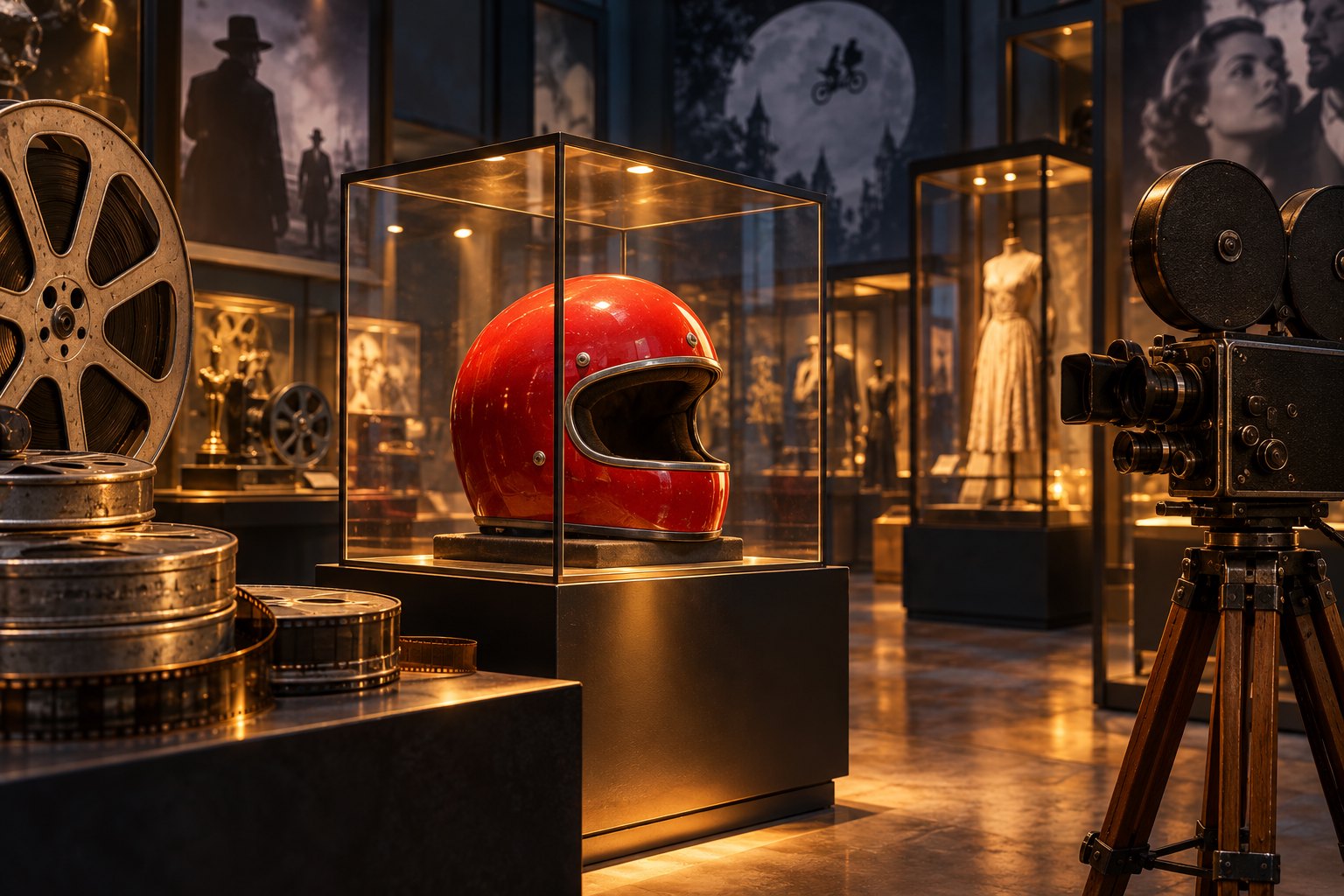
Hollywood East Brewseum collects film history, and the range highlighted in WECT’s coverage—from Talladega Nights to The Exorcist—suggests an appealing way to think about movie memorabilia. Comedy and horror may produce different reactions, but both leave audiences attached to physical things: clothing, rooms, ordinary objects transformed by a performance. The interesting question is what those things help us remember beyond a famous title. [WECT’s reporting](https://www.wect.com/2026/10/30/talladega-nights-exorcist-hollywood-east-brewseum-collects-film-history/)
A collection can preserve that connection. Its deeper value emerges when recognition becomes curiosity: Who used this object? What did it communicate about a character? Why did the camera make it memorable?
Spoiler note: The criticism below discusses character developments in Talladega Nights: The Ballad of Ricky Bobby and the ending of the original The Exorcist. These readings concern the films themselves; they do not identify particular Brewseum holdings or establish an artifact’s provenance.
Why these two movies make an intriguing pairing
At first, the connection seems almost entirely comic: Ricky Bobby’s noisy self-confidence alongside the dread associated with The Exorcist. Yet both films make an abstract crisis visible. One turns a man’s need to win into a whole public identity. The other turns a family’s inability to protect a child into an increasingly unbearable domestic space.
That is where a film-history collection can become more than a recognition game. Screen objects participate in storytelling before they become collectibles. Clothing establishes status. Furniture controls movement. A familiar room becomes threatening when the people inside it lose the ability to understand what is happening.
My view is that memorabilia becomes most interesting when it sends us back to those dramatic relationships. The object offers an entry point; the character supplies its emotional weight.
Ricky Bobby: when winning becomes a personality
In Talladega Nights, Will Ferrell’s Ricky Bobby measures himself through racing success. The arrival of rival Jean Girard destabilizes that identity, while Ricky’s relationship with fellow driver Cal Naughton Jr. exposes how conditional his comfortable world has become. His governing maxim—“If you ain’t first, you’re last!”—compresses the problem into eight words. [Sony Pictures’ film synopsis](https://www.sonypictures.com/movies/talladeganightstheballadofrickybobby)
As a joke, the line is wonderfully unreasonable. As a personal philosophy, it leaves Ricky with no livable middle ground. He cannot be capable but frightened, talented but temporarily unsuccessful, or valuable to someone without outperforming them. Every setback threatens to become a judgment on his existence.
Ferrell makes that ridiculousness effective by giving Ricky’s certainty such childish force. The character rarely seems to be performing stupidity for an audience. He appears to be working sincerely with an inadequate set of ideas. That sincerity is the source of both the laughter and the occasional sting.
Cal complicates the victory fantasy
John C. Reilly’s Cal matters because he makes Ricky’s worldview relational. Friendship should allow both men to matter; a permanent hierarchy requires one to remain secondary. Their exuberant “Shake and bake!” expresses the pleasure of partnership, but the friendship also invites a question: how generous is a champion whose closest companion is expected to help keep him on top?
For me, the comedy works best when affection and selfishness occupy the same moment. Ricky can enjoy Cal’s company while failing to recognize the limits his own ambition places on their relationship. The film’s broadness gives that contradiction room to become absurd without making it unrecognizable.
This is a useful perspective for looking at movie costumes. A racing outfit does more than identify an occupation. In a story like Ricky’s, it can externalize the public identity that the person underneath struggles to sustain. That is an interpretive question to bring to a display, rather than a claim about any particular garment at the Brewseum.
The Exorcist: the person beneath the spectacle
William Friedkin’s The Exorcist builds its horror around Chris MacNeil’s efforts to help her daughter, Regan, and Father Damien Karras’s confrontation with suffering and doubt. Karras ultimately draws the possessing force into himself and goes through the bedroom window, sacrificing his life. The American Film Institute’s account also documents the film’s production history and its use of briefly glimpsed disturbing imagery. [AFI’s film record](https://catalog.afi.com/Film/54970-THE-EXORCIST)
Chris provides the film’s most immediate emotional perspective. She needs help for her child. The frightening gap between witnessing suffering and being able to relieve it makes the story compelling before its most notorious effects take over. Her desperation gives the supernatural conflict a concrete human purpose.
Karras brings another kind of vulnerability. For him, the encounter presses against grief, guilt, and uncertainty. His importance does not depend on behaving like an invincible specialist. I find the film more troubling because its would-be protector is himself wounded: the person asked to confront evil cannot simply set aside his own pain.
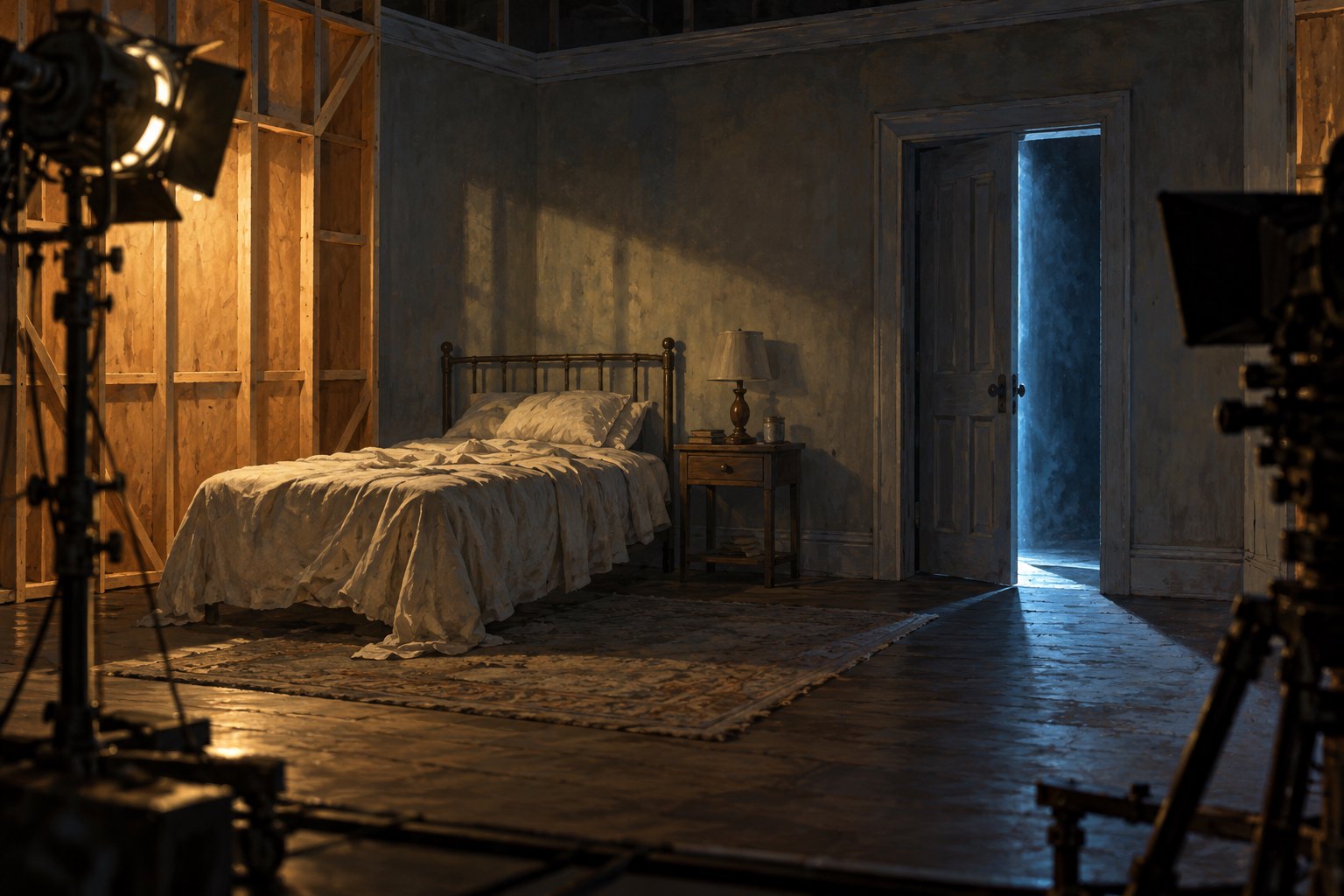
Regan’s bedroom concentrates these relationships. A place associated with privacy and care becomes a space that adults approach with fear. Its dramatic power depends on that reversal. The horror comes partly from the persistence of ordinary domestic surroundings while ordinary protection fails.
Separating a frightening object from this context can make the movie seem like a catalog of shocks. Returning to Chris and Karras restores the stakes. The effects matter because a child needs saving and because the effort to save her demands something devastating from another person.
How to look beyond a recognizable prop
Hollywood East Brewseum’s subject invites viewers to practice a more attentive kind of fandom. When examining film memorabilia, four questions can turn a brief glance into a useful encounter:
- What is its documented relationship to the production? Screen-used objects, production-made duplicates, replicas, and promotional pieces tell different stories.
- Whose character does it help define? Consider status, occupation, vulnerability, or the identity someone wants others to see.
- What did filmmaking contribute? Lighting, framing, sound, editing, and performance can give an otherwise ordinary object extraordinary force.
- Whose work made it possible? A star’s association is only one part of the story; construction, fitting, maintenance, and placement also deserve attention.
The same attention to small details animates our discussion of why cinema’s smallest scene-stealers matter. What initially catches the eye can become a route into understanding how a scene works.
Preserved objects also remind us that movies require people and practical infrastructure. That connection gives another dimension to what meaningful support for film production should deliver: the work being supported eventually becomes the screen history audiences treasure.
What survives after the movie ends
The deeper connection between these films is their treatment of control. Ricky mistakes superiority for security. Chris discovers that devotion alone cannot guarantee protection. Karras’s final action gives compassion a terrible physical cost. Their situations differ radically, but each story tests what a person does when familiar assurances stop working.
That is the promise of collecting film history. An object can preserve evidence of the craft while prompting us to revisit the feeling it helped create. Hollywood East Brewseum’s range offers an inviting starting point: laugh at Ricky Bobby’s certainty, remember the fear surrounding Regan’s room, then look again at the human choices that made either movie stay with you.
Original content by this site's editorial team. Published: October 31, 2026 at 02:34:38 PDT (Los Angeles time)