
Heart of the Beast finds its most compelling subject in the space between being capable and being invulnerable. Brad Pitt plays James Belmont, a military veteran stranded in Alaska with his combat dog, Odin. Their survival story offers a useful corrective to the fantasy of the entirely self-sufficient action hero: responsibility for another creature can expose weakness while providing a reason to keep going. The film’s central relationship gives its familiar wilderness premise an emotional question worth considering—what happens when the protector needs protection?
David Ayer directs from Cameron Alexander’s screenplay. Paramount confirms the plane-crash premise and the September 25, 2026, theatrical release. [Paramount’s film overview](https://www.paramountpictures.com/movies/heart-of-the-beast).
Spoiler notice: This analysis discusses the opening, the accident, the characters’ wartime injuries, and a significant written quotation. It leaves James’s ultimate fate undisclosed.
James Belmont: Expertise Cannot Guarantee Safety
James’s military experience initially makes him legible as someone equipped to handle isolation. Yet the event that strands him is a heart attack while flying. The distinction matters: the crisis begins inside the person who is supposed to manage the situation. Training cannot make his body obey him. Glenn Kenny’s review also describes a later arm injury that forces James to enlist Odin’s help, further reversing their apparent hierarchy. [Glenn Kenny’s review](https://www.rogerebert.com/reviews/heart-of-the-beast-brad-pitt-dog-film-review-2026).
My reading is that this reversal supplies the premise’s strongest dramatic idea. James can understand a problem without possessing the physical means to solve it alone. That gap makes dependence concrete. Accepting help becomes part of competence, and his bond with Odin becomes something more consequential than companionship during an adventure.
The distinction also offers a way to judge Pitt’s role without confusing a character’s endurance with emotional depth. Repeated suffering is only dramatically useful when it changes a decision, a relationship, or a sense of responsibility. James’s predicament matters most when his limitations alter what he and Odin must ask of each other.
Odin Has Needs of His Own
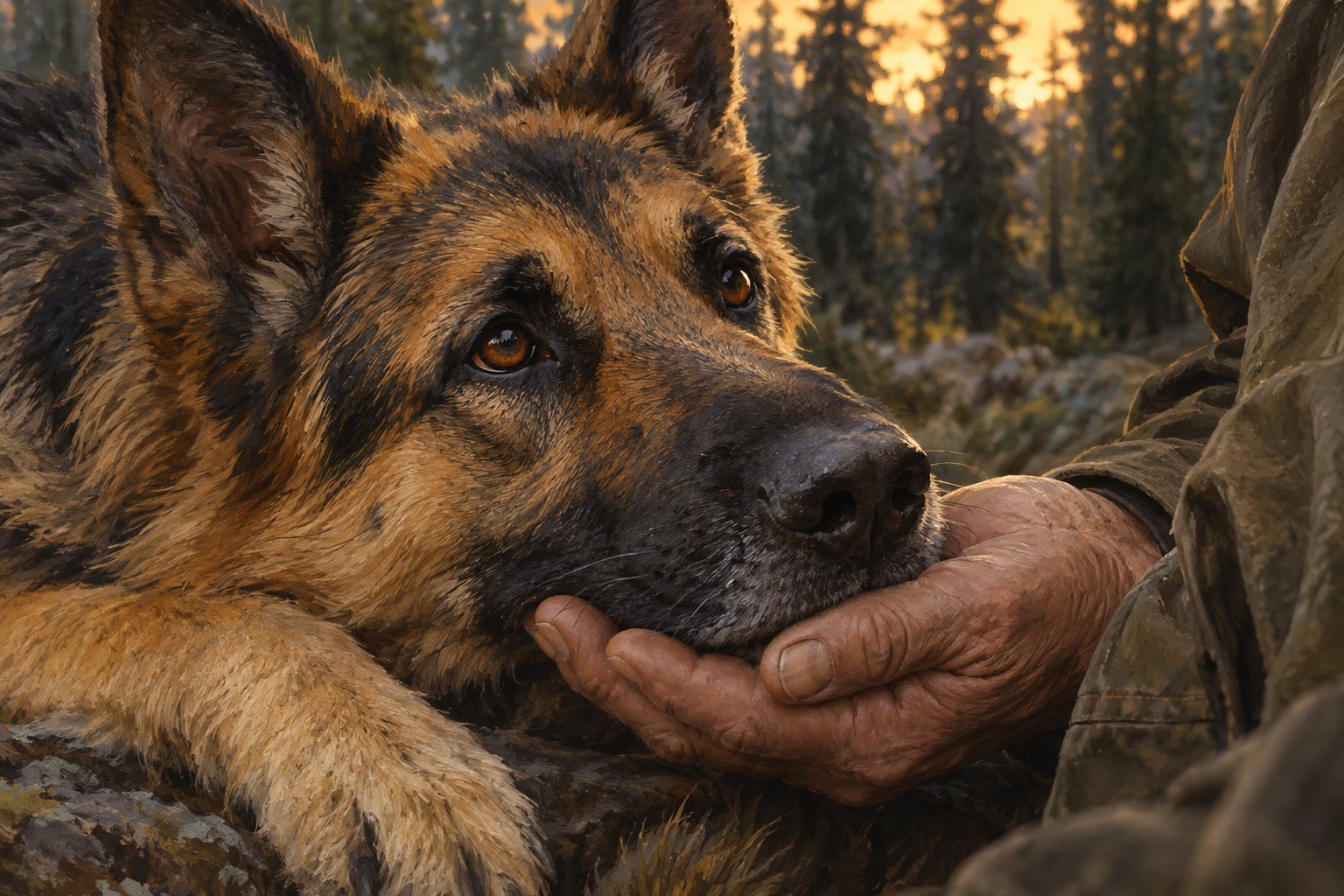
Odin is a fellow veteran with a prosthetic leg. Both characters experience combat nightmares, and their relationship includes comforting one another afterward. William Bibbiani’s account emphasizes these shared vulnerabilities and the affection between them. [TheWrap’s review](https://www.thewrap.com/creative-content/movies/heart-of-the-beast-review-brad-pitt-david-ayer/).
That characterization creates an important ethical difference between loving an animal and valuing its usefulness. Odin’s past service does not exhaust his identity. His need for reassurance exists alongside his ability to help James. A dog who can rescue someone must still be allowed to be frightened, tired, or dependent.
The relationship therefore invites attention to small acts of care. Does James respond to Odin as an individual with limits? Can an action sequence preserve that individuality when the plot needs another rescue? Those questions are more revealing than simply counting the dog’s heroic moments. They keep the emotional stakes rooted in a living companion rather than an endlessly available survival resource.
The Opening Changes What Viewers Fear
For viewers concerned about the dog’s fate, the opening provides an answer: Odin reaches civilization. The story then moves backward to explain how he arrived there. That structure is documented in TheWrap’s review, which distinguishes the dog’s survival from the uncertainty surrounding James. [The opening explained](https://www.thewrap.com/creative-content/movies/heart-of-the-beast-review-brad-pitt-david-ayer/).
I find the structural choice interesting because it changes the audience’s work. Viewers can watch how attachment survives pressure without spending every scene guessing whether the film will kill its canine lead. Suspense remains, but it becomes concerned with separation, cost, and the route between two known points.
Knowing an outcome does not automatically drain a story of feeling. It can sharpen attention to gestures that might otherwise disappear beneath anticipation. A pause, a look, or a decision to stay close can acquire significance because the audience is already considering what the journey will demand.
When the Wilderness Threatens to Become a Checklist
The physical challenges include dangerous terrain and encounters with predators. Stephen A Russell’s review praises the landscape photography while questioning the credibility of the digitally rendered animals. [Time Out’s review](https://www.timeout.com/movies/heart-of-the-beast-review-2026).
Those observations point toward a larger critical distinction. A landscape can make characters feel small without constantly supplying a new attacker. Distance, exposure, and exhaustion already establish the limits of human control. Additional threats need to deepen that relationship with the setting; otherwise, escalation can begin to feel mechanical.
For this particular story, the most useful test is whether each obstacle reveals something different about James and Odin. One challenge might require trust, another patience, another an acknowledgment of physical limits. If every encounter merely confirms their toughness, the adventure risks flattening the very vulnerability that makes its premise compelling.
Paramount’s production interview confirms that New Zealand supplied the Alaskan setting and describes Pitt’s demanding underwater work. That physical production context helps explain the film’s emphasis on bodies negotiating an environment, though production difficulty alone cannot establish dramatic success. [Paramount’s cast and director interview](https://www.paramount.com/news/brad-pitt-jk-simmons-and-director-david-ayer-on-the-bond-at-the-center-of-paramount-pictures-heart-of-the-beast).
A Written Line Worth Arguing With
One of the film’s clearest thematic statements appears in a book left for James by the traveler played by J.K. Simmons: “It’s not who you live for. It’s who you’d die for.” The quotation and its presentation are described in Mike BC’s review. [But Why Tho?’s discussion of the quotation](https://butwhytho.net/2026/09/heart-of-the-beast-review/).
The sentiment makes sacrifice a measure of devotion. My reservation is that it can undervalue less spectacular obligations. Living for someone involves repeated, ordinary effort: paying attention, adapting to limitations, and remaining available. Those commitments can be harder to dramatize than a single decisive act, but they give sacrifice its meaning.
Our discussion of marriage and ordinary happiness in Damn Yankees approaches a related question: what does a character risk overlooking while pursuing a grander test of worth? Here, James and Odin’s everyday attachment supplies the value that danger puts at stake.
The Deeper Meaning: Care Survives the Heroic Role
The most persuasive interpretation of Heart of the Beast is that service leaves obligations extending beyond usefulness. James and Odin have already been valued for what they can do. Their relationship asks whether they remain worthy of devotion when their abilities fail them.
That is also why the film’s emotional premise belongs beside stories about rebuilding a life after loss. Our analysis of grief and renewed desire in Ha-Chan, Shake Your Booty! explores another route toward that question of continued connection.
James’s dependence on Odin need not diminish him, and Odin’s injuries need not become proof that he owes anyone another heroic performance. The relationship is most meaningful when care remains valuable without a demonstration of strength. That is the emotional promise beneath this Brad Pitt dog movie’s survival machinery: being needed can sustain a person, but being loved should not require being indispensable.
Original content by this site's editorial team. Published: September 28, 2026 at 03:04:59 PDT (Los Angeles time)