Elon Musk’s Grok has released its first AI-generated Odyssey episode, according to Variety. That is a release milestone. Whether it is also an artistic achievement requires a different kind of evidence: scenes that establish desire, choices that carry consequences, and characters whose experiences matter after the images disappear.
The immediate attraction is understandable. An AI-generated epic invites curiosity about what the technology can put on screen. For a film audience, though, the more interesting question concerns what those images communicate. Does the episode give viewers someone to follow emotionally, or chiefly something to look at?
This is spoiler-free commentary on the reported release, not a firsthand episode review. Without verified access to the episode’s complete content, a scene-by-scene verdict would be premature. Specific dialogue, performances, plot developments, and Easter eggs cannot responsibly be assessed here. What can be examined is the storytelling challenge this particular project presents—and the standards that would make its achievement meaningful.
What the first episode establishes
The reported release establishes that an initial installment exists. It does not, by itself, establish the quality of a complete adaptation, the effectiveness of its character development, or the consistency of later episodes. Those distinctions matter because a beginning and a finished narrative accomplish different things.
An opening episode has a manageable but demanding assignment. It must establish enough of a dramatic situation for viewers to understand what matters, while leaving something unresolved that they want to return to. A beautiful setting can help. So can an arresting image. Neither automatically creates that desire to continue.
The phrase AI-generated also describes a production method without explaining every creative decision. It does not independently tell us who shaped the story, selected material, revised sequences, or determined the rhythm of the finished episode. Conclusions about those contributions require verified credits and production reporting. A brand name cannot substitute for that information.
The character test: a desire we can follow
For Grok’s Odyssey, the most useful critical starting point is the character’s perspective. At any given moment, what does the central figure want? What stands in the way? What changes because of a decision? These questions apply whether the screen presents a conversation, an unfamiliar landscape, or an elaborate action sequence.
Consider the difference between showing someone looking across water and making that look dramatically legible. The image might communicate wonder, dread, calculation, or longing. Its meaning depends on context: what came before, how long the shot lasts, what the character notices, and what follows. Attractive imagery becomes storytelling when those relationships are clear.
A character also needs more than a consistent appearance. Emotional continuity means that an experience leaves a trace. Fear may affect a later decision. Confidence may become hesitation. An earlier mistake may change how someone listens. If each sequence begins from the same emotional baseline, even technically polished scenes can feel disconnected.
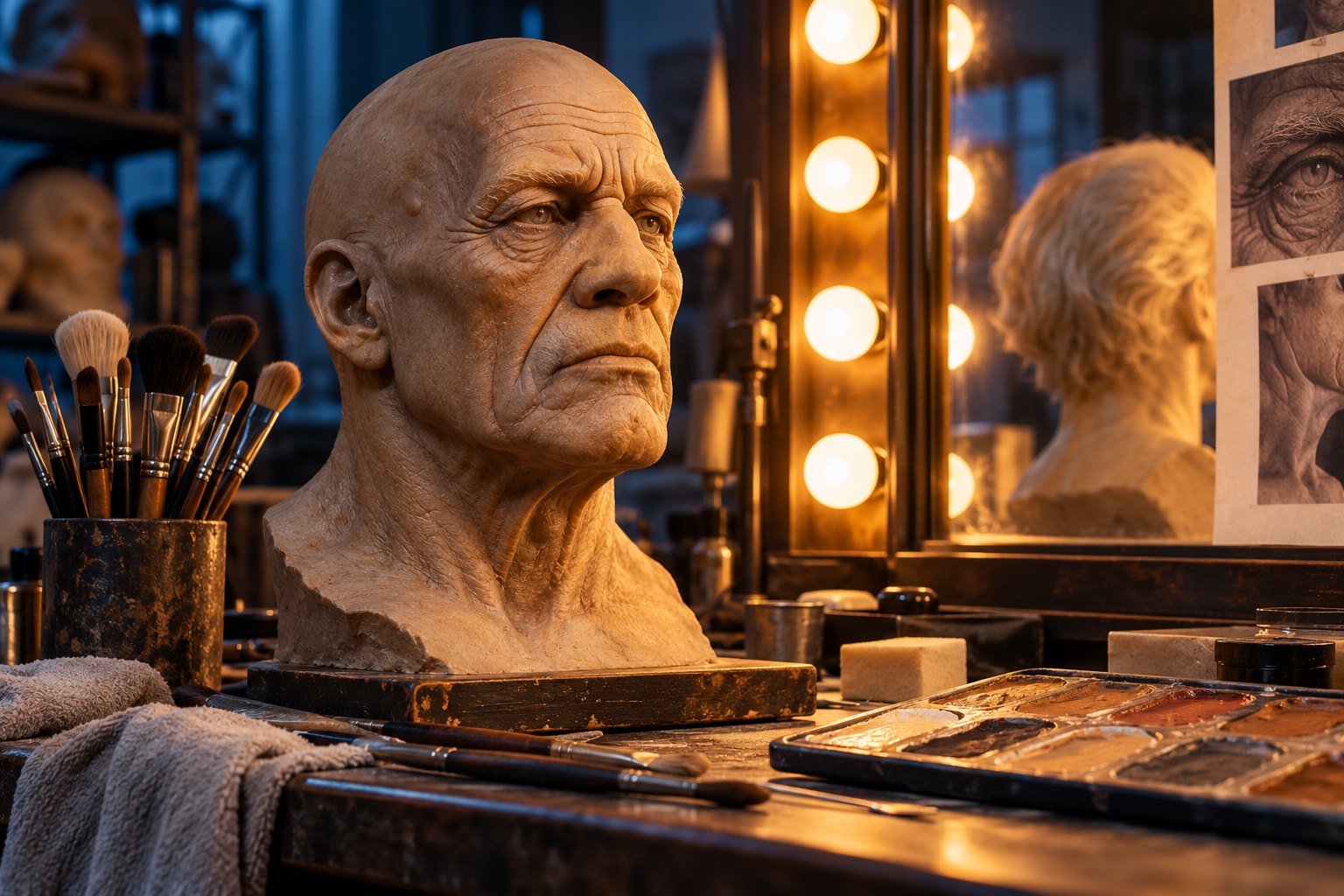
Our discussion of how an altered appearance can contribute to character raises a related distinction: an immediately visible transformation attracts attention, but its dramatic value depends on the behavior surrounding it. The same principle offers a useful standard for an AI-generated protagonist.

Visual continuity should serve emotional continuity
Viewers assessing an AI-generated episode may understandably scrutinize faces, hands, objects, and movement. Visual consistency matters because unintended changes can interrupt our understanding of a scene. Yet a review that stops at spotting defects misses much of what cinema does.
A perfectly stable image can still be dramatically empty. Conversely, an imperfect image may participate in an effective sequence if its composition, timing, and relationship to surrounding shots communicate something precise. The relevant question is how the visual choices support the experience of watching.
Spatial clarity is especially useful to examine. Can viewers understand where people are in relation to one another? Does a change in camera position reveal information? Does a cut help us recognize danger or register a reaction? If the audience must repeatedly reconstruct the basic physical situation, emotional involvement becomes harder to sustain.
My critical preference is for images that direct attention toward a meaningful detail. A spectacular vista earns its place when it changes our sense of a character’s circumstances. A close-up earns its place when looking more closely reveals something. Scale alone cannot make either shot necessary.
Dialogue and sound need their own scrutiny
No episode dialogue is quoted here because its wording has not been verified. Familiar literary language should not be presented as something this adaptation actually says. A memorable line belongs in a review only when the critic can establish both the words and their context.
When assessing the episode, listen for whether speech changes the relationship between characters. Does someone evade a question, conceal a feeling, issue a challenge, or revise an intention? Dialogue becomes dramatically useful when speaking is itself an action. Statements that merely explain the premise may deliver information without creating much tension.
Sound deserves equally close attention. Music can suggest grandeur or sorrow, but the scene still needs to establish why those feelings are warranted. Silence, breathing, environmental sound, and the spacing between lines can shape our response as strongly as a prominent score.
As our examination of soundtracks that reveal character explores, music becomes especially expressive when it gives access to an inner life. For this episode, that is a more revealing criterion than whether the accompaniment sounds conventionally epic.
How to judge the installment on its own terms
A first episode need not resolve its larger story. It should, however, provide some local movement: a situation develops, a choice complicates it, or new information changes what we understand. An ending can leave questions open while still making the preceding sequence feel purposeful.
Three viewing questions help separate that achievement from the excitement surrounding the production method:
- What changed within the episode? Identify a shift in knowledge, allegiance, danger, or intention rather than simply a change of location.
- Whose experience organized the sequence? Notice whether the framing and editing gave access to a particular perspective.
- What makes the next installment desirable? Look for an unresolved dramatic question that extends beyond curiosity about the technology.
These are standards for criticism, not claims about what the released episode contains. They leave room for the work to surprise viewers and for a final judgment to follow the evidence.
The deeper issue: can the images accumulate meaning?
The reported release invites a larger question about screen storytelling: what makes a succession of generated images feel like an experience someone has lived through? My answer is consequence. An event matters when it changes how we understand a person, and when that change survives into the next scene.
That is the artistic opportunity facing Grok’s Odyssey. Its production method may bring viewers to the first episode. Sustained attention will depend on whether the narrative gives them something specific to remember: an intention complicated, a relationship altered, a choice whose cost becomes clear.
The release alone cannot settle that question. A fair critical response should neither award greatness for technical novelty nor assume failure from the method of production. The decisive evidence belongs on screen, in the connections between images—and in whether those connections make a character’s next decision matter.
Original content by this site's editorial team. Published: October 25, 2026 at 13:07:37 PDT (Los Angeles time)