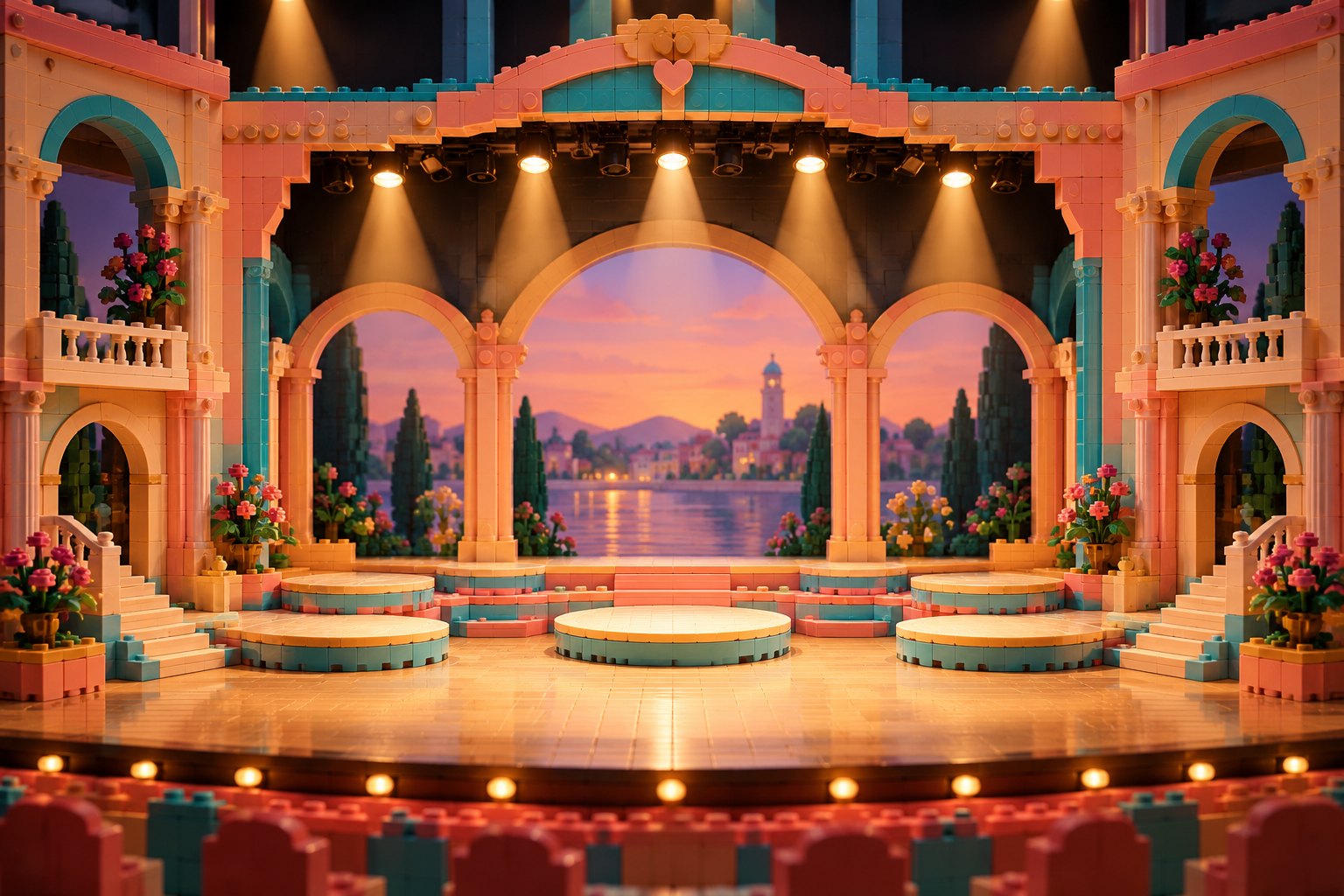
Glee is returning on Hulu and Disney+, with BBC reporting the comeback and Variety and Deadline describing a reboot ordered to series. That establishes the return of the high school musical comedy-drama. It does not establish whether its next musical numbers will have anything urgent to say. For this viewer, that is the creative question worth asking before debating a dream soundtrack.
The original series offers a particularly useful example in “Duets,” its second-season episode built around a classroom singing competition. Its strongest insight is that choosing a partner can be as revealing as choosing a song. A performance becomes a negotiation: about attraction, embarrassment, friendship, and who gets to stand beside whom.
Spoiler notice: This article discusses the original series, particularly “Duets.” It is retrospective criticism and analysis of the reboot’s possibilities, not a review of new episodes. No premiere date, returning cast member, or new storyline is asserted here.
What the reboot announcement does—and does not—tell us
The reported Hulu and Disney+ return gives audiences a concrete reason to revisit Glee. But a series order is a production milestone, not an artistic verdict. Familiar branding cannot tell us how a new episode will balance comedy, vulnerability, and musical spectacle.
That distinction matters especially for a show whose songs can circulate separately from their scenes. A number might be enjoyable as an isolated recording yet feel dramatically unnecessary within an episode. Conversely, a modest performance can become unforgettable because we understand what it costs a character to attempt it.
Our earlier discussion of the reboot’s promise of ambition and belonging considered the ensemble’s competing needs. “Duets” suggests a more specific test: does singing change what two people can say to each other afterward?
“Duets” makes the assignment personal
The episode’s classroom contest turns an ordinary practical decision into a revealing social exercise. Students must pair up. That means private preferences become visible, and an apparently neutral assignment exposes differences in confidence, status, and emotional security.
From Kurt’s perspective, the task carries a burden that other students do not experience in the same way. His proposed partnership with Sam becomes entangled with warnings about how their classmates might respond. Finn worries that association with Kurt will expose Sam to teasing and drive him away from the club.
There is a productive discomfort here. Finn understands the school’s hostility, but his proposed solution asks Kurt to accommodate it. Protecting a newcomer and preserving an unfair social arrangement can become the same action. The episode gives viewers grounds to recognize Finn’s concern while questioning where he places the responsibility.
My reading is that this tension makes the assignment more interesting than the contest itself. For one student, finding a partner is a chance to flirt. For another, it involves calculating whether his presence will be treated as a liability. The same classroom instruction produces unequal emotional work.
Kurt’s solo reveals the missing partner
Kurt ultimately performs “Le Jazz Hot!” alone, turning the duet assignment into an elaborate showcase of his own range. The number allows him to occupy the stage with confidence. It also makes the absent partner impossible to ignore.
That double meaning is the scene’s strength. Kurt can create spectacle and demonstrate skill without receiving the companionship the exercise seems to promise. His ingenuity does not erase his isolation. The performance offers an achievement and leaves an emotional problem unresolved.
A reboot could learn from that refusal to make applause solve everything. A student may sing beautifully and still leave rehearsal hurt. A triumphant arrangement can express what someone wishes were true rather than what the surrounding story has actually established.
Rachel’s early declaration, “There’s nothing ironic about show choir!”, provides a useful lens. Glee can invite laughter at the extravagance of performance while taking the performer’s investment seriously. The humor works best when it recognizes the scale of the feeling underneath the theatrical gesture.
Rachel’s duet changes the purpose of singing
By the end of “Duets,” Rachel joins Kurt for “Happy Days Are Here Again” and “Get Happy.” The performance shifts the episode away from winning a classroom challenge and toward the possibility of connection.
From Rachel’s perspective, sharing this number requires a different use of talent. She is not simply demonstrating that she deserves attention. She is directing attention toward someone else and making room for a musical exchange. From Kurt’s perspective, a partner is finally present without his having to turn solitude into a clever performance concept.
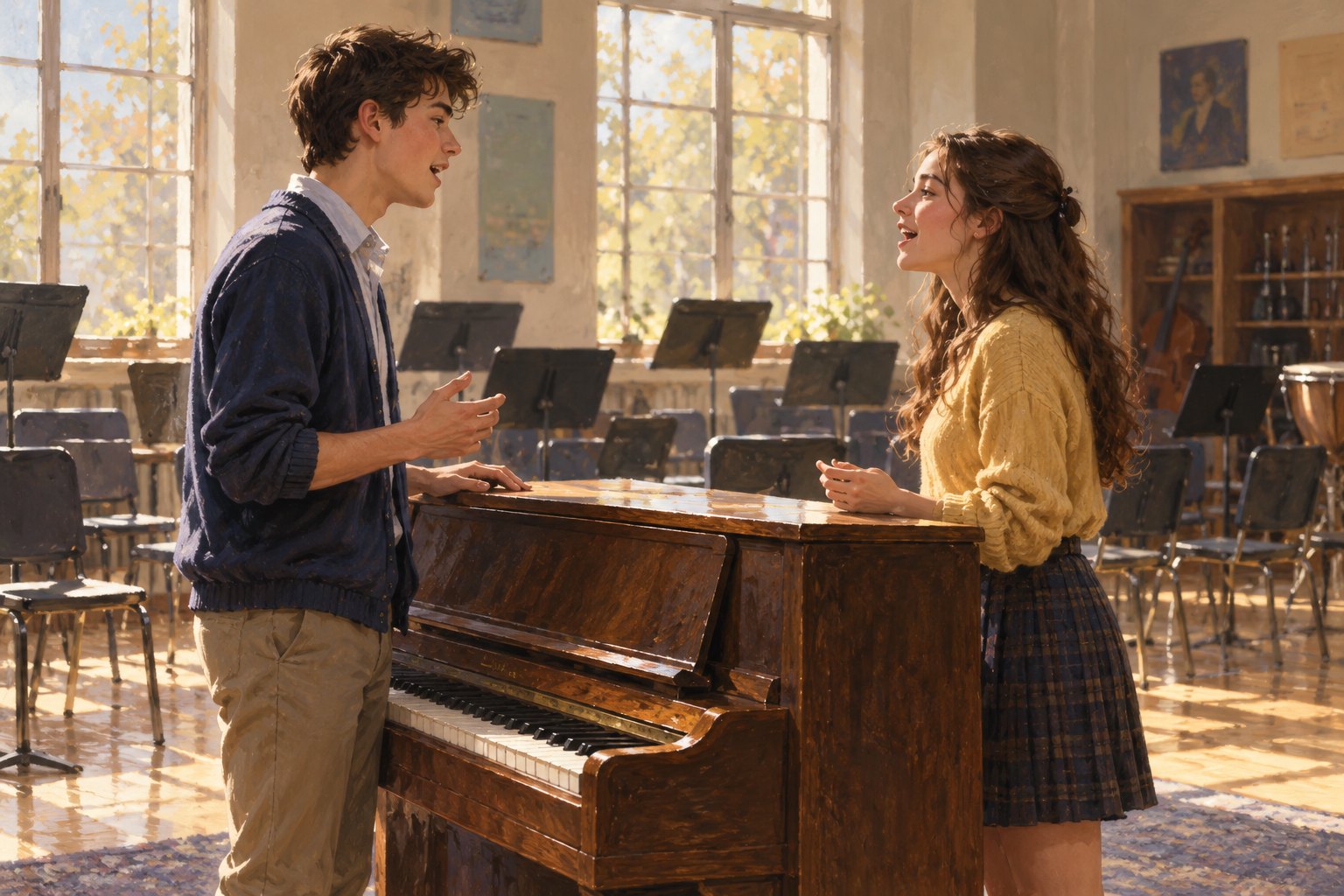
The two songs retain distinct melodic identities while fitting together. To my ear, that makes the arrangement an effective expression of friendship: neither person must disappear for the pairing to work. The pleasure comes from hearing two sensibilities recognize each other.
Rachel’s pilot boast, “I’m very talented too,” distills her habitual self-certainty. Against that baseline, this later duet gains force. Her talent becomes a means of reaching another person. The emotional development is carried by what she does with her voice, rather than by a speech announcing that she has changed.
A love song needs a particular listener
Sam and Quinn’s performance of “Lucky” offers another model. Its dramatic usefulness comes from the emerging connection between the singers. The duet gives their interaction a shared rhythm and lets attraction take shape through collaboration.
That is a different function from Kurt’s solo or the closing Rachel–Kurt pairing. One performance exposes an absence; another offers companionship; another tests romantic possibility. The episode benefits from allowing its numbers to do different kinds of narrative work.
This also explains why selecting recognizable songs is only the beginning. A familiar chorus supplies associations, but the scene still needs a particular singer, listener, and circumstance. The same principle underlies our examination of how spectacle earns dramatic payoff: an impressive sequence becomes more involving when something personal can change inside it.
What to listen for when Glee returns
The reboot’s performances will deserve judgment on their own terms. Still, the original provides useful questions for viewers: Why does this character choose this song now? Who needs to hear it? Does the listener understand what the singer intends? What remains unresolved when the music stops?
Those questions leave room for exuberance, absurdity, and sheer vocal pleasure. They also demand consequences. A confession should complicate a relationship. A competitive performance should reveal what winning means to the competitor. A celebratory chorus should not automatically cancel the hurt that preceded it.
The deeper achievement of “Duets” is its treatment of music as a social act. Singing lets a character construct a version of themselves, but another person can accept, misunderstand, or refuse that invitation. The stage is therefore a place of uncertainty as well as expression.
That is the possibility I want the Hulu and Disney+ reboot to pursue. Glee can make a song feel enormous because, for the person singing, the next few minutes might alter a relationship. The most satisfying return would recover that sense of consequence: when the final note ends, someone has to live with what was sung.
Original content by this site's editorial team. Published: October 21, 2026 at 09:37:58 PDT (Los Angeles time)