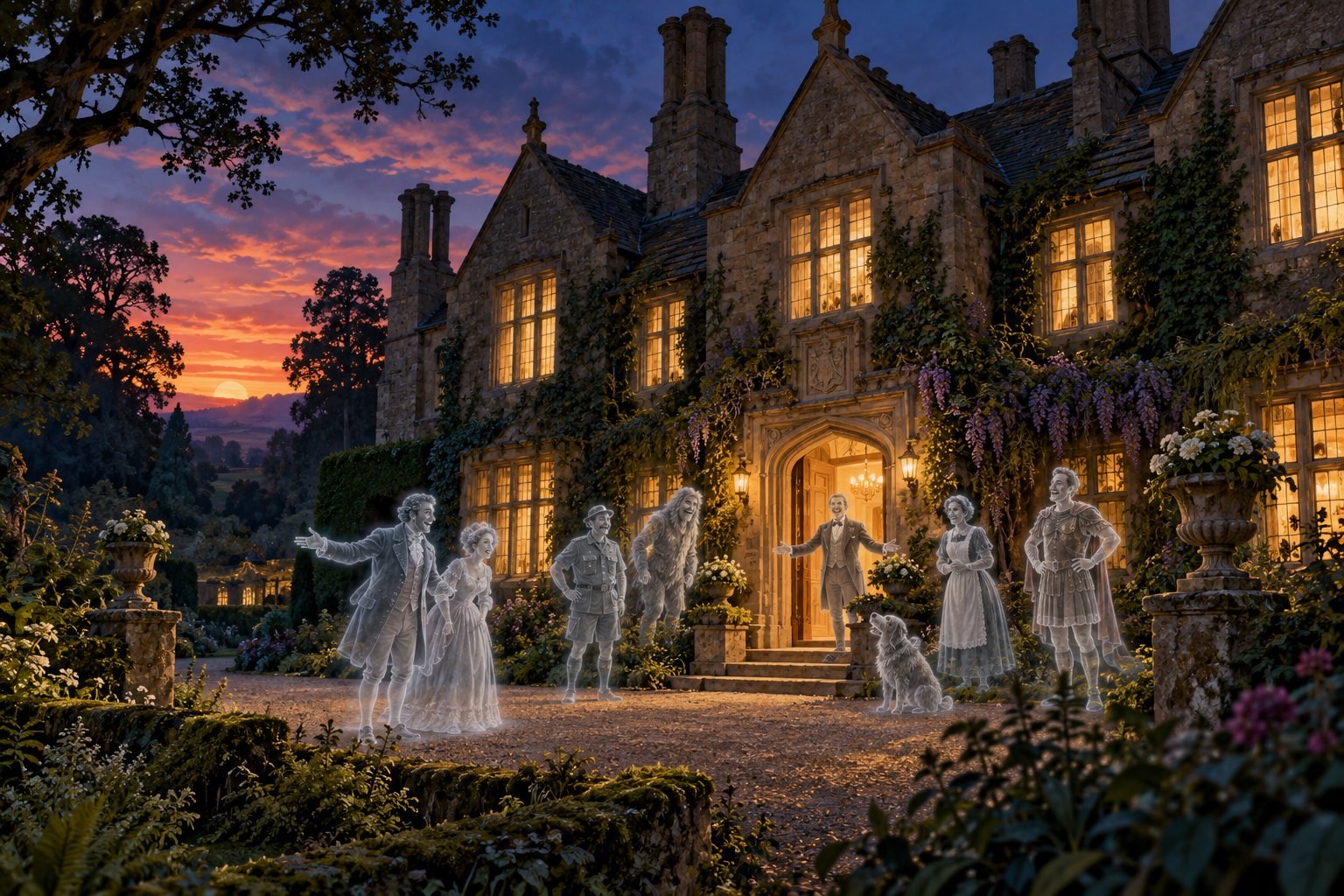
Ghosts: The Possession of Button House finds an unusually revealing way to expand its supernatural sitcom premise: give the dead access to the living world, then ask whose life makes that freedom possible. The central possession supplies a comic adventure, but its more interesting consequence is an imbalance. Julian gains mobility by taking over teenager Jack’s body. Jack, meanwhile, must negotiate an unfamiliar existence among people who have had considerably longer to get used to being ghosts.
That exchange is the strongest basis for reading the film as something more substantial than a reunion. Beneath the supernatural confusion sits a recognizable question: can a group that desperately wants companionship recognize another person’s needs before making him useful?
Spoiler notice: This review discusses the possession premise, the situation following the television finale, and selected character moments. It does not explain the ending.
Button House has residents, but it needs company
Directed by returning series director Simon Hynd, the film follows Alison and Mike’s departure from Button House with their daughter, Mia. The property is awaiting transformation into a hotel and golf resort. Its spectral inhabitants remain behind, with too much time and too little happening.
For the ghosts, development promises more than new furniture or repaired walls. It promises people. Their attachment to the building is inseparable from their dependence on whoever passes through it. A place that looks like an impressive inheritance to the living can become a painfully small world when leaving is impossible.
Thomas’s description of absence, which “makes the big feelings feel more big,” is characteristically clumsy poetry. It also identifies the problem neatly. Without Alison’s everyday presence, the ghosts have fewer distractions from themselves. Their eccentricities become ways of managing the same underlying deprivation: they want someone to notice them.
The arrival of teenagers conducting a séance therefore introduces more than potential mischief. It brings a new audience into a household starved of attention. The discovery that possession is possible changes both the practical rules and the emotional balance.
Julian treats another body like an opportunity
Julian occupies Jack’s body and sets out to contact Alison. For a former politician accustomed to putting his own interests first, possession is an especially pointed new ability. He can cross a boundary that previously confined him, while someone else absorbs the immediate consequences.
That makes the choice of Julian dramatically useful. The story does not hand this freedom to its most considerate character. His willingness to act creates momentum, but it also exposes how easily a rescue mission can become an excuse to skip uncomfortable questions about permission.
Scott Ellis Watson’s role involves conveying Julian through Jack’s outward appearance. The familiar parliamentary bark of “Ord-ah! Ord-ah!” becomes a compact identity test: a teenage body delivers the vocal habits of a dead politician. The joke depends on recognition, yet its underlying discomfort matters too. The person everyone sees is not the person directing the encounter.
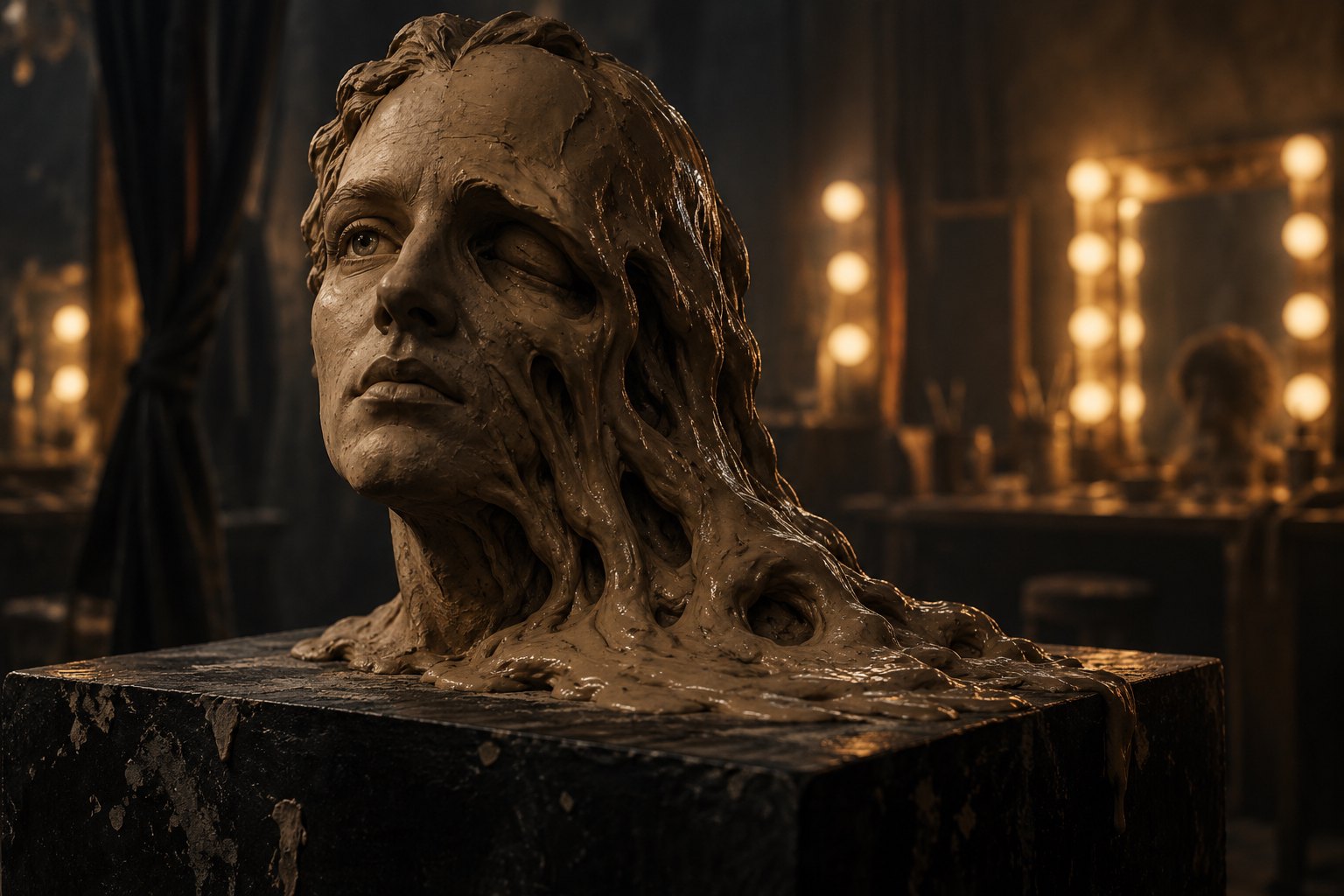
This is a lighter treatment of the connection between appearance and identity examined in our character analysis of Clayface. Here, the body becomes a temporary passport. My reservation is that Julian’s entertaining opportunism can make it easy to overlook the person whose passport he has borrowed. Jack’s parallel story is essential to keeping that imbalance visible.
Jack needs recognition, not another assignment
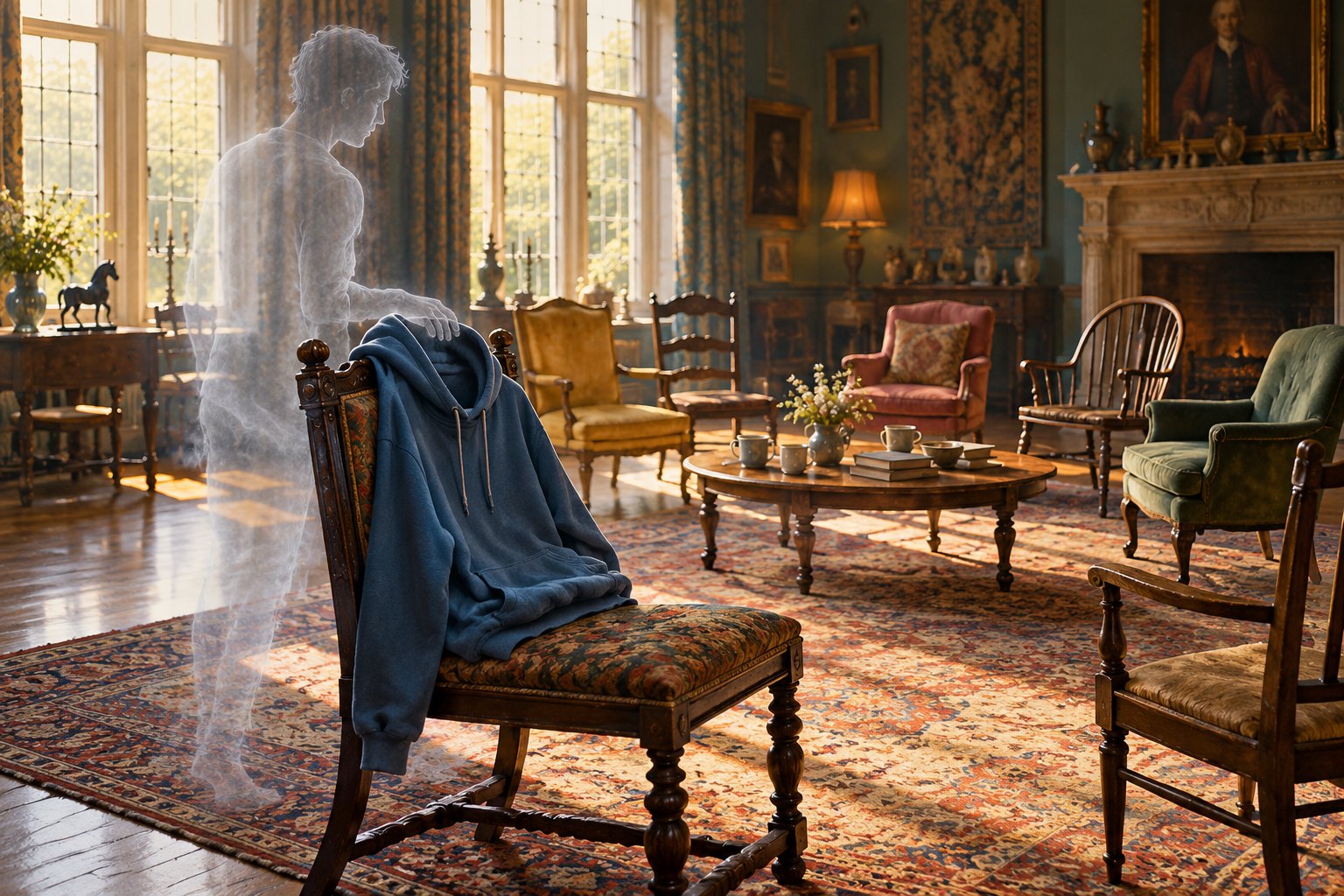
While Julian moves through the living world, Jack’s displaced spirit stays with the ghosts. The structure creates a useful reversal: the established characters acquire new possibilities while the newcomer inherits their restrictions.
Jack is a young person in foster care, and that background gives the household’s attempts at connection additional weight. He should not be understood merely as a device that allows favorite characters to leave the estate. His uncertainty about belonging makes the ghosts’ makeshift family relevant to him in a way their supernatural abilities alone cannot.
Kitty and Pat’s awkward efforts to connect with him bring out a distinction worth preserving. Kind intentions do not automatically produce understanding. Enthusiasm can overwhelm; advice can arrive before anyone has listened. Their generational distance is funny, but it also gives their care something to work through.
The most compelling interpretation of this relationship is reciprocal. Jack encounters adults who cannot simply disappear into busy lives elsewhere. The ghosts encounter a teenager whose emotional needs cannot be solved by treating him as an exciting new visitor. Both sides must adjust their expectations of company.
Alison’s return carries an unresolved obligation
Alison’s involvement matters because leaving Button House was already a meaningful choice. She and Mike have a child and a life beyond the ghosts. Bringing them back into the adventure inevitably raises the question of how much responsibility affection should require.
From the ghosts’ perspective, Alison is the person who can understand and help them. From hers, their emergencies compete with obligations they cannot fully share. The resulting tension gives the reunion emotional substance: loving this household does not make its demands effortless.
That is also why the threatened property should be considered through its residents rather than through architecture alone. A location acquires dramatic value through the relationships it makes possible, a principle explored in our commentary on everyday spaces in The Pitt. Button House matters because of who can find one another there.
Small pleasures explain the appeal of being alive
The wider ensemble gives the possession idea several different meanings. Pat’s chance to enjoy a scotch egg makes physical existence appealing at its most ordinary. The Captain’s opportunity to lead a mission connects freedom with purpose. Fanny’s encounter with modern feminist ideas suggests that access to the present can challenge assumptions as well as satisfy curiosity.
These moments support the film’s character-centered approach to expansion. A larger story does not have to give every ghost a grand revelation. Taste, movement, attraction, and responsibility can each reveal something that confinement has kept dormant.
There is an accompanying limitation. Familiar traits do considerable work, so viewers already invested in the British series have an advantage. The possession mechanism is easy enough to grasp; the emotional significance of watching a particular ghost experience something new depends more heavily on knowing what that character has been missing.
The deeper meaning of possession
The title invites two related readings: possession of a body and possession of a place. Neither guarantees belonging. Julian can inhabit Jack without understanding him. The ghosts can remain at Button House without feeling that their existence matters to anyone outside it.
For me, that distinction is the film’s richest idea. Ownership and access are comparatively simple; making room for another person is harder. The ghosts’ family becomes meaningful when it can accommodate someone whose experience does not match its own.
The most rewarding way to approach The Possession of Button House is therefore through its competing desires. Julian wants freedom, Jack needs recognition, Alison needs a life that can contain affection without being consumed by obligation, and the household wants company. Their supernatural predicament makes those ordinary needs visible. Being alive offers pleasures the ghosts miss, but being included offers something neither life nor death can guarantee.
Original content by this site's editorial team. Published: October 29, 2026 at 04:22:35 PDT (Los Angeles time)