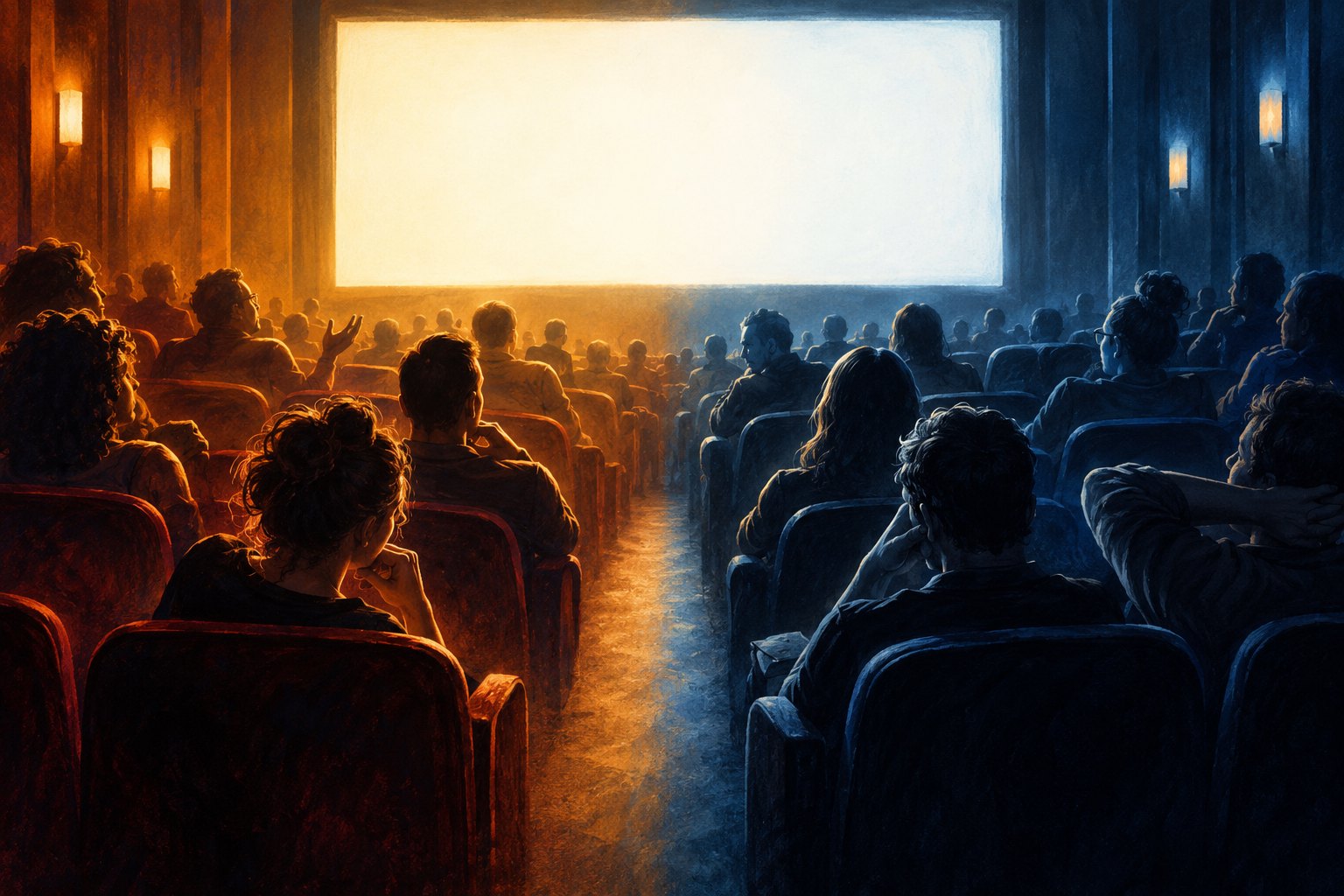
Florida State University’s film school has received national recognition for both its undergraduate and graduate programs, according to Florida State University News. For readers who care about movies, the announcement invites a question beyond institutional prestige: what does a strong film education help a filmmaker see that a camera alone cannot?
Our answer begins with character. A technically accomplished scene can still leave us indifferent if we cannot understand what someone wants, what they are afraid to reveal, or what a decision costs them. Film education becomes especially interesting when it connects the mechanics of production to those human stakes.
FSU’s recognition is an occasion to examine that connection. The educational achievement and the artistic question deserve distinct treatment: recognition establishes that programs have attracted attention; judging the films themselves requires watching the work. This commentary considers the creative standards worth bringing to that viewing.
What the FSU announcement establishes
The university’s announcement concerns recognition for undergraduate and graduate film study. That scope matters. It draws attention to education at different stages of a filmmaker’s development, without establishing that every student follows the same path or pursues the same kind of cinema.
It also leaves practical questions unanswered. Recognition alone cannot tell a prospective student how often they would direct, what production expenses they would face, how feedback would work, or how much access they would have to equipment. Those details require separate, current evidence. Neither career security nor artistic originality should be inferred from an institutional distinction.
For a film publication, the most productive response is to connect the news to the finished work audiences encounter. When watching films associated with any school, including FSU, we would look for deliberate perspective, responsive performances, and choices that give a scene emotional consequences. Those are critical criteria, not claims about a particular curriculum.
Character perspective starts before the close-up
A useful way to evaluate filmmaking is to ask whose experience organizes a scene. This goes beyond identifying the protagonist. A scene can follow one person physically while giving the audience information that belongs to someone else. That gap can create suspense, compassion, suspicion, or dramatic irony.
Consider a hypothetical exercise: two siblings meet to discuss selling their childhood home. One needs the money; the other wants to preserve a connection to a parent. A wide shot might emphasize the distance between them. A close-up could reveal that apparent stubbornness is barely controlled grief. Neither choice is automatically more sophisticated. Its value depends on what the scene needs us to understand.
The director must also decide when understanding should arrive. Showing distress immediately invites sympathy. Delaying it may force viewers to reconsider an earlier judgment. Camera placement, shot duration, and the order of information become part of the characterization.
That is the kind of attentive viewing explored in our review of perception and vulnerability in Under the Skin. The connection is a critical method: examining how a film changes our relationship with a character through what it allows us to observe.
Working with actors means making behavior specific
Performance offers another useful test. An actor may communicate an emotion clearly while the scene remains dramatically vague. Sadness, anger, and attraction acquire interest through context: who is present, what must be concealed, and what the character hopes will happen next.
Returning to the hypothetical siblings, a direction to appear devastated supplies a result. A direction to keep the other sibling from noticing a trembling hand supplies an action. The latter gives the performer something concrete to attempt, and it gives the camera behavior to discover.
In our view, strong filmmaking makes room for these competing intentions. A person can argue about money while seeking reassurance. Someone can win an argument and immediately regret the victory. Such contradictions allow characters to feel larger than the plot function they serve.
For readers assessing student work, the practical question is whether each performer seems to be responding to the other person. Watch the listener during an important speech. If the scene changes because of what that listener hears, the filmmaking has created a relationship rather than merely recorded dialogue.
The editing room tests what the scene actually communicates

Editing makes the relationship between technique and character particularly visible. Cutting to a reaction can establish that a remark wounded someone. Staying with the speaker can make us wonder whether that person notices the damage. Holding both people in the frame may let us study their unequal awareness at once.
Each version can use the same performances and produce a different emphasis. The editor helps determine whose experience receives attention and how long viewers have to interpret it.
Sound contributes to that judgment. A response heard from outside the frame may interrupt a character’s apparent control. A pause may become uncomfortable because ordinary room noise continues beneath it. Music may deepen an emotion, but it can also settle a question that the performance has left productively open.
When considering what FSU’s recognition means for audiences, this is where our interest lands: the possibility of encountering filmmakers who can explain their choices through their effects. An elegant transition has limited value if it distracts from the emotional turn that makes the sequence matter.
A practical way to watch emerging filmmakers
Viewers do not need production experience to engage seriously with student films. Start with the story’s immediate demands, then examine how the film meets them. Four questions can make that process more precise:
- What does the central character want? Look for a desire expressed through behavior, even if the character cannot articulate it.
- What changes within the scene? A shift in trust, knowledge, or control can matter as much as a major plot event.
- Where does the film direct your attention? Notice whether framing and sound reveal something you would otherwise miss.
- What does the ending ask you to reconsider? An effective conclusion can alter the meaning of an earlier gesture without explaining every uncertainty.
These questions also resist premature judgments based on presentation alone. A modestly staged conversation may demonstrate considerable dramatic control. An elaborate sequence may reveal ambition while leaving motivation unclear. Both deserve specific criticism.
The same concern with meaningful character development informs our analysis of the storytelling challenge facing Shadow of the Past. Whether a production is small or familiar to millions, recognition becomes dramatically useful only when the story gives viewers a reason to care.
Why film education belongs in the movie conversation
FSU’s recognition gives audiences a reason to pay attention to the institution’s emerging filmmakers. It does not supply a verdict on work we have not examined. The meaningful next step is to watch individual films closely and describe what their makers accomplish.
Our deeper interest is in the relationship between learning a craft and learning to attend to other people. Every scene distributes attention: someone speaks, someone waits, someone is misunderstood, and someone receives the final reaction shot. Those decisions shape the audience’s understanding of whose experience matters.
A film education’s artistic promise lies in making such decisions more conscious. The achievement worth looking for on screen is a filmmaker who can turn observation into dramatic form—and leave us understanding a person more fully than we did when the scene began.
Original content by this site's editorial team. Published: October 5, 2026 at 12:58:57 PDT (Los Angeles time)