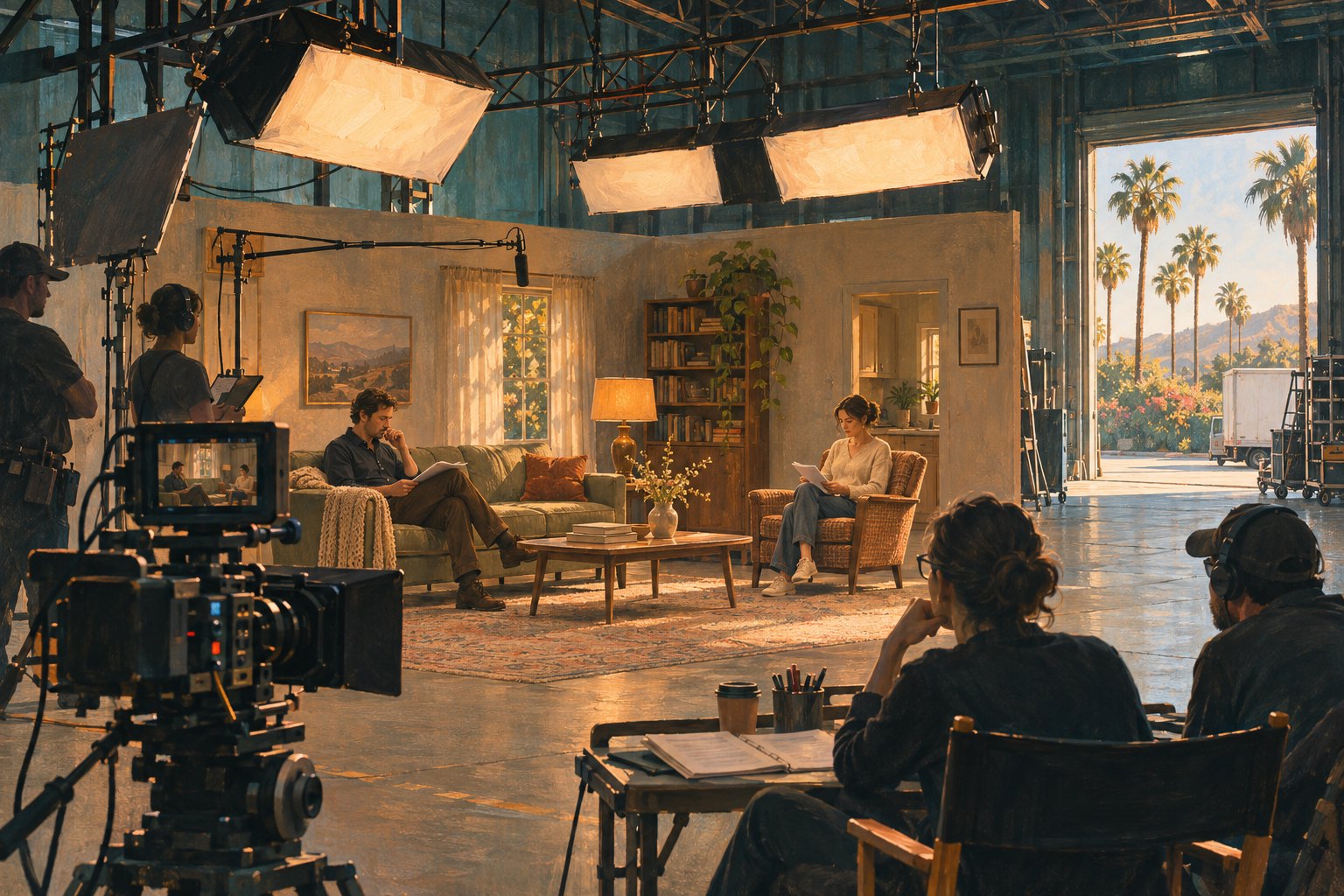
Exploring film festivals beyond Sundance starts with a useful change of question: what would you like to discover? A regional program, a documentary showcase, a genre festival, or a collection of international shorts can offer different routes into unfamiliar filmmaking. The best fit depends on the movies you want to encounter, the screenings you can actually attend, and how much room you leave for surprise.
Our view is that a worthwhile festival visit should sharpen your taste, not simply confirm it. That means approaching the program with curiosity while keeping your critical judgment intact. A festival selection deserves attention; it still has to earn your affection onscreen.
Choose the kind of discovery you want
Before comparing individual titles, decide what is missing from your usual movie diet. Perhaps you rarely watch short films. Perhaps your international viewing stays within one language. Perhaps you enjoy horror but want to see how a filmmaker creates dread without familiar stars or elaborate effects. Those preferences give your search a direction without predetermining the result.
For character and community, examine regional programs
Look for descriptions that identify a particular place, social relationship, or everyday conflict. Specificity gives you something to evaluate beyond the promise of an inspiring journey. A story about a difficult workplace or a strained household may interest you because its pressures are recognizable, even when its setting is unfamiliar.
Once the film begins, ask whether that setting changes what the characters can do. Does geography determine who can leave? Does a shared space force people into uncomfortable proximity? Our commentary on how locations shape believable movie worlds develops this connection between physical surroundings and dramatic possibility.
For formal surprises, consider shorts and specialized programs
A shorts program can be a useful choice when you want several encounters with unfamiliar filmmaking in one sitting. Check its full running time and the descriptions of its individual selections. An animation block, for example, may suit a very different mood from a collection of documentary portraits.
At a genre-focused screening, bring your enthusiasm and your standards. When watching horror, consider whose fear organizes the scene. In a thriller, ask what information a character lacks and whether the film makes that uncertainty compelling. Recognizing a convention is only the beginning; the pleasure lies in seeing what the filmmaker does with it.
Read the program for evidence, not adjectives
Words such as bold, moving, and unforgettable tell you how a film is being presented. They tell you little about how it works. More useful details include the central relationship, the dramatic situation, the running time, and the approach to storytelling.
A synopsis that describes competing obligations gives you a clearer reason to attend than a string of compliments. Still, keep synopsis and judgment separate. A compelling premise may produce a flat movie, while an apparently modest situation may reveal extraordinary emotional complexity.
- Identify the central tension. What does someone want, and what makes pursuing it difficult?
- Notice the form. Is the attraction a performance, an observational approach, animation, or an unusual narrative structure?
- Check the screening conditions. Confirm language, subtitles, accessibility information, venue, and admission rules before committing.
- Separate selection from evaluation. A festival label helps identify a film’s screening history; your response should come from the film itself.
If a description feels vague, use that uncertainty deliberately. Make it your adventurous choice rather than buying several tickets on the same thin promise.
Build a schedule that leaves you able to watch
For a first visit, consider a simple three-part plan: one film that matches your established interests, one that stretches them, and one shorts program or conversation if the schedule offers it. Treat this as a starting point, not a quota.
Check whether screenings overlap once travel, entry procedures, and any discussion are included. A pass may have reservation requirements, and admission arrangements can differ between events. Read the current terms rather than assuming that purchasing access guarantees a particular seat.
Leave a gap after the film you most want to think about. Fatigue can flatten distinctions between deliberate pacing and weak momentum. A meal, a walk, or ten quiet minutes with a notebook may improve the next screening more than squeezing another title into the afternoon.
Watch unfamiliar films through their characters
Our preferred critical starting point is the distance between what a character says, what they do, and what they seem unable to admit. That gap provides a way into a film without requiring advance knowledge of its director or reputation.
Track the decisions that change a relationship. Who initiates a conversation? Who changes the subject? Who controls when an encounter ends? A performance may communicate power through hesitation, posture, or the decision to remain still. Dialogue matters, but a scene can quietly contradict its most confident speaker.
Then examine how the filmmaking directs your allegiance. A close-up can invite sympathy; an extended wider shot can make you notice the person being ignored. Editing may place you inside one character’s uncertainty while allowing another to remain unreadable. These choices shape interpretation rather than merely decorating the plot.
That attention to emotional contradiction also guides our character-focused review of The Invite. The linked review contains major spoilers; the broader method works best when you first give a new film room to establish its own terms.
Use the conversation after the film to deepen your reading
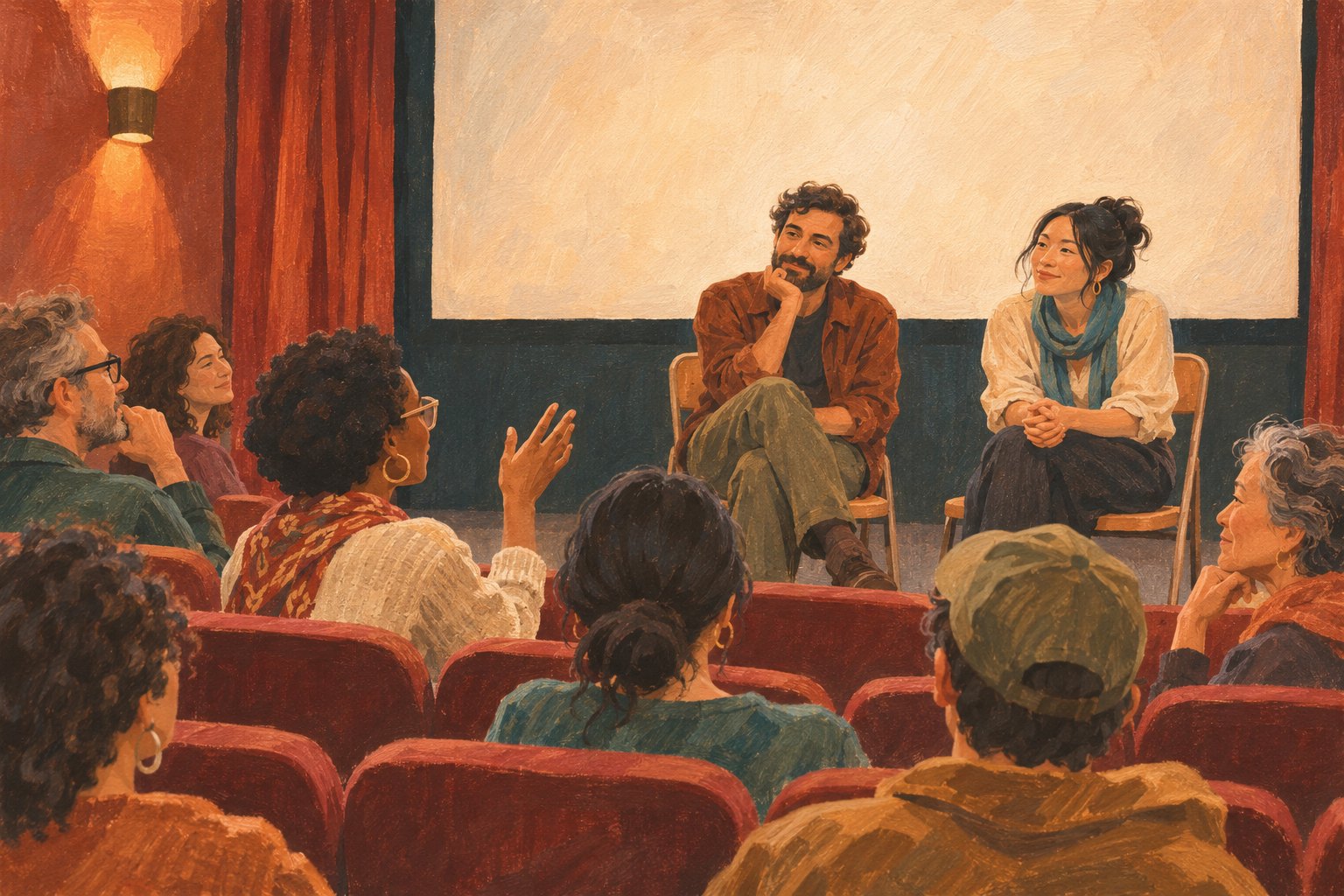
If a filmmaker discussion is offered, questions about observable choices usually produce more useful answers than requests to explain everything. Ask about the decision to withhold a reaction shot, the use of an offscreen sound, or the point at which a scene ends. Ground the question in something you actually noticed.
Keep intention and effect distinct. Learning why a scene was constructed a certain way can enrich your understanding without changing your response to it. You can respect an artistic intention and still find the result unconvincing.
Before reading other reactions, record three things: an image that stayed with you, a character choice that troubled or delighted you, and a moment when your attention changed. If you record dialogue, mark uncertain wording as a paraphrase. An approximate memory should never become an authoritative quotation.
The real reward is a more precise sense of your own taste
The deeper value of looking beyond Sundance is the opportunity to reconsider what makes a movie worth your time. You may discover that an unresolved ending feels satisfying when the character’s decision is clear, or that a visually impressive film leaves you cold because its relationships never develop.
You do not have to love an unfamiliar film to benefit from seeing it. A thoughtful disappointment can help you name what you need from storytelling. An unexpected favorite can reveal a preference you did not know you had.
Choose a festival program that gives those discoveries a chance. Then let the film earn its place in your memory through a face, a decision, a sound, or a scene you keep turning over after the lights come up.
Original content by this site's editorial team. Published: November 2, 2026 at 12:25:57 PST (Los Angeles time)