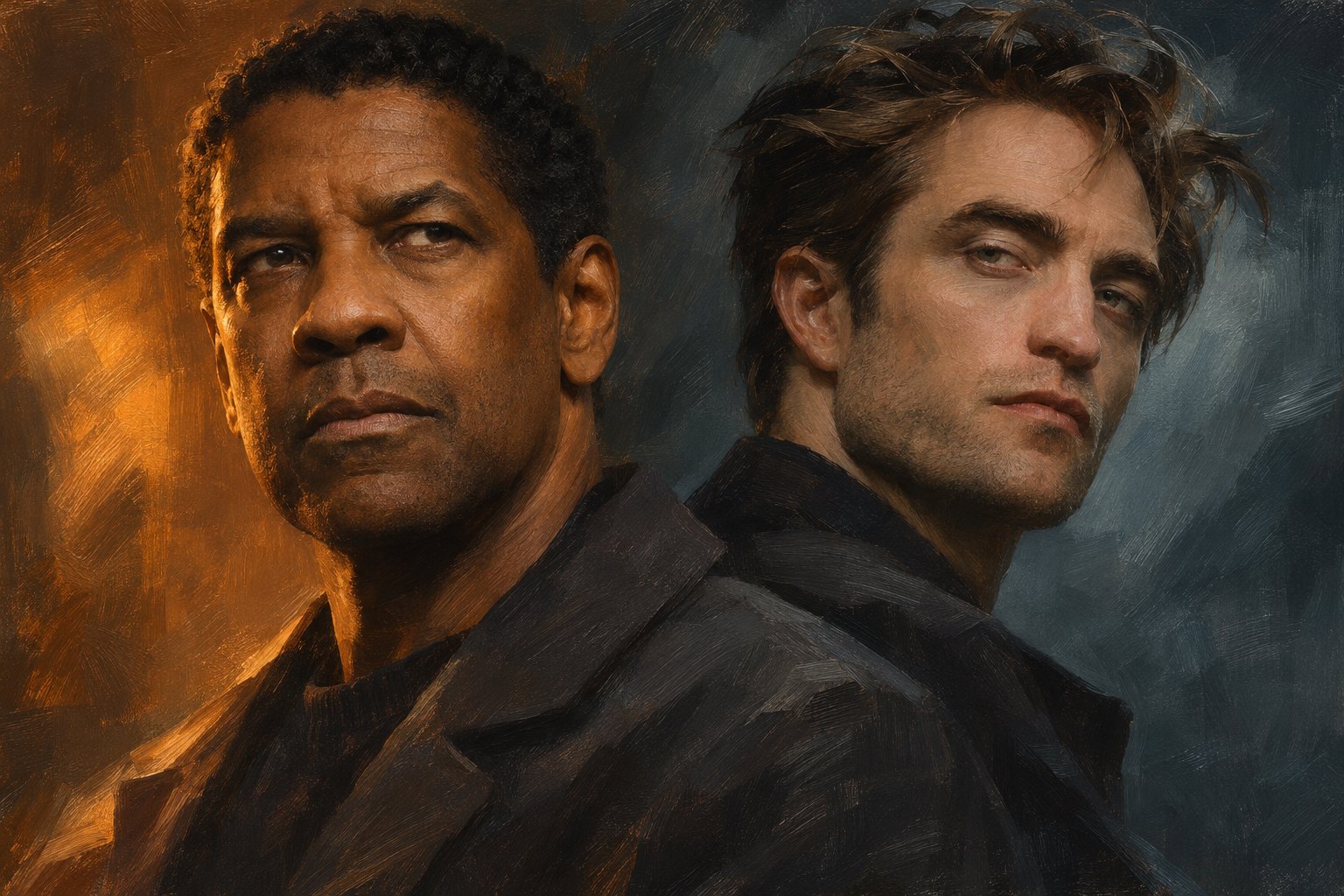
Denzel Washington and Robert Pattinson are starring in The Take, a forthcoming Netflix heist thriller whose most interesting promise lies in its three central roles: a bank guard, a teller, and a master thief. Daisy Edgar-Jones also leads the cast. That combination gives the project an appealing dramatic question before anyone opens a vault: when people with different kinds of access become entangled, who actually understands the situation?
This is a spoiler-free critical preview, not a review of the finished film. The announced premise supports a discussion of character perspective, but it does not establish the characters’ motives, specific betrayals, dialogue, or ending. Those distinctions matter for a movie built around deception.
What Is Confirmed About The Take?
Netflix identifies Fernando Meirelles as director and Simon Kinberg as screenwriter. Its production announcement places filming in New Jersey and lists Danai Gurira, Sean Harris, Moisés Arias, and Justin Kirk alongside the three leads. The story involves a bank guard, a teller, and an expert thief caught in dangerous deception and shifting allegiances. The announcement does not specify which lead plays which role or provide a release date. These details are documented in [Netflix’s production announcement](https://www.netflix.com/tudum/articles/the-take-release-date-cast-news).
The distinction between a cast announcement and a character introduction is especially useful here. Washington and Pattinson provide an immediate reason to pay attention, but assigning either actor the position of mastermind, victim, or moral center would get ahead of the evidence. The casting invites curiosity; the eventual performances must establish where our sympathies belong.
Three Characters, Three Different Relationships With Risk
My interest in this premise begins with the imbalance between its occupations. A guard, a teller, and a thief can occupy the same building while reading it differently. One might notice movement, another a disruption in routine, another an opportunity. Those are possibilities inherent in the setup, rather than descriptions of scenes from The Take. They suggest how a familiar genre could produce tension through conflicting interpretations.
The Guard: Responsibility Without Complete Knowledge
A guard’s dramatic potential comes from the distance between being responsible for security and knowing where danger originates. In a heist story, a visible threat can command attention while something less obvious goes unnoticed. The compelling character question is therefore not simply whether the guard is capable. It is what that person believes deserves protection, and how confidently they can act on incomplete information.
I would look for decisions that carry a personal cost. Following a procedure, trusting a colleague, or hesitating before an accusation can all become revealing choices when the circumstances make certainty impossible. A character becomes interesting when responsibility creates pressure, rather than functioning as a convenient reason to stand near the action.
The Teller: Familiarity as a Form of Power
The teller offers a different possibility: knowledge acquired through repetition. A workplace can become legible through tiny patterns that outsiders overlook. In dramatic terms, someone who understands ordinary behavior may be better positioned to recognize an abnormal moment than someone arriving with an elaborate plan.
The danger for the writing would be treating this character only as a source of access or exposition. A stronger approach would give the teller an independent objective that complicates everyone else’s calculations. For me, agency is the key measure: does this person make consequential choices, or merely enable the choices of more conspicuous characters? That question matters regardless of which performer occupies the role.

The Thief: Expertise Needs a Blind Spot
A master thief brings an obvious attraction: the pleasure of watching someone solve a difficult problem. Yet competence alone can flatten suspense. If a character anticipates every response, other people risk becoming moving parts in an exhibition of cleverness. The more interesting possibility is expertise that works brilliantly until it encounters something it has misunderstood.
That misunderstanding need not involve machinery or timing. It could be a mistaken judgment about another person. As a critical preference, I find a plan more engaging when its vulnerability reveals the planner’s character. The audience then has something to reconsider beyond the mechanics of the robbery: the assumptions that made those mechanics seem reliable.
Washington and Pattinson Should Complicate Our First Impressions
Recognizable actors introduce an extra layer to a deception story because audiences begin forming expectations before the characters have earned them. A commanding presence can make a claim feel credible. A guarded expression can encourage suspicion. Neither reaction necessarily tells us anything reliable about the person being portrayed.
For The Take, the opportunity is to let behavior gradually revise those initial impressions. I would be more interested in a conversation that changes who seems persuasive than in a scene that merely announces who is dangerous. Edgar-Jones is equally important to that prospect: a three-person premise needs three centers of intention, even when two names dominate the initial attention.
This also means chemistry should involve resistance. Characters need not understand one another for their scenes to work. They may be most compelling when the audience can recognize incompatible intentions beneath an apparently straightforward exchange.
What Would Make the Double-Crosses Satisfying?
My standard for a successful reversal is that it changes the meaning of something already witnessed. Surprise can produce an immediate jolt, but recognition gives that jolt staying power. A pause, a concession, or an apparently minor decision should become more interesting once the audience understands its context.
That requires a careful distinction between withholding an answer and withholding everything necessary to ask a useful question. Viewers do not need the complete plan. They do need enough emotional and practical information to understand why a decision matters. Our discussion of suspense in Dogfight considers a related issue: how the timing of information shapes investment in a thriller.
When The Take becomes available, three questions will offer a useful way to assess its construction: can each central character alter the situation, do reversals follow from recognizable motives, and does discovering the truth change the emotional stakes? These are more revealing standards than simply counting surprises. They also reflect the approach in our guide to reading film criticism beyond the verdict: identify what a movie asks its audience to experience, then judge how it creates that experience.
The Deeper Possibility: Trust as Something People Spend
The most promising interpretation of this setup concerns the price of trusting another person. A heist makes money visible, but dependence can be the more interesting transaction. Someone must believe an explanation, accept a promise, or let another person act beyond their supervision. Every such decision creates an opening.
That is a possibility within the announced premise, not a claim about the finished film’s message. My hope for The Take is that its eventual outcome matters because of what its characters choose to believe. A stolen fortune supplies a concrete objective. The harder question—and potentially the more memorable one—is what each person gives away before realizing a transaction has taken place.
Original content by this site's editorial team. Published: November 3, 2026 at 18:34:17 PST (Los Angeles time)