Dive in Wonderland will screen in the United States and Canada on November 16, 2026, as a one-day Crunchyroll Anime Nights event. Tickets are on sale, according to [Crunchyroll’s release announcement](https://www.crunchyroll.com/ko/news/announcements/2026/11/2/dive-in-wonderland-anime-film-releases-united-states-canada-release-november-16). For viewers planning a theater visit, the limited engagement is the immediate news. The more intriguing creative detail is who enters Wonderland: a university student whose uncertainty gives this familiar setting a different point of entry.
Her name is Rise Azumino, and she travels with Alice. That arrangement creates an appealing possibility: encountering a childhood fantasy at an age when being unsure of yourself can feel less like an adventure and more like falling behind.
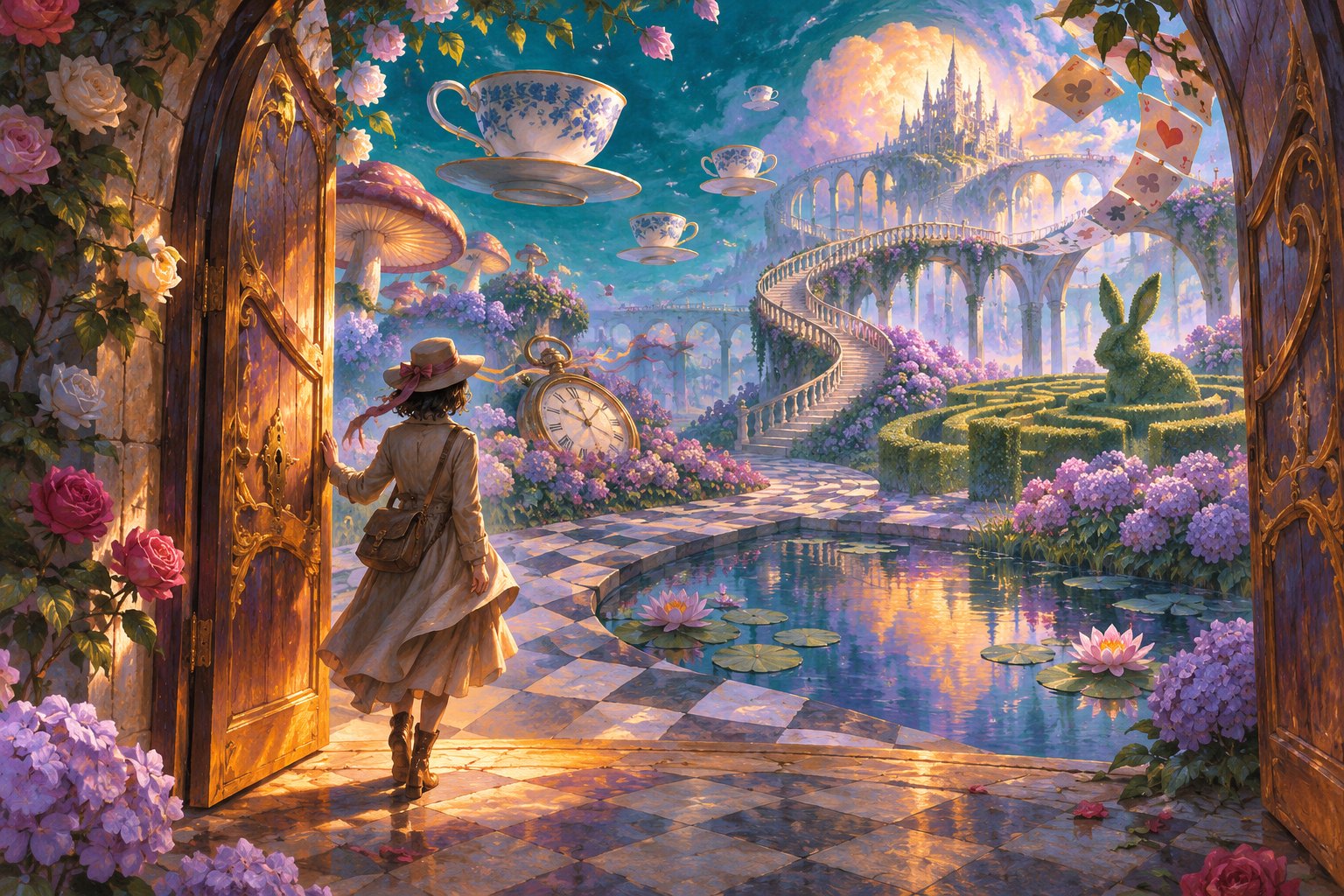
Coverage note: This is a critical preview based on confirmed release information and the official premise, rather than a scored review of the completed film. It discusses the setup without revealing an ending. The accompanying illustrations are symbolic editorial artwork.
What the November 16 release means for viewers
The announced engagement covers both countries, but a national release announcement does not guarantee a screening in every city. Check a participating theater’s listing for the location, start time, language presentation, and ticket availability before making plans. Because this is advertised as a one-day event, waiting for the following weekend could mean missing the scheduled engagement.
The film was directed by Toshiya Shinohara, written by Yuko Kakihara, and animated by P.A. Works. It previously opened in Japan on August 29, 2025. November 16 is therefore its announced U.S. and Canadian event date, rather than its original Japanese premiere.
These details establish access and authorship. They do not establish whether the film’s emotional journey succeeds. That distinction matters particularly with a recognizable fantasy property, where affection for the setting can arrive long before an audience has met this version’s protagonist.
Rise brings a different kind of confusion to Wonderland
The [official story introduction](https://sh-anime.shochiku.co.jp/alice-movie/) presents Rise as a university student struggling to find her way despite trying to read social expectations and do what others do. An invitation left by her late grandmother leads her into Wonderland, where she meets Alice and begins traveling with her.
The revealing detail is Rise’s relationship to conformity. Her difficulty is not described simply as having no plans. She is trying to avoid mistakes by following the apparent rules, yet that effort has failed to make life intelligible. For a character in that position, a world of absurdity offers a particularly sharp dramatic test.
My reading of the premise is that Wonderland could expose the limits of her usual strategy. If circumstances refuse to behave predictably, observing everyone else more carefully may stop being useful. A person accustomed to searching for the acceptable response might eventually have to consider what she actually thinks.
That is a more specific foundation than a general message about believing in yourself. It connects the fantasy to an ordinary adult frustration: doing everything that appears sensible and still feeling misplaced. Whether the film develops that tension through convincing choices remains the central question for a full review.
Alice becomes a companion, changing the emotional balance
Having Rise travel alongside Alice changes the structure of the encounter. The famous name no longer identifies the only person through whom the audience can approach this world. There is room for two reactions to the same experience, and for the distance between those reactions to become meaningful.
The premise alone does not establish the precise balance of their personalities. It does, however, make their relationship worth watching closely. Does Rise become more willing to speak? Can the two disagree? Does companionship alter how she responds to uncertainty, or simply make the journey less lonely?
For me, the strongest version of this setup would allow influence to emerge through interaction. A traveling companion becomes dramatically valuable when being with that person changes a decision. Reassurance can be moving, but a relationship gains weight when it also makes hesitation, resistance, or misunderstanding visible.
This is related to the question raised in our discussion of why point of view matters in a familiar adaptation: recognizable material becomes a story through the experience of a particular person.
The grandmother’s invitation gives the journey personal stakes
Rise enters Wonderland through something left by a deceased family member. That gives the invitation a significance beyond its practical role as a route into the adventure. It connects an uncertain future to an existing relationship, even before the film reveals what that connection ultimately means.

As an interpretive possibility, the invitation suggests that inheritance can include a way of looking at life. Someone who is gone can still influence where attention falls, what feels worth exploring, or which questions remain unfinished. That possibility should not be mistaken for a confirmed explanation of the film’s mystery.
There is also a productive tension between accepting an invitation and choosing a destination. Rise can follow a path opened by her grandmother while still needing to decide what she wants from it. A satisfying character arc would give both impulses room: the comfort of connection and the responsibility of making a choice herself.
Familiar inhabitants need to do more than appear
The announced story includes recognizable Wonderland figures, among them the White Rabbit, the Queen of Hearts, the Mad Hatter, and the Cheshire Cat. Their presence establishes continuity with the familiar imaginative world. Their dramatic value will depend on what their encounters bring out in Rise.
A useful viewing question is what changes after each encounter. Does she revise an assumption, take a risk, or recognize a preference? Those are stronger signs of character development than the number of celebrated figures the film manages to introduce.
Animation can make that development visible through posture, distance, rhythm, and reactions as much as dialogue. A full assessment should examine those choices rather than treating visual extravagance as proof of emotional depth. Our commentary on the relationship between fantasy spectacle and character stakes explores a comparable adaptation challenge.
The deeper possibility: uncertainty without self-erasure
The most compelling interpretation available from the setup concerns the difference between feeling uncertain and assuming that uncertainty makes you inadequate. Rise’s effort to follow others suggests a character seeking reassurance through correct behavior. Wonderland offers a setting in which correctness may be difficult even to define.
That makes the premise promising without settling the verdict. The film still has to earn any transformation through the specificity of Rise’s experience. A statement about individuality will matter more if the audience understands what expressing herself costs her.
For the November 16 engagement, that is the question worth taking into the theater: how does traveling with Alice change Rise’s ability to choose? The familiar landscape provides the invitation. Her response is what could make this particular visit to Wonderland memorable.
Original content by this site's editorial team. Published: November 3, 2026 at 16:00:14 PST (Los Angeles time)