Dancing with the Stars brought two eliminations and one perfect score to Horror Movie Night, giving the evening an unusually sharp contrast between achievement and departure. Those are the central results identified in ABC7 Los Angeles’s recap. They also offer a useful starting point for considering why horror and televised dance make such an intriguing combination: both ask an audience to watch people negotiate vulnerability through their bodies.
Spoiler notice: This commentary discusses the evening’s reported elimination count and perfect-score milestone. It examines the theme’s storytelling possibilities rather than offering a dance-by-dance performance review.
For movie fans, the interesting question extends beyond recognizing a costume or hearing a familiar musical cue. What happens when a story associated with fear has to become a partnership, a sequence of movements, and a performance that can be judged? My view is that the strongest standard is emotional clarity: the dancing should make a relationship understandable even to someone who cannot identify the film reference.
What two eliminations and one perfect score actually tell us
The evening’s headline results establish two different kinds of consequence. A perfect score records the highest available assessment within the scoring framework. An elimination ends a competitive run. They belong to the same program, but they do not answer the same question.
That distinction matters when discussing whether an episode was satisfying. A maximum score can mark a major achievement without settling which performance a viewer found most moving. Likewise, the fact that two eliminations occurred does not, by itself, explain either departure or establish whether the outcome was fair. Those judgments require fuller evidence about performances and the applicable results process.
For an honest critical response, the numbers should begin the conversation. They should not replace it. The useful follow-up is to ask what a dance communicated, how clearly it communicated it, and whether the horror premise contributed something that ordinary competition staging could not.
Horror needs a point of view, even without dialogue
In a frightening story, the location of our sympathy shapes almost everything. Watching someone approach a threat feels different from watching a threat approach someone. The physical distance may be identical; the dramatic meaning is not.
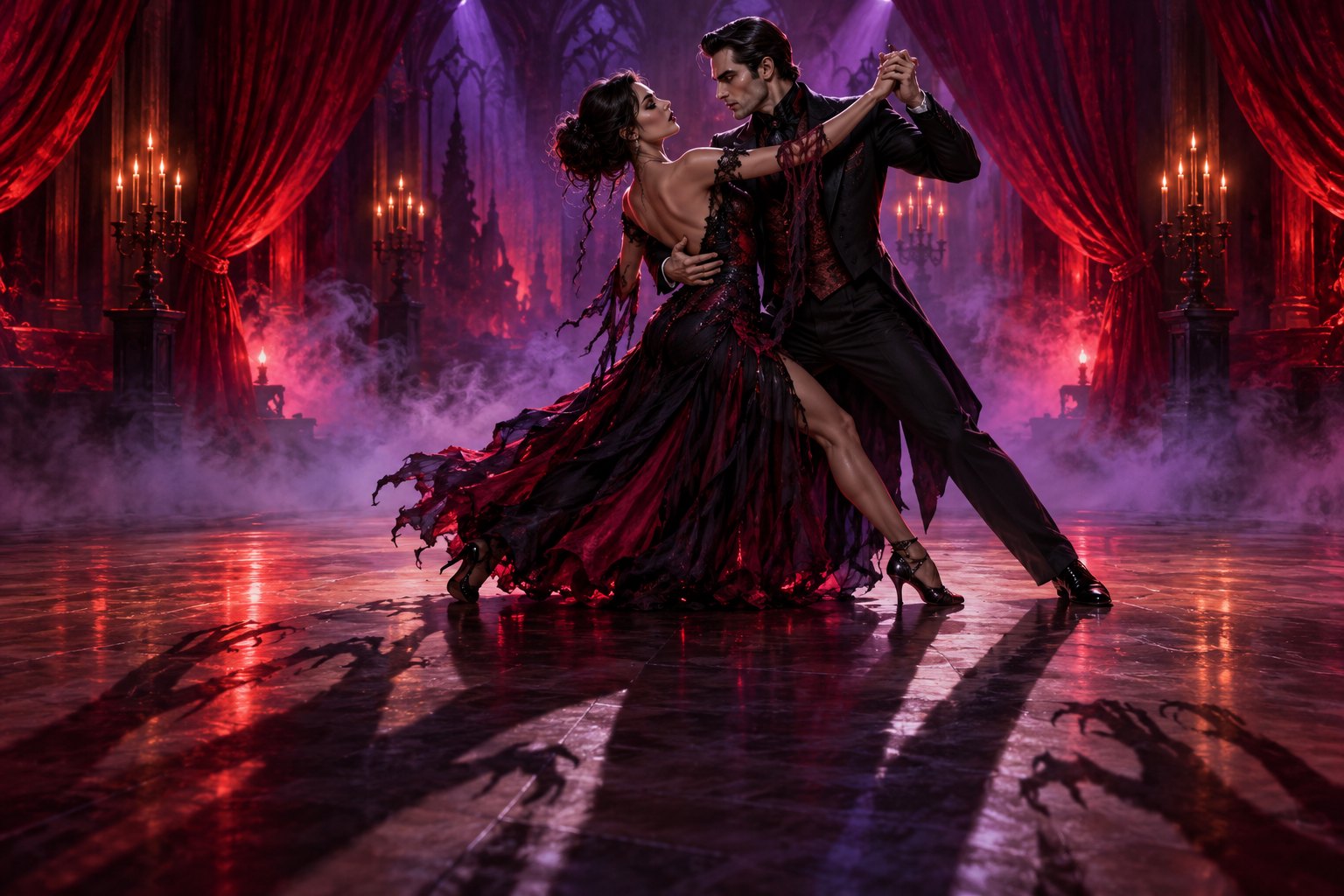
A dance adaptation can express that distinction through simple choices. One performer might reach while the other withdraws. A moment of supported balance might suggest trust, dependence, or a trap. These are examples of how movement can carry a horror narrative, not descriptions of specific choreography from this episode.
The key question is whose experience the audience is following. If both dancers merely look ominous, the atmosphere may be clear while the story remains vague. If their movements establish competing intentions, even a brief routine can develop tension: someone wants closeness, someone fears it, and their relationship changes as the distance closes.
This emphasis on identity and behavior connects with our discussion of how unstable identity shapes the horror of Clayface. Across different forms, a disturbing appearance becomes more meaningful when it changes what a character wants or what another person can safely believe.
Costumes establish the premise; movement has to develop it
Horror imagery is efficient. A silhouette, a shadow, or a sudden change in lighting can suggest danger before a performer takes a step. That efficiency is valuable in a short routine, where there may be little time for exposition.
But recognition can also disguise thin storytelling. Knowing which kind of monster a costume suggests is different from understanding the person wearing it. A successful adaptation needs a progression beyond its entrance: an attraction becomes threatening, confidence becomes uncertainty, or an apparent escape becomes another form of confinement.
My preferred test is to imagine the routine without its decorative elements. Would the timing, posture, and relationship between the performers still communicate unease? If so, the horror is embedded in the dancing. If the meaning disappears with the costume, the performance may depend more on illustration than interpretation.
That does not make spectacle worthless. Visual pleasure is part of the appeal. The distinction simply helps explain why an elaborate presentation can be entertaining while a smaller gesture stays in the memory longer.
Why a perfect score and a memorable performance can differ
The phrase “perfect score” is precise about a result and much less precise about a viewer’s experience. It does not require everyone watching to feel the same emotional response. Nor does it turn every aspect of a performance into an unanswerable artistic judgment.
Horror makes this especially interesting because unease often depends on interruption. A held position can feel uncomfortable. A delayed response can suggest mistrust. An apparently awkward relationship between two bodies can be dramatically expressive, provided that the effect is intentional and controlled.
For viewers, separating execution from interpretation makes the discussion richer. Did the performers appear secure in the movement? Did their choices establish a convincing relationship? Did the frightening premise deepen that relationship? These questions allow appreciation of a scoring milestone while leaving room for an independent response.
How to watch the horror storytelling more closely
A useful second viewing can focus on three concrete elements:
- Attention: Notice where each performer looks. Watching a partner, avoiding a partner, and searching beyond a partner suggest different sources of danger.
- Control: Follow who initiates contact and who determines when it ends. A change in that balance can communicate a reversal without dialogue.
- Consequence: Compare the opening and final relationship. A dramatic routine should give some sense that the encounter has altered something.
These observations are more useful than treating every prop as a hidden reference. A recognizable detail may be an homage; calling it an Easter egg requires a specific, demonstrable connection. The same care applies to quotations: a movie’s famous line should illuminate an actual adaptation choice, rather than serve as borrowed atmosphere.
Our examination of how immersive horror makes helplessness personal in Ti West’s Remnants explores a related concern: proximity to danger matters most when it changes our understanding of the person experiencing it.
The deeper tension is between trust and uncertainty
Horror-themed partner dancing contains a productive contradiction. The performers may need to suggest suspicion, menace, or loss of control while relying on cooperation to make the movement possible. The fictional relationship can be dangerous precisely because the working partnership is secure enough to represent danger.
Horror Movie Night’s reported combination of one perfect score and two eliminations adds another layer. Recognition and departure occupy the same evening, giving the competitive stakes an emotional counterpart to the theme. That contrast does not establish the quality of every routine, but it explains why the results carry more than numerical interest.
The most revealing way to approach the episode is therefore to watch for relationships beneath the scary imagery. A score can identify a competitive peak. The deeper artistic achievement is making a gesture of trust feel uncertain—and making that uncertainty tell a story.
Original content by this site's editorial team. Published: October 28, 2026 at 02:12:16 PDT (Los Angeles time)