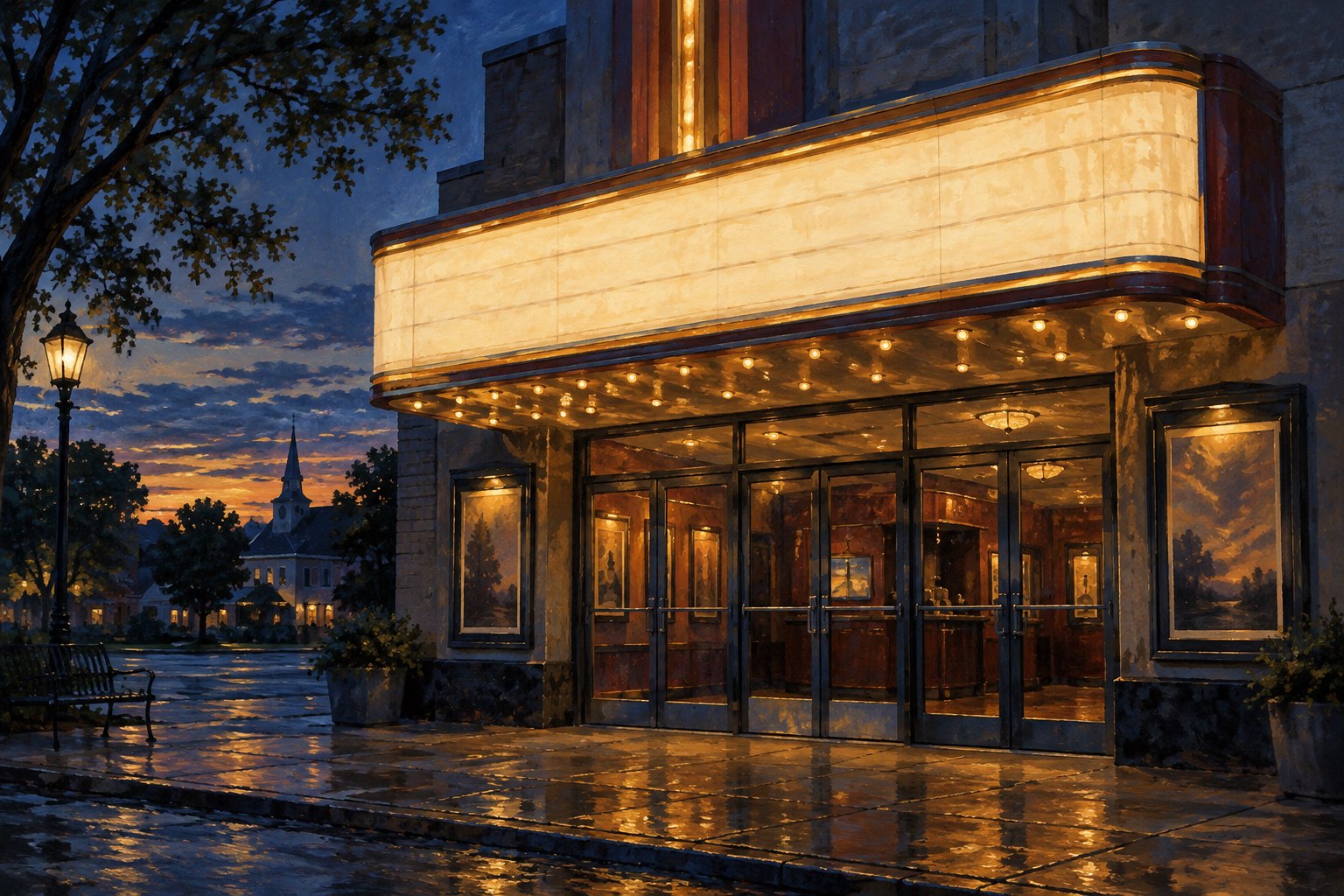
A beloved Concord movie theater has suddenly closed for good, according to Queen City News. Its coverage frames the reaction with the words “so disheartening.” The immediate news is the permanent closure; the particular sting is its abruptness. A place people expected to visit again has become a place they can only remember.
That distinction deserves attention. An announced closing can give patrons an opportunity to choose a final movie, invite someone along, or deliberately look around before leaving. A sudden closing can make an ordinary visit become the last visit only in retrospect. This is film-culture commentary about that unfinished goodbye, rather than a review of a particular movie.
What the closure establishes—and what it cannot explain
The central reported facts are limited: a well-loved Concord theater has closed suddenly and permanently. Those facts alone do not establish the business explanation, what notice employees received, or whether patrons had any opportunity to mark the ending. They also do not establish what will happen to the building.
It would be easy to fill those gaps with familiar explanations about streaming, ticket prices, or changing entertainment habits. None should be treated as the cause here without evidence specific to this theater. Affection for a venue cannot reveal its finances, and a permanent closure does not, by itself, explain the decisions behind it.
Our earlier coverage of Concord’s theater closure and its community impact considered the loss of a local moviegoing institution. Another question now merits closer attention: how do people give an ending meaning when they did not know they were approaching one?
Why an ordinary last visit can feel unfinished
In a movie, an ending changes how we understand what came before it. A casual exchange acquires weight. A familiar room looks different when a character leaves it for the final time. Filmmakers can prepare us for that departure through performance, framing, or the patient observation of an otherwise routine action.
Daily life offers no such guarantee. Someone leaving a theater may be thinking about the ending of the film, the drive home, or what to eat. If the venue subsequently closes without an anticipated farewell, those unremarkable moments become the last available record. The memory has to carry a significance it was never asked to hold.
That is one way to understand the emotional force of an abrupt closure. It can take away the ability to pay attention on purpose. The missing experience may be as modest as one more walk through the lobby with a friend who understands why it matters.
This is an interpretation of the situation, not a claim about any particular Concord patron’s experience. People will respond differently. Some may feel a substantial loss; others may simply need to change their plans. A thoughtful account leaves room for both.
A farewell screening would have its own limits
It is tempting to imagine a perfect final night: the right film, a full room, a shared acknowledgment that something is ending. That imagined scene has dramatic appeal. It should not become a standard against which the real people involved are judged without knowing their circumstances.
A farewell event requires time, staffing, access, and coordination. We do not know whether such an event was possible here. Nor would a carefully staged last screening resolve the practical consequences of a closure for everyone affected.
Still, the wish for one reveals something worth taking seriously. A final screening lets the audience participate in an ending. Patrons can decide who should be there and which details they want to remember. Without that opportunity, the work of remembrance moves elsewhere—to conversations, photographs, and accounts assembled after the doors have closed.
Preserve a visit, not just a verdict
For anyone who knew the Concord theater, the most useful tribute may begin with a single visit. Calling a place wonderful expresses affection, but describing an experience gives someone else a way to understand that affection. A small, accurate account can preserve more than a sweeping claim about what the theater meant to everybody.

A personal record does not need to be elaborate. These prompts can help turn a general feeling into something specific:
- Identify one film you remember seeing there. If the title or year is uncertain, preserve that uncertainty instead of guessing.
- Describe who accompanied you. Ask before publicly sharing another person’s name, photograph, or private experience.
- Separate the film from the occasion. What did you think of the movie, and what made that particular outing memorable?
- Keep supporting objects in context. A ticket, photograph, or calendar entry is more useful when you record what it actually establishes.
- Allow different memories to coexist. Two people can remember the same evening differently without either account needing to become the definitive version.
These are suggestions for preserving personal history, not an announcement of an organized Concord archive or memorial. Their value lies in keeping the details small enough to remain honest.
Let the movie remain part of the memory
A tribute to a cinema can become so focused on the building that the films disappear. Yet the relationship between a movie and the circumstances of watching it is often the most revealing part of a recollection. Did you sympathize with a character whom your companion disliked? Did a quiet scene stay with you longer than the spectacle you bought a ticket to see?
Returning to that film can be a useful act of criticism. Consider what the character knows in the scene you remember, what they want, and what their choices cost someone else. Then ask whether your present interpretation matches your original response. The difference may tell you something about the film, or about how you have changed.
Our commentary on nostalgia and the emotional promise of returning explores a related tension: revisiting something does not restore the circumstances in which we first encountered it. Watching a remembered movie again can deepen the connection while leaving the original evening irretrievable.
An ending without a tidy explanation
The Concord closure does not need to become a morality tale about audiences failing theaters or technology replacing human connection. Those conclusions would exceed the established facts and flatten the experience into an argument prepared in advance.
The more compelling interpretation is narrower. A familiar cinema allows future plans to feel ordinary: another release, another evening, another conversation afterward. Sudden permanence interrupts that expectation. It changes the meaning of the last visit before the visitor has had a chance to recognize it as an ending.
No retrospective tribute can provide the missing final night. It can, however, give the remembered nights their proper detail. For the people who cared about this Concord theater, that may be the most meaningful goodbye still available: naming the movie, remembering the company, and explaining what happened when the lights went down.
Original content by this site's editorial team. Published: September 28, 2026 at 18:03:40 PDT (Los Angeles time)