China’s first AI-generated theatrical film has disappointed at the box office, according to Fortune. The commercial setback brings an important question into focus: when a film is identified primarily by the technology behind it, how should we discuss the creative decisions that make it a movie?
A production milestone can establish that something has become possible. Assessing the resulting film requires a different kind of attention: to the viewpoint it establishes, the behavior it makes convincing, and the consequences it allows its characters to carry. Those are decisions for which creative responsibility still matters, however the images were produced.
This is spoiler-free critical commentary, not a screening-based review. The reported result does not establish the film’s artistic strengths or weaknesses. Without verified scenes and dialogue to examine, assigning motives to its characters or quoting memorable lines would create a false impression of firsthand knowledge.
What the reported failure leaves unresolved
The description of the release as a box-office flop gives us a commercial assessment. It does not, by itself, explain the outcome. Release scale, awareness, scheduling, expectations, and responses to the movie would need separate examination before any one explanation could be persuasive.
Nor does the phrase “AI-generated” provide a complete account of authorship. It cannot tell a reader who developed the dramatic structure, selected particular images, determined the rhythm of a conversation, or approved the final sequence. Those distinctions matter because a finished film consists of choices as well as materials.
Our earlier discussion of what this reported box-office failure can tell us about audiences considered the limits of the commercial verdict. A separate issue deserves attention here: how to evaluate the creative work without allowing a broad technology label to absorb every question about it.
Creative responsibility lives between the images
My view is that the most useful test of filmmaking is often the relationship between two moments. An image may be striking on its own. Its dramatic value depends on what precedes it, what follows it, and whose experience gives it significance.
Consider a hypothetical close-up of someone hesitating before opening a door. The image could communicate fear, guilt, anticipation, or simple uncertainty. An earlier promise might make the hesitation painful. A sound from the other side might make it frightening. A later decision might reveal that the person had understood the danger all along.
That example is not a description of this Chinese release. It illustrates the kind of evidence a substantive review would need. Identifying an expressive face is only the beginning; criticism must explain how the film makes that expression legible and why it matters at that particular moment.
The same principle applies to creative responsibility. Whoever controls selection, duration, sound, and sequence helps determine the scene’s meaning. A discussion centered entirely on image generation risks leaving those consequential decisions unexplored.
Characters need emotional continuity
For a character-centered assessment, visual consistency would be one question among several. A character also needs an intelligible relationship with their own past. The viewer should be able to recognize how an earlier experience affects a later response, even when that response is surprising.
This does not mean every character must behave rationally. Contradiction can be the most revealing part of a performance. Someone can want forgiveness while refusing to apologize, or seek companionship while pushing another person away. What matters is whether the film makes the contradiction specific enough to feel like behavior rather than an arbitrary change of direction.
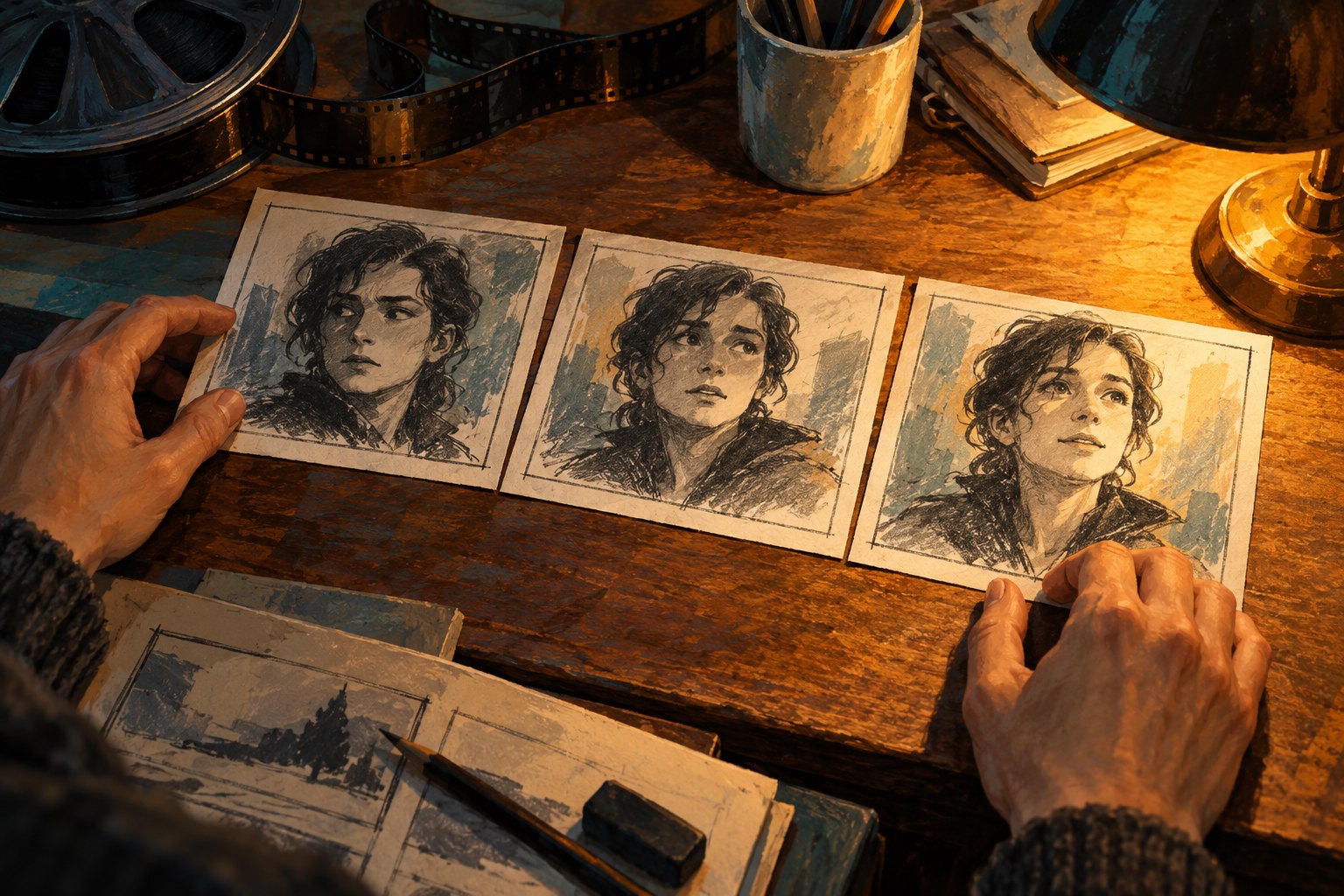
A close review of the reported AI release would therefore need to follow particular choices across scenes. Does a setback change how someone approaches the next obstacle? Does a damaged relationship affect the way two people share a frame? Does the ending develop an established conflict, or merely announce that it has been resolved?
These questions provide a standard for assessment, not findings about a film whose scenes have not been established here. Applying that distinction consistently gives an unfamiliar production method a fair examination while preserving the same expectations we bring to other movies.
Dialogue needs a speaker with something at stake
Memorable dialogue is another area where the creative decisions surrounding an element can matter as much as the element itself. A sentence may sound elegant in isolation and still accomplish little within a scene. A plain remark can become devastating when the viewer understands what it costs someone to say it.
Useful dialogue analysis begins with the speaker’s immediate purpose. Are they asking for help, concealing information, testing a relationship, or trying to escape an uncomfortable truth? It then follows the response. A line becomes dramatic action when it changes what another person knows, wants, or is willing to do.
No verified quotations are presented here. Their absence leaves a real limit on what can be said about this film’s writing. Supplying an imagined line would obscure precisely the relationship between words, character, and context that a serious review should investigate.
For readers interested in that approach, our guide to reading character through images, sound, and editing develops ways to connect interpretation to evidence on the screen.
What a useful account of the production would explain
The most revealing follow-up to this release would connect production decisions with identifiable effects in the finished movie. A list of tools would offer limited insight on its own. An account of why a scene was reshaped, why a particular version was selected, or how an emotional transition was repaired would tell us more about the filmmaking.
Three areas would be especially valuable:
- Story decisions: who established character goals, conflicts, and consequences, and how those decisions guided the finished structure.
- Performance decisions: how expressions, voices, gestures, and timing were selected to sustain a recognizable character.
- Editorial decisions: how images and sound were arranged, and what was removed when a sequence failed to communicate its intended meaning.
Answers would make criticism more precise. They could help distinguish an unconvincing creative choice from a technical constraint, or reveal where an inventive solution produced something worth studying. Neither praise nor criticism benefits from treating the entire production as a single undifferentiated machine.
The deeper issue is accountability for meaning
The reported disappointment makes this release an occasion to reconsider how we talk about cinematic authorship. A technological first is easy to identify in a headline. The work of shaping attention and sustaining emotional meaning is harder to summarize, but it remains central to the experience of watching a film.
My critical position is that creative responsibility should remain visible. If a film asks us to care about a character, its makers are responsible for giving that attachment substance through choices the viewer can perceive. If those choices succeed, they deserve careful explanation. If they fail, criticism should locate the failure rather than simply repeat the technology label.
The box-office report cannot settle that artistic assessment. What it can do is bring the next question into sharper focus: who made the decisions that turned generated material into a story, and what did those decisions allow the story to mean?
Original content by this site's editorial team. Published: October 27, 2026 at 18:15:00 PDT (Los Angeles time)