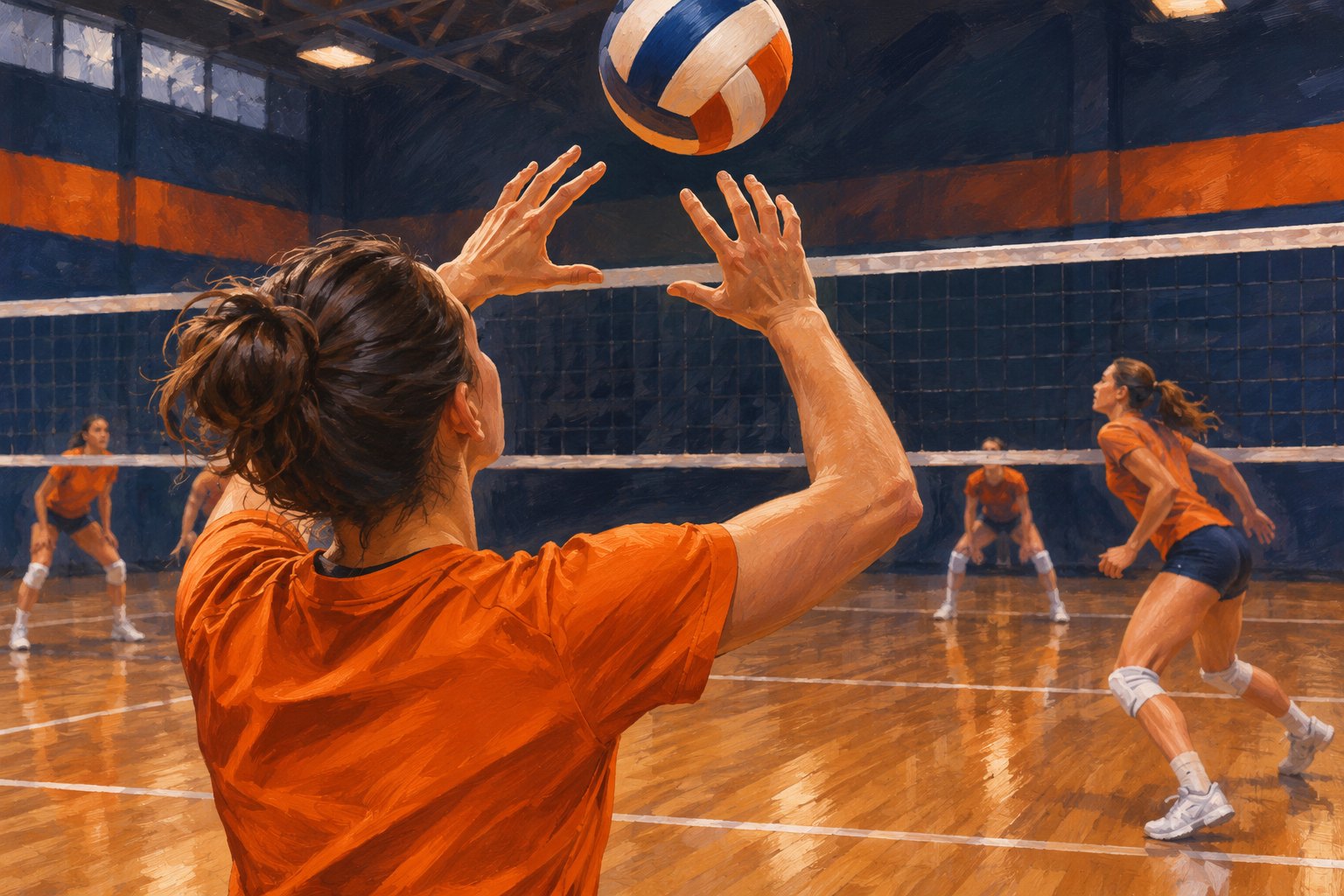
Caroline Kerr’s volleyball film breakdown puts Tennessee’s setter at the center of a useful viewing question: what happens before the moment that earns the applause? A finishing swing is easy to follow. Understanding the set that makes an attack possible requires attention to space, timing, and the players who never touch the ball.
The NCAA feature is identified as a volleyball film breakdown with Kerr. Here, film means sports footage. This article offers a framework for approaching that footage through the setter’s role; it does not attribute unverified explanations, specific rallies, or quotations to Kerr. The interesting critical angle is perspective: how does a sequence change when we watch the person organizing an attack instead of following only its conclusion?
Start Before Kerr Touches the Ball
A setter’s contact can look like the beginning of an offensive move, but it belongs to a chain already in progress. The incoming pass affects where the setter can move, how comfortably she can reach the ball, and which attacking options remain practical. Watching only the set risks confusing a constrained choice with a freely chosen one.
When studying footage centered on Kerr, first locate her as the ball approaches. Then watch the relationship between her movement and the pass. Does she have time to establish position? Is she moving away from the net? Does the ball arrive where several attackers can remain involved? These are questions to ask of the pictures, not conclusions to assume about her performance.
That distinction changes the quality of the analysis. A visually ordinary delivery might be an effective response to an awkward situation. A spectacular-looking play might begin with unusually favorable conditions. Before evaluating the decision, establish the problem the setter actually had to solve.
The Setter’s Perspective Depends on Everyone Else
Putting Kerr at the center should widen our view of the court. A setter’s work is relational: the significance of her movement depends on teammates’ approaches and opponents’ positioning. A close-up may reveal technique, but a wider view is often more useful for understanding the available choices.
Follow an attacker who does not receive the ball. An approach can still matter if it demands attention from a blocker. Conversely, movement that looks persuasive to a viewer may have little visible effect on the defense. The evidence lies in what the opposing players do next. Do they shift, hesitate, or stay balanced?
For readers accustomed to movie analysis, this resembles watching an ensemble scene. The speaking character supplies the obvious focus, while another person’s movement changes the meaning of the exchange. Looking beyond the focal point reveals relationships that a first viewing can miss.
Our discussion of reading Drake Maye’s game film through the surrounding team raises a related issue. An individual’s decision becomes more intelligible when the surrounding work remains in view. With a setter, that surrounding work is constantly changing the shape of the next opportunity.
Timing Matters as Much as Destination
Where a set goes is only part of the story. Its timing helps determine whether an attacker can meet it comfortably and whether the defense can organize. Two balls delivered toward the same area can create very different attacking situations.
A useful viewing habit is to compare the attacker’s approach with the ball’s arrival. Watch when the approach begins, how it develops, and whether the hitter appears to adjust. Then look across the net. Is the block already established, or are defenders still moving into position? Avoid treating any single visual cue as a complete technical diagnosis.
Slow motion helps separate these movements, but it also changes our experience of the decision. A gap that seems obvious in a paused frame may exist only briefly at playing speed. Replay the sequence normally after examining it slowly. That restores some sense of the time pressure under which the players act.
A Practical Three-Pass Viewing Method
Kerr’s breakdown is a useful occasion to practice watching with a specific question on each replay. Trying to evaluate every player at once usually produces impressions rather than clear observations.
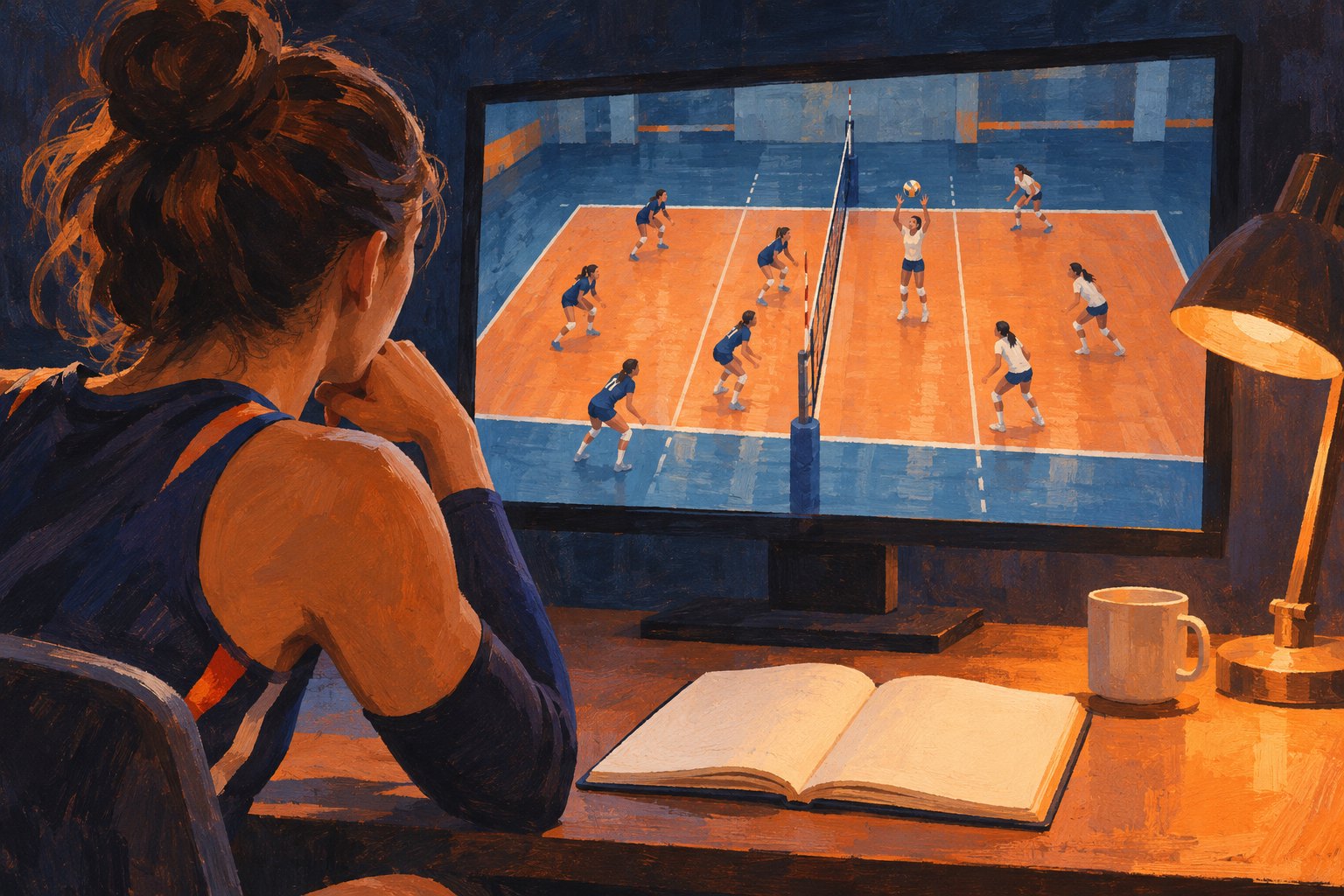
- First pass: follow the incoming ball. Establish where the pass travels and what movement it requires from the setter. Describe the situation without judging the eventual outcome.
- Second pass: follow the available attackers. Watch their preparation and the defenders opposite them. Note which options are visible, and acknowledge any players the camera leaves outside the frame.
- Third pass: follow the consequences. Watch the set, the hitter’s adjustment, and the defensive response. Ask what opportunity the delivery created before considering how the rally ended.
A short note after each replay can keep the exercise honest. An observation such as “the blocker moves toward the approaching attacker” is narrower and more useful than “the setter fools the defense.” The second statement adds an explanation of intent that the first does not establish.
Listen for Reasoning Without Inventing an Inner Monologue
An athlete’s explanation can add information that footage alone cannot supply. Viewers may see a movement without knowing the planned assignment or the cue behind it. When listening to Kerr, distinguish what she explicitly identifies from what you infer while watching.
This is where a character-centered approach needs care. In fiction, dialogue and editing may invite us to interpret a character’s motives. In sports coverage, a player is a real person whose thoughts cannot be established by a reaction shot. A glance, smile, or expression of frustration is not enough to support a detailed story about confidence, disagreement, or leadership.
The same discipline strengthens close reading of performance and ambiguity in The Graduate: a persuasive interpretation explains which details support it. Here, the standard is especially concrete. Attribute explanations accurately, describe visible actions precisely, and leave uncertainty intact.
What the Camera Can—and Cannot—Explain
Sports footage is evidence with a frame around it. If an attacker’s preparation happens offscreen, the viewer cannot fully reconstruct that option. If a replay begins just before the set, it may hide the movement that made the contact difficult. A tight shot can clarify hand position while obscuring the defense.
My critical preference is for analysis that makes those limits visible. The strongest explanation lets viewers follow the connection between a claim and the relevant action. It also allows for incomplete evidence. An exciting replay and an explanatory replay can serve different purposes, even when they show the same point.
The Deeper Appeal: Making Preparation Visible
The most rewarding way to approach Caroline Kerr’s volleyball film breakdown is to watch for the creation of an opportunity. That shifts attention from the final touch toward the coordination that precedes it: a pass, an approach, a defensive movement, and a delivery made within a narrowing window.
For a viewer interested in screen storytelling, the appeal is the discovery of causality inside something that initially looks instantaneous. Rewatching can turn a blur into a sequence of connected actions. Kerr’s position provides a particularly useful vantage point because the setter’s task sits between receiving the ball and enabling someone else to attack.
The point is not to make every rally fit a heroic narrative. It is to see more of what the players are doing. When that happens, the finishing swing remains exciting—but the preparation becomes worth watching in its own right.
Original content by this site's editorial team. Published: November 2, 2026 at 16:41:08 PST (Los Angeles time)