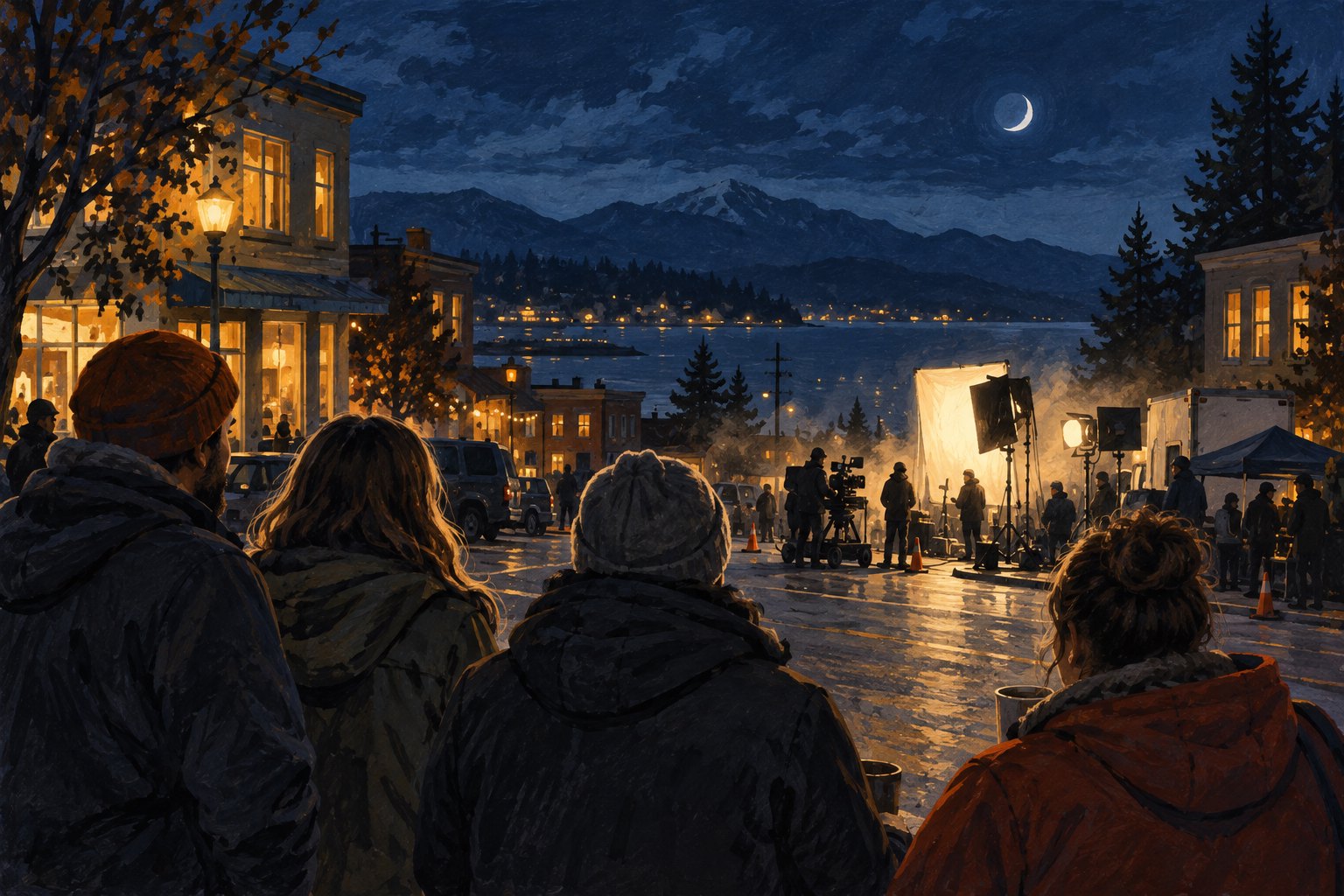
Bellingham residents stayed up late to catch a glimpse of a movie shoot associated with Tyler Perry, according to Cascadia Daily News. The immediate attraction is easy to understand: filmmaking had become something people could watch in their own city, and bedtime could wait. Before there was a finished movie to discuss, the act of making one had become an event.
That is an appealing starting point for film commentary because it brings attention back to something a polished movie usually conceals: a fictional world has to be assembled somewhere. For the people nearby, that somewhere already has a life, a history, and everyday uses. A production temporarily gives it another purpose.
This is spoiler-free commentary on the filming and its appeal, rather than a review of an identified, completed movie. The reported premise alone does not establish a title, cast, storyline, release date, or whether Perry was personally visible to spectators.
Why a glimpse can be worth staying awake for
The telling detail in the Bellingham story is the willingness to stay up. Watching a film shoot offers none of the pacing guarantees of watching a film. There may be long stretches when little seems to happen, and an observer may never understand what a particular setup is meant to accomplish. Yet the possibility of witnessing a small piece of the process can make the waiting worthwhile.
My reading of that appeal is that it combines proximity with uncertainty. A movie on a screen arrives as a finished object. A production nearby is still becoming something. Even an unremarkable action can feel newly interesting when it might eventually belong to a scene watched by strangers far away.
That does not establish what motivated any particular Bellingham resident. Celebrity interest, curiosity about equipment, and simple enjoyment of an unusual evening are different possibilities. The important distinction is that spectators can find the experience rewarding without gaining privileged knowledge of the story.
A familiar place gets a second identity
For someone who knows a filming location, a movie can create two overlapping experiences. There is the place as it exists in daily life, and there is the place as the film asks us to imagine it. Recognition can briefly pull a local viewer out of the narrative: that doorway or stretch of pavement has associations the screenplay never mentions.
Filmmakers can work with that specificity or transform it. Framing, lighting, set dressing, and sound can make an ordinary exterior feel welcoming, lonely, threatening, or anonymous. These are general creative possibilities, not descriptions of what was filmed in Bellingham. Seeing equipment in a neighborhood cannot tell an observer which emotional meaning the finished sequence will carry.
The distinction also gives local audiences an interesting way to watch later. Instead of asking only whether a familiar place appears, ask what the movie makes that place do. Does it establish distance between people? Offer privacy? Make someone feel exposed? Recognition is pleasurable, but dramatic purpose gives a location lasting value.
The camera sees less than the spectator
A bystander can take in an entire production area. The camera selects a fraction of it. What looks expansive from the sidewalk might become a close-up; an elaborate setup might support only a brief transition. The viewer’s eventual experience depends on that selection, followed by the choices made in editing and sound.
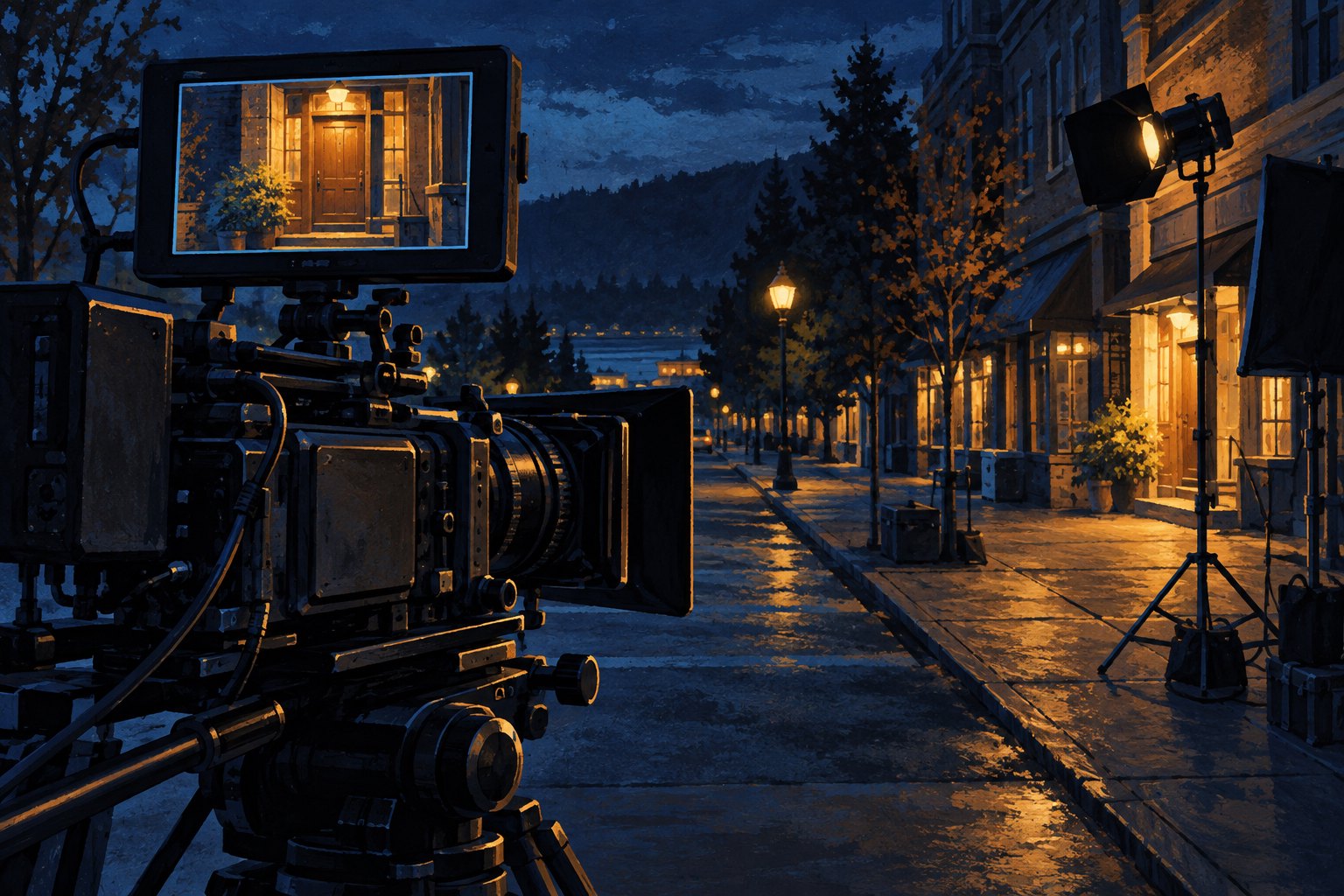
Consider a hypothetical shot of someone approaching a door. A wide composition might emphasize how alone the person is. A tighter view might direct attention to hesitation in a hand or face. Sound from the other side could suggest welcome or danger. The physical action stays similar while its meaning changes. This example describes film technique, not a scene from the Bellingham production.
That is why a glimpse of filming is such an incomplete preview. It reveals work in progress while withholding the relationships between shots that make the work intelligible. Our discussion of how editing must preserve character motivation in an adaptation considers the same underlying issue: a recognizable moment needs an emotional connection to what surrounds it.
What a character-centered review must wait to see
A meaningful review of the eventual film would begin with the people inside its story. What does a character want when entering a scene? What prevents them from getting it? What changes because of the encounter? A location becomes expressive when the filmmaking connects its physical details to those pressures.
Those questions require the actual movie. An actor repeating a movement during production cannot establish whether the character is decisive or conflicted. A nighttime shoot cannot establish a dark tone. And a familiar name associated with a project cannot, by itself, establish its genre or emotional ambitions.
The same restraint applies to dialogue. A memorable line earns its force through delivery, context, and consequence. Without verified access to the film, quoting supposed lines or identifying supposed Easter eggs would replace criticism with invention. The useful anticipation here is curiosity about how the eventual movie will organize perspective, performance, and place.
Local excitement and artistic judgment can coexist
The Bellingham event has value as a local experience regardless of how the finished movie is received. Residents do not need to predict critical acclaim to enjoy seeing filmmaking nearby. Equally, a reviewer does not owe a production a favorable verdict because its arrival created excitement.
Keeping those judgments separate allows both to remain honest. Someone might treasure the memory of watching a shoot and later find the scene forgettable. Another viewer, with no connection to the location, might find that same sequence emotionally powerful. Personal attachment and artistic response can meet without becoming identical.
Our commentary on looking beyond visual spectacle to character and storytelling offers a related standard. The image that attracts attention is a beginning. What matters afterward is whether the film gives that attention somewhere meaningful to go.
The scene outside the movie
What makes Bellingham’s late-night curiosity worth considering is the temporary overlap between ordinary life and fictional possibility. For a resident, the attraction can begin before any performance reaches a screen: a place that seemed fully known has become the setting for something unfinished.
To me, that is the deeper appeal of watching a production. It makes the distance between everyday surroundings and cinematic imagination feel smaller. The eventual movie will have to earn its own response through its characters and storytelling. For now, the residents staying awake supply a separate, modestly revealing story: people still want to see how movies come into being, even when all they can catch is a glimpse.
Original content by this site's editorial team. Published: September 24, 2026 at 21:32:33 PDT (Los Angeles time)