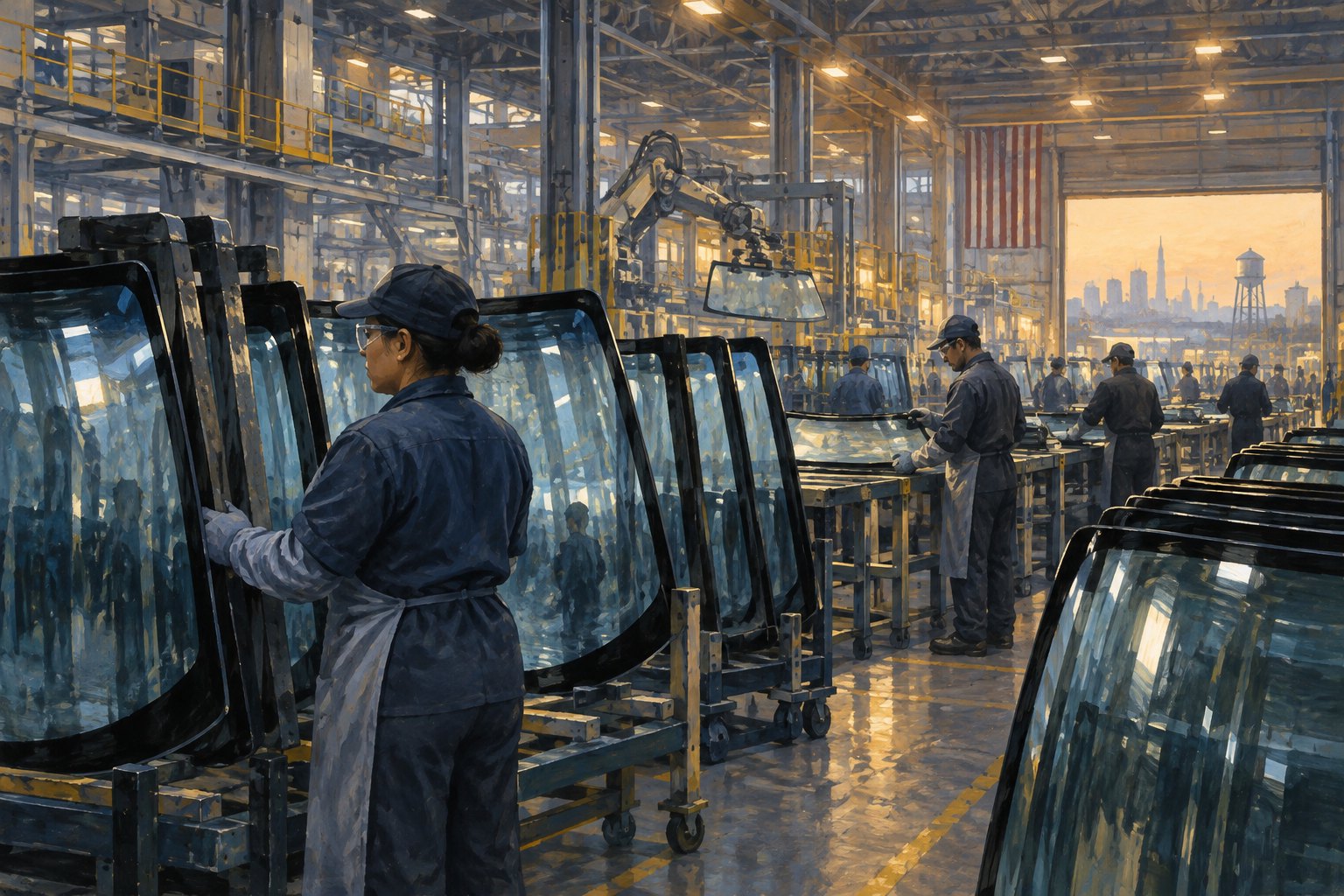
American Factory begins with a promise almost everyone can understand: a shuttered workplace will come back to life. Julia Reichert and Steven Bognar’s 2019 documentary follows what happens when that promise meets the competing needs of the people expected to fulfill it. My judgment is that its greatest achievement lies in making economic power visible through ordinary encounters—training sessions, conversations about home, and arguments over who gets heard.
Marquette Today’s September 30 Politics and Film listing brings the documentary back into discussion. Its suitability for that conversation is clear: politics here lives inside the working day, wherever someone decides what another person’s time and labor should cost.
Spoilers follow, including the union campaign’s outcome and the closing automation sequence.
A reopened factory cannot simply reopen the past
The setting is a former General Motors plant near Dayton, Ohio, repurposed by Chinese automotive-glass manufacturer Fuyao. Chairman Cao Dewang sees an industrial opportunity. American workers see the possibility of recovering livelihoods damaged by the old plant’s closure. Chinese employees arriving to help establish production bring expertise, expectations, and obligations to families far away.
Those ambitions initially appear compatible. A successful plant could provide wages, reward investment, and make the difficult transition worthwhile. But the filmmakers gradually separate the meaning of success for each group. A functioning production line is one measure. A household’s ability to regain stability is another.
For workers remembering GM, the comparison involves more than a familiar building. Their earlier employment supplied a standard against which the new jobs inevitably fall short. The factory’s return therefore produces a particularly painful kind of disappointment: the place can look like economic recovery while individual lives remain diminished.
This distinction also underlies our examination of what employment promises leave behind in a local economy. In American Factory, the test is immediate and personal: what does having a job actually make possible?
Wong and Kenny give the film its human center
Furnace engineer Wong He is essential to the documentary because his competence never cancels out his vulnerability. He understands the work, takes responsibility seriously, and misses his family. His experience complicates any reading that treats the Chinese employees as interchangeable representatives of management.
One of his most memorable observations is: “We workers lay down tracks so the train can run smoothly.” The metaphor gives labor dignity while quietly exposing its position. Workers make movement possible, but laying the track does not necessarily mean choosing the destination.
His connection with American coworker Kenny Taylor offers an answer to the film’s early cultural awkwardness. Shared work creates recognition. Learning from another person can become respect; respect can become affection. These relationships matter because they develop through practical dependence, rather than through a speech announcing that everyone is essentially the same.
Yet friendship has limits as a remedy. A worker can care deeply about a colleague without gaining influence over staffing, wages, or production targets. I find these scenes moving precisely because the film does not ask personal kindness to solve problems it cannot reach.
Cao Dewang’s idea of purpose carries unequal consequences
The documentary gives Cao room to articulate his outlook and reveal uncertainty. That access makes him a more compelling presence than a distant executive invoked only when something goes wrong. He is invested in what he has built, and the film allows that investment to contain pride, impatience, and doubt.
Late in the documentary, his reflections on industrial development turn toward what has been lost. Then comes the declaration: “The point of living is to work.” It is a compact statement of purpose, but its meaning changes depending on who must live by it.
For an owner, work can mean shaping an institution and pursuing an ambition. For an employee, it can mean accepting a schedule and pace set by somebody else. The words express conviction; the surrounding film asks whether that conviction can fairly govern everyone.
The result is a portrait that permits understanding without demanding agreement. Cao’s doubts make him recognizable as a person. They do not redistribute his authority. That tension is one of the documentary’s strongest dramatic resources.
The trip to China makes belonging look complicated
When American supervisors visit Fuyao’s operations in China, the documentary expands its view of the company’s culture. Workplace formations, coordinated routines, and a large company celebration show belonging being actively organized. The Americans’ performance of “YMCA” introduces a disarming burst of awkward fun.
The sequence works because several reactions can coexist. Collective enthusiasm can be pleasurable. Pride in skilled work can be sincere. The expectation that employees publicly demonstrate identification with their employer can also feel intrusive.
At times, the film’s broad contrast between national working cultures risks making individual behavior seem too neatly explained by nationality. Its intimate scenes provide the necessary correction. Wong’s homesickness, for example, asks us to notice the personal cost beneath an outward appearance of dedication.
The best way to watch these sequences is to consider who is speaking and what position they occupy. A supervisor’s admiration for discipline tells us something different from a worker’s account of living under it.
The union campaign turns disagreement into a question of power
The effort to organize with the United Auto Workers brings the documentary’s tensions into focus. Workers raise concerns about conditions and their ability to influence decisions. Management opposes unionization. The film also shows employees who do not want a union, giving the shop floor disagreements of its own.
Meetings led by a company-paid labor consultant are especially revealing. Their dramatic force comes from watching the setting itself: employees are listening inside a workplace whose terms they do not control. The question is larger than whether an argument sounds persuasive. Who can require an audience, and whose message receives that institutional support?
The union loses the vote. The filmmakers make the result consequential without presenting a ballot as a complete account of every worker’s motives. Fear of losing income, confidence in management, frustration, and differing ideas of protection all complicate the outcome.
There is a useful connection here to the struggle to turn personal testimony into institutional change in 4000 Days. The circumstances differ profoundly, but both invite attention to the distance between being heard and acquiring the power to make others respond.
The ending changes what the factory’s success means
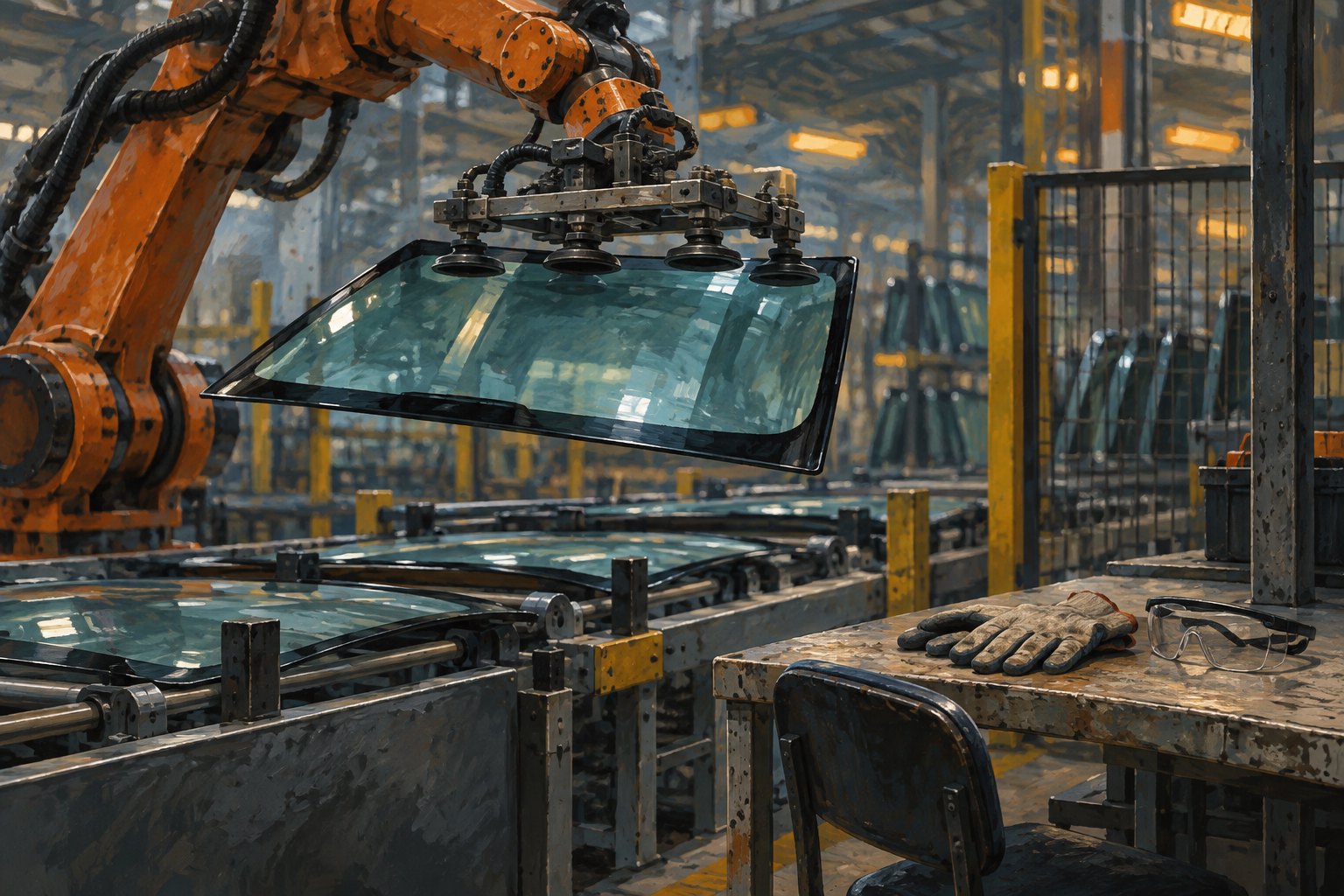
The closing discussion of automation unsettles the entire story. Managers describe tasks that machines can perform and positions that can disappear. After so much conflict over how people should work together, the possibility emerges that production will require fewer of them.
This is an effective ending because it changes the scale without abandoning the people we have met. The factory may endure. Its output may improve. Neither development guarantees that the workers who helped establish it will share in its future.
My reading is that American Factory ultimately asks who has the authority to define progress. Workers seek security and decent treatment; management seeks a viable, productive enterprise. The film shows how easily the second objective can become the official measure while the first remains conditional.
Its deepest insight is that dignity needs more than appreciation. Friendship, pride, and sincere gratitude matter, but their value is precarious when people cannot influence the conditions of their own working lives. The factory’s glass becomes an apt image for the documentary itself: we can see the people on the other side with unusual clarity, yet seeing them does not remove the barrier.
Original content by this site's editorial team. Published: September 28, 2026 at 11:18:23 PDT (Los Angeles time)