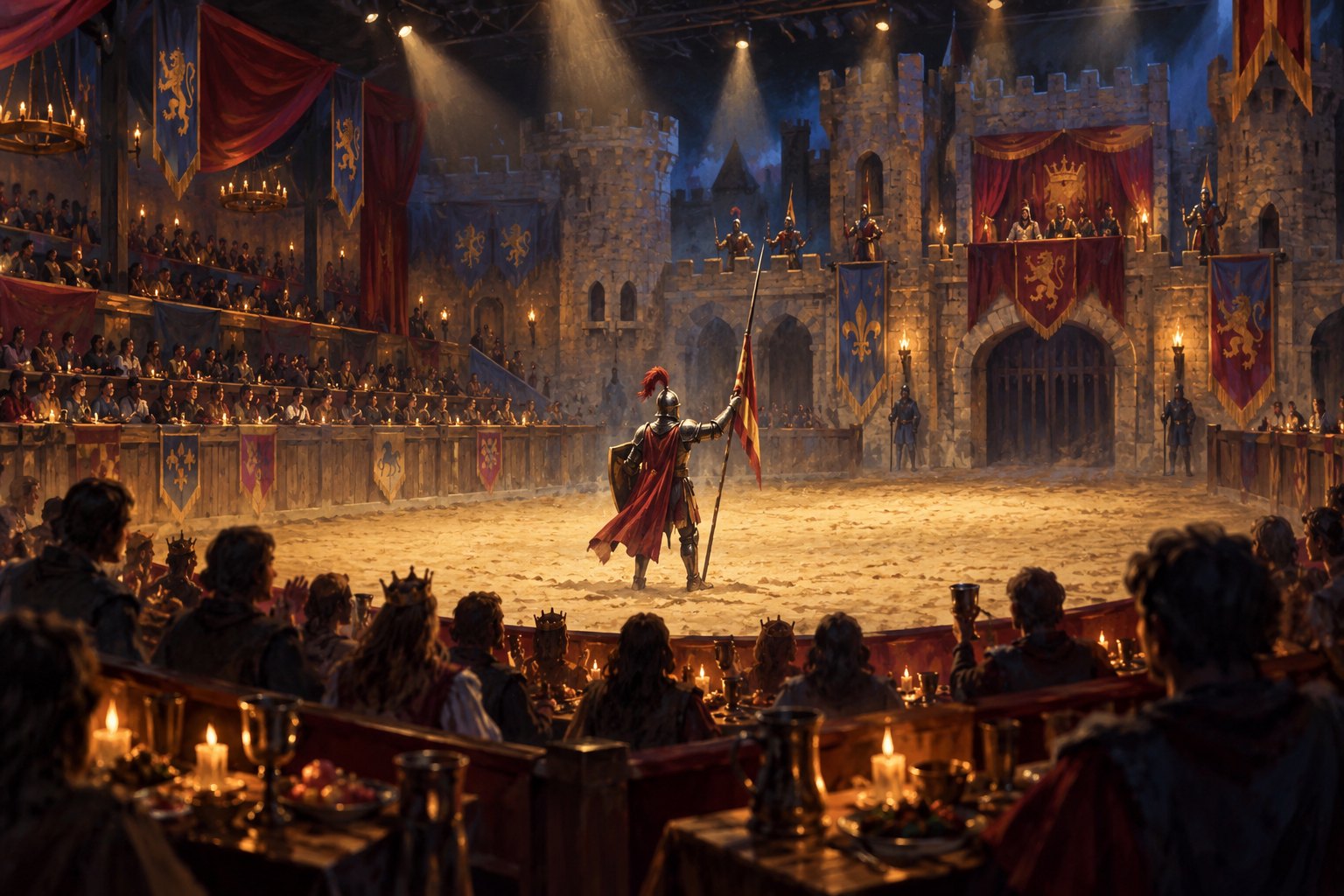
Medieval Times is getting the feature-film treatment, according to Gizmodo. The immediate attraction is easy to understand: theatrical heroism, an audience ready to participate, and a setting where exaggerated behavior can feel perfectly at home. The harder question is whether those attractions can become a story worth following after the pleasure of recognition wears off.
My view is that the strongest opportunity lies in the relationship between playing a hero and becoming someone other people can depend on. A movie built around that distinction could make its spectacle funny, personal, and unexpectedly moving. Simply asking viewers to recognize the setting would offer much less.
This is a spoiler-free editorial preview, not a review of a finished film. The character possibilities discussed below are critical proposals, not descriptions of verified scenes. There is no basis here for assessing performances, quoting finished dialogue, or identifying Easter eggs.
What the Medieval Times movie needs to establish
The report answers the basic question of whether a full Medieval Times movie is being pursued. It does not, by itself, establish how successfully the concept will work onscreen. For readers deciding whether to follow the project, that distinction matters: a recognizable premise can generate interest without yet demonstrating a compelling film.
The most useful next evidence would be material that establishes a central character, a specific desire, and an obstacle that grows naturally from this setting. A trailer full of armor and reaction shots could communicate the atmosphere. It would take something more precise to communicate the story.
This is also the adaptation problem explored in our analysis of the Zelda movie’s challenge beyond brand recognition: familiarity may get viewers through the door, but it cannot determine what they should care about once they sit down. Medieval Times presents its own version of that challenge because the appeal of an experience must become the momentum of a narrative.
The most interesting perspective is behind the performance
From an audience’s perspective, theatrical heroism looks immediate. Someone enters, commands attention, and becomes the person to cheer for. From a performer’s perspective, the same moment could involve concentration, nerves, physical preparation, and an awareness that someone else’s enjoyment depends on getting the details right.
That difference offers a promising way to build character. If the adaptation explores the people responsible for the spectacle, it could let viewers hold two truths at once: the performance is deliberately artificial, and the effort behind it is real. A character can know that a heroic pose is rehearsed while still taking pride in performing it well.
I would find that more engaging than a treatment that assumes everyone involved secretly despises the work. Embarrassment can produce an easy joke. Pride complicated by disappointment can sustain a person. The crucial question would be what a character believes the performance gives other people—and whether they value that contribution themselves.
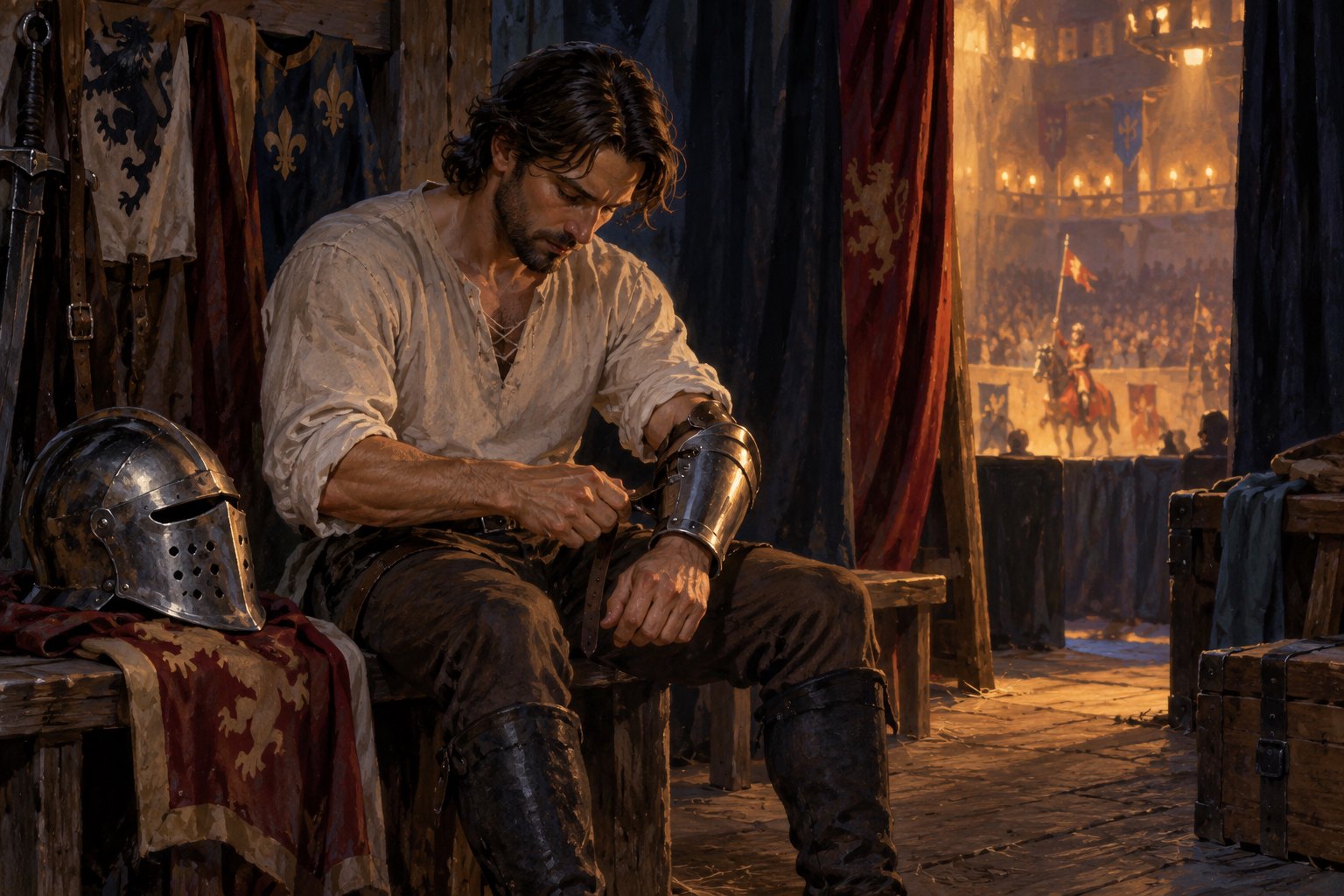
A backstage perspective would also create a useful visual contrast. Public confidence and private uncertainty do not need a speech to explain them. A pause before an entrance, or the care taken over an ordinary preparation, could reveal what a character cannot comfortably say. These are possibilities for the filmmaking, not claims about scenes already present.
Comedy should emerge from competing priorities
The setting invites broad comedy, but broad does not have to mean arbitrary. A comic sequence becomes more satisfying when everyone involved wants something understandable and those desires interfere with one another. Maintaining appearances, earning recognition, protecting another person, and keeping an event moving could pull a situation in different directions.
The distinction is between a funny object and a funny predicament. Armor might create an amusing image. A character trying to preserve their dignity while that armor prevents a necessary action creates a situation. The second gives the audience something to anticipate, which allows the joke to develop rather than merely announce itself.
Dialogue would need the same foundation. A memorable line earns its place because of who says it, what they are trying to conceal, and how the circumstances expose them. Without verified dialogue to assess, attaching invented catchphrases to this project would tell readers nothing. The eventual test is whether the jokes reveal personalities distinct enough that the lines could not be swapped between characters.
Spectacle needs a clear point of view
A feature film can direct attention more precisely than a live audience member can. Framing, cutting, and sound determine whether we notice an impressive action, a frightened observer, or someone quietly preventing a mishap. Those choices can turn the same event into triumph, humiliation, suspense, or affection.
For this adaptation, I would look for action that changes a relationship. Does one person finally trust another? Does a public success conceal a private failure? Does the person receiving applause understand who made that success possible? Such questions give physical sequences consequences beyond their scale.
Clarity would matter as much as energy. Viewers should understand what a character intends before a complication disrupts it. If the geography or objective becomes unreadable, both suspense and comedy weaken: we cannot appreciate a reversal when we never understood the plan.
Our preview of character stakes in Something Is Killing the Children considers a related principle in horror. The genres demand different responses, but both depend on making a threatened outcome matter to someone we understand.
Affection would be funnier than condescension
A Medieval Times movie could easily lean on the assumption that elaborate make-believe is inherently ridiculous. That would narrow its possibilities. An audience laughing at the excesses of a performance can still appreciate the pleasure it provides. The film would become richer if it allowed both reactions.
Affection does not require abandoning satire. It means choosing the target carefully. Vanity, entitlement, and the hunger for applause can withstand a sharp comic treatment. Treating every enthusiastic spectator as foolish would instead make shared enjoyment itself the joke, leaving the movie with little reason to invite our own enthusiasm.
The deeper opportunity: heroism without applause
The most rewarding interpretation available to this premise concerns the difference between recognition and responsibility. A staged hero is visible by design. Dependability often involves actions that attract no audience at all. Bringing those ideas into contact could give a Medieval Times movie an emotional purpose suited to its setting.
An eventual ending would feel earned to me if it clarified what the central character values when approval is uncertain. That need not require solemnity or a lecture. Comedy can make a small choice revealing precisely because a character has spent so much time avoiding it.
For now, the premise offers an inviting possibility rather than a verdict. The film’s decisive achievement would be making viewers care about the person inside the heroic image. Once that happens, the spectacle has someone to belong to—and the applause has something to mean.
Original content by this site's editorial team. Published: October 10, 2026 at 05:57:00 PDT (Los Angeles time)