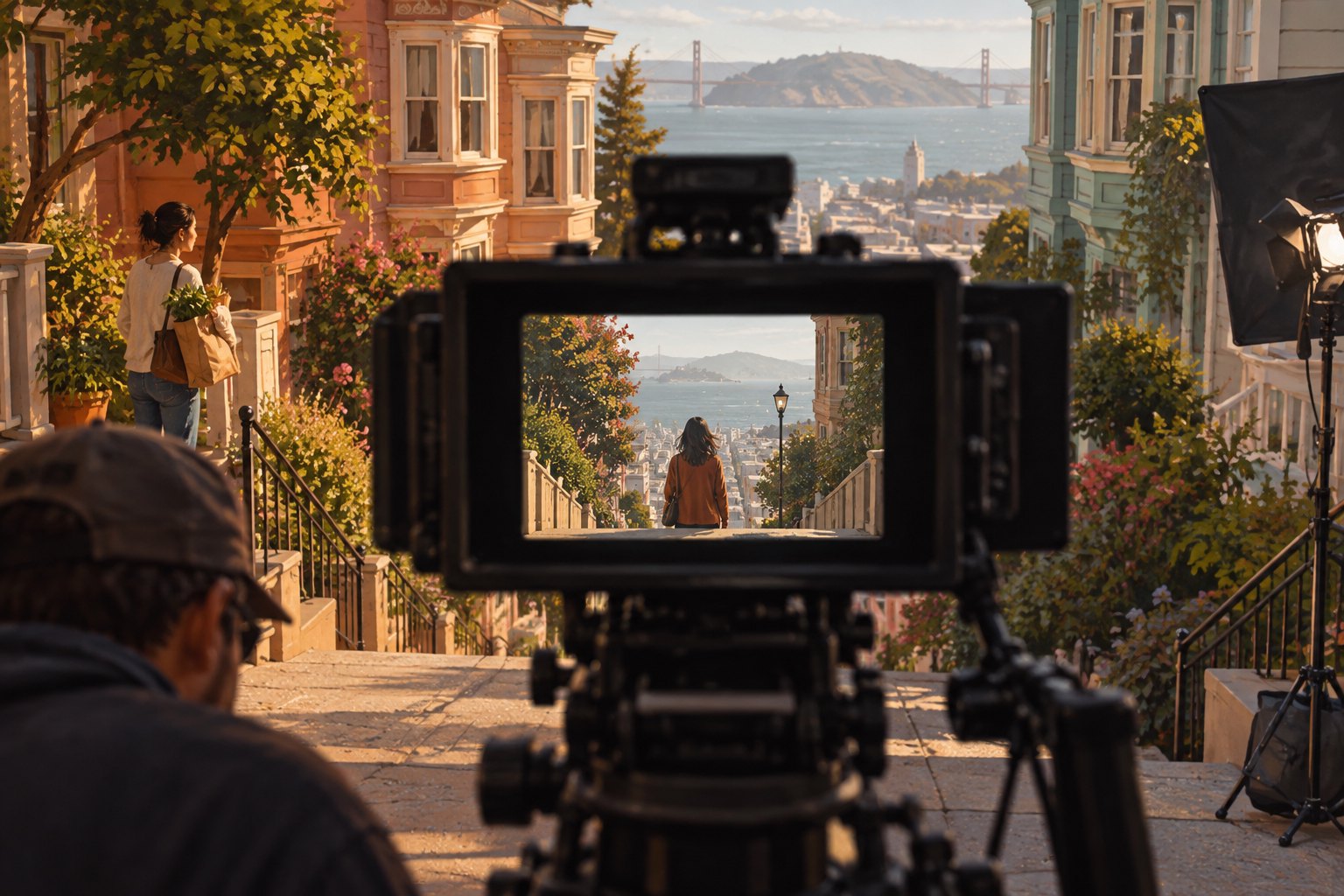
A billionaire’s involvement in a movie shoot taking over a San Francisco street makes an irresistible entertainment story: private wealth, a recognizable city, and the temporary transformation of an everyday place into a set. SFGATE reports the street takeover in connection with a film production. That establishes the event at the center of the discussion; it does not, by itself, establish misconduct, neighborhood opposition, or the artistic merits of the movie.
The interesting question for filmgoers is what that access ultimately buys on screen. A production can secure a striking location and still have little to say about it. My critical test would be whether the street helps us understand the characters—or simply gives their story an expensive backdrop.
What the street takeover does—and does not—tell us
The word takeover carries an implication of power. Paired with billionaire wealth, it encourages readers to picture someone treating a shared city as personal property. But a description of filming activity is not sufficient evidence for that conclusion. Questions about access arrangements, the extent of disruption, and residents’ experiences require their own reporting.
Equally, a conspicuous shoot is no guarantee of a major cinematic achievement. Visible equipment and an impressive location tell an observer something about the work of production. They cannot reveal whether the performances connect, whether scenes build emotional pressure, or whether the editing gives the story a convincing rhythm.
This distinction matters because production coverage can become a substitute for criticism. The spectacle of making a movie is available before the movie itself can be judged. Here, the responsible approach is production commentary: consider what the street shoot means without inventing dialogue, assigning motives to characters, or treating imagined scenes as something audiences will actually see.
Why a real street can matter to a movie
A street gives filmmakers relationships between bodies and space. An incline can make a walk look exhausting. A doorway can offer shelter or exclusion. The distance between two people can become legible through the pavement separating them. These are possibilities of film language, not descriptions of scenes confirmed for this production.
For an actor, that environment can provide practical behavior. A character who has to climb, pause, negotiate a narrow passage, or look across a long intersection has something physical to do while thinking. When those actions support the scene, the setting contributes to characterization without requiring explanatory dialogue.
That is why I would look beyond the attractiveness of the San Francisco imagery. Does the geography affect a decision? Does a character move through the neighborhood with confidence, uncertainty, or a sense of being watched? A useful location supplies more than recognition. It changes how an encounter plays.
The character’s viewpoint is the real test
Imagine, purely as a filmmaking example, two people arriving at the same residential entrance. One expects to be welcomed; the other worries about being turned away. The architecture has not changed, but the scene’s meaning has. Camera distance, the actor’s hesitation, and the timing of a cut can make an ordinary threshold feel reassuring or forbidding.
This is the kind of character-centered attention that would justify a substantial location sequence. The audience should understand why this place matters to this person at this moment. A beautiful wide shot may establish where someone is. The surrounding performance and editing must establish what being there costs them.
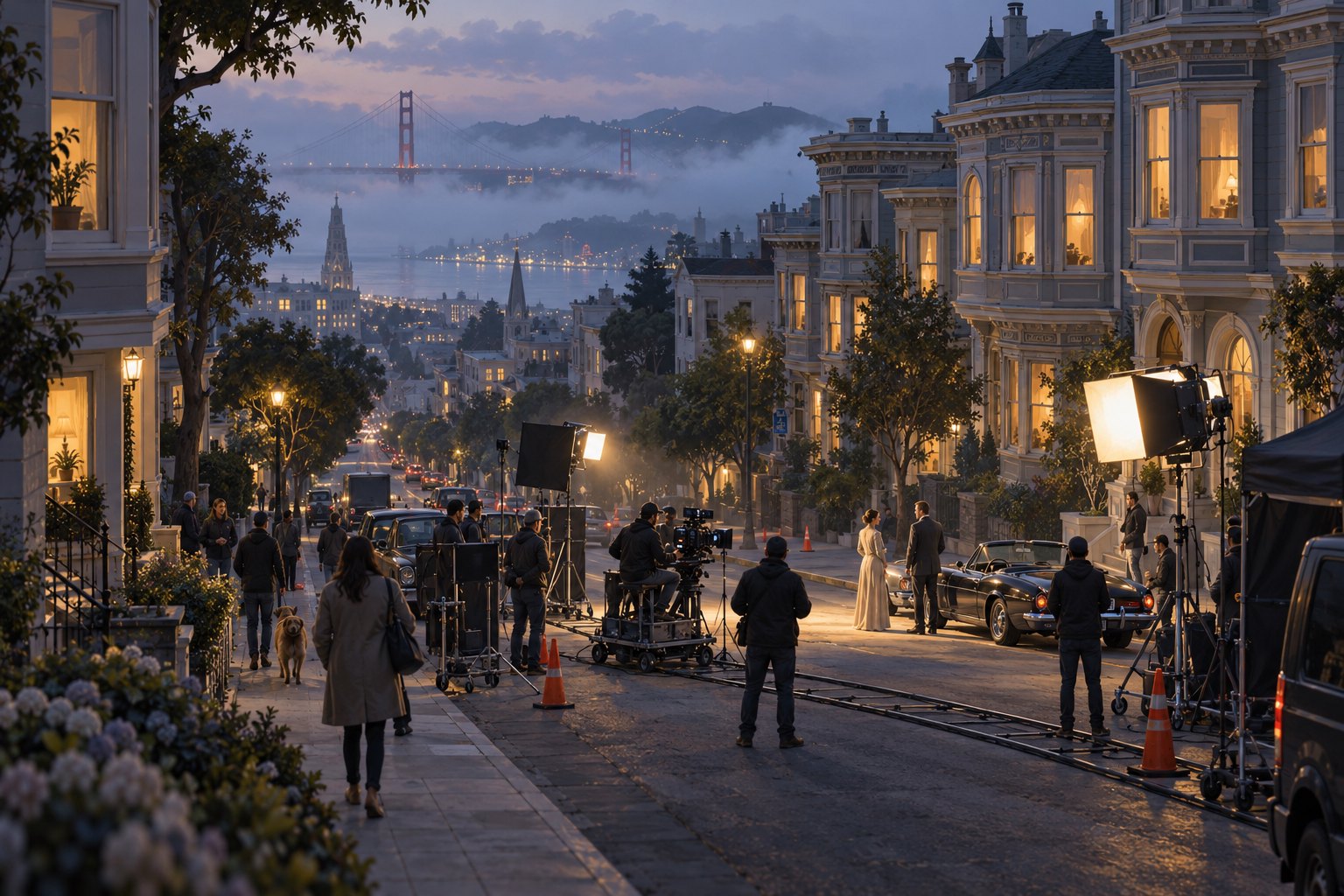
Our discussion of what an early Miles & Juliette image can promise about a relationship raises a related distinction: an image can suggest dramatic possibilities without demonstrating that the finished work fulfills them. The same restraint belongs here. Access to San Francisco creates an opportunity for specificity; the eventual scenes must make use of it.
Money can support ambition without proving its value
The billionaire angle deserves attention because resources affect what an artist can attempt. In general, financial freedom can create room for elaborate preparation, difficult locations, or choices that might be harder to sustain under commercial pressure. None of that tells us the budget, financing structure, or working conditions of this particular shoot.
As criticism, though, there are two tempting shortcuts to avoid. Wealth does not establish that a filmmaker is artistically empty. It also does not make personal ambition inherently important. A lavishly supported project still needs precise performances, meaningful choices, and scenes worth watching.
The more useful question is whether resources make room for observation. Does the movie notice the small gestures that reveal how someone lives? Can it tolerate an awkward silence? Does it allow supporting characters to have purposes beyond serving the protagonist? Those qualities cannot be inferred from the financial standing of anyone behind the camera.
Our commentary on the shared resources that keep independent film communities alive considers another relationship between resources and artistic freedom. Together, these subjects invite attention to the conditions that make films possible while leaving the judgment of each film to the work itself.
The neighborhood exists beyond the frame
For a production, a street is a place to organize an image. For the people who use it, it may be a route home, a workplace entrance, or part of an ordinary errand. Neither perspective disappears when filming begins. That overlap gives location shooting its fascination and creates practical questions worth asking.
A useful follow-up to this story would establish how access was handled, what people nearby experienced, and how the production communicated with them. Those questions should remain questions until answered. Assuming universal excitement would flatten the neighborhood into an audience; assuming universal resentment would flatten it into an opposition campaign.
The same attentiveness has an artistic counterpart. A movie feels more inhabited when people beyond its central characters appear to have lives of their own. Background activity, sound, and small interruptions can suggest a place that continues outside the story’s immediate needs.
What would make the shoot worth remembering?
When the resulting film can be assessed, three questions will matter most: whether the location shapes character behavior, whether the visual choices express a meaningful viewpoint, and whether the city feels inhabited rather than merely displayed. Those are standards for a future review, not a verdict delivered in advance.
The deeper tension in this San Francisco story is between controlling a space and understanding it. Filmmaking requires selection: someone chooses where the camera stands and what remains outside its view. My hope would be for a movie whose attention reaches beyond the spectacle of that control. The memorable achievement would be a street that helps us recognize a person—someone whose fear, desire, or sense of belonging becomes clearer because the scene happens there.
Original content by this site's editorial team. Published: October 10, 2026 at 23:23:44 PDT (Los Angeles time)