Annette Bening as Catwoman. Buddy Ebsen as the Tin Man. Debra Winger as Dottie Hinson. Jean-Claude Van Damme as the Predator. All four actors secured major parts that ultimately became associated with someone else. But describing every departure as an actor simply quitting obscures the differences between a personal decision, a creative objection, a medical emergency, and a disputed production breakdown.
People’s retrospective brings these casting stories together. They also offer a useful way to revisit the movies: beyond wondering what an absent star might have done, consider what the replacement actually contributes. A character exists on the page, but posture, timing, vulnerability, and physical presence determine how that character reaches us.
Spoiler warning: The following analysis discusses character arcs and story developments in The Wizard of Oz, Batman Returns, A League of Their Own, and Predator.
Buddy Ebsen: A medical emergency behind the Tin Man’s recasting
Buddy Ebsen’s departure from The Wizard of Oz was involuntary. According to People’s account of his written recollection, the aluminum powder used in his makeup caused severe breathing difficulties and hospitalization. Jack Haley took over the Tin Man.
That distinction matters. An actor becoming unable to continue working is a different story from someone deciding a part no longer suits him. The finished film’s warmth should not turn the circumstances behind its production into a whimsical anecdote.
Haley’s Tin Man is memorable because his emotional behavior keeps contradicting his supposed deficiency. He believes he needs a heart, yet his tenderness is apparent before the Wizard gives him anything. The journey makes visible a quality he cannot recognize in himself.
My reading is that Haley’s gentleness helps the film avoid making this contradiction feel like a lesson delivered from above. His character seems sincerely uncertain about his own worth. The audience recognizes his compassion while he continues searching for an authority who will certify it.
Dorothy’s declaration, “There’s no place like home,” expresses the same larger pattern: the adventure changes how familiar things are understood. The Wizard’s gifts matter as recognition, even though they do not manufacture the qualities the travelers seek. Haley’s performance gives that idea an especially tender form.
Annette Bening: The Catwoman role that became Michelle Pfeiffer’s
Bening recalled on Happy Sad Confused that she had been measured for her Catwoman costume before telling director Tim Burton she was pregnant. She withdrew from Batman Returns, and Michelle Pfeiffer took the role. Bening also praised Pfeiffer’s performance.
Pfeiffer’s Selina Kyle makes the 1992 film feel dangerously unstable. After Max Shreck pushes Selina from a window, her transformation into Catwoman combines liberation with damage. She discovers a forceful identity, but the film never makes that discovery look emotionally simple.
What works best, to my eye, is the friction between her swagger and her distress. Catwoman’s theatrical confidence does not erase Selina’s injuries. The performance lets triumph and desperation occupy the same gesture, which makes her more compelling than a straightforward revenge figure.
The scene in which Bruce Wayne and Selina recognize each other’s secret identities is particularly revealing. An apparently intimate encounter becomes a confrontation with everything their romance cannot accommodate. Recognition brings them closer to the truth without making a shared future easier.
That tension rewards the kind of character-centered reading explored in our discussion of Pan’s Labyrinth: fantasy becomes most interesting when we ask what a character’s choices cost. Selina’s costume is spectacular, but her refusal to become comfortably understandable gives the performance its staying power.
None of this proves Bening would have been less effective. Her completed interpretation does not exist for comparison. Pfeiffer’s achievement can stand without an imaginary contest.
Debra Winger: A creative objection before A League of Their Own
Winger was initially cast as Dottie in A League of Their Own. In a 2021 Telegraph interview recounted by People, she connected her departure to Madonna’s casting and her concerns about the production’s direction. Geena Davis ultimately played Dottie.
The finished film provides a separate question from whether Winger’s concern was understandable: does its celebrity ensemble overwhelm the women’s story? My judgment is that Davis gives the movie enough emotional gravity to hold its broader comedy together.
Dottie’s talent creates an awkward imbalance with her sister Kit, played by Lori Petty. Dottie has abilities that attract attention almost automatically; Kit wants an opportunity to establish herself. Their conflict gives athletic excellence a personal cost. Being good at something does not settle how much of your life you want to give it.
Davis’s composure is crucial. She makes Dottie’s authority feel natural, which also helps explain why Kit finds her presence so difficult. A reassuring older sister can become an impossible standard without intending to.
Jimmy Dugan’s “There’s no crying in baseball!” is the movie’s most portable joke. Within the story, however, his outburst exposes how poorly his habits initially fit the people he is supposed to lead. The comedy depends on that mismatch. The women’s emotional lives are not interruptions to the baseball story; they are part of what makes the competition matter.
The film fictionalizes its central characters within a historical setting. Its effectiveness as a sports drama should therefore be judged separately from its completeness as an account of the real league.
Jean-Claude Van Damme: The creature performance that never reached the screen
Van Damme was cast as the creature in Predator, rather than as its human protagonist. He later described a restrictive costume and impractical physical demands. Accounts of his exit differ, so his explanation should remain attributed to him. Kevin Peter Hall performed the redesigned creature.
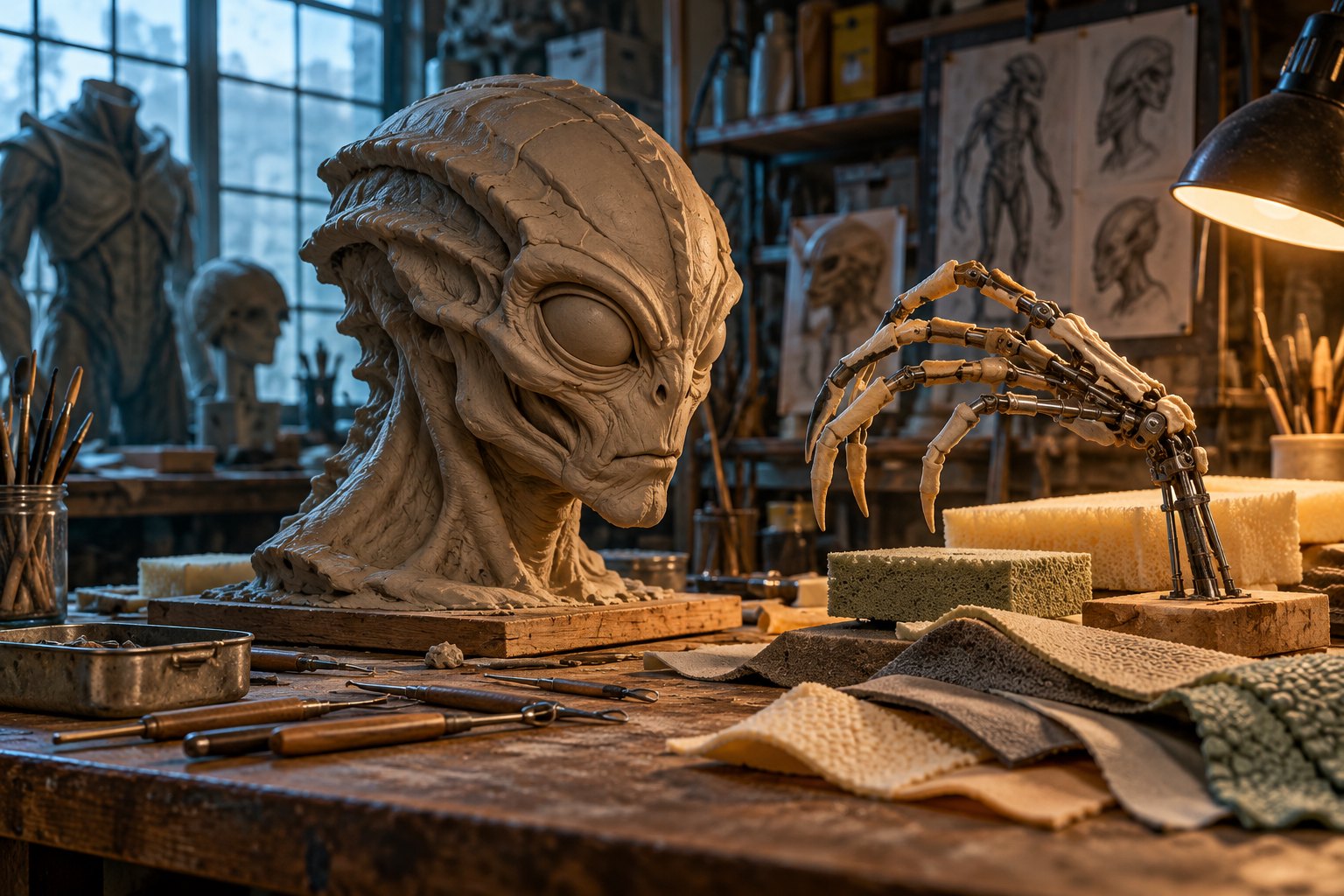
The distinction between those roles is essential to understanding the finished movie. Arnold Schwarzenegger’s Dutch supplies the human perspective; Hall supplies the physical intelligence of the threat. Creature acting involves decisions about attention, patience, movement, and response, even when a face is hidden.
From Dutch’s perspective, the story steadily dismantles confidence. His team’s military competence cannot guarantee safety against an opponent that controls when it becomes visible. The jungle stops being territory they can dominate and becomes an environment they must learn to read.
Hall’s presence makes the hunter feel deliberate. In my view, that deliberateness is more frightening than constant aggression: the creature appears to assess its prey. Dutch’s eventual use of mud and improvised traps shifts the dramatic emphasis toward observation and adaptation.
The result illustrates why physical performance matters to horror storytelling. A striking design attracts attention; an intelligible pattern of behavior gives the audience something to fear.
What these casting changes reveal about familiar characters
These films invite us to mistake familiarity for inevitability. Haley’s tenderness, Pfeiffer’s volatility, Davis’s restraint, and Hall’s controlled menace now seem inseparable from their characters. Yet each performance emerged after another casting plan changed.
The deeper lesson is about how we judge acting. A successful replacement does not establish that the departing performer made a mistake. Nor does a fascinating production story explain everything valuable on screen. The useful comparison is between the character’s needs and the choices the eventual actor makes.
Watch the Tin Man’s compassion, Selina’s fractured confidence, Dottie’s uncomfortable authority, and the Predator’s patience. Those details turn casting history into film analysis: they show how a role becomes a person—or a presence—we believe.
Original content by this site's editorial team. Published: October 26, 2026 at 08:15:50 PDT (Los Angeles time)