
Toronto International Film Festival 2026 offers a compelling watchlist for viewers interested in people under pressure: workers confronting economic insecurity, families living through grief, and men whose professional skills cannot resolve their moral problems. Possible Love, Tender Loving Care, and Your Mother Your Mother Your Mother provide three particularly intriguing starting points, depending on whether you prefer social drama, domestic storytelling, or action.
The ten titles below appear in Rolling Stone’s TIFF selection. This guide considers their character conflicts and thematic possibilities rather than assigning a competing numerical ranking. [Rolling Stone’s festival selection](https://ca.rollingstone.com/tv-movies/best-movies-toronto-international-film-festival-2026/)
Spoiler note: Basic premises and some early story developments follow. The interpretations are readings of those established setups, not verdicts based on firsthand festival screenings. Endings are not disclosed.
Possible Love: Who controls the story of someone else’s hardship?
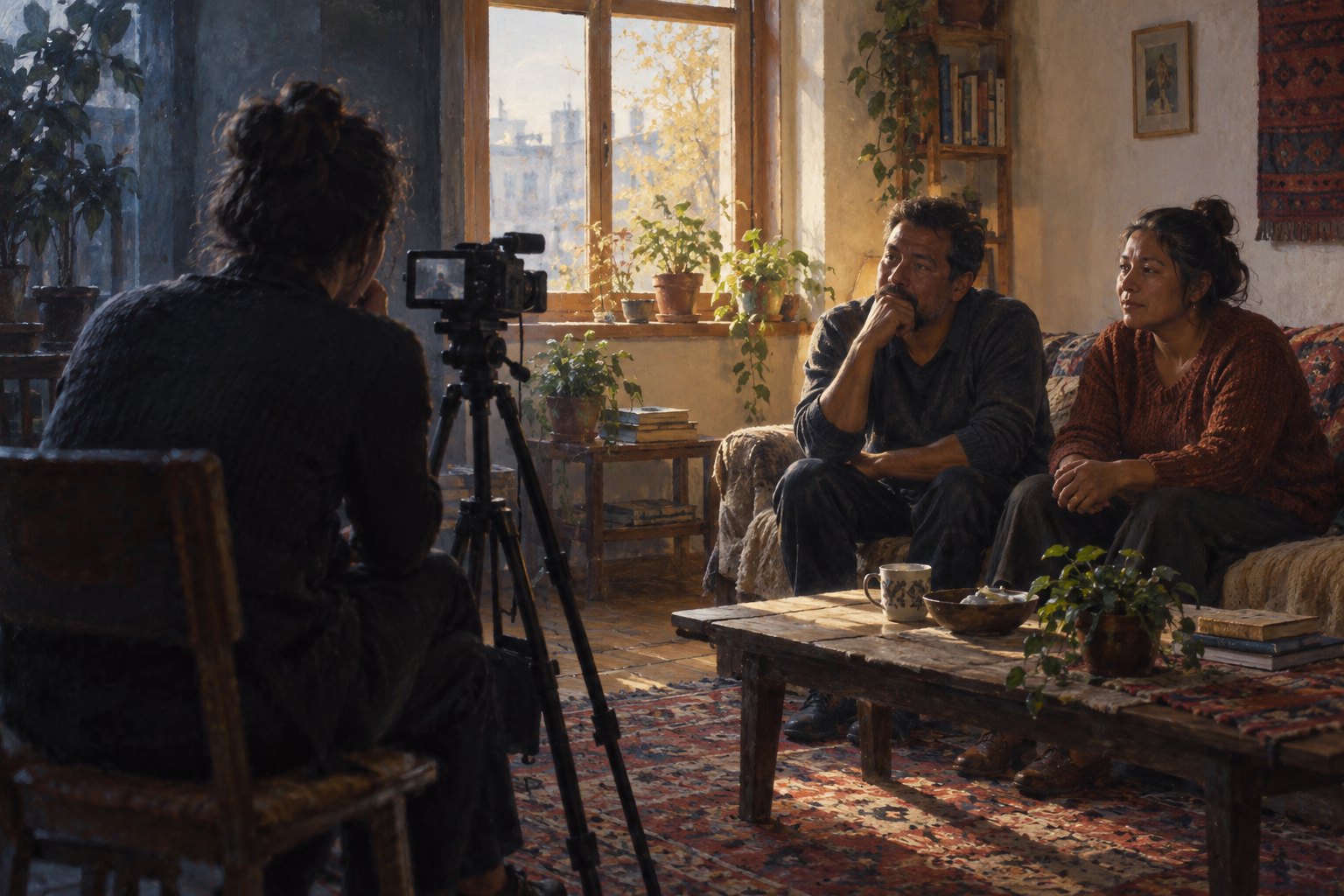
Lee Chang-dong’s drama brings a laid-off worker and his family into the orbit of a documentarian and her husband. That arrangement gives an apparently compassionate project an uncomfortable imbalance: one household supplies the experience, while the other shapes its representation. [TheWrap’s cast interview](https://www.thewrap.com/creative-content/movies/possible-love-cast-intimate-story-interview/)
The opening title card, “Thou shalt not covet,” introduces a useful complication. Desire can involve money, security, intimacy, or the authority to explain another person. Ho-seok’s reluctance to be interviewed also makes refusal meaningful: being understood should not require surrendering control over one’s pain. [The Daily Beast’s account of the opening](https://www.thedailybeast.com/obsessed/possible-love-this-just-might-be-the-best-film-of-the-year/)
My reading of this premise is that empathy becomes ethically interesting when it costs the observer something. For a related examination of labor and dignity, consider our discussion of workplace solidarity in 9 to 5.
Tender Loving Care: The people who help need help, too
Mike Leigh centers Amy, a child protection worker played by Kate O’Flynn, who moves in with her friend Rosie after a relationship ends. Rosie also works in social services; meanwhile, Amy’s parents face a crisis of their own. [Film at Lincoln Center’s synopsis](https://www.filmlinc.org/nyff2026/films/tender-loving-care/)
The tension here is especially recognizable: professional competence does not protect anyone from private vulnerability. From Amy’s perspective, accepting support may challenge an identity built around providing it. Watch for the distinction between listening to someone and quietly taking charge of them. That distinction can turn an ordinary conversation into the emotional center of a film.
Your Mother Your Mother Your Mother: Protection beyond physical strength
Mahershala Ali plays Latif, a Muslim contract killer whose wife’s death leaves him raising their children. A search for breast milk for his infant daughter helps set him on a collision course with a militant faith leader played by John Cho. Bassam Tariq directs. [Vancouver International Film Festival’s synopsis](https://viff.org/whats-on/viff26-your-mother-your-mother-your-mother/)
The infant’s needs give the action premise an unusually concrete measure of responsibility. Latif can possess formidable physical abilities and still need assistance he cannot command. The compelling question is how fatherhood changes his understanding of protection: defeating a threat and sustaining a household demand very different kinds of strength.
Everytime: Returning to a place that never became a memory
Sandra Wollner’s film follows Ella, her young daughter Melli, and her older daughter Jessie’s boyfriend, Lux, after a family tragedy. Ella eventually revives a canceled trip to Tenerife, where past and present begin to overlap. [Sydney Film Festival’s synopsis](https://www.sff.org.au/program/event/everytime/)
That traveling group already contains an emotional imbalance. Lux belongs through a relationship whose circumstances have changed; Ella and Melli share a family bond without necessarily sharing the same grief. A useful way into the film is to ask who wants the holiday to restore something, and who needs permission for life to become different.
Black Sunflowers: Young people beyond the image of war
James Marcus Haney’s documentary follows young Ukrainians whose lives move between civilian experience and the front. Its production involved a local Ukrainian film crew. [AOI Pro.’s production announcement](https://www.aoi-pro.com/en/news/20260903/11754/)
These are real people, not fictional characters arranged to complete a dramatic argument. Their ordinary aspirations deserve attention alongside the danger they face. The critical challenge is to resist treating pleasure as an interruption of the serious subject. Friendship, music, and the possibility of a future are part of what makes the destruction of ordinary life comprehensible.
Krux: When authority makes survival seem disloyal
Tony Vahl’s debut takes place in a German village near the end of World War II, where approaching defeat drives local authorities toward a collective death imperative. The premise puts obedience and survival in direct conflict. [Rolling Stone’s account of Krux](https://ca.rollingstone.com/tv-movies/best-movies-toronto-international-film-festival-2026/)
Its most disturbing question is personal: what happens when the people claiming to protect a community insist that its members must die? Read through that conflict, the village becomes a setting in which fear can masquerade as moral certainty.
Ladies and Gentlemen, Brian Mulroney: Political identity as a performance
Matthew Rankin uses archival material and an experimental collage approach to examine Brian Mulroney’s political ascent. The National Film Board describes a documentary that combines politics, propaganda, and popular culture. [The National Film Board’s announcement](https://mediaspace.nfb.ca/comm/ladies-and-gentlemen-brian-mulroney-at-tiff-2026/)
Here, the central figure is also a public construction. A smile, a joke, or an appearance can become evidence of how political trust is produced. Viewers should examine the film’s own persuasive methods, too: juxtaposition can reveal a contradiction, but editing always guides attention. The documentary’s interpretation and its archival evidence deserve separate consideration.
Wild Horse Nine: A partnership weighed down by history
Martin McDonagh sends CIA agents Chris and Lee, played by John Malkovich and Sam Rockwell, to Easter Island shortly before the 1973 Chilean coup. Their pasts and present conspiracies complicate the assignment. [Searchlight’s official synopsis](https://press.searchlightpictures.com/wild-horse-nine)
The partnership offers a pointed way to examine responsibility. Two colleagues may remember the same work while telling themselves incompatible stories about what it meant. Humor can make those evasions entertaining; the more searching question is whether their familiarity allows honesty or helps them avoid it.
Wild Wild East: An investigation inside an occupied community
Jan Holoubek’s film takes place in occupied Poland in 1943. German officer Martin Wolff arrives to investigate a Jewish lawyer’s disappearance, unsettling a town already shaped by fear, opportunism, and concealed information. [Mid March Media’s synopsis](https://midmarchmedia.com/film/wild-wild-east/)
Wolff’s official role makes the detective-story structure morally unstable from the outset. Authority cannot automatically stand in for justice under occupation. The revealing character question is what each person’s silence accomplishes: self-preservation, protection of another person, or preservation of an advantage.
Soumsoum, The Night of the Stars: Who gets called dangerous?
Mahamat-Saleh Haroun’s film follows a young woman experiencing visions who forms a bond with an older woman accused of witchcraft. That relationship places personal recognition against communal suspicion. [Rolling Stone’s account of Soumsoum](https://ca.rollingstone.com/tv-movies/best-movies-toronto-international-film-festival-2026/)
The premise invites attention to the difference between being feared and being understood. Before accepting the village’s judgment, consider whose account of events carries authority and whose experience is dismissed.
The deeper connection: Care, control, and the right to be understood
Read together, these ten premises suggest a productive theme: care and control can occupy the same relationship. A filmmaker offers attention, a parent offers protection, an official claims responsibility, and a community claims certainty. The decisive issue is how much freedom remains for the person receiving that attention.
That is also a useful standard for criticism. A strong interpretation leaves room for a character’s contradictions instead of reducing a person to a lesson. Our examination of what gives a festival film lasting impact develops that distinction. For this Toronto watchlist, begin with the conflict that interests you most—and pay attention to the person whose perspective is easiest to overlook.
Original content by this site's editorial team. Published: September 26, 2026 at 13:08:34 PDT (Los Angeles time)