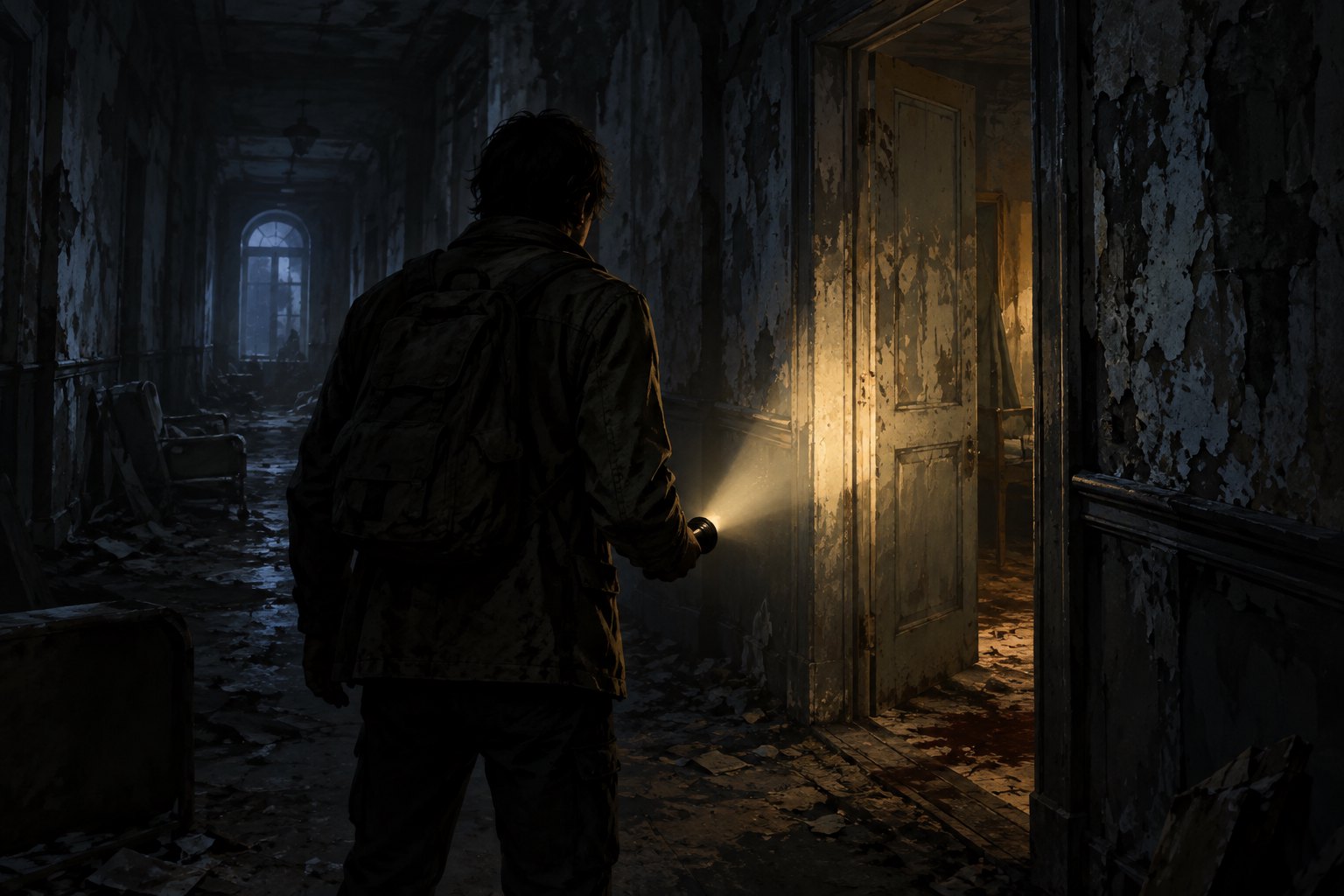
Wildwood has unveiled its final trailer ahead of its October release, bringing its central dramatic proposition into focus: a sister enters an unfamiliar world because someone she loves needs her. The prospect of an elaborate fantasy landscape is appealing, but Prue McKeel’s rescue mission offers the more compelling reason to care. An enchanted forest becomes meaningful when every step through it carries a personal cost.
This is a character-focused preview, with premise spoilers, rather than a review of the completed film. Its judgments concern the story’s announced setup and dramatic possibilities; they do not presume how the finished movie resolves them.
What is confirmed about Wildwood’s release and story?
LAIKA released the final trailer on September 16. Directed and produced by Travis Knight and written by Chris Butler, Wildwood is scheduled to open in U.S. theaters on October 23, 2026. Peyton Elizabeth Lee voices Prue, whose baby brother is taken by crows. Her rescue attempt leads into an enchanted forest outside Portland, Oregon, accompanied by classmate Curtis Mehlberg, voiced by Jacob Tremblay. The announced story includes talking animals, bandits, and a wider struggle involving the forest’s future. These details are confirmed in [Fathom Entertainment’s release announcement](https://www.fathomentertainment.com/news/wildwood-tos-press-release/).
That premise establishes two different scales of urgency. Prue has an immediate, understandable objective: bring her brother home. The forest introduces needs and conflicts that extend beyond her family. The interesting question is how those demands will interact. Expanding the adventure can deepen her predicament, provided the personal objective remains emotionally present.
Prue’s strongest dramatic asset is a specific reason to act
A rescue story gives its protagonist direction before the audience understands the surrounding world. We do not need a complete explanation of the forest’s history to understand why Prue would enter it. Her brother’s disappearance makes hesitation costly and turns unfamiliar territory into something she must navigate.
From Prue’s perspective, however, urgency could also narrow her judgment. Someone searching for a missing sibling has reason to favor the quickest answer, the nearest lead, or the person offering immediate help. Those pressures create opportunities for suspense without requiring the character to behave foolishly. A choice can be understandable and still expose someone to danger.
That is a possibility within the setup, not a claim about a particular scene. It is also the standard by which I would assess Prue’s eventual characterization: do her decisions express the strain of her situation, or does the plot simply move her between attractions? A determined heroine becomes more interesting when determination has consequences.
The distinction matters particularly in fantasy. Viewers may enjoy discovering creatures and environments, but discovery alone does not create a character arc. Prue needs opportunities to interpret what she encounters, revise an assumption, and decide what matters when two urgent responsibilities compete.
Curtis gives the rescue mission a second perspective
A companion can change the emotional geometry of an adventure. Prue’s family connection gives her a reason to accept extraordinary risks. A classmate accompanying her occupies a different position: close enough to help, but without precisely the same obligation. That difference could make their partnership more revealing than a straightforward pairing of leader and assistant.
For Curtis to matter dramatically, his presence should affect how decisions are made. Agreement can demonstrate trust; disagreement can expose what each character understands differently. Neither requires turning the partnership into constant bickering. Sometimes a companion’s most useful contribution is noticing what the person under greatest pressure cannot afford to notice.
I would be especially interested in whether the film allows both characters to be reasonable at once. Prue’s urgency need not make every objection cowardly. Curtis’s caution, if the story gives him any, need not make her resolve reckless. A friendship gains substance when affection survives competing assessments of the same danger.
This connects with our discussion of how limited knowledge makes a character’s next move suspenseful. The genres differ, but the underlying principle travels: audiences become involved when they understand why someone chooses without knowing whether the choice will work.
The forest needs to exert pressure, not just inspire wonder
A vast setting can make a protagonist feel small. That relationship between body and environment is particularly promising for a story about a young person confronting unfamiliar powers. Distance, obstructed views, and difficult terrain can all make an objective feel harder to reach before any antagonist appears.

For me, the appeal of handcrafted fantasy lies partly in that sense of physical resistance. A surface can look touchable; an obstacle can appear to occupy real space. But visual detail earns its dramatic place when it changes our understanding of a character’s experience. The useful question is what an environment makes someone do, fear, or reconsider.
That is why spectacle should be assessed through point of view. A sweeping view can communicate possibility, isolation, or exposure depending on whose situation it expresses. The same forest might promise answers to Prue while suggesting overwhelming uncertainty to someone beside her. A film can let us inhabit both responses without explaining either aloud.
What the final trailer cannot settle
The release of a final trailer helps audiences decide whether a film’s premise interests them. It cannot establish whether its relationships accumulate depth across an entire feature. Editing can bring urgency to a few minutes; sustained storytelling must also manage the quieter stretches in which trust, disappointment, and understanding develop.
My main reservation is therefore structural. As the forest’s larger conflict comes forward, will Prue’s brother remain a person whose absence matters, or become merely the device that started the adventure? A rescue narrative needs emotional continuity even when its immediate objective slips out of view.
Adaptation brings a related test. Our commentary on why recognizable lore needs to serve lived character experience argues for judging familiar material by what it does within a film. For Wildwood, the same approach means asking whether every new element complicates the journey meaningfully, rather than rewarding recognition by itself.
The deeper possibility: learning whom responsibility includes
The most promising interpretation of Wildwood’s premise concerns the expansion of responsibility. Prue enters the forest with a bond she already understands. The larger conflict could confront her with people and needs she did not know existed. That creates the possibility of growth through attention: learning that an urgent private crisis takes place inside a world with other claims upon her.
Such a development would be strongest if it preserved the force of her original love. Growing more aware of others should make bringing her brother home more morally complicated, not less important. That balance is what makes this October release worth watching: the possibility that an enormous fantasy adventure can remain intimate enough for one frightened, determined sister to give it shape.
Original content by this site's editorial team. Published: September 19, 2026 at 20:49:05 PDT (Los Angeles time)