Tyler Perry’s name is circulating in connection with a movie filming in downtown Bellingham, but readers looking for a confirmed film title or a clear account of his involvement should distinguish the rumor from an announcement. [Cascadia Daily News’s reporting](https://www.cascadiadaily.com/2026/sep/23/rumors-fly-about-tyler-perry-movie-filming-in-downtown-bellingham/) describes speculation surrounding the production. That makes this a developing film story, with questions still attached to the association.
The immediate attraction is easy to understand: a familiar downtown might become part of a movie connected to a recognizable filmmaker. For local readers, that raises the possibility of seeing ordinary surroundings transformed on screen. For Perry’s audience, it invites curiosity about what kind of project could be taking shape. Neither curiosity establishes a plot, a cast, or a release plan.
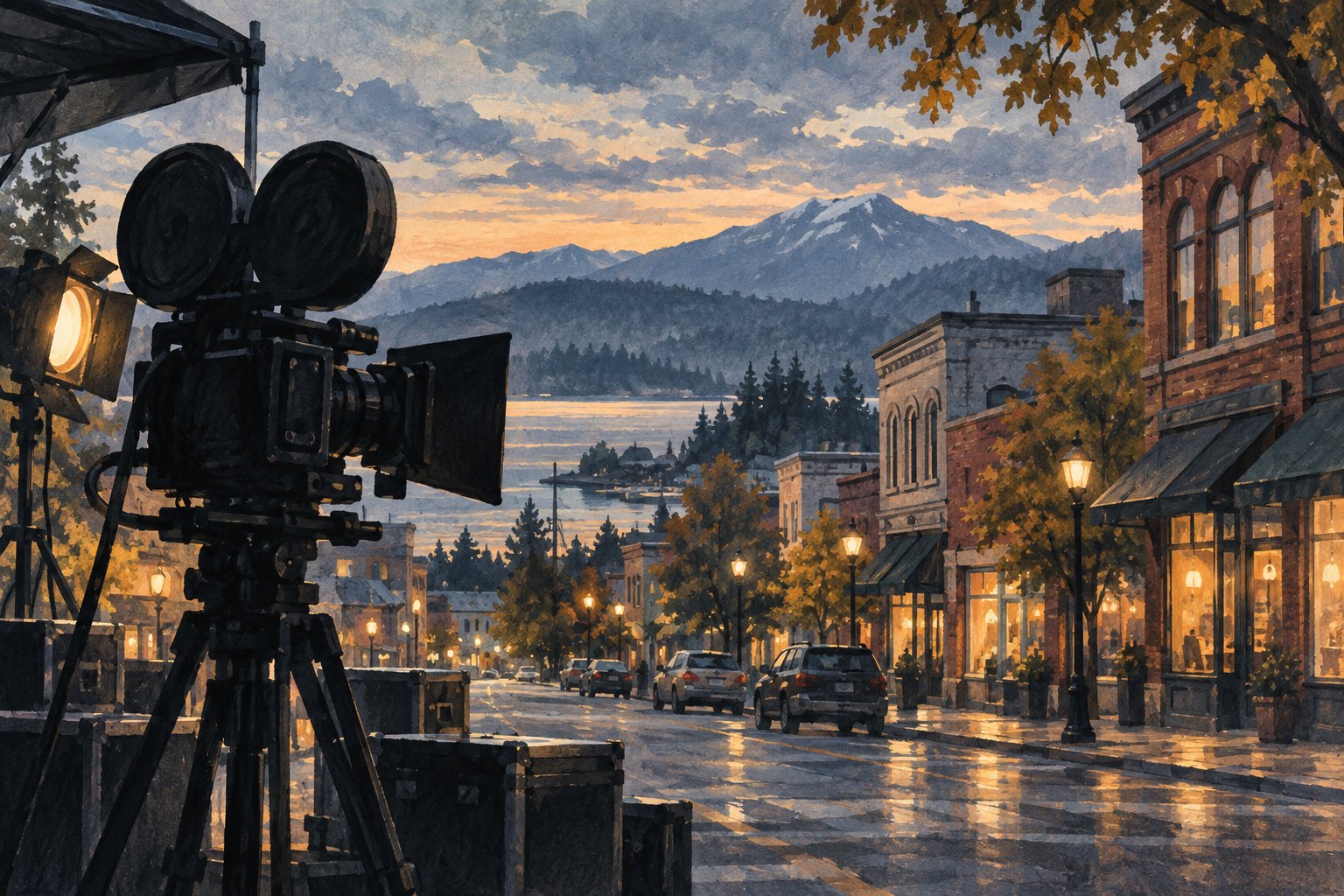
This is spoiler-free production commentary. No completed film is being reviewed, and the illustrations are conceptual rather than photographs of the reported production.
What the Tyler Perry connection would need to establish
The phrase “a Tyler Perry movie” can sound more specific than it is. A filmmaker’s association with a project can involve writing, directing, producing, performing, or some combination of those responsibilities. Those credits answer different questions about how a film is made and whose creative choices an audience will eventually be evaluating.
For this Bellingham story, the useful next development would be an attributable identification of the project and Perry’s role. A title would give readers something concrete to follow. Confirmed credits would explain the connection. A synopsis would begin to establish what the movie is actually about. Those pieces should be assessed individually instead of allowing one plausible association to stand in for all three.
There is also a distinction between being connected to a production and being physically present at a location. The former does not establish the latter. Readers hoping for information about an appearance should look for explicit confirmation, rather than treating a filmmaker’s name attached to a project as a sighting.
Filming in Bellingham would not necessarily mean a story about Bellingham
A shooting location and a fictional setting are separate things. A street can appear as itself, represent another city, or supply a few shots within a place assembled from multiple locations. Even recognizable architecture may be used without the screenplay identifying where the camera stood.
That distinction matters because local anticipation often begins with recognition: Which buildings will appear? Will a familiar corner make the cut? Will the town be named? These are enjoyable questions, but they concern different creative decisions. A movie could preserve a location’s appearance while giving it an entirely different identity.
My interest in the Bellingham possibility lies in what the eventual film might do with the relationship between people and their surroundings. An attractive street provides visual appeal. A dramatically meaningful street tells us something about who feels at home there, who feels watched, and who has somewhere else to go. That is where location becomes part of storytelling.

How a downtown can reveal a character’s point of view
Consider the difference between observing a place and experiencing it through a character. A wide shot might make a downtown look welcoming and navigable. A closer frame might withhold the next corner, emphasizing uncertainty. The buildings have not changed; the audience’s access to them has.
These are general possibilities of film form, not descriptions of scenes from the rumored project. They explain why a location announcement cannot tell us much about a movie’s emotional character. Framing, performance, editing, and sound determine whether a place feels comforting, indifferent, threatening, or full of opportunity.
A character’s history matters, too. Someone returning to a familiar neighborhood carries a different relationship to its doorways and sidewalks than someone passing through for the first time. A convincing film can express that difference through hesitation, pace, or attention. It does not always need a speech explaining the significance of every building.
When a film eventually becomes available to review, those observable choices offer a stronger basis for criticism than assumptions drawn from a filming rumor. Our discussion of how character conflicts give Dirty Dancing’s finale its emotional force applies that approach to a finished movie: interpretation begins with what people actually do and what their choices cost them.
Why the famous name cannot supply the missing story
Perry’s name is central to the interest surrounding this rumor. Yet attaching expectations to an unconfirmed project can make viewers imagine a film before they know its premise. Once that imagined version becomes familiar, later information may be interpreted as confirmation even when it points somewhere else.
The fairer critical approach is to leave room for the particular work. An established filmmaker’s involvement may explain why a project attracts attention, but it does not establish its tone, its central relationship, or the quality of its performances. Those judgments require evidence from the film.
A similar distinction informs our commentary on what a casting pairing can promise before performances are available to assess. Anticipation is a legitimate part of moviegoing. It becomes more useful when its limits remain visible.
Which future details would actually move the story forward?
For readers following the Bellingham report, several kinds of information would answer separate questions:
- An identified production: A confirmed title and responsible production company would distinguish the project from speculation about other movies.
- Explicit creative credits: These would clarify Perry’s involvement without requiring readers to infer it.
- An official premise: This would establish characters and conflict, providing a foundation for meaningful story discussion.
- A stated fictional setting: This would help explain whether Bellingham appears as itself or serves another place.
- A distribution announcement: This would address where and when audiences can watch, independently of the filming location.
None of those details should be filled in with guessed dialogue, presumed character arcs, or a predicted ending. Memorable lines and hidden references belong in criticism when they can be connected to an identifiable work. At this stage, inventing them would obscure the very movie readers are trying to learn about.
The deeper appeal of a familiar place on screen
The Bellingham rumor touches something more interesting than celebrity proximity. Cinema can make viewers reconsider places they believe they already understand. A doorway usually passed without notice can become the site of a consequential decision; a routine walk can acquire emotional weight through a character’s experience.
That possibility is worth following. If the reported association becomes a clearly identified film, the most rewarding question will extend beyond whether viewers can recognize downtown Bellingham. It will be whether the movie gives them a reason to see that place differently—and whether the people in its story make that changed perspective feel earned.
Original content by this site's editorial team. Published: September 23, 2026 at 18:52:36 PDT (Los Angeles time)